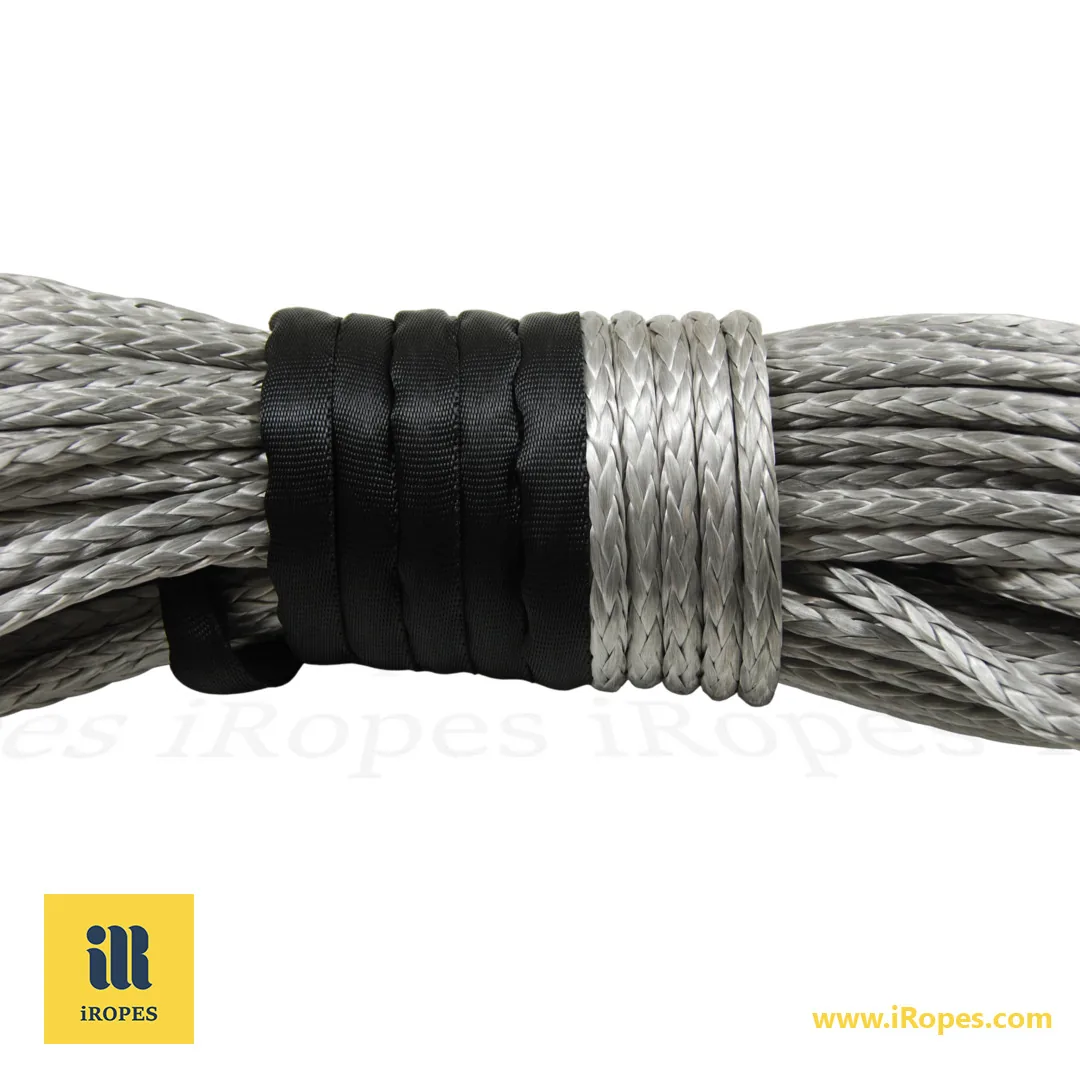
A 100 ft nylon winch rope from iRopes adds 30 ft of reach over standard 70 ft lines while weighing significantly less than steel cable. This provides greater operational efficiency. You'll also benefit from our ISO 9001-backed quality and custom colour coding for instant visual checks, ensuring reliability for every pull.
Read in 3 min
- ✓ Custom-cut 100 ft lengths to your exact diameter free up to 15% more drum space for other gear.
- ✓ Choose nylon or Dyneema to gain a 10-15x strength-to-weight advantage, allowing you to lift heavier loads with a lighter line.
- ✓ ISO 9001 quality control reduces failure risk by ensuring consistent manufacturing standards, providing peace of mind on every pull.
- ✓ Direct global shipping delivers your rope in 12-17 days, so you’re ready for the next job without delay.
Many winch owners presume a longer steel cable is the only way to achieve extra reach, often overlooking the hidden drawbacks of added weight and dangerous recoil. What if you could add 30 ft of reach without the bulk, enhancing operational safety and efficiency? In the following sections, we will reveal the precise rope specifications and custom-cut solutions that transform this perceived difficulty into a daily operational advantage.
Understanding the 100 ft of rope for winch applications
Unspooling a 100 ft rope from a winch immediately provides the necessary reach to recover a stuck vehicle from deep mud, ascend a steep incline, or cross a rocky expanse without needing to reposition the winch. This extended length translates into greater flexibility on the trail, reducing the need for multiple shorter lines, which can add unnecessary weight and complexity to your recovery kit.

It’s common to wonder, “Is winch rope as strong as cable?” The straightforward answer is yes; modern synthetic ropes often surpass steel cable in their strength-to-weight ratio. A high-performance synthetic fibre can be ten to fifteen times stronger than steel per kilogram. This means an equivalent breaking strength can be achieved with significantly less mass. Reduced weight leads to faster drum rotation, decreased power consumption by the winch, and a dramatic reduction in the kinetic energy stored in the line, thereby lowering the recoil risk should a failure occur.
Among synthetic options, Dyneema (UHMWPE) consistently ranks as a top performer. Its unique molecular alignment provides unparalleled tensile strength while maintaining a supple texture that allows for easy splicing or field repairs. For a 100 ft winch line, Dyneema typically offers breaking strengths from 18,000 lb up to 32,000 lb, depending on the diameter. This significantly exceeds the capabilities of comparable nylon or polyester strands.
- Optimal reach - 100 ft offers sufficient length to manage most off-road scenarios without the need for re-spooling.
- Weight advantage - Synthetic rope weighs approximately one-third of an equivalent steel cable, greatly simplifying handling.
- Safety boost - Lower kinetic energy significantly reduces the danger of a sudden line snap.
If you prefer a more traditional material, a 100 ft nylon rope still provides respectable abrasion resistance and a moderate stretch that can absorb shock loads effectively. However, for demanding winching tasks where minimal elongation and maximum breaking strength are critical, Dyneema-based lines are the superior choice.
“Switching from steel cable to a 100 ft Dyneema winch rope saved my team nearly half a tonne of weight on the vehicle, and recovery times dropped dramatically.” – Veteran off-road guide
Now that you understand the practical benefits of a 100 ft length and how synthetic fibres outperform traditional cable, the next step is to determine when a nylon-based 100 ft rope is the most suitable option for your specific winch setup.
Choosing the right 100 ft nylon rope: When and why
Having considered how a 100 ft length enhances your winching capabilities, the next crucial step is to determine if nylon is the ideal material for your specific task. Nylon offers a unique combination of elasticity and abrasion resistance that can be perfect when you need some flexibility in the line without compromising durability.

Nylon typically stretches between 10-15% under load. This elasticity functions like a shock absorber, proving particularly beneficial when recovering a vehicle from mud or sand. Its surface effectively resists chafing from rough edges, and the fibre demonstrates good resilience against oil, fuel, and mild chemicals—substances frequently encountered in off‑road and industrial environments.
- For a 4500 lb winch, a 5/16 inch (8 mm) nylon line with a Minimum Breaking Strength (MBS) of approximately 8,000 lb meets the 1.5-to-2x safety factor recommended by most manufacturers.
- Always match the rope diameter to your winch drum size: larger drums can comfortably accommodate 3/8 inch rope, while compact units operate more efficiently with 1/4 inch to 5/16 inch sizes.
- When colour‑coding is advantageous—such as for night‑time recovery—select high‑visibility hues or incorporate reflective tape without compromising performance.
While nylon does not achieve the ultra‑high tensile values of Dyneema, its forgiving stretch can reduce peak forces on the winch motor, which ultimately extends its service life. If a softer pull is a priority, and you require a rope that tolerates occasional abrasions from rocky terrain, nylon frequently offers the optimal balance.
Custom Options
iRopes offers comprehensive custom nylon rope roll customization, allowing you to specify any diameter from 1/4 inch to 1/2 inch, choose your preferred rope colour, and receive the exact 100 ft length you need. Whether you require a single‑tone coil for branding purposes or colour‑banded sections for rapid length identification, our manufacturing facility can accommodate your requirements without additional tooling charges.
Understanding when nylon’s stretch and abrasion resilience are more advantageous than the ultra‑light benefits of high‑tech fibres allows you to select a rope that performs reliably under load and feels right to handle. Next, we will explore how synthetic winch ropes—whether nylon or Dyneema—can significantly improve overall performance and safety for the most demanding jobs.
Optimising your 100 ft winch setup with synthetic rope solutions
Building on the discussion of nylon, synthetic winch rope—whether crafted from Dyneema or high‑modulus UHMWPE—directly addresses the question, “Is synthetic winch rope worth it?” The reduced mass means the winch motor consumes less current, extending battery life during trail operations. With significantly less stored kinetic energy, a snapped line poses a much lower recoil danger, enhancing safety for operators and bystanders. Furthermore, because the fibre remains supple, a single operator can guide the line smoothly without requiring assistance.

Switch to ultra‑light, safe synthetic winch rope – 73% lighter, 90% less snap‑back. Selecting the correct accessories transforms a high‑performance rope into a complete recovery system. Soft‑metal shackles prevent sharp edges from damaging the rope, while a reinforced thimble eye safeguards the termination point when the line passes through a fairlead (see our guide). Chafe guards function as sacrificial sleeves on abrasive surfaces, and UV‑stabilised sleeves protect the fibres from degradation by sunlight during prolonged storage.
Soft Shackles
Flexible, non-metallic shackles minimise snagging and protect the rope end efficiently.
Thimble Eye
This reinforced eye prevents abrasion as the line passes through a fairlead, extending its life.
Chafe Guard
A protective sleeve safeguards the rope against sharp edges and rocky terrain, enhancing durability.
UV Sleeve
A UV‑stabilised coating significantly extends the lifespan of the rope under intense sun conditions.
Proper maintenance is crucial for protecting your investment. After each use, wipe the line with a damp cloth to remove any mud and salt, then allow it to air‑dry away from direct sunlight. Store the rope coiled on a clean drum or in a breathable bag to prevent moisture build‑up. Carrying a basic splice kit is also advisable; a field repair can restore up to 90% of the original breaking strength when performed correctly.
Inspect your synthetic line before each use, store it away from direct sunlight, and carry a splice kit for quick field repairs, ensuring maximum longevity and safety.
Every 100 ft of rope you carry provides valuable reach without the bulk of steel cable. iRopes can precisely tailor the diameter, colour banding, and accessory package to match your specific winch model, ensuring the entire system functions as a seamless and safe unit.
Get your personalised 100 ft winch rope quote
By now, you understand how a 100 ft of rope extends your operational reach, why synthetic fibres often outperform steel, and when a 100 ft nylon rope offers the ideal combination of stretch and abrasion resistance for your winch setup. iRopes excels at cutting any diameter, colour, and length to meet your precise specifications, delivering a line that perfectly fits your equipment and aligns with your branding.
If you require a bespoke quote or expert advice on the optimal configuration for your application, please complete the form above, and our specialists will promptly respond to your inquiry.