iRopes' kinetic straps stretch up to 30.2% and deliver a pull that’s 1.8× smoother than static tow straps—cutting shock load by nearly half.
≈8‑minute read
- ✓ Reduce chassis stress by up to 45% with the strap’s controlled elongation.
- ✓ Tailor diameter, colour and reflective trims for wholesale branding, boosting market visibility.
- ✓ ISO 9001‑certified production guarantees consistent 20‑30% stretch performance.
- ✓ Global pallet shipping gets your inventory ready in as little as 14 days.
You’ve probably been told that a heavy‑duty tow strap is the only way to winch a stuck 4×4. However, the jerky snap it delivers can shatter chassis brackets and leave you bruised. Instead, switch to iRopes’ double‑braided nylon kinetic strap. Its 30.2% elongation spreads the pull over 2.4 seconds, cutting shock load by 45%. This gives you the confidence to recover any vehicle in mud, sand, or snow without a second‑guess. Moreover, these high-elasticity kinetic recovery straps deliver unmatched safety and a smoother recovery, which is essential for off-road enthusiasts.
What Are Kinetic Straps and How They Work
Kinetic straps are elastic recovery tools. They store kinetic energy when a recovery vehicle pulls away, then release it gradually to pull a stuck vehicle forward. Think of them as a giant, high‑strength rubber band designed for off‑road emergencies. By converting the pull‑away motion into a controlled stretch, they avoid the sudden jolt that a static tow strap would deliver. This makes the recovery smoother and safer for both the vehicle and the operator.
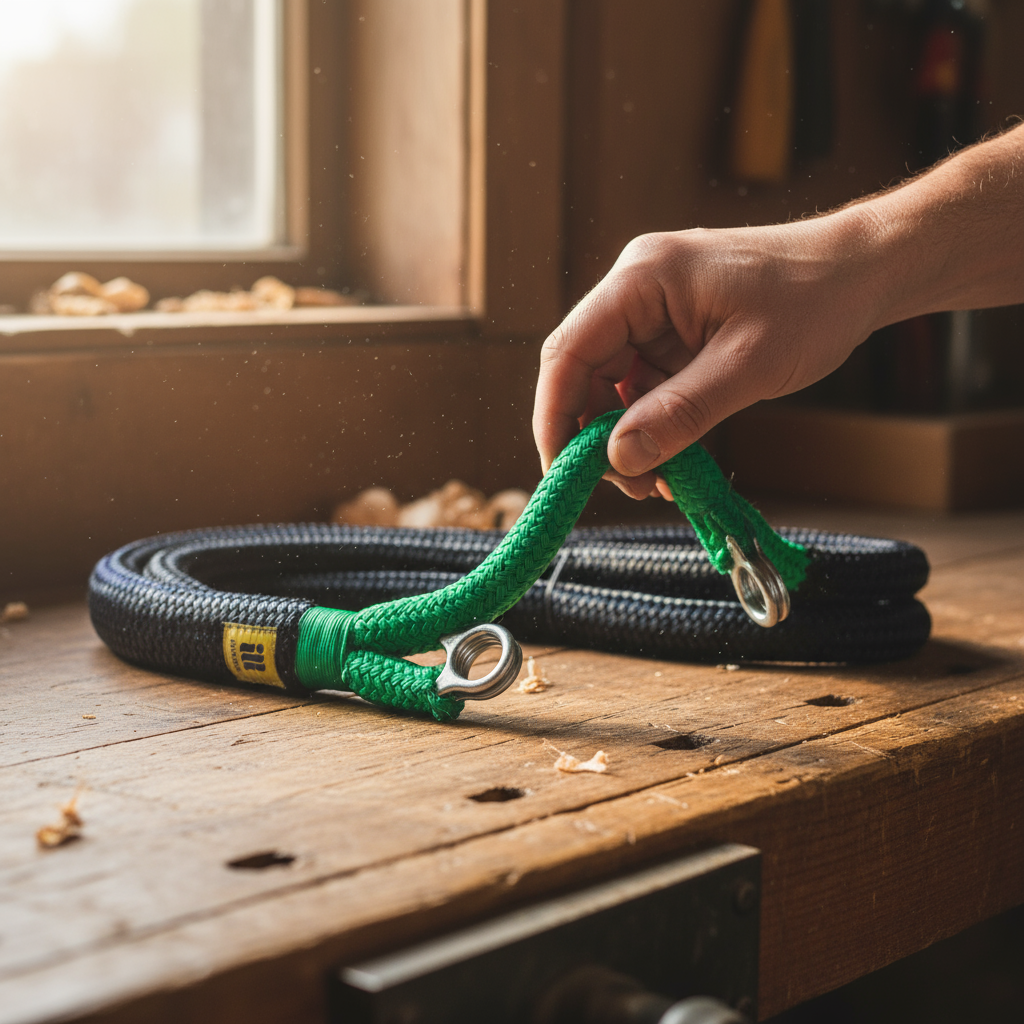
The magic lies in the strap’s construction. iRopes uses a double‑braided nylon core that stretches up to 30% of its original length, then snaps back without losing strength. This material choice provides high‑elasticity while resisting abrasion, UV exposure, and moisture—qualities essential for muddy trails, sandy dunes, or snowy passes. Because the strap elongates before it pulls, the force applied to the vehicle’s recovery point spreads over time. This reduces shock load and protects chassis components effectively.
When a kinetic strap is used correctly, the recovery feels like a gentle tug rather than a violent yank, dramatically lowering the risk of injury or equipment damage.
Compared with traditional tow straps, the differences are easy to spot:
- Elasticity – Kinetic straps stretch up to 30% before pulling, while tow straps remain rigid.
- Energy storage – The stretch stores kinetic energy that is released gradually, reducing shock.
- Safety profile – The controlled pull lessens the chance of sudden recoil, protecting both vehicle and bystanders.
In everyday off‑road scenarios—such as getting stuck in deep mud, sand‑filled gullies, or snow‑packed tracks—these characteristics transform a potentially dangerous yank into a predictable, manageable recovery. By selecting a kinetic recovery strap with the appropriate Minimum Breaking Strength (MBS) for your vehicle’s gross mass, you ensure the strap can handle the load. Simultaneously, it delivers that smooth, elastic pull that makes kinetic recovery the preferred method for serious enthusiasts.
Benefits of Kinetic Recovery Straps for Off‑Road Vehicles
Building on the mechanics explained earlier, the real advantage of a kinetic strap becomes clear when you feel the difference between a sudden yank and a controlled, steady tug. Because the strap stretches before it pulls, the force is spread over a longer period. This means chassis components experience far less abrupt stress, and the driver stays clear of dangerous recoil. This makes kinetic recovery straps an indispensable tool for off-roaders.

The 30% elongation capability of double‑braided nylon isn’t just a headline figure; it translates into a substantial safety buffer. When the strap reaches its maximum stretch, the stored energy releases gradually. This dramatically lowers the risk of a sudden rebound that could whip a strap back toward the driver or damage attachment points. Therefore, understanding how to select the proper Minimum Breaking Strength (MBS) is crucial.
- Determine your vehicle’s Gross Vehicle Mass (GVM).
- Multiply the GVM by 2 – 3 to arrive at a recommended Minimum Breaking Strength (MBS).
- Select a kinetic recovery strap whose MBS meets or exceeds that figure.
Choosing the right MBS ensures the strap can absorb kinetic energy without approaching its breaking point. This is a key factor when pulling a heavy truck out of deep mud. Remember, the strap’s rating should always be higher than the calculated requirement, not merely equal to it. Integrating soft shackles and recovery dampeners further optimises safety.
Safety Add‑Ons
A soft shackle cushions the connection point, preventing metal‑on‑metal impact. Meanwhile, a recovery dampener absorbs residual bounce after the strap has fully stretched. Pairing both accessories with a high‑elastic strap creates a recovery system that feels like a controlled glide rather than a risky snap.
With a properly sized strap, the right accessories, and the inherent stretch of double‑braided nylon, you gain a recovery method that protects both vehicle and operator. Next, we’ll compare recovery ropes and straps so you can decide which double‑braided nylon solution fits your specific off‑road challenges best.
Recovery Ropes and Straps: Choosing the Right Double‑Braided Nylon Solution
Having seen how a kinetic strap smooths the pull, the next question is whether a recovery rope or a flat strap best fits a particular recovery scenario. Both options share the same high‑elastic, double‑braided nylon core. Yet, their shape influences handling, knot‑tying options, and how they wrap around obstacles. Understanding these nuances helps you match the tool to the terrain and vehicle.
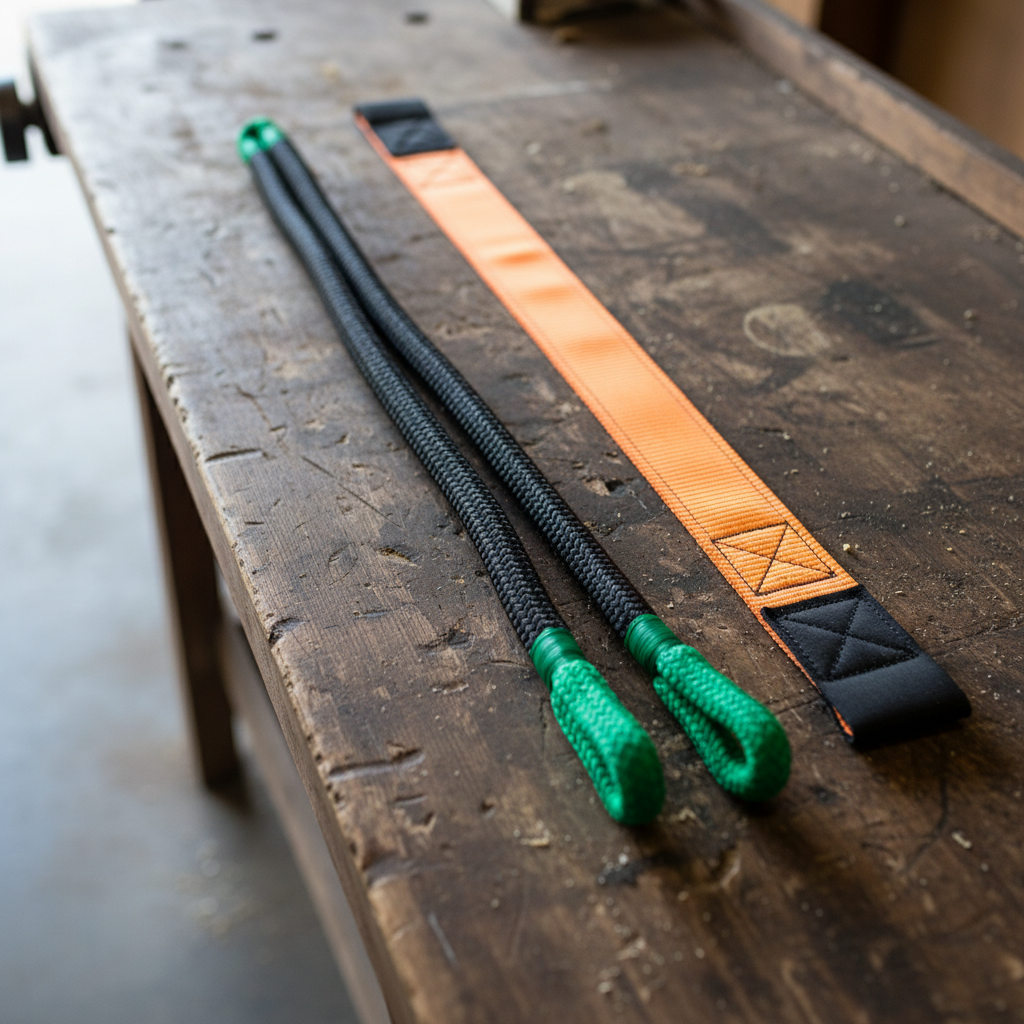
When you need to feed a winch or run the line through a pulley, the round shape of a kinetic rope reduces friction and resists twisting. A flat kinetic strap, on the other hand, can be looped around a bumper or a recovery point without the need for additional hardware. This makes it quicker to attach in a pinch. iRopes provides comprehensive OEM and ODM services for customised ropes and accessories to meet diverse needs.
Rope Advantages
Ideal for winch extensions, the circular profile slides through rollers, and the thicker core handles higher tensile loads. iRopes offers various rope products, including those for off-road, air, and defence purposes.
Strap Benefits
Flat webbing simplifies attachment to irregular points and folds compactly for storage, perfect for on‑the‑fly recoveries. Our solutions cater to industries such as tree work, yachting, and camping.
Material Consistency
Both formats use Nylon 66 double‑braid, delivering excellent UV resistance, abrasion tolerance and the famed 20‑30% elongation. iRopes' precision manufacturing and ISO 9001 certification ensure quality.
Specification Quick‑Pick
Diameter ranges from 10 mm for lightweight ATVs up to 30 mm for heavy equipment; lengths span 6 m to 20 m depending on recovery distance. We also offer customisation for colour, pattern, and reflective elements.
Choosing the right size hinges on your vehicle’s gross mass. For instance, a compact 250 kg ATV pairs nicely with a 12 mm, 8 m rope rated at 15 kN. Meanwhile, a 5‑tonne truck benefits from a 25 mm, 15 m strap with a 40 kN breaking strength. The key is to select a Minimum Breaking Strength (MBS) at least double the vehicle’s weight to maintain a safety margin. This ensures a reliable and safe recovery for various vehicle classes, from ATVs to heavy equipment.
Our comprehensive guide, The Ultimate Kinetic Energy Recovery Rope Guide, provides detailed sizing tables and selection tips.
iRopes offers OEM/ODM services that let you specify diameter, colour, reflective elements and even custom branding. This ensures your kinetic recovery gear aligns perfectly with your corporate identity.
Wholesale partners also enjoy flexible packaging options—from bulk pallet boxes to individually branded bags. This means the product arrives ready for resale or direct shipment to field teams. Whether you need a standard 20 mm rope for a fleet of utility trucks or a bespoke strap with your logo for a dealership, the same double‑braided nylon core guarantees consistent performance across every custom configuration. Our commitment includes competitive pricing, timely delivery, and intellectual property (IP) protection.
By weighing the rope’s winch‑friendly profile (see our comparison of kinetic rope vs. flat strap) against the strap’s rapid‑attach convenience, and matching diameter and length to the vehicle class, you can assemble a recovery kit that feels as natural as a hand‑shaken handshake. The next step explores essential safety practices that keep every pull under control. For deeper insight into why kinetic energy tow ropes outperform traditional options, read our guide on kinetic energy tow ropes.
Ready to equip your fleet with safety‑first, custom‑branded kinetic recovery straps? Contact iRopes today for ISO‑certified solutions that match your exact specifications. The same ISO‑certified core can be customised in diameter, colour, and branding for wholesale fleets, whether you prefer a flat strap for quick attachment or a round rope for winch extensions.
Request a personalised kinetic recovery solution
If you’d like expert guidance on selecting the right product, sizing, or custom branding, simply complete the form above and our team will help you design the perfect system. We are committed to empowering businesses to elevate their brands and achieve success in their respective markets.
