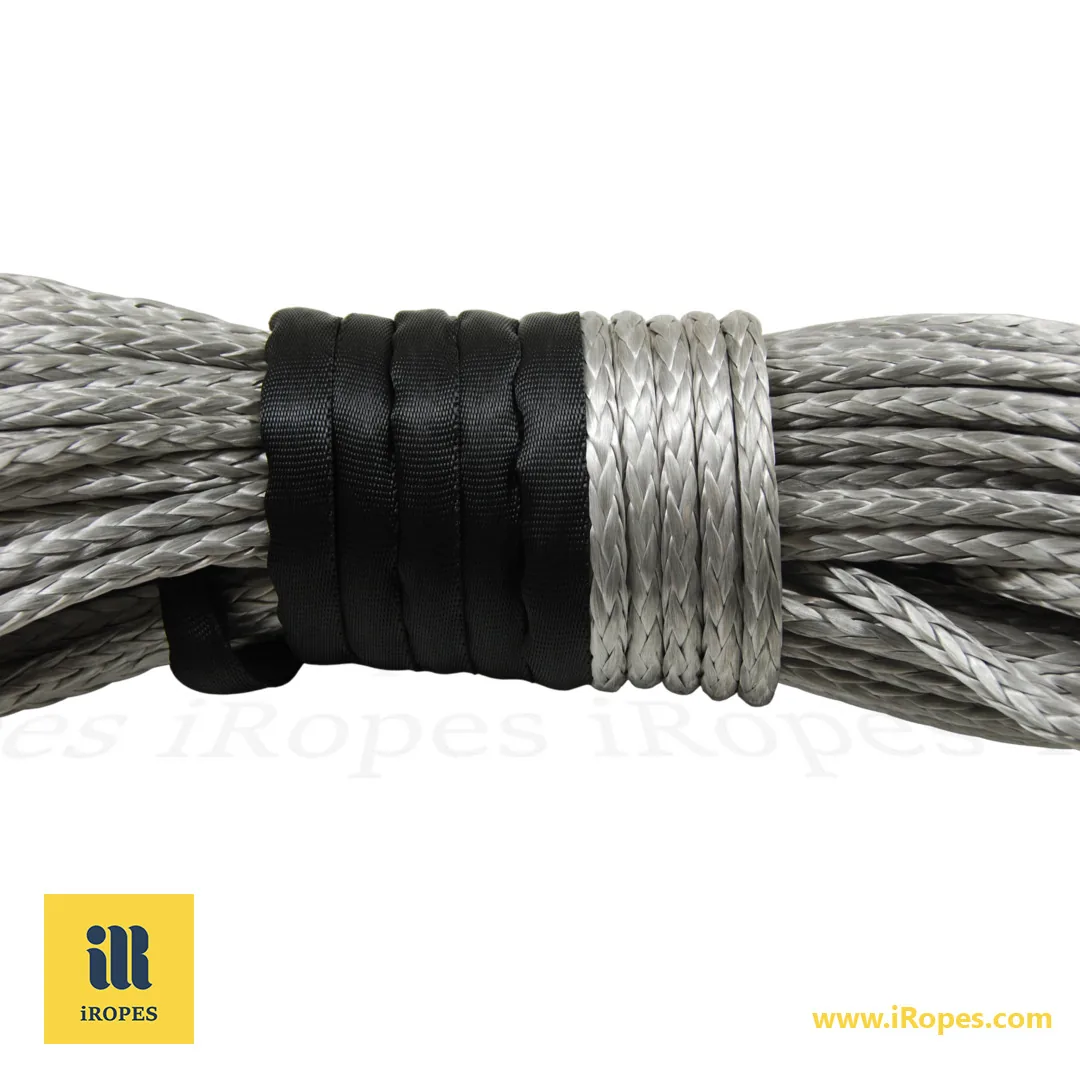
1/4‑inch 50 ft synthetic winch rope delivers up to 9,500 lb breaking strength while being up to 85 % lighter than steel cable.
≈ 8 min read – What you’ll gain
- ✓ Reduce winch‑driven weight by 85 %, improving vehicle handling and fuel efficiency.
- ✓ Harness 9,500 lb of pull in a compact 1/4‑inch line—about 30 % stronger than comparable steel.
- ✓ Perform a DIY splice in under 15 minutes and recover up to 95 % of original strength.
- ✓ Order fully custom‑branded rope from iRopes with ISO 9001 quality and IP protection, with reliable lead times.
You probably assume a frayed 50 ft synthetic winch rope is a lost cause and reach for a brand‑new coil, but the reality is that a quick splice can recover up to 95 % of its original 9,500 lb strength—saving you time and the cost of a replacement. In the sections that follow, we’ll reveal the exact five‑step splice method, the sizing math for a 12 k lb winch, and how iRopes can craft a custom rope that fits your rig perfectly.
50 ft synthetic winch rope – Definition, specs and hot‑sale details

When you first hear the term “synthetic winch rope”, it can sound a little futuristic, but the concept is straightforward: a rope built from ultra‑high‑molecular‑weight polyethylene (UHMWPE) fibres, most often marketed under the Dyneema brand. Those fibres are spun into a 12‑strand construction that gives the line a smooth, low‑stretch feel while keeping the weight down dramatically compared with steel cable.
The 1/4‑inch diameter version that spans 50 ft has become the hot‑sale size for many ATV owners. It offers a breaking strength of roughly 9,500 lb, which is ample for mid‑range winches that sit in the 5–8 k lb class. Because the rope is light, it sits comfortably on the winch drum without adding the bulk that steel cable would, and it rolls out with very little friction.
- Material - UHMWPE/Dyneema fibres give a tensile strength up to 30 % greater than steel of the same diameter.
- Diameter & length - 1/4‑inch thickness, 50 ft long, fitting most standard ATV winches.
- Breaking strength - Rated at 9,500 lb, providing a comfortable safety margin for typical off‑road recovery tasks.
Among the strongest options for winch lines is the Dyneema SK75 grade. SK75 fibres are engineered to deliver very high tensile strength, out‑performing the older SK60 variant by around 15 %. In practical terms, a rope made from SK75 can handle the same load with a thinner profile, which translates into even lighter weight and easier handling on the trail.
“Dyneema SK75 delivers a superior strength‑to‑weight ratio for winch lines and outperforms the older SK60 grade by roughly 15 %.” – Master Pull technical guide
Understanding these fundamentals equips you to pick the right line for your rig. With the definition, material benefits, and the standout performance of SK75 clear, the next step is to keep that rope in top condition – a topic we’ll explore in the following section on repair and maintenance.
Synthetic winch rope repair – DIY steps and maintenance
Now that you know the specs of a 50 ft synthetic winch rope, the next logical step is keeping it in peak condition. Whether you’ve noticed a slight fray after a muddy pull or a clean, localised cut, a well‑executed synthetic winch rope repair can restore most lines to near‑original strength and save you the cost of a full replacement.

Before you reach for a new coil, evaluate the damage. Minor abrasions, a few frayed strands, or a short, clean cut are generally repairable. If the core is compromised, the breaking strength drops dramatically and replacement is the safer choice. As a guide, if the visible damage affects less than about 10 % of the rope’s cross‑section, a splice will usually return the line to service.
- Inspect the rope thoroughly, marking any compromised fibres.
- Trim away loose or broken strands with sharp scissors, keeping the cut clean.
- Insert the splice sleeve from the kit, aligning the fibres as instructed.
- Slide a heat‑shrink tube over the splice and apply gentle heat until it seals snugly.
- Conduct a controlled pre‑tension test on the winch; gradually load the rope before returning it to full service.
Answering the common query “How do I repair a synthetic winch rope?” – follow the five‑step routine above, then pre‑tension the line under a controlled load. Aim to restore near‑original performance; only a calibrated load test can verify exact strength recovery.
Safety reminder
Always wear cut‑resistant gloves and use a safety thimble on the working end. After splicing, load the rope gradually up to around half the winch’s rated capacity before full‑scale use. This practice helps uncover hidden weaknesses before they become a problem.
Beyond the repair itself, regular maintenance prolongs life. Wipe the rope with a damp cloth after each use, dry it thoroughly, and store it in a shaded, moisture‑free container. Applying a UV‑resistant spray every few months guards the fibres against sun‑induced degradation. With a clean, well‑kept line, you’ll notice smoother runs and fewer unexpected failures.
Having mastered the repair process, the next consideration is selecting the correct diameter when you move up to higher‑capacity winches, such as those rated for 12 k lb pulls. The sizing guide in the following section will show you how to match rope size to winch power safely.
12000 synthetic winch rope – Sizing for high‑capacity winches
Now that you’ve mastered the repair steps, the next logical step is making sure the line you choose can actually handle the force your winch delivers. Pairing a 12 k lb winch with the right diameter synthetic rope isn’t guesswork – it’s a simple check that keeps you safe on the trail.
Manufacturers commonly align pull rating with rope diameter. In practice, a 5/16″ line will sustain roughly 12 k lb before it approaches its breaking point, while stepping up to 3/8″ gives you a comfortable ≈ 20 k lb headroom, and 7/16″ pushes the limit to around 26 k lb. This relationship is the backbone of the sizing guide you’ll see below.

Diameter
Rope thickness options
5/16″
≈12 k lb breaking strength – ideal for 12 k lb winches.
3/8″
≈20 k lb – gives a generous safety margin for heavier‑duty work.
7/16″
≈26 k lb – reserved for high‑capacity, heavy‑duty rigs.
Winch rating
Compatible pull capacity
≈12 k lb
Matches a 5/16″ synthetic rope – strong yet lightweight.
≈20 k lb
Pairs with a 3/8″ line for added confidence on steep climbs.
≈26 k lb
Designed for the largest synthetic ropes used on heavy‑duty rigs.
If you are hunting for a 12000 synthetic winch rope to pair with a 12 k lb winch, the 5/16″ diameter is the sweet spot. It delivers enough breaking strength to meet the winch’s rating while preserving the lightweight advantage that makes synthetic rope so appealing. Opting for a larger diameter, such as 3/8″, isn’t a bad idea either – it simply adds an extra safety buffer at the cost of a little added mass.
For step‑by‑step installation tips, see our guide on installing 4500 lb and 12 k lb synthetic winch ropes.
Answering the common query “What size synthetic winch rope for a 12 k lb winch?” – choose a rope whose breaking strength meets or exceeds the winch’s maximum pull. In practice, a 5/16″ line (≈ 12 k lb) suits most 12 k lb winches, while a 3/8″ line (≈ 20 k lb) provides an even larger margin.
When selecting rope, verify that your winch’s drum can accommodate the rope’s diameter and that there is sufficient side clearance to avoid binding.
Finally, keep spool compatibility in mind: some winches have narrow drums that struggle with a 7/16″ line, whereas a 5/16″ rope slides on effortlessly. Pair the diameter with a sensible safety margin, and you’ll have a dependable setup. You may also want to review our winch cable clamp and fid rope guide for optimal hardware selection. With those checks complete, you’re ready to explore where to purchase or custom‑order the perfect line for your rig.
Custom ordering and buying guide
When it comes to sourcing a 50 ft synthetic winch rope, you have two clear pathways. Online retailers typically list a handful of standard lengths and colours at fixed prices – convenient, but limited in branding or performance tweaks. Discover the best synthetic winch line for high‑performance applications, or opt for direct OEM/ODM ordering with iRopes, which lets you specify exact diameter, length, colour, UV‑coating, reflective strands, and even custom‑printed packaging, all backed by ISO 9001 quality control and full IP protection. iRopes can supply non‑branded or customer‑branded packaging (bags, colour boxes, or cartons) and ship pallets directly to your location worldwide.

Customisation Features
Choose colour, add your brand’s logo, apply UV‑protective coating, or incorporate reflective strands for night‑time visibility – all on a single 50 ft coil.
Pros
Lightweight – reduces vehicle load by up to 85 % compared with steel cable.
High strength‑to‑weight ratio – delivers 30 % more tensile strength per diameter.
Cons
Higher upfront cost – synthetic lines cost more than comparable steel cables.
UV and chemical sensitivity – prolonged sun exposure or harsh chemicals can degrade fibres over time.
Abrasion and heat – dragging over sharp edges or heat build‑up on the drum can shorten service life.
Maintenance – requires routine cleaning and drying to perform at its best.
Safety
When a synthetic rope fails, it exhibits far less dangerous recoil than steel, improving operator safety.
Maintenance
Regular cleaning and a periodic UV‑coat re‑application keep performance consistent for years.
Bottom line: if you value weight savings, easy handling and reduced snap‑back on failure, a synthetic winch rope is worth the extra dollars. If you’re on a tight budget or operate in an environment with intense UV exposure, the disadvantages outlined above may tip the scale toward a steel alternative. Either way, knowing the trade‑offs lets you choose the line that best matches your winch’s rating and your adventure style.
Need a custom winch rope solution?
You've learned that the 1/4‑inch 50 ft synthetic winch rope is the hot‑sale size for ATVs, delivering up to 9,500 lb breaking strength, how to perform synthetic winch rope repair, and which diameter matches a 12 k lb winch – including the 12000 synthetic winch rope option for higher capacity. With this knowledge you can keep your line performing, select the right size, and, if needed, have iRopes customise colour, UV‑coat or branding to suit your application.
For a personalised quote or further guidance, complete the form above and our rope specialists will tailor a solution just for you.