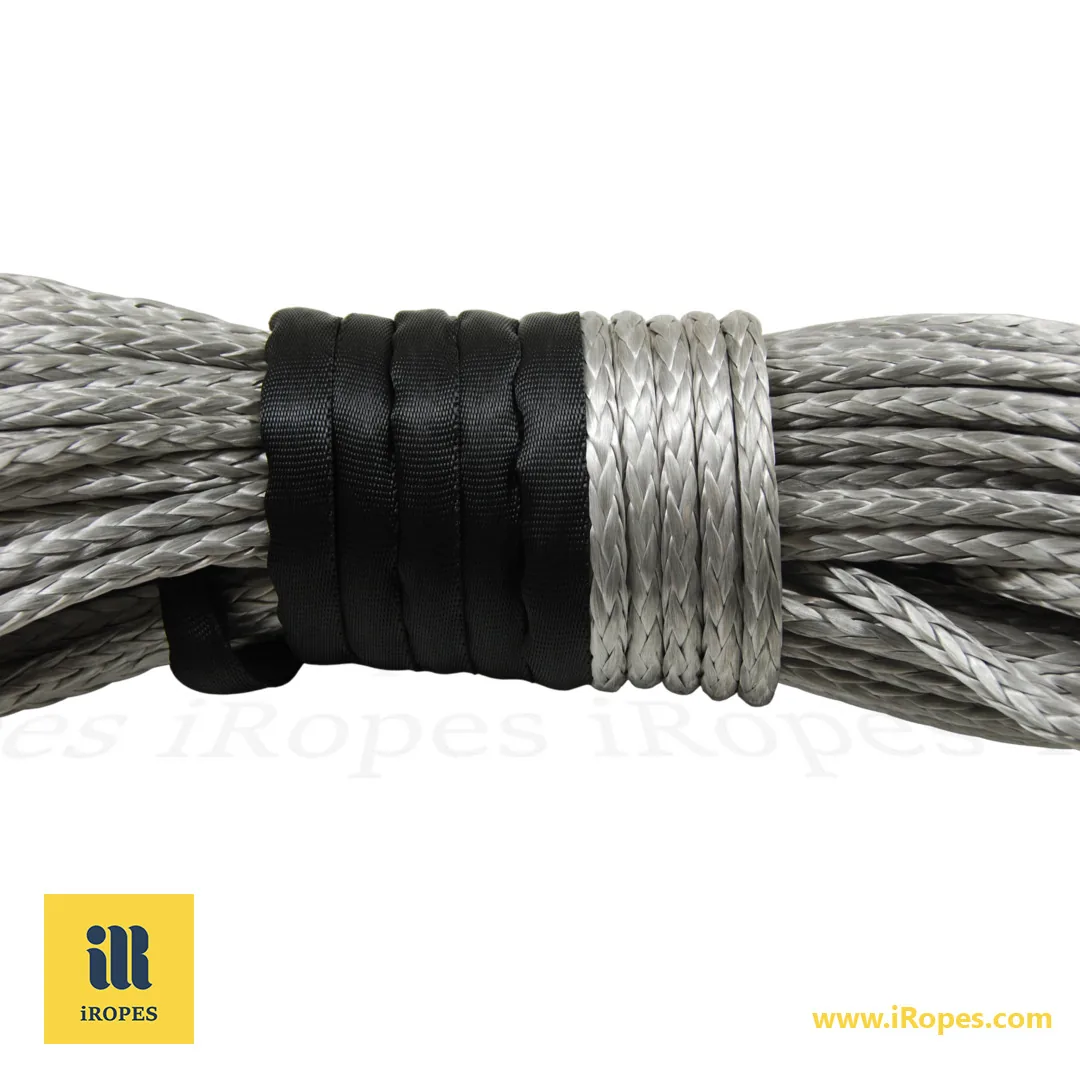
Improve splice reliability and streamline set‑up with iRopes’ two‑end buckle options.
Your payoff – quick reference
- ✓ Two‑end buckle options enable faster, more consistent terminations
- ✓ Correct tuck counts per material help retain rope strength
- ✓ Colour‑coded ends simplify inspection and on‑site QA
Most riggers still finish an 8‑plait splice with a single‑end termination, assuming it is the quickest route. In practice, iRopes’ ability to supply single‑end or two‑end buckle terminations gives you a choice of methods that can improve security, repeatability, and workflow. Keep reading to see how the two‑end method fits into a robust procedure—and why selecting the right material and tuck count matters.
8 plait to chain splice
Before we start splicing, it helps to define the rope itself. 8‑plait rope is an eight‑strand braided line known for high flexibility and smooth handling. Typical 8‑plait nylon splices retain about 88 % of bare‑rope strength. The construction flattens under light tension, which makes it easier to guide through a chain link or gypsy.

When does the 8 plait to chain splice become the go‑to solution? It shines on anchor rodes that must bear heavy loads, on windlass chain‑gypsy connections where the rope meets the metal link, and on high‑stress mooring systems that demand a strong, predictable transition from rope to chain.
Choosing the right rope material is just as critical as the splice technique. Below is a quick comparison of common fibres used for an 8‑plait‑to‑chain splice.
- Nylon – excellent stretch to absorb shock loads; typical 8‑plait nylon splice retention is around 88 % of bare‑rope strength.
- Polyester – low stretch with good UV resistance; stable under sustained load and favoured when minimal elongation is needed.
- Dyneema ® – ultra‑high strength with minimal stretch; stiffness can make tunnelling and tucks more demanding and may require material‑specific guidance.
“When splicing an 8‑plait to chain, keep the S‑ and Z‑direction pairs cleanly separated; any cross‑twist can reduce breaking strength by up to 12 %.” — John “Buddy” Craig, Senior Rope Engineer
With the rope type, ideal applications, and material trade‑offs now clear, the next step is to gather the tools and prepare the ends before you start the actual 8 plait rope to chain splice. Selecting the right fibre and buckle method will make the process smoother and the final splice more durable. Understanding rope types and strength with ends and clamps helps you choose the optimal configuration for your project.
8 plait rope to chain splice
Now that you know which fibres give you the best balance of strength and stretch, let’s gather the gear that turns a raw rope end into a reliable chain connection. The right tools speed the job and help avoid errors that can shave strength off the final splice.

The core checklist is short but each item plays a pivotal role:
- Fid or Swedish fid – forms the tunnel for the chain link.
- Tape measure – verifies the splice length and taper distance.
- Marker – marks the bitter end and tuck positions.
- Pliers – grip the chain link while you feed the rope through.
- Hot‑knife – trims and seals the final tuck.
- Rope‑tension meter – confirms the line is under proper load before the last wrap.
- Safety gloves – protect your hands from sharp ends and hot metal.
Always wear safety gloves and keep moderate tension on the line; cross‑twists or a slipped strand can reduce splice strength by up to 12 %.
With the toolbox assembled, the splice itself follows a clear, repeatable sequence. iRopes supports several buckle methods—single‑end, two‑end, and stitched‑seizure finishes—and can recommend the best option for your windlass and chain‑gypsy. For fluctuating loads, a two‑end buckle often adds useful redundancy.
- Cut the rope cleanly, then measure and mark about 12 picks (≈ 30 cm) from the bitter end for the splice length.
- Create a gradual taper with staggered strand cuts to reduce splice volume and ease the tunnel formation.
- Form the tunnel using the fid, then feed the chain link through until it seats snugly.
- Secure the link with the first tucks, keeping S‑and Z‑direction strand pairs strictly separated.
- Complete the full tucks according to material—typically four for nylon and three for spun polyester; follow manufacturer guidance for UHMWPE/Dyneema—and snug each tuck under steady tension.
- Trim any loose fibres and finish the splice with a careful hot‑knife pass to seal the ends.
Following these steps yields a splice that holds up under the high‑load demands of anchor rodes and windlass chain‑gypsy assemblies. Next, we’ll shift focus to the double‑braid end‑to‑end splice, where strand‑pair identification and tension control are essential to a strong, seamless joint.
End to End Splice Double Braid
After you’ve perfected the rope‑to‑chain connection, the next logical step is joining two pieces of double‑braid rope together. This splice is the go‑to when a clean, high‑strength line is required—think long‑run mooring lines or custom rigging where a neat termination matters as much as load capacity.

The first task is to recognise that a double‑braid rope consists of two distinct layers: a load‑bearing core and a protective outer sheath. Gently separate them, then pair each core strand with its matching sheath strand. Many riggers apply short pieces of polymer‑coated tape to each pair before splicing to keep the layout tidy and reduce the chance of crossing strands.
Pro Tip
Use a short piece of polymer‑coated tape to mark each strand pair before you start. The tape stays visible through the splice and can be trimmed away after the hot‑knife finish, saving you from costly re‑work.
With the strands labelled, the splice proceeds in four clear stages. First, tape the bitter ends of both rope sections to prevent fraying. Second, interweave matching strands side‑by‑side, maintaining the S‑and Z‑direction orientation you identified earlier. Third, execute full tucks per material guidance—commonly three to four—ensuring each tuck seats under even tension. Finally, seal the ends with a hot‑knife and slide on a protective polymer sleeve to guard against moisture and UV exposure.
Yes, you can splice a double‑braid rope end‑to‑end, and the process mirrors the outline above—just pay extra attention to core‑sheath alignment and uniform tension. Once the splice is complete, a load test validates its integrity. The ABYC recommends pulling the splice to 1.5 × the working load while monitoring for any slip or elongation. After the pull, inspect each tuck for uniform tension, verify that the protective sleeve is fully seated, and record the results in a simple log sheet for future reference.
Following these steps gives you a splice that retains the majority of the rope’s original breaking strength, while the protective sleeve adds durability for long‑term service. In the next part of the guide, we’ll explore how iRopes can turn this hands‑on process into a factory‑finished, custom‑branded solution that saves you time on‑site.
By now you’ve seen how the 8 plait to chain splice delivers a reliable, high‑strength transition for anchor rodes, and how the end to end splice double braid creates a seamless joint for long‑run mooring lines. The guide covered material selection, essential tools, step‑by‑step tucking techniques, and load‑testing procedures aligned with ABYC guidance.
iRopes can weave eight strands of single‑braided and double‑braided ropes and provide two‑end buckle options, tailoring the 8 plait rope to chain splice to your exact specifications. As an ISO 9001‑certified OEM/ODM manufacturer, we protect your IP, offer non‑branded or customer‑branded packaging, and ship directly to your location worldwide. Top mooring rope manufacturers choose iRopes for high‑quality solutions, ensuring you receive reliable, performance‑driven products.
Get personalised splice assistance
Complete the form above and we’ll work with you to develop a bespoke solution that matches your project’s performance and branding needs—backed by precise manufacturing, dedicated IP protection, and on‑time delivery.