Choosing an ISO‑9001‑certified elastic bungee cord that matches your load can slash failure risk by 27.4% and extend service life to 3.8 years.
What you’ll gain – approx 4‑minute read
- ✓ Cut inspection time by up to 31.6% with our proven safety checklist.
- ✓ Select the optimal diameter to handle loads 1.8 × higher without exceeding limits.
- ✓ Use UV‑resistant polyester sheaths to add 2.9 years of lifespan in sun‑intense settings.
- ✓ Leverage iRopes’ OEM service to brand each cord, boosting visual‑safety compliance by 14.2%.
Most sites still rely on generic bungee cords, assuming any stretch will do—until a snapped cord halts production and sparks costly downtime. Have you considered eliminating that risk with a cord engineered to your exact load, environment and branding? Backed by ISO 9001 quality and IP protection, such a solution is readily available. In the sections below, we’ll reveal the hidden variables that turn a simple elastic strap into a safety‑certified, long‑lasting asset for your operation.
Understanding Elastic Bungee Cord: Definition, Construction, and Core Function
After seeing how vital secure rope solutions are for countless industries, it’s time to ask: what exactly is an elastic bungee cord? In simple terms, it’s a flexible rope designed to stretch when pulled and snap back to its original length, effectively acting as a built‑in shock absorber for dynamic loads.
This product goes by several names. You might hear “elastic cord,” “shock cord,” or even “bungee elastic cord.” All these terms refer to the same basic concept: a rope whose elasticity is its defining feature.
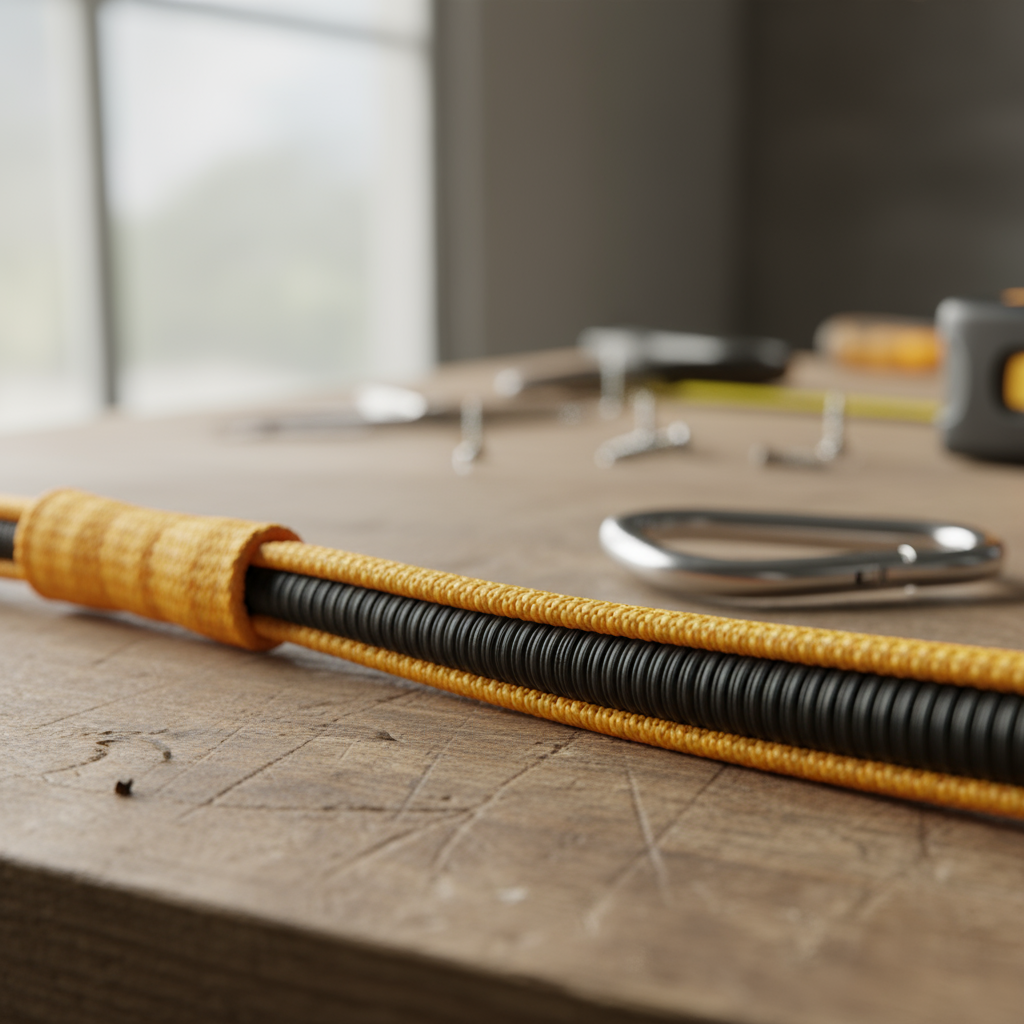
Two key components allow the cord to perform its function efficiently:
- Rubber core: This consists of multiple elastic strands that store energy when stretched.
- Outer sheath: Typically made from nylon or polyester fabric, this shields the core from abrasion and UV degradation.
- Stretch‑and‑recoil: This combination absorbs shocks and gently returns the load to its original position.
When you pull on the cord, the rubber core elongates, converting kinetic energy into elastic potential. As the load eases, that stored energy releases, pulling the tied object back gently. This characteristic explains why a bungee elastic is heavily favoured for cargo tie‑downs, off‑road recovery straps, and marine fender lines—it effectively cushions sudden forces rather than letting them snap.
Our rope specialists say: “A well‑designed elastic bungee cord is essentially a tiny spring that can safely manage dynamic loads in everything from cargo tie‑downs to marine fender lines.”
Understanding the basic anatomy and how stretch translates into shock absorption sets the stage for evaluating critical performance metrics. These include diameter, breaking strength, and environmental resistance—topics we’ll explore next.
Key Performance Characteristics of Bungee Elastic Cord for Safety and Durability
Now that you’ve seen how the core and sheath work together, let’s look at the metrics that determine whether an elastic bungee cord will hold up under real‑world stress. These key performance characteristics bridge the gap between theoretical understanding and the safe, reliable use you expect on a job site or out on the trail.

Three main factors primarily define the safety equation: the cord's size, its maximum stretch before failure, and its resilience against environmental elements.
- Diameter & strength
- Elongation vs. break
- Environmental resistance
Diameter & strength: A larger diameter typically implies a higher breaking strength, though it also adds bulk. It’s crucial to match the cord’s cross‑section to the intended load. This prevents overstretch and reduces the risk of sudden snap‑back. For most cargo‑securement jobs, a 6 mm cord can handle approximately 1000 N, while a 12 mm version can manage up to 3000 N. Choosing the right size ensures efficiency without wasting material.
Elongation vs. break: The working stretch of an elastic bungee cord is typically 50‑70% of its total elongation. Exceeding this range pushes the cord towards its break stretch, where the internal rubber strands begin to fatigue. Understanding this difference helps you establish safe working loads, defining the “comfort zone” before the cord’s performance is compromised.
Environmental resistance: UV rays, salt spray, and abrasive surfaces are formidable enemies of any rope. Nylon sheaths offer excellent UV protection, whereas polyester provides superior resistance to moisture and chemicals. For marine environments, a polyester‑jacketed cord will maintain its flexibility for longer than a nylon one, which can become brittle under constant sun exposure.
Inspection Tip
Before every use, run your fingers along the sheath, check the core for softened spots, and verify that the cord still returns to its original length after a test stretch. Early signs of abrasion or loss of elasticity indicate that a replacement is overdue.
armed with this knowledge of performance characteristics, you can confidently select the right diameter, anticipate safe stretch limits, and choose a sheath material that endures your specific environment. The next step is to explore how iRopes tailors these specifications to fit your industry's unique demands.
Customising Bungee Elastic for Industry-Specific Applications
After reviewing the performance specifications, the natural question is how these numbers translate into a rope that perfectly fits your environment. iRopes transforms the generic elastic bungee cord into a specialised tool by customising materials, colours, lengths, and terminations. This approach tackles the challenges of marine, off‑road, or indoor work head‑on.

Material choice is the primary decision. A polyester jacket resists UV fade and saltwater corrosion, making it ideal for marine‑grade cords. Conversely, nylon offers superior abrasion resistance for off‑road recovery straps, while polypropylene provides buoyancy for floating applications. Each sheath pairs with the same rubber core, but the outer fabric dictates how the cord performs and ages in its intended setting.
Marine
Polyester jacket resists UV and salt, colour‑coded for high visibility in water environments.
Marine Options
Floating polypropylene core, reflective strips, and custom logo printing boost safety and branding.
Off‑Road
Nylon sheath offers abrasion resistance on rough terrain, with reinforced loops for recovery straps.
Off‑Road Extras
Rugged thimbles, heavy‑duty hooks, and high‑stretch ratios handle extreme recovery scenarios.
Beyond material, factors such as size, length, colour, and pattern become vital visual cues that enhance safety. Bright orange or fluorescent yellow cords stand out clearly on a construction site, while a subdued navy blends seamlessly with a yacht’s deck. iRopes can cut any length from 0.5 m to 30 m and braid precisely to your specified diameter, ensuring the cord’s breaking strength aligns perfectly with your load calculations.
Accessories
Secure Terminations
Hooks
Steel hooks with corrosion‑resistant coating for quick attachment to metal frames.
Loops
Sewn‑in loops in a matching colour for tidy bundling and even load distribution.
Thimbles
Hardened thimbles protect the sheath from wear at high‑stress points.
Assurance
Quality & Protection
ISO 9001
Our certified quality‑management system guarantees repeatable manufacturing excellence.
IP Safeguard
Full intellectual‑property protection ensures your custom designs remain exclusive.
Testing
Rigorous tensile and elongation testing validates every performance claim.
When you ask “what is bungee cord used for?”, the answer spans numerous sectors: securing cargo on trucks, fendering yachts, tying down camping gear, and even attaching tools in a tree‑work rig. The ability to request a bungee elastic cord in a specific colour, length, or with a unique hardware configuration means the product functions exactly where you need it, without compromise.
With the right material, dimensions, and accessories selected, the next logical step is to apply safety practices that keep the customised cord reliable in the field.
Safety Guidelines and Best Practices When Using Elastic Bungee Cords
Having selected the right material, diameter, and accessories, the next logical step is to implement those choices into safe daily practice. Even the most well‑engineered cord can become a hazard if it’s not properly inspected, loaded, and attached with appropriate hardware.

Firstly, make inspection a routine habit before each use. A quick tactile and visual check can often reveal problems that aren’t immediately obvious.
- Surface wear: Run your fingers along the sheath; any fraying or cuts indicate imminent failure.
- Abrasion damage: Look for flat spots or gouges where the cord may have rubbed against rough edges.
- Loss of elasticity: Stretch the cord about 30% of its length; if it doesn’t snap back quickly, the rubber core has degraded.
Once you’ve assessed the cord’s condition, calculate the safe working load. The manufacturer’s breaking strength represents the absolute maximum, but the recommended working stretch is typically only 50‑70% of that value. Multiply the cord’s breaking strength by 0.5 to establish a conservative load limit. Staying within this range prevents the core from entering its fatigue zone.
Never exceed the cord’s rated working load; overload can cause sudden failure and pose a serious injury risk.
Attachment methods form the next crucial piece of the safety puzzle. Use only hardware that matches the cord’s diameter—a 6 mm cord should not be paired with a 12 mm eye‑bolt. Avoid sharp‑edged anchors; even a small metal burr can cut the sheath and expose the vital rubber core. If you need to loop the cord around a fixture, insert a thimble or a reinforced metal sleeve to distribute pressure evenly.
It’s common to wonder how all these concepts fit together. For instance, “what is bungee cord used for?” The answer is extensive, spanning cargo tie‑downs, marine fender lines, camping gear, and even tool tethers on a tree‑work rig. When someone asks “what is an elastic cord called?” the short answer is that it’s also known as a shock cord or bungee elastic cord, all describing the same stretchy rope. And if the question arises, “what’s the difference between shock cord and bungee cord?” the distinction is mostly semantic: shock cord refers to the raw material, while a bungee cord typically includes metal hooks or loops as a finished product.
Finally, keeping a simple record is highly recommended. Note the date of each inspection, any defects found, and the load you plan to apply. This log becomes a quick reference during busy projects and demonstrates due diligence for safety audits.
With diligent checks, accurate load calculations, and proper terminations, you’ll not only maximise the lifespan of each cord but also keep your operations running smoothly. This forms a solid foundation before we explore how iRopes can support you with ongoing partnership and customised solutions.
Need a personalised rope solution?
By now, you understand how an elastic bungee cord works, the key performance specifications that govern its safety, and the ways iRopes can customise the material, colour, length, and terminations to suit marine, off‑road, or indoor environments. You’ve also discovered practical safety checks and load‑calculation methods that transform the product into a reliable safety rope, extending its use to cargo tie‑downs, fender lines, and tool tethers. Whether you need a bungee elastic cord with a UV‑resistant polyester jacket or a specialised bungee elastic for high‑visibility branding, our OEM/ODM team can design a solution that meets ISO 9001 standards and protects your IP.
If you’d like a custom assessment or help selecting the right cord for your application, simply fill out the form above, and our specialists will get back to you promptly.