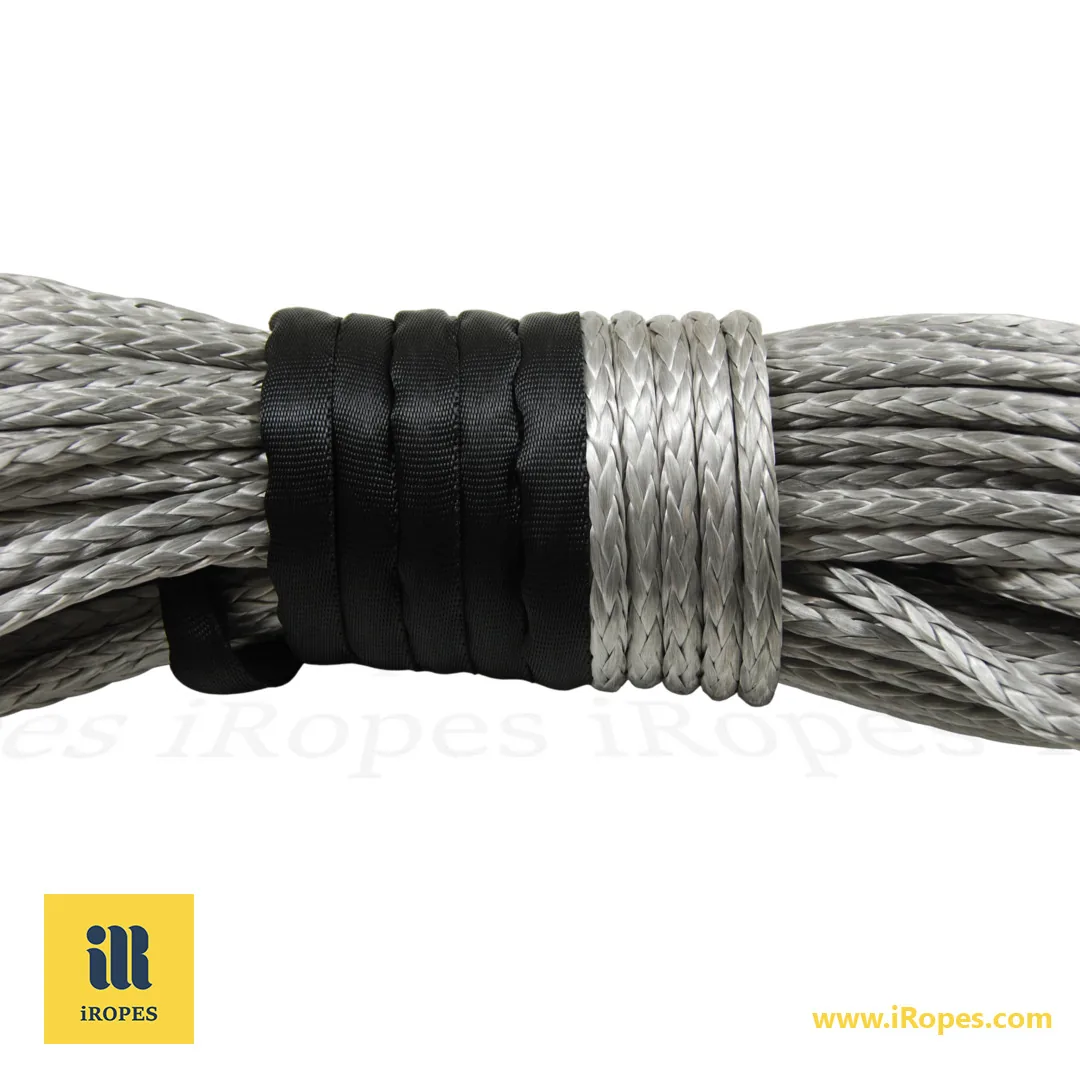
Unlock 85-100% of Kuraray Vectran's 3.2 GPa tensile strength for 24-strand ropes by mastering eye splicing—far surpassing knots' 50-60% retention. This ensures critical safety in yachting or defence scenarios.
Discover in a 12-Minute Read: ✓ Gain Unmatched Rope Performance
- ✓ Master Vectran's low 0.2% creep after 100 hours, solving elongation issues in high-load applications like off-road recovery.
- ✓ Acquire step-by-step splicing skills with 5-7 tucks to avoid 10-15% strength loss from common errors, building your hands-on expertise.
- ✓ Compare Vectran vs poly prop for 2x cost efficiency in light marine tasks, informing budget-smart selections for camping or tree work.
- ✓ Explore iRopes' OEM customisation, blending fibres for ISO 9001-certified ropes tailored to your industry's exact needs.
You've probably relied on quick knots for rope terminations, assuming they hold firm under pressure. Yet, with 24-strand Kuraray Vectran, knots slash strength by half, risking catastrophic failure in storms or heavy pulls. Imagine if a precise splicing technique could preserve nearly all of that metal-like 3.2 GPa power, transforming your rigging from vulnerable to unbreakable. Dive deeper to uncover the hidden contrasts with poly prop rope and explore iRopes' bespoke solutions. Our offerings align perfectly with your demands, ensuring every strand delivers maximum reliability.
Decoding Kuraray Vectran: The High-Performance Fibre for Superior Strength and Stability
Imagine being on the open water, relying on a mooring line during a sudden storm—failure isn't an option. This is exactly where materials like Kuraray Vectran become essential, transforming our expectations for rope reliability. So, what exactly is Vectran rope? It's a specialised synthetic fibre developed by the Japanese company Kuraray, manufactured from liquid crystal polymer (LCP). This isn't just any plastic. LCP forms through a unique spinning process where long, rod-like molecules align tightly, granting it the compressive stiffness of metal yet retaining the lightweight flexibility of a polymer. Think of it as nature's way of packing serious power into something that feels almost delicate to the touch.
Having handled plenty of ropes over the years, I can attest that Kuraray Vectran's impressive properties truly set it apart, making it a preferred choice for demanding jobs. Let's simplify its key attributes: its tensile strength can reach up to 3.2 GPa, meaning it withstands immense pulling forces without stretching out of shape—a feat far beyond most fibres. Creep, that insidious elongation under constant load, remains minimal at just 0.2% after 100 hours. Consequently, your line won't noticeably sag over time like cheaper alternatives might. What about water absorption? It's practically zero, keeping weight consistent even after a drenching. Moreover, it shrugs off UV rays and abrasion, resisting cuts and fading that commonly plague outdoor gear. It also performs reliably across a vast temperature range, from -70°C in freezing climbs to +150°C in hot industrial environments. These aren't merely laboratory statistics; these are the characteristics that ensure ropes perform when pressure is at its peak.
- Tensile strength up to 3.2 GPa - Delivers metal-like pull resistance in a featherweight package, ideal for heavy lifts.
- Low creep at 0.2% over 100 hours - Maintains shape under prolonged tension, preventing surprises in long-term use.
- Near-zero water absorption - Stays light and strong, even when submerged for hours.
- Superior UV and abrasion resistance - Endures harsh sun and scraping without rapid wear.
- Temperature range -70°C to +150°C - Performs reliably from Arctic cold to desert heat.
The true advantage of Kuraray Vectran lies in its benefits, particularly its unbeatable strength-to-weight ratio. It can be up to 10 times lighter than steel for the same strength, which means easier handling without sacrificing safety. In extreme conditions, such as high winds or rugged terrain, its durability truly shines, significantly reducing the risk of snaps that could turn a routine task disastrous. Consider yachting professionals securing vessels against gales, or defence teams rigging secure lines in unpredictable operations; even industrial lifting in factories benefits from this reliability. At iRopes, our ISO 9001-certified team in China applies its hands-on expertise to craft these high-performance fibres into ropes that consistently exceed expectations. We've witnessed firsthand how blending Vectran enhances gear for heavy-duty applications like off-road recovery or tree work, where every strand is critical.

One essential piece of advice I always offer is to not just grab any rope; instead, pair the right fibre with intelligent techniques to truly harness its full potential. This approach leads us to how proper handling preserves all this inherent strength.
Mastering Splicing 24 Strand Rope: A Step-by-Step Guide for Vectran Applications
Building on the standout traits of Kuraray Vectran we've just covered, the real challenge lies in joining or terminating the rope without compromising its strength. I've spent countless hours in workshops observing splices hold firm where knots would inevitably fail. It's profoundly clear: proper splicing preserves nearly all that built-in power. In high-demand setups like yachting moorings or defence rigging, where every load is critical, a well-executed splice can determine the difference between smooth operations and a costly mishap. So, why opt for splicing over a quick knot? An eye splice, for instance, retains an impressive 85-100% of the rope's original strength, whereas knots often reduce it to a mere 50-60%. This reduction occurs because knots create stress points that fray under pressure. Consequently, splicing isn't just a technique but a safety essential for anyone working with demanding fibres.
Before beginning, gather the appropriate gear and prepare your workspace. Treat it as if you're setting up for a precise craft project where attention to detail truly pays off. You'll require a fid—a tool shaped like a long needle, specifically used to thread strands through the rope's core—a sharp splice knife for clean cuts, a marking pen to track positions, and, crucially, gloves and eye protection for safety. Measure out your working length using the '72 times diameter rule'; for example, with a 12mm rope, you'll need approximately 864mm of tail to ensure sufficient material for secure tucks. Always inspect the rope thoroughly beforehand, running your hands along its length to detect any damage. Clean it with fresh water to remove any dirt that could snag during the process. Attempting to splice without this preparation often leads to uneven pulls and frustration, so invest the time now to avoid rework later.
- Mark and form the eye: Measure twice the desired eye size plus the rope diameter, then use your pen to create reference points where the working end meets the standing part.
- Extract the core: For a 24-strand rope, carefully pull out the inner core using the fid, smoothing it as you go to prevent kinks.
- Insert and tuck: Feed the core through the standing part via the fid, then make 5-7 tucks— this is the optimal range for slick synthetics like Vectran, ensuring strands are locked without slippage.
- Taper the tail: Trim alternate strands progressively shorter to create a smooth, wedge-shaped end that slides easily.
- Milk and set: Run your hand firmly along the splice to smooth it out, then lightly load the rope to seat everything properly.
- Proof-load: Apply 50% of the expected working load briefly to test the integrity, observing for any shifts.
Now, a word on common pitfalls: I've observed that over-tightening during milking can crush fibres, instantly reducing strength by 10-15% immediately after the effort. Similarly, skipping a sufficient number of tucks will cause the splice to pull apart under real stress. For 24-strand constructions, stick to eye or bury splices for end terminations. The four core splice types—eye, bury, chain (for connecting ends), and short splice—each suit different needs, but always ensure they match your rope's construction. With practice, these steps can transform a coil of Kuraray Vectran into a seamless loop ready for action.

Mastering this technique for Vectran ropes establishes a strong foundation. However, considering it against more budget-friendly options like poly prop rope is vital for refining your choices for the task at hand.
Poly Prop Rope vs. Kuraray Vectran: Performance, Cost & Application Comparison
With those splicing basics now understood, particularly for detailed 24-strand constructions, it's time to set Kuraray Vectran against a more everyday workhorse: poly prop rope. I've handled my share of these lines over the years, from casual dock setups to quick camping rigs, and poly prop rope—short for polypropylene—stands out for its straightforward appeal. This thermoplastic fibre naturally floats on water, thanks to a density around 0.91 g/cm³, making it a natural choice for marine tasks where sinking isn't an option. Its tensile strength, typically hovering between 0.55 and 0.70 GPa, is solid enough for moderate pulls without breaking the bank, usually costing around US$6 per kilogram. Furthermore, it boasts inherent UV resistance that holds up reasonably well in sunlight, which is why you'll find it widely used, from boat bumpers to general tie-downs.
However, when directly comparing poly prop rope against Kuraray Vectran, the performance gaps become notably apparent and are crucial depending on your specific application. Poly prop can absorb up to 0.5% water, potentially adding weight over time and leading to softening under wet conditions, unlike Vectran's virtually dry-as-a-bone profile. Creep is another area where poly prop exhibits more stretch under sustained loads, whereas Vectran barely deforms. As for abrasion resistance, poly prop wears down more quickly against rough surfaces, such as barnacle-encrusted pilings. Its temperature range is also more restrictive, becoming brittle around -30°C. These characteristics make poly prop reliable for non-critical jobs but less forgiving in extreme conditions where Vectran excels due to its superior durability and stability.
Poly Prop Rope
Affordable Everyday Option
Buoyancy
Floats on water for safe marine use, eliminating submersion risks.
Low Cost
At around US$6/kg, it keeps projects budget-friendly for lighter duties.
UV Resistance
Inherent protection suits outdoor exposure without rapid fading.
Kuraray Vectran
Premium High-Load Performer
Minimal Creep
Remains firm under constant tension for reliable, long-haul holds.
Wide Temp Range
Handles -70°C to +150°C, offering extreme weather versatility.
Superior Abrasion
Resists cuts and wear in rough, high-friction environments.
This side-by-side comparison highlights the inherent trade-offs: poly prop rope excels in cost-efficiency for replaceable gear, offering a quick return on investment through its sheer affordability. In contrast, Vectran proves its worth over years with less frequent replacements and fewer failures in splices that hold more dependably under stress. So, when should you choose one over the other? Opt for poly prop in lighter-duty scenarios, such as floating dock lines or camping guy wires, where buoyancy and a low price simplify things. Reserve Kuraray Vectran for the heavier, more critical tasks—off-road pulls through stubborn mud, intricate tree work amidst challenging branches, or defence setups demanding an unyielding grip. The decision ultimately hinges on what truly holds more weight in your setup: your budget or the assurance of worry-free performance.

Understanding these distinct characteristics helps narrow your options. However, fine-tuning to exact specifications—like blending fibres or adding protective layers—often finalises the decision for peak results.
Choosing and Customising Ropes with iRopes: Tailored Solutions for Every Industry
Knowing the clear distinctions between poly prop rope and Kuraray Vectran helps narrow your options. Nevertheless, fine-tuning to exact specifications—such as blending fibres or applying protective layers—often seals the deal for optimal results. This is where thoughtful selection becomes paramount, weighing what your specific setup truly demands. Consider the environment your rope will encounter: will it face corrosive salty seas or dusty trails that can abrade surfaces? Load requirements are equally important—will it need to handle sudden jerks from a winch or sustain steady pulls over extended periods? Budget also plays a significant role, balancing upfront costs with the rope's expected lifespan. Furthermore, do not overlook buoyancy if you're working over water, where sinking could lead to significant trouble. These factors collectively guide your decision, whether you lean towards affordable poly prop rope for casual floats, robust Kuraray Vectran for high-stakes holds, or even a hybrid mix that intelligently combines the best attributes of both worlds.
At iRopes, we streamline customisation, transforming these choices into ropes that fit your needs precisely. Our team seamlessly blends materials; for instance, combining ultra-high-molecular-weight polyethylene (UHMWPE) with Kuraray Vectran to achieve enhanced snap-back for dynamic loads. You can adjust diameters, ranging from slender 6mm for intricate work to robust 24mm for heavy hauls. You can also select colours that align with your branding or improve visibility, and add crucial accessories like sturdy thimbles to prevent wear at attachment points. Protective coatings are also instrumental, shielding against chafe from rough edges or UV degradation in sunny climates. For added peace of mind, we rigorously safeguard your intellectual property from initial design sketch to final shipment, ensuring your innovative ideas remain exclusively yours. Our focus extends beyond merely providing rope; it's about engineering a solution that works harder and more effectively for you.
Off-Road Recovery
Hybrid blends pulled vehicles from mud without stretch, extending gear life in rugged terrains.
Defence Rigging
Vectran lines secured operations in variable weather, with zero failures during extended field tests.
These aren't merely theoretical concepts; we've implemented them in real-world scenarios with remarkable results. For instance, in yachting, a client equipped their moorings with Kuraray Vectran, which successfully endured back-to-back storms, holding firm where other ropes frayed—all thanks to our precision braiding in Chinese facilities. For tree work, our poly prop rope enabled crews to expedite setups, with lighter lines effortlessly traversing branches without snagging. Off-road teams consistently rely on our hybrid solutions for extracting rigs from challenging bogs, and defence organisations depend on Vectran's unyielding grip in operations that push limits. Each success story begins with a thorough discussion about specific needs and culminates in ropes that consistently perform beyond expectations.
Partnering with iRopes ensures that reliability at every single step. Our ISO 9001 certification guarantees that every coil adheres to global standards, from the initial twist to the final packaging. We facilitate timely global delivery, shipping pallets worldwide on schedule, ensuring no delays hinder your projects. We also offer flexible packaging options: generic or custom-branded with your own logo—an ideal solution for wholesale buyers in regions like the US or Europe aiming to fortify their brands. This hands-on approach transforms potential headaches into seamless operations, whether you're splicing 24 strand rope on-site or ordering ready-to-deploy custom lengths.
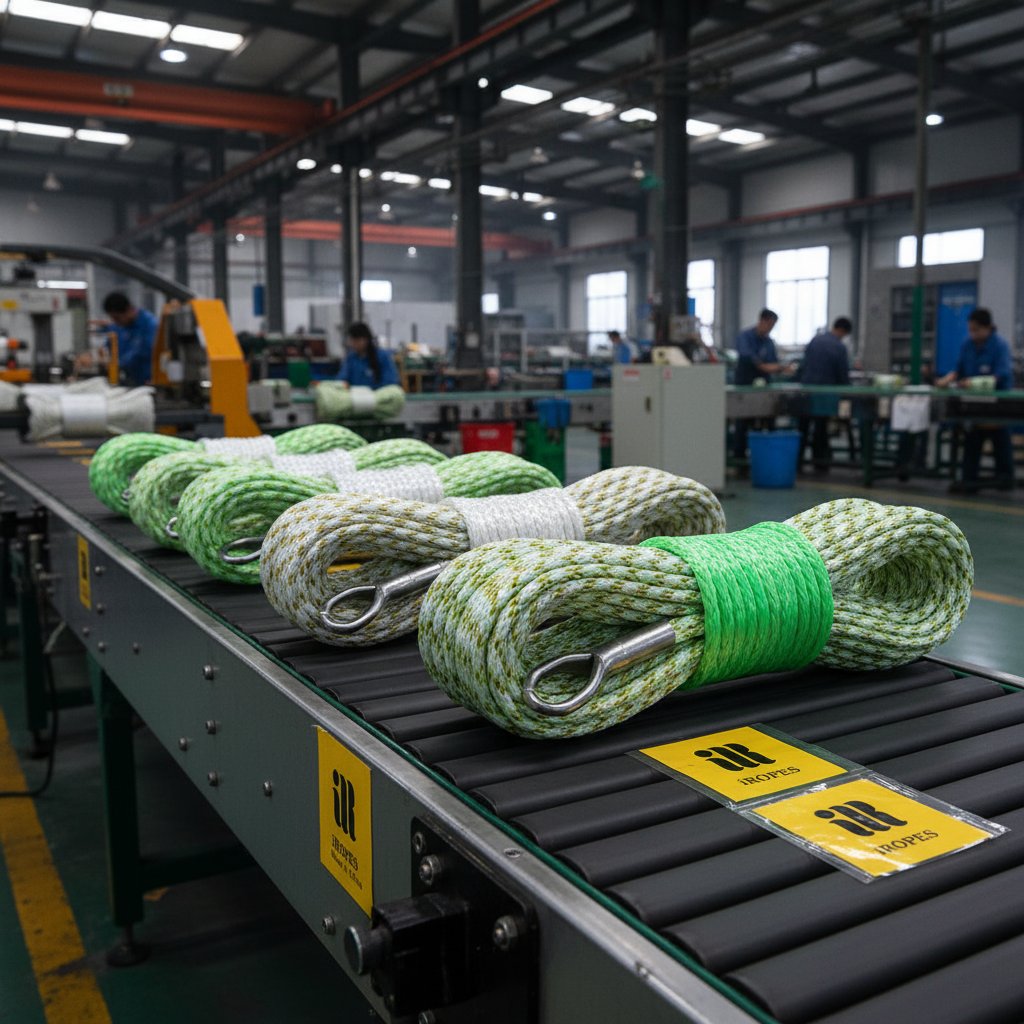
Bringing all these elements together, these custom touches elevate your rope selection into a strategic decision that yields significant benefits in the field, paving the way for insights you can immediately apply to your own operational setups.
Harnessing the exceptional strength and durability of Kuraray Vectran in 24-strand ropes can significantly enhance your projects in yachting, defence, and beyond. Simultaneously, effective splicing 24 strand rope techniques ensure up to 100% strength retention, leading to safer, more reliable performance. A comparison with poly prop rope clearly highlights Vectran's superior edge in extreme conditions, while polypropylene offers commendable affordability for lighter-duty applications. At iRopes, a leading rope maker in China, our expertise lies in blending high-performance fibres such as Kuraray Vectran, UHMWPE, Technora™, Kevlar™, polyamide, and polyester. We also offer a range of coating options, ensuring ropes that meet precise industry needs, backed by ISO 9001 quality and efficient global delivery. This commitment showcases the exceptional quality available from "Made in China" manufacturing.
These insights empower you to select and splice with newfound confidence. However, for bespoke hybrids or highly application-specific advice, our team is readily available to provide further guidance and detailed information on ropes for various applications.
Need Tailored Rope Solutions? Get Expert Guidance from iRopes
If you're ready to explore custom Kuraray Vectran integrations, refine your splicing 24 strand rope techniques, or evaluate poly prop rope alternatives for your operations, please complete the inquiry form above. Our specialists at iRopes, China's premier rope manufacturer, will provide personalised recommendations to optimise your setups.