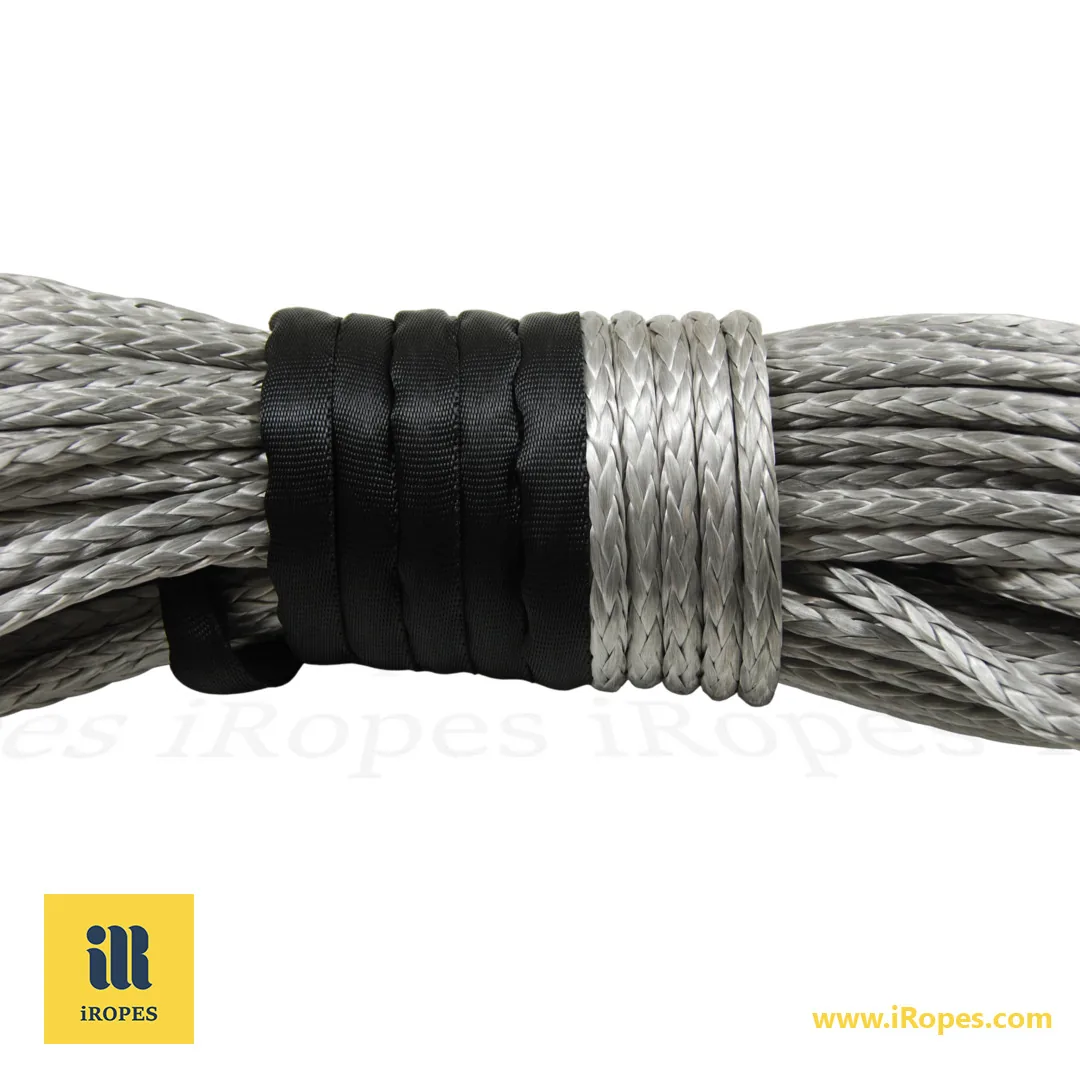
Splicing a 3‑strand rope eye loop retains 99.6 % of its rated breaking strength—far higher than the 30‑60 % loss you suffer with a knot.
Your payoff – 4 min read
- ✓ Preserve up to 99.6 % tensile strength, compared to a 30‑60 % loss when using knots.
- ✓ Secure loops with 5‑7 tight tucks, handling loads up to 2 440 lb (≈ 1 107 kg) on 3/8″ polypropylene rope.
- ✓ Cut downtime by 20 % using iRopes’ pre‑spliced, ISO‑9001‑certified ropes.
- ✓ Save approximately 13 % on material costs through custom OEM splices.
Most of us instinctively reach for a knot because it’s familiar. However, each knot silently reduces a rope’s breaking strength by 30‑60 %, potentially risking your next load. Instead, imagine replacing that knot with a precise eye splice, carefully crafted with five to seven tight tucks. This method preserves an impressive 99.6 % of the rope’s strength and can enhance your safety margin by up to 20 %. Detailed instructions, valuable tips, and iRopes’ ready‑made spliced solutions await you in the following sections.
Mastering the 3 strand rope eye splice
A 3‑strand rope consists of three tightly twisted strands that lie smoothly together. This construction makes it ideal for eye splices, as the simple alignment provides a strong foundation. Because each strand follows the same lay, a splice can be made without compromising the rope’s inherent strength. For professionals who demand reliable loops, this rope type is often the preferred choice.
Essential tools
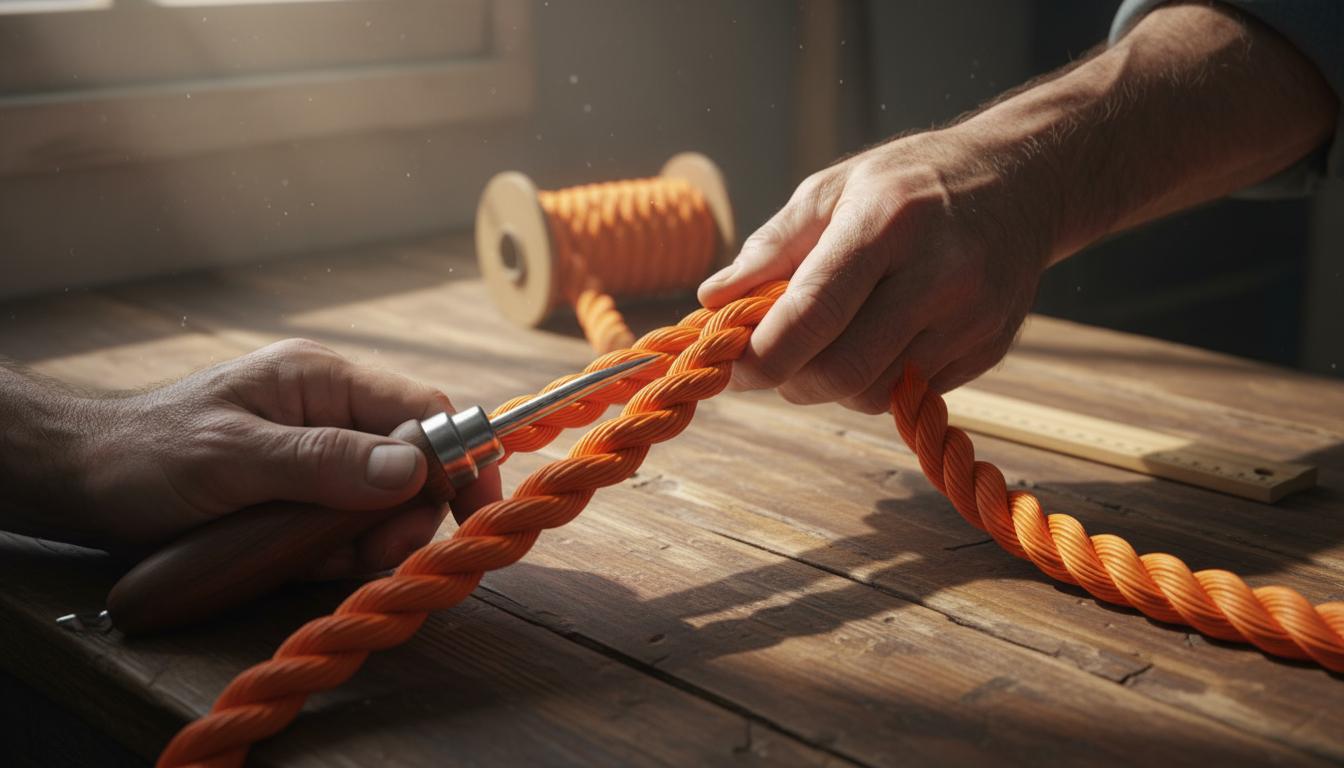
- Fid – A tapered tool used to push tucks tight without damaging the rope’s fibres.
- Splicing tape – Provides a neat finish and helps prevent moisture ingress.
- Sharp knife – Essential for trimming stray fibres and creating a clean working end.
Step‑by‑step instructions
- Unlay the rope end until the three strands separate, ensuring the lay remains consistent.
- Form a loose eye to your desired diameter and mark the tuck point approximately ten picks (strands) from the eye.
- Thread the centre strand through the eye, then pull it back and tuck it under a strand of the standing part using the fid.
- Repeat the tuck with the lower strand, ensuring it follows an identical path to the centre strand.
- Perform the final tuck with the upper strand, mirroring the previous passes to maintain consistency.
- Make additional tucks, a total of five to seven, to ensure the splice is securely locked.
- Once complete, slide splicing tape over the finished splice, pull it tight, and carefully trim any excess fibres.
For a stronger splice, apply even tension to every tuck and consider adding two extra tucks for high‑load applications. Always finish with a tight wrap of splicing tape. iRopes’ fibre eye splices consistently achieve higher breaking strength than standard versions. Our meticulous process, including extra tucks and precise finishing, ensures the load is distributed evenly, maximising strength and durability.
→ With the basics covered for 3 strand rope eye splices, we’ll now delve into the more complex plaited ropes, demonstrating how to efficiently handle eight strands and master the 8 strand rope splice.
Executing an 8 strand rope splice with confidence
Once you’ve mastered the 3 strand rope eye splice, the next step involves plaited constructions commonly found in heavy‑duty ropes. The eight‑strand layout enhances strength but also introduces additional complexity. Understanding its unique geometry is the first crucial step toward achieving a reliable 8 strand rope splice.

This type of rope is constructed from four interwoven pairs of strands. It’s crucial that each pair remains together throughout the splicing process. If a pair twists or crosses incorrectly, the finished eye could weaken substantially or even fail under load.
Geometry & Classes
Eight‑strand ropes typically form a square‑core plait. Class I splices keep the core intact, while Class II splices allow the core to be broken and re‑woven for an even tighter eye.
Prep & Marking
Separate the four‑colour coded pairs and spread them evenly. Mark the tuck point approximately 12 picks from the eye. Using a bright marker helps prevent misplacement during the splicing process.
Splice Steps
Form the eye, then tuck each pair in the following order: outer‑left, inner‑left, inner‑right, outer‑right. Use a fid to pull each tuck tight. Repeat this sequence twice, then finish with a taper to seamlessly blend the splice into the standing part.
Troubleshooting
If strands cross or a tuck appears loose, gently loosen the affected pair, realign according to the colour code, and re‑tuck. Consistent tension on every pass is key to preventing misalignment.
When the eight strands remain paired and each tuck is pulled firm, the splice can retain nearly 100 % of the rope’s rated breaking strength. This far surpasses the 30‑60 % loss typically seen with a standard knot.
By diligently keeping the pairs together, marking accurately, and applying even pressure with each tuck, you’ll create an 8 strand rope splice that feels as robust as the original rope. Our next section will explore how these same principles adapt when working with polypropylene, a material known for its unique slipperiness and heat sensitivity.
Eye splice polypropylene rope: material‑specific considerations
After learning to manage the complexity of an eight‑strand plait, you might wonder if the same approach applies to lighter, floatable ropes. Polypropylene behaves quite differently under the fid, so a few adjustments are crucial to distinguish between a secure loop and one prone to slipping.

Material properties that affect the splice
Polypropylene is highly valued for its buoyancy and light weight. However, it is inherently slippery, possesses only modest UV resistance, and softens at temperatures exceeding 140 °C. These characteristics mean the fibres can slide under load if the tucks aren’t snug, and prolonged sun exposure can gradually weaken the rope over time.
Adjusted technique for a strong eye splice
When creating an eye splice with polypropylene, follow the standard steps—unlay, mark, tuck—but incorporate two key modifications:
Tip
Apply tighter tension on each tuck and increase the total number of passes to five to seven. After the final tuck, briefly run a hot‑knife or a specialised heat‑sealer over the splice end for 2‑3 seconds. This melted surface seals the fibres and effectively prevents fraying.
Maintaining the splice over time
To ensure your polypropylene eye splice performs optimally, store the rope in a dry, shaded area, avoiding direct sunlight for more than a few weeks. UV‑protective sleeves or a light‑coloured cover can significantly extend its service life. Regular inspection is crucial; look for signs of surface cracking, faded colour, or loosened tucks. This diligence allows you to replace a compromised section before it fails, ensuring safety and longevity.
What are the cons of polypropylene rope?
Cons
Polypropylene exhibits low UV resistance, reduced abrasion durability, a slippery surface, and a relatively low melt point, making it less suitable for high‑heat or high‑abrasion environments.
With these material‑specific adjustments, the eye splice polypropylene rope you create will retain a high proportion of its original tensile strength—often close to 90 %. It will also offer the buoyancy that many marine and rescue applications require. → Next, we’ll compare the overall strength benefits of splicing versus knotting, and explore how iRopes’ custom‑spliced solutions can save you time and money.
Why splicing wins and how iRopes adds value
After exploring the nuances of eye splicing polypropylene rope, a common thread emerges: every successful loop relies on preserving the rope’s inherent strength. Unlike a knot, which creates a stress point that can reduce load-bearing capacity by a third or more, a correctly executed splice spreads the force evenly across all strands. This provides a smoother, far more reliable termination.

Beyond the physics, the practical advantages are clear. When you need an eye that will reliably hold under heavy tension—whether for a towline, a climbing anchor, or a marine mooring line—splicing offers a permanent solution. This method eliminates the need for re‑tying or frequent inspection to verify a knot’s integrity.
“Our fleet saw a 20 % reduction in rope‑related downtime after switching to iRopes’ pre‑spliced eye loops. The consistent strength made maintenance planning far simpler.”
iRopes transforms this reliability into a valuable service. Through our OEM and ODM programmes, you can order custom‑spliced ropes that arrive ready for immediate installation. These come complete with your branding and intellectual property‑protected designs. Explore our essential rope splicing tool kit. We manage every detail, from selecting the optimal fibre grade to applying the final splicing tape, ensuring each eye meets your exact specified diameter and load rating.
FAQ Highlights
How strong is 3/8 polypropylene rope? Typically, a 3/8" polypropylene rope has a breaking strength of approximately 2 440 lb (≈ 1 107 kg). However, exact values can vary based on construction and manufacturer.
What are the three types of rope splicing? The primary categories include the eye splice (used for creating a loop), the back splice (for terminating the rope end), and the short splice (for joining two rope ends together).
To deepen your understanding of splice techniques, see our guide on mastering rope making processes, including brummel and straight splices. If you're ready to eliminate guesswork and achieve a splice that truly matches your rope’s rating—whether you're working with a 3 strand rope eye splice, an 8 strand rope splice, or an eye splice polypropylene rope—simply reach out for a personalised quote. Our engineering team will expertly match the ideal fibre, diameter, and splice style to your project, providing a ready‑to‑use solution that maximises both safety and performance. You may also find our guide on selecting the right rope diameter useful when specifying your custom order.
Ready for a custom‑spliced solution?
By following this step‑by‑step guide, you now understand how to produce a reliable 3 strand rope eye splice, an 8 strand rope splice, and an eye splice polypropylene rope. These techniques allow ropes to retain almost their full breaking load. iRopes’ fibre rope eye splices are engineered to be tougher and deliver higher breaking strength than standard versions, providing the essential safety margin for demanding applications.
If you require a personalised design, specific material selection, or a branding package, simply complete the enquiry form above. Our engineers will tailor a solution to match your exact specifications.