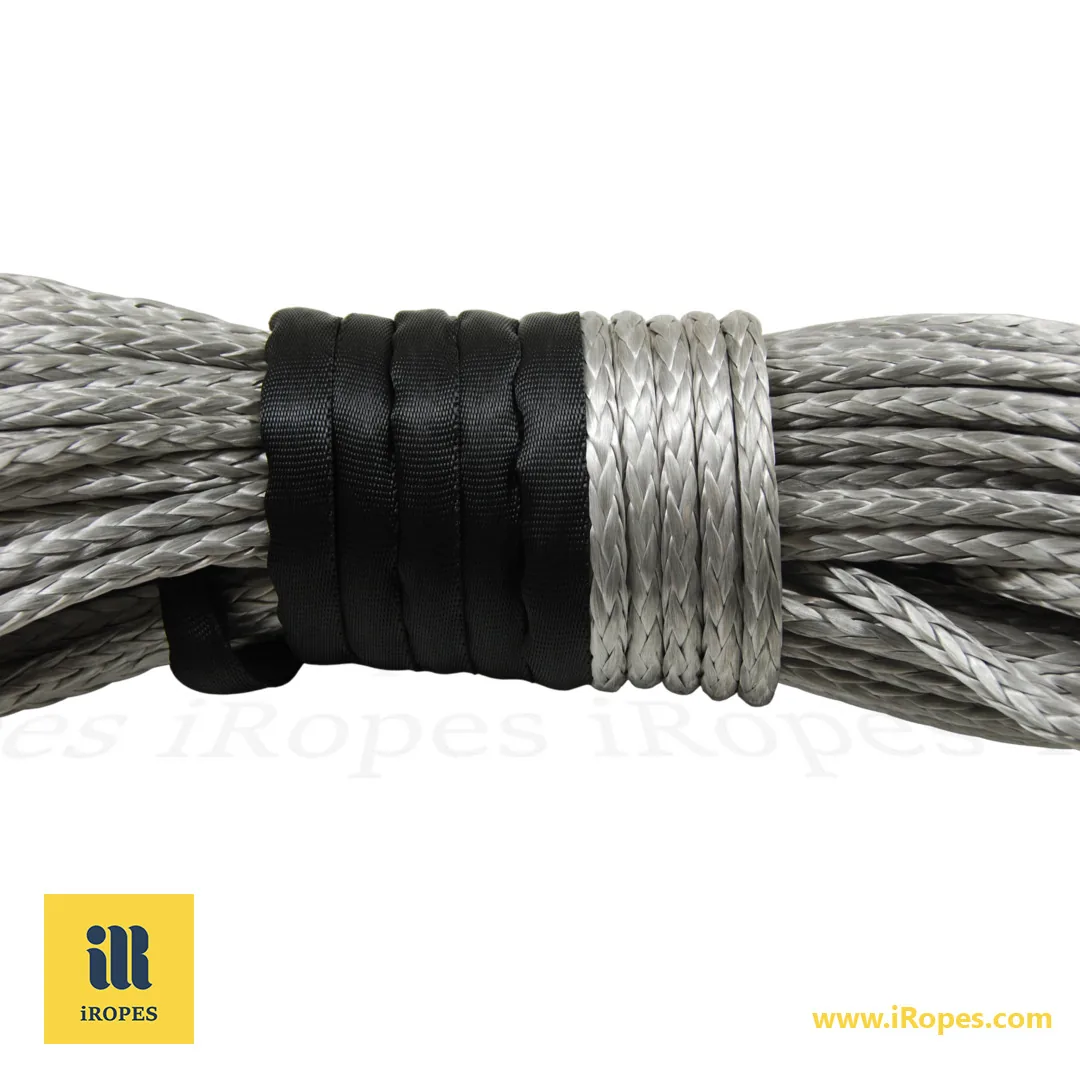
Double‑braid polyester rope limits halyard elongation to 5 % at 30 % load and retains 90 % of its strength after five years of UV exposure—the performance edge premium yachts demand ⚡
What you’ll master in 3 min
- ✓ Reducing halyard stretch to under 5 % at 30 % load means crisper sail trim.
- ✓ Keeping over 90 % tensile strength after five years of sun‑salt exposure leads to lower replacement costs.
- ✓ Customising colour, diameter, and accessories within ≤ 48 h lead‑time ensures brand‑consistent rigging.
- ✓ Securing IP‑protected OEM/ODM service guarantees your design remains exclusive.
Most skippers instinctively reach for nylon, believing its elasticity is the only safe choice. However, a high-quality double‑braid polyester line delivers up to 5 % less stretch and retains over 90 % of its strength even after years of harsh sun‑salt exposure. This provides the precise control you desire without constant re‑tensioning. Imagine reefing a mainsail that holds its shape perfectly, all while your rope outlasts the season and can even showcase your brand's colours. Keep reading to discover how iRopes transforms that vision into a fit‑for‑purpose solution, crafted specifically for the demanding world of yachting.
Understanding Double Braid Polyester Rope: Construction and Core Benefits
When examining a piece of double braid polyester rope, its clean, symmetrical weave is immediately apparent. This "braid‑on‑braid" design features a tightly woven polyester core, encased snugly within an outer sheath braided in the same direction. The core bears the majority of the load, while the sheath provides crucial protection against abrasion, UV exposure, and moisture. In essence, a double‑braided rope functions as a rope within a rope, with each layer contributing to both strength and durability without adding unnecessary bulk or stiffness.

Understanding this intricate construction helps clarify a common question: "What is double braided rope?" It refers to a rope engineered with two independent braids—an inner core and an outer sheath—that work in concert to deliver a product that is both exceptionally strong and remarkably flexible. Furthermore, this layered structure makes the rope highly spliceable. This means you can join ends seamlessly without bulky fittings, a feature highly valued by marine professionals who custom-tailor halyards or sheets for their yachts.
- Torque‑free handling: The balanced braid geometry prevents the rope from twisting under load, ensuring smooth, predictable operation on deck.
- Easy spliceability: The inner core can be eye‑spliced or loop‑spliced without compromising strength, saving valuable time during rigging adjustments.
- High tensile strength: Polyester’s inherent tenacity, combined with the double‑braid layout, results a rope that resists stretching even under significant loads.
The protective outer sheath shields the core, enabling the rope to maintain its peak performance even in corrosive salty air and under direct sunlight. This makes it a preferred choice for yacht owners seeking reliable halyards and sheets that require precise tension. Picture reefing a mainsail on a blustery afternoon: a torque‑free line allows you to pull the sail in effortlessly, without battling unwanted twists, while its low‑stretch characteristics ensure the sail's shape remains perfectly true.
Finally, the construction also plays a role in buoyancy and safety. While a standard polyester double braid does not float due to its density, its superior resistance to rot, mildew, and chemicals ensures it outlasts many alternatives in demanding marine environments. If buoyancy is a critical requirement, you can discuss alternative cores with your supplier. However, the core‑sheath design remains a fundamental hallmark of reliability for any vessel.
Key Performance Attributes of Double Braid Polyester
Having explored how the braid‑on‑braid construction results in a strong, torque‑free line, let's now delve into the specific performance metrics that establish this rope as a top choice for modern yachting.

In the challenging marine world, performance largely hinges on three quantifiable characteristics: the rope's elongation under stress, its safe load capacity, and its ability to withstand harsh environmental conditions.
- Minimal stretch: At 30 % of its tensile strength, this rope elongates by only about 5 %. This characteristic provides crisp, exceptionally predictable sail trim.
- High breaking strength: A 3/8 inch (10 mm) double braid polyester rope typically boasts a breaking strength of approximately 12 000 lb (5.4 t). When a 5:1 safety factor is applied, this translates to a safe working load of roughly 2 400 lb (1.1 t).
- Exceptional durability against the elements: The robust outer sheath effectively resists abrasion, UV radiation, chemicals, rot, and mildew. Consequently, the rope retains over 90 % of its strength even after years of exposure to sun and salt.
These impressive figures explain precisely why many experienced skippers refer to polyester double braid as "the gold standard for precision rigging." Its low‑elongation property ensures your halyards remain taut, even during unexpected wind gusts, while its high tensile capacity instils confidence when executing heavy reefing manoeuvres or navigating downwind runs.
“The chief disadvantage of polyester rope is its limited shock‑absorption; unlike nylon, it does not ‘give’ under sudden jerks, so applications that demand high impact cushioning may prefer a more elastic fibre.”
Grasping these key attributes lays the essential groundwork for the next segment of our guide. Here, we will match the material’s inherent strengths and weaknesses against real‑world yachting tasks, and provide a direct comparison with alternative fibres, allowing for informed decisions.
Yachting Applications of Polyester Double Braid Rope
With the performance traits now thoroughly clarified, it's time to examine how double braid polyester rope seamlessly integrates into the daily routines of sailing. This line's characteristics profoundly influence every aspect, from hoisting the mainsail to securing the yacht firmly at a dock.
Halyards
Lift sails with utmost precision; low‑stretch keeps sail shape crisp, even when the wind abruptly picks up.
Sheets
Control the boom and jib with ease; a torque‑free feel allows fine‑tuning of trim without fighting the line.
Dock Lines
Secure the vessel at its berth; the abrasion‑resistant sheath provides crucial protection against pier rub.
Mooring Warps
These long, strong lines are ideal for anchoring, shrugging off UV and salt spray for reliable holding power.
It's important to note that when you require a line to remain on the surface, a pure polyester double braid will naturally sink rather than float. For tasks where buoyancy is absolutely critical—such as a safety line that must remain clearly visible—you would typically opt for a rope constructed with a low‑density core, such as a polypropylene‑filled design, instead of a standard polyester core.
The primary trade‑off you'll encounter with polyester is its limited shock absorption. Unlike nylon, which stretches to cushion sudden jerks, polyester maintains its shape rigorously. This inherent rigidity makes it superb for precise sail control, but it does mean the line can transmit higher impact forces if a load is abruptly stopped.
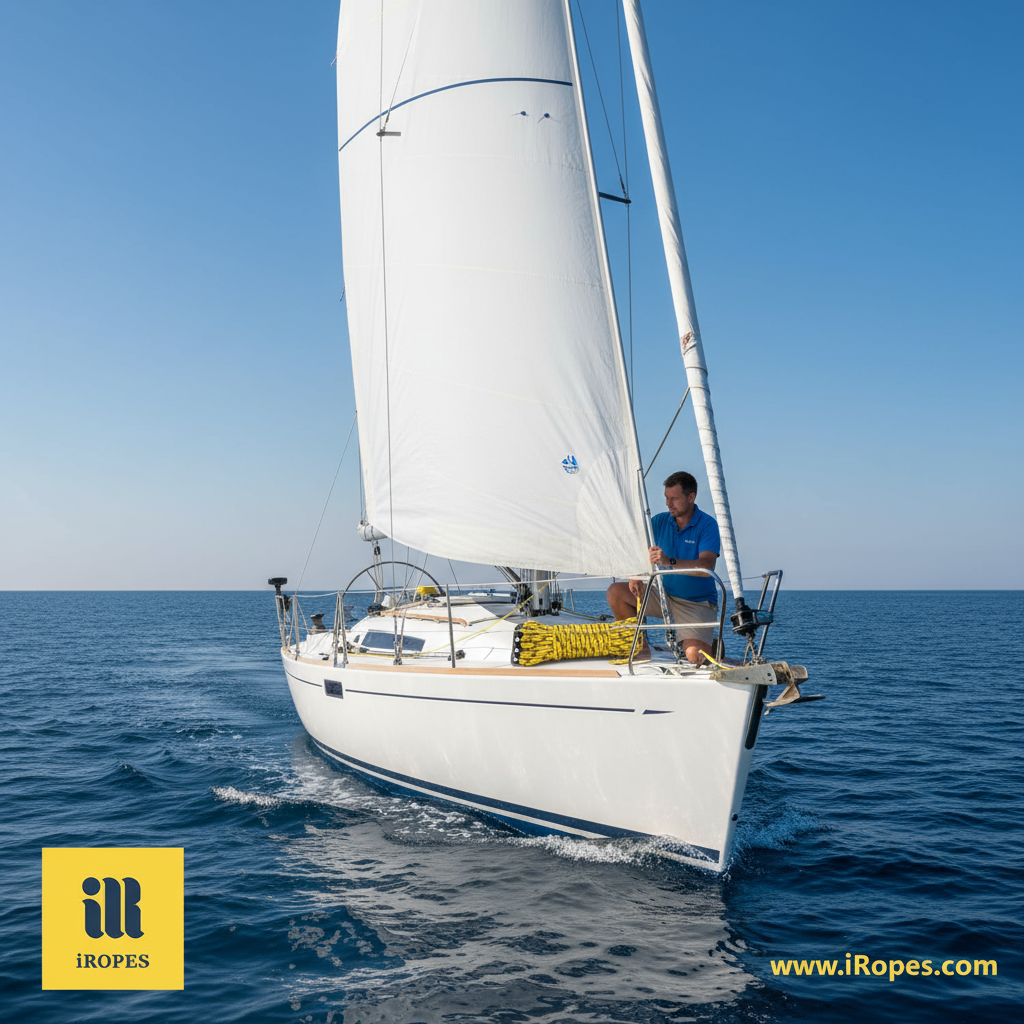
Consider reefing the mainsail on a calm afternoon: the halyard’s minimal elongation keeps the sail trim impeccably tight, while its sturdy sheath withstands the constant abrasion from deck hardware. These same robust qualities make the rope a steadfast choice for dock lines, which must endure repeated loading cycles and harsh marine exposure.
Balancing these strengths with the need for shock absorption often leads skippers to employ a strategic mix-and-match approach. They commonly use polyester double braid for primary sail controls, while reserving a more elastic nylon for heavy‑impact equipment like anchor rodes. This combined strategy allows you to benefit from precise handling where it matters most, while simultaneously protecting your rig from sudden, jarring shocks.
Choosing the Right Material: Polyester vs. Nylon and iRopes Custom Solutions
Building on the successful mix‑and‑match approach, the next crucial step involves determining which fibre best suits each specific line on your yacht. Polyester consistently offers razor‑sharp, low‑stretch performance, whereas nylon provides a more forgiving "give" under sudden loads. Understanding these fundamental trade‑offs is key to assigning the optimal rope to its intended task.
Polyester
Low stretch, UV‑stable
Strength
Typical breaking strength often exceeds 5 000 lb for a 5/16″ diameter, providing a safe working load well above 1 000 lb.
Stretch
Elongation reliably stays under 5 % at 30 % load, ensuring exact sail trim.
UV resistance
Retains more than 90 % of its strength even after years of prolonged sun exposure, making it ideal for marine use.
Nylon
High elasticity, shock‑absorbent
Strength
Similar breaking strength to polyester at comparable diameters, offering reliable total load capacity.
Stretch
Elongates up to 15 % at the same load level, providing significant natural shock absorption.
UV resistance
Degrades faster than polyester, typically showing more significant strength loss after prolonged sun exposure.
When a line demands absolute precision—such as a mainsail halyard—polyester’s low‑elongation properties are unparalleled. Top benefits of polyester braid rope for sailing provide further insight into why this fibre excels in marine applications. Conversely, for a running sheet that must absorb gust‑induced jerks, nylon’s inherent elasticity effectively reduces shock on the hardware. By intelligently pairing these two materials, you achieve a rigging system that is both incredibly accurate and adequately forgiving.
Custom Solutions
iRopes excels at transforming a standard polyester double braid into a product that perfectly aligns with your yacht’s colour scheme, precise diameter, and specific accessory requirements. You can choose from an extensive range of sheath colours, incorporate essential eye‑splices, thimbles, or chafe guards, and even specify core types for buoyancy if needed. Critically, every batch is manufactured under stringent ISO 9001 quality control, ensuring consistent tenacity, superior performance, and a flawless finish.
Explore our unrivaled polyester marine rope solutions for even more performance options. Our ordering workflow is meticulously streamlined to ensure efficiency. It typically involves submitting a detailed technical brief, receiving a precise 3‑D design mock‑up, approving a sample, and then initiating the production line. To safeguard your innovations, our dedicated intellectual‑property protection ensures your unique branding and design remain exclusive from the initial concept to final delivery. Furthermore, our robust global logistics network efficiently ships pallets directly to your preferred dockside warehouse anywhere in the world.

With a clearer understanding of material choices and iRopes’ bespoke customisation service, you are now perfectly equipped to specify the exact rope that will keep your sails flat, ensure your lines run smoothly, and make your brand unmistakably prominent on the water.
Ready for a custom rope solution tailored to your yacht?
This article has thoroughly demonstrated how a high-quality double braid polyester rope offers superior torque‑free handling, minimal stretch, and exceptional UV resistance, making it an ideal choice for critical applications like halyards, sheets, dock lines, and mooring warps. Understanding the robust braid‑on‑braid construction empowers you to confidently decide when the double braid polyester design is the right selection for your yacht’s deck, and to recognise when a more elastic fibre like nylon might be more suitable. Beyond standard offerings, iRopes provides comprehensive OEM and ODM services, allowing you to customise any polyester double braid to perfectly match your colour scheme, specific diameter, and desired accessory requirements, all while adhering to stringent ISO 9001 quality control standards.
If you'd like personalised advice on specifying the ideal rope for your vessel, simply complete the form above, and our dedicated specialists will expertly guide you through all available options. You may also explore our essential marine rope products for yachts to broaden your selection.