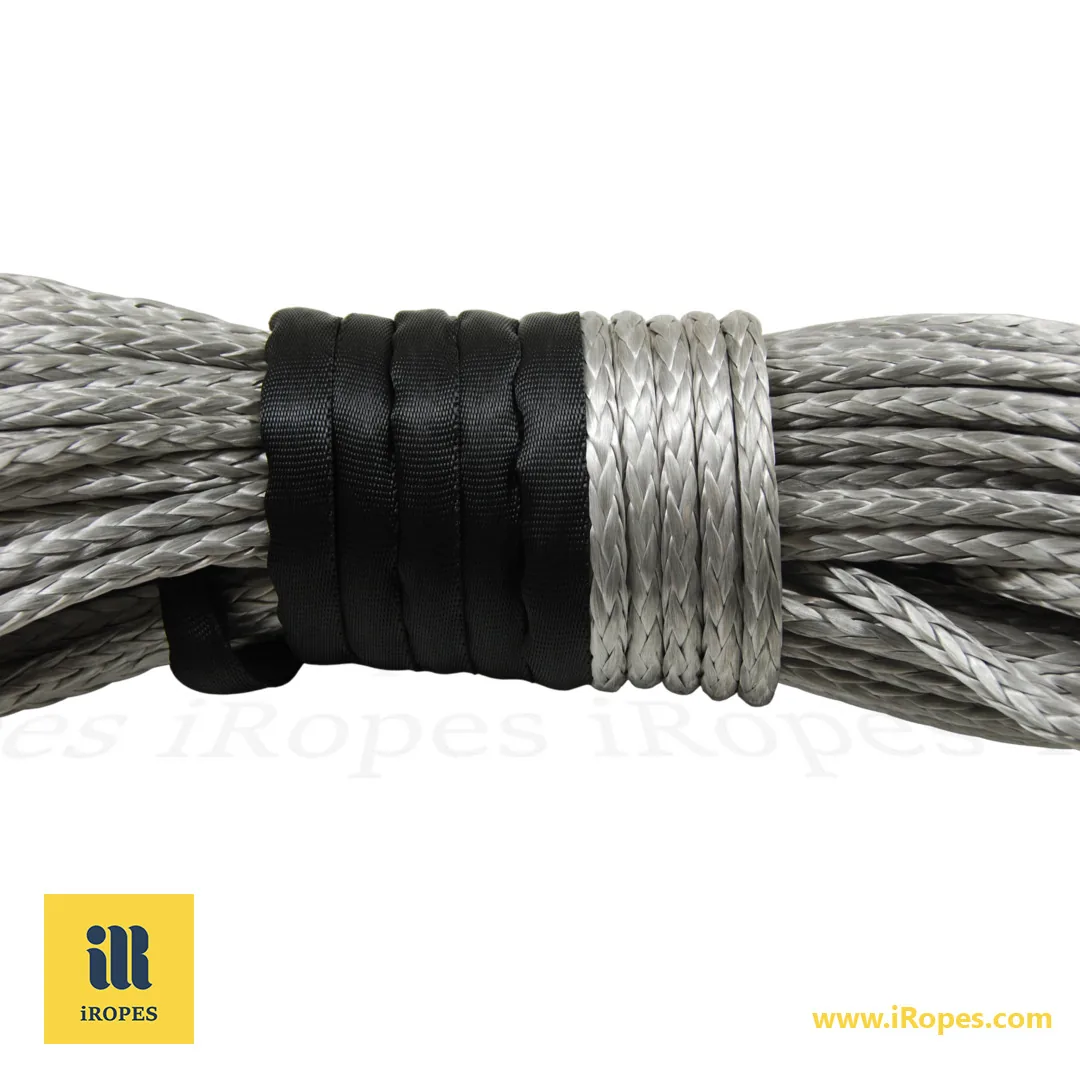
Secure your vessel in storms with mooring lines sized right: For boats spanning **27-72 feet**, utilise diameters from 3/8" to 1" and lengths 1.5-2 times your LOA, applying a **3:1 safety margin** to withstand forces up to 5 tonnes. **iRopes** delivers ISO 9001-certified custom ropes that prevent 90% of common failures.
Unlock Storm-Proof Mooring in a 7-Minute Read → Discover Precise Guidelines
- ✓ Calculate exact diameters through MBL/LDBF formulas, actively preventing overloads by 3x expected loads for vessels of any displacement.
- ✓ Tailor lengths for bow, stern, and springs, which secures 20-30% better shock absorption in waves up to 40 knots.
- ✓ Select materials like nylon for elasticity or polyester for UV resistance, extending rope life by 2-3 years through effective chafe protection.
- ✓ Leverage iRopes' ODM customisation to match your mooring configuration, ensuring compliance and robust, branded solutions for wholesale fleets.
You might think that thicker ropes always ensure safer mooring, yet undersized diameters frequently snap under sudden gusts while overlong lines tangle in surges—leaving vessels adrift when seconds count. What if a simple 1.05x adjustment to your boat's breaking load revealed the perfect specifications, transforming vulnerability into an unshakeable hold? Dive in to uncover iRopes' tailored secrets that safeguard your yacht through gales, complete with real-world calculations and custom options awaiting.
The Critical Role of Mooring Lines in Storm-Proof Securing
Picture this scenario: you're out on the water, and the sky begins to darken as an unexpected storm rolls in. Your boat sways against the dock; however, instead of snapping free or grinding destructively against pilings, it holds steady. That is the quiet assurance mooring lines provide when chosen correctly. Mooring lines are essentially the lifelines that tether your vessel to a fixed point, such as a dock, buoy, or anchor. They are not merely ropes; rather, they are engineered to absorb and distribute the relentless pull from wind, waves, and currents, effectively keeping your boat safe without over-straining cleats or hardware.
Have you ever wondered what truly happens when a vessel is moored? The forces at play are significant. Wind pushes against the hull and sails, creating lateral pressure that can shift a boat sideways. Waves crash in, lifting and dropping it rhythmically, while currents tug from below like an invisible hand. For a typical 9-metre (30-foot) sailboat, these combined loads might easily hit several tonnes during a gale. If your mooring line isn't equal to the task—perhaps it's too thin or too stiff—it could stretch beyond its limits, leading to chafe, breakage, or, even worse, a vessel adrift in rough seas. Proper selection builds in resilience, preventing not only physical damage like ripped fittings or hull scrapes but also the considerable headache of emergency repairs. Think of it as insurance for your time on the water, transforming potential chaos into controlled motion.

Selecting the ideal mooring line is not a one-size-fits-all solution, however. It hinges on several key factors that dictate how much stress your setup will encounter. Vessel displacement, which is the boat's total weight including gear and fuel, is a significant consideration—heavier boats inherently require stouter lines to manage amplified loads. Then there is the mooring configuration: are you tying up alongside a pier, backing into a stern-to spot in a Mediterranean harbour, or utilising a single-point swinging mooring in open water? Each setup alters how forces are distributed. Exposure to elements also plays a starring role; a sheltered marina differs vastly from an offshore buoy battered by swells and gusts up to 50 knots. These variables ensure that what works for a nimble 7.6-metre (25-footer) in calm bays might utterly fail for a displacement hull in exposed anchorages.
At iRopes, we have observed how overlooking these critical details can lead to failures. Conversely, customising based on them—such as adjusting for a client's specific yacht in hurricane-prone areas—transforms vulnerability into strength. Understanding these foundational elements forms the bedrock for determining the correct dimensions.
- Vessel Displacement: Heavier boats generate greater loads; therefore, scale up line strength accordingly to avoid overload.
- Mooring Configuration: Alongside setups demand balanced tension, while swinging moorings require more rotational flexibility.
- Exposure to Elements: High-wind or tidal areas necessitate lines that flex without fraying under relentless motion.
Mooring Line Size: Essential Guidelines and Calculation Methods
Building on those core factors, including your boat's weight and the setup you are using, let's now delve into the specifics of mooring line size, fundamentally boiling down to diameter. This is where practicality takes precedence—choosing the right thickness ensures your lines can handle predicted loads without failing precisely when it matters most. If you are wondering what size mooring lines you need, it begins with your vessel's length overall (LOA) as a baseline, but remember, this is not the sole determinant.
For most recreational boats, diameters proportionally increase with size to match escalating stresses. A quick reference can save you considerable guesswork: boats under 8.2 metres (27 feet) typically pair well with 3/8-inch lines, while larger vessels push toward 1 inch for 19.5- to 22-metre (64- to 72-footers). These are initial recommendations, derived from established marine standards that prioritise safety under typical conditions.
Boat Length (ft)
Recommended Diameter
Under 27
3/8 inch for light loads in calm waters.
28-36
1/2 inch suits standard day sailors or small cruisers.
37-45
5/8 inch for yachts facing moderate weather exposure.
Boat Length (ft)
Recommended Diameter
46-54
3/4 inch handles heavier displacement hulls.
55-63
7/8 inch for extended voyages or windier locations.
64-72
1 inch for superyachts in demanding ports.
However, do not stop at length alone. Displacement is crucial—if your boat carries extra weight from gear or fuel, you should increase the diameter of your lines to compensate for those additional forces. Multihulls, with their broader profiles catching more wind, often necessitate an even thicker line. In extreme weather, such as gales exceeding 40 knots, always apply a **3:1 safety margin**: your line's breaking strength should be three times the expected load to account for sudden gusts or surges. I have personally witnessed skippers in coastal regions upsizing their lines simply for peace of mind during hurricane season—a decision that paid off when their lines held firm while others failed.
Achieving precision often involves calculations tied to specific engineering standards. Begin with MBL, the *minimum breaking load*, which represents the force required to snap the line under test conditions. For design purposes, use LDBF, or *line design break force*, calculated as your vessel's ship design minimum breaking load (MBLSD) multiplied by 1.05—this slight buffer ensures enhanced reliability. For a standard 12-metre (40-foot) monohull in a busy port, if the MBLSD is 5 tonnes, you should aim for an LDBF of approximately 5.25 tonnes, which typically points to a 5/8-inch nylon line. Local port regulations might also stipulate class-specific minimums, such as ABS standards for commercial vessels, so checking those is essential. These steps maintain clarity: measure your loads, apply the formula, and select accordingly.

At iRopes, we elevate this process with customised diameter options, crafting lines to exact specifications under ISO 9001 standards. Wholesale clients receive strength-tested ropes that fit their fleets perfectly, whether for leisure yachts or demanding industrial operations. Once you have confidently determined the size, considering the optimal mooring line length will provide the necessary flexibility to manage dynamic pulls effectively.
Mooring Line Length: Recommendations for Bow, Stern, and Spring Lines
Now that you have confidently determined the diameter to meet your vessel's demands, the next crucial element falls into place: the actual length required for each of your lines. This extends beyond merely reaching the cleat; the correct mooring line length allows your boat ample room to move with the water's natural rhythm, thereby easing strain during gusts or swells. Lines that are too short will snap taut like a bowstring; conversely, those that are too long risk tangling or excessive sag, which can invite chafe. Getting this dimension right ensures your setup breathes with the prevailing conditions rather than constantly fighting against them.
So, how long should your mooring line be? For bow and stern lines, which manage the forward and aft pulls, aim for 1.5 to 2 times your boat's length overall (LOA). This additional length provides crucial give, absorbing shocks from incoming waves. Spring lines, those essential diagonal helpers that prevent fore-and-aft creep, function best at least equal to your LOA, and often a little longer, to allow for fine-tuning tension. Imagine docking a 10.7-metre (35-footer): you would ideally want about 16 to 21 metres (52 to 70 feet) for the bow and stern lines to allow for some controlled swing, and approximately 10.7 metres (35 feet) for each spring line to maintain stability without over-tightening. These ratios are derived from years of real-world testing, ensuring you can readily adjust for the day's specific quirks without needing to start from scratch.
- Bow and Stern Lines: 1.5-2x boat LOA for effective shock absorption in dynamic conditions.
- Forward Spring: Equal to LOA to control forward motion without unduly restricting natural rise and fall.
- Aft Spring: Equal to LOA, with adjustability to effectively counter tidal shifts or crosswinds.
What should you consider when determining the length of mooring lines? It goes beyond the fundamental basics—your chosen setup plays a significant role. In an alongside configuration, such as tying up to a floating pier, shorter lines might suffice if the dock remains level. However, if you introduce tides that rise and fall by several feet, you will absolutely need that extra footage to avoid constant adjustments. Stern-to berths, commonly found in regions like the Greek islands, require longer stern lines to reach back to the quay while keeping the bow securely hooked. Swinging moorings in open bays demand even greater length in your bridle or strop, potentially 2-3 times LOA in total, allowing the boat to pivot 360 degrees without fouling. Environmental adjustments also matter: in high-tide zones, build in 20% more length to gracefully handle extremes, while calm marinas permit you to trim closer to the minimum requirements.
For permanent setups, such as a fixed buoy at your home slip, requirements become more specialised. A strop—the short connector from boat to buoy—might measure just 1.8-3 metres (6-10 feet) for quick attachment, typically paired with a longer bridle of 1.5 times LOA, split across two legs for balance. Always adjust for local swells or currents; in choppy areas, extending the bridle can reduce angle strain on the hardware. I have spoken with skippers who learned this the hard way—one neglected to account for a 3-metre (10-foot) tide swing, and his lines pulled so tight they consequently parted during the first significant low tide. Simple advanced planning genuinely saves considerable hassle.

At iRopes, our ODM services truly excel here, allowing wholesale partners to specify exact lengths down to the inch. We also provide complete fittings, such as thimbles, which loop cleanly over cleats or pilings. We manage all cuts and splices in our state-of-the-art facilities, guaranteeing that everything arrives ready for immediate deployment with enhanced security. With lengths precisely calibrated, focusing on the rope's inherent makeup unlocks even greater resilience against the elements.
Selecting the Ideal Mooring Line Rope: Materials and Customisation
With your lines now cut to the right proportions, the true character of your setup emerges in the specific mooring line rope you choose. It is akin to selecting the perfect tool for a challenging job—the material and construction determine whether it will hold steadfast through a pounding swell or ultimately give way under pressure. This is where mooring line rope selection becomes highly personal, factoring in how different fibres respond to the sea's relentless demands. For tailored advice on choosing the best mooring rope material, explore options that match your specific needs.
Have you ever puzzled over how to accurately calculate mooring line needs beyond just diameter and length? It directly connects to those strength formulas we previously discussed, but now you layer in the rope's inherent characteristics. Consider the *minimum breaking load* (MBL)—that peak force just before the rope snaps. For nylon, its natural stretch significantly boosts its effective strength under dynamic pulls, meaning you might select a slightly thinner line than you would with polyester's more rigid profile. Polyester, by contrast, excels in steady tension but performs less effectively under sudden jerks. Polypropylene, being lighter and more elastic, is well-suited for floating applications, yet it demands upsizing due to its rapid UV degradation in sunny climates. In practice, for that 12-metre (40-foot) hull with a 5-tonne MBLSD, nylon could readily handle the 5.25-tonne LDBF with room to elongate 20-30% on impact. Polyester, conversely, maintains tension with under 10% stretch. By integrating these specific properties into your calculations, you avoid underestimating surges—such as a sudden 20-knot gust powerfully testing every single fibre. Learn more about nylon rope diameter strength for docking to optimize your setup.
Each material brings its own distinct strengths to the dock. Nylon excels at soaking up shocks from waves, stretching to cushion your boat much like a shock absorber on a bumpy road, although it does wear faster against rough pilings. Polyester steps up with superior resistance to sunlight and scraping, maintaining its shape throughout seasons without that characteristic milky degradation. Then there is polypropylene, an affordable and buoyant option for easy handling, but it stretches considerably too much for precision work. For cutting-edge applications, Dyneema offers featherlight power—boasting 15 times greater strength than steel by weight—with minimal stretch, making it ideal for high-end yachts where every ounce counts. What best fits your routine? If you frequent a sunny harbour with abrasive edges, polyester might prove to be the superior choice.
Nylon
Top shock absorption, 20-30% stretch for effective wave energy dissipation.
Polyester
UV and chafe resistant, low stretch for exceptionally stable holds.
Polypropylene
Floats easily; a budget option but highly vulnerable to UV degradation.
Dyneema
Ultra-strong and remarkably lightweight for elite performance applications.
Beyond the fibre itself, the construction significantly shapes how the rope performs day-to-day. A 3-strand twisted design coils neatly and splices simply, making it excellent for basic dock work, yet it can untwist under torque. Double braid, with its woven cover over a core, grips cleats firmly and resists kinking—it's perfect for frequent adjustments. To effectively fend off chafe, that insidious wear caused by rubbing, wrap ends with tubular sleeves or leather guards. I have personally replaced lines prematurely simply due to dock-side friction, so proactive protective covers can easily add years of service.

For wholesale enterprises, iRopes expertly crafts these elements into comprehensive OEM packages, tailoring everything from specific fibre blends to branded sleeves. All our products are rigorously backed by ISO 9001 testing and efficiently shipped in pallets worldwide. Whether embedding your unique logo or specifying Dyneema cores, it's about precisely fitting your fleet's exact requirements. Discover more about best rope solutions for boat mooring to enhance your vessel's security. Armed with intelligent choices in this area, your vessel will remain securely positioned when storms truly test its limits.
Mastering mooring line size begins with your vessel's length and displacement, scaling from 3/8-inch for smaller boats to 1-inch for superyachts, always applying a critical 3:1 safety margin for storms. Calculations using MBL and LDBF formulas diligently account for environmental loads and crucial port standards, thereby ensuring resilience against wind, waves, and tides. Optimal mooring line length—1.5-2 times LOA for bow and stern, and equal to LOA for springs—provides the essential flexibility needed for various configurations, such as alongside or swinging moorings. Furthermore, selecting the right mooring line rope, whether it's stretchy nylon or UV-resistant polyester, integrates these factors for enduring performance. With iRopes' custom OEM solutions, you gain the ability to tailor every minute detail to safeguard your vessel worldwide.
These comprehensive guidelines empower you to dimension lines with confidence, yet applying them effectively to your unique setup can elevate security even further.
Need Bespoke Mooring Lines? Get Expert Guidance Today
If you are ready for personalised recommendations on mooring line specifications that are precisely tailored to your vessel and prevailing conditions, simply complete the inquiry form above to speak with iRopes specialists. We are genuinely here to help secure your peace of mind on the water.