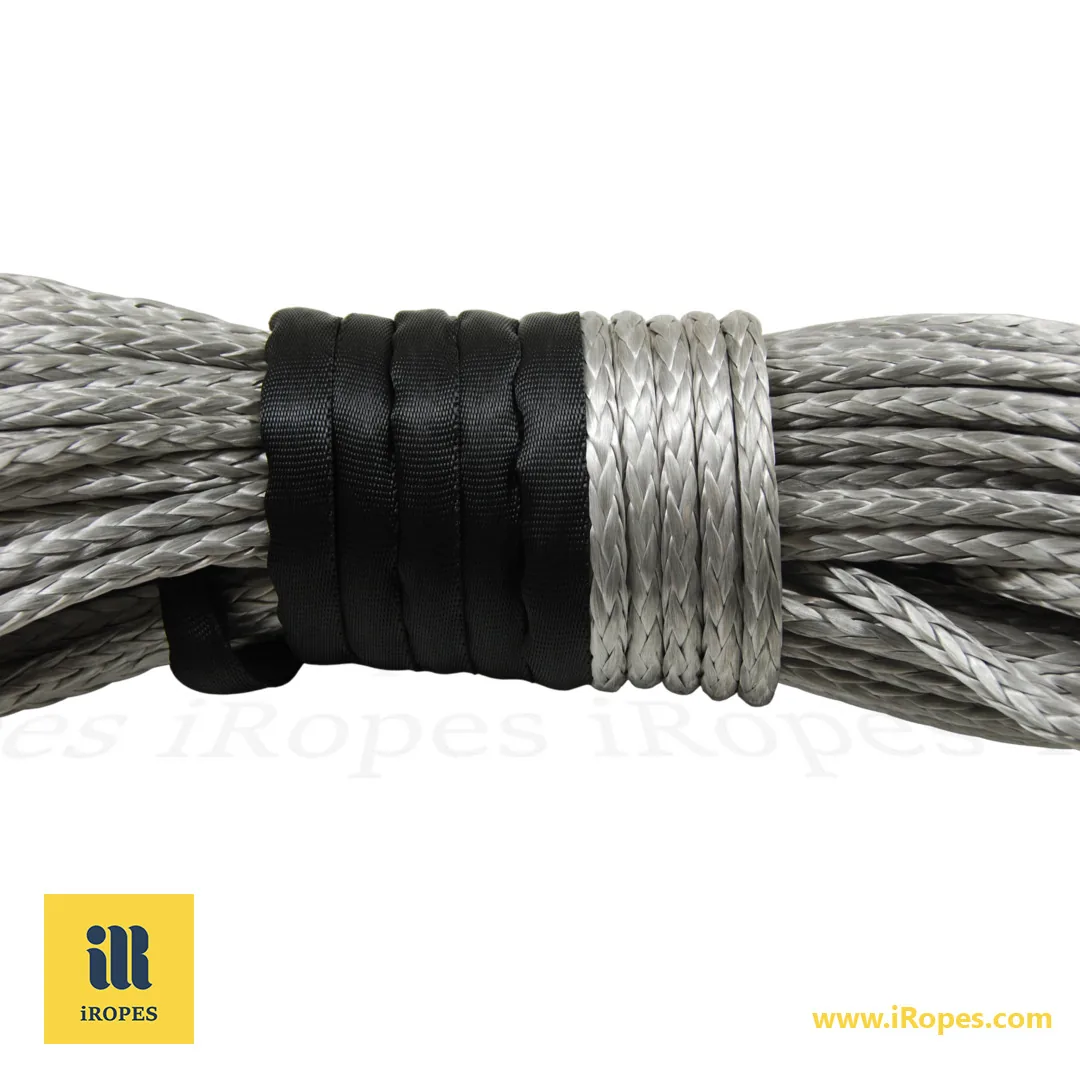
1‑inch twisted nylon rope lifts 22 600 lb (≈ 10 t) while stretching 35‑38 % for shock absorption.
What you gain in ~4 min read
- ✓ 35‑38 % elongation absorbs shocks, cutting equipment stress by up to 30 %.
- ✓ Breaking strength reaches 22 600 lb per inch, safely handling loads of 10 t.
- ✓ UV, abrasion & moisture resistance extends service life by 15‑20 % in marine conditions.
- ✓ Full OEM/ODM customisation (diameter, colour, terminations) accelerates time‑to‑market by up to 25 %.
Imagine you’re specifying a line for a 5‑tonne crane or a dock winch. Are you still guessing whether the rope will survive the sudden jerk of a wave or an accidental load‑drop? Many engineers rely on generic ropes, often leading to over‑specification or, worse, risky failures. In the following sections, we'll reveal exactly how iRopes’ 3‑strand twisted nylon rope outperforms rivals and explain how you can custom-order the perfect rope in minutes.
Understanding Nylon Twisted Rope: Definition and Construction
When you need a rope that handles heavy loads, absorbs shock, and remains flexible, nylon twisted rope is often the ideal solution. Simply put, a twisted rope is made by spiralling individual yarns into cords. These cords are then twisted together to form the familiar helical pattern seen in numerous industrial and marine applications.

The backbone of this product is its robust 3‑strand construction. This process involves three distinct steps:
- Strand preparation: individual yarns are twisted to form three strong cords.
- Lay alignment: the three cords are then twisted together in the opposite direction, creating the rope’s characteristic helix.
- Final finishing: the rope is heat‑set and rigorously inspected to ensure consistent diameter and strength.
Selecting nylon as the core material adds a performance advantage unmatched by many alternatives. Nylon’s high tensile strength allows the rope to bear significant loads without snapping. Its natural elasticity, offering 35‑38 % elongation, provides essential shock absorption for both offshore towing and demanding industrial lifts. Furthermore, nylon resists abrasion, UV radiation, and moisture, ensuring the rope remains reliable even after prolonged exposure to salty sea air or oily workshop environments.
So, what exactly does “twisted rope” mean? It refers to the manufacturing method: yarns are first twisted into separate strands, and then these strands are twisted together in the opposite direction. This opposing twist technique effectively locks the fibres in place, providing the impressive strength-to-weight ratio that engineers rely on for demanding applications.
“The 3‑strand design gives twisted nylon rope its legendary shock‑absorption, making it the go‑to choice for marine towing and industrial recovery.”
With a clear understanding of how 1 twisted nylon rope is constructed and why nylon is the material of choice, you can appreciate the balance of strength and flexibility that makes this rope a staple in heavy‑duty sectors. Next, we’ll explore the specific performance figures—including breaking strength tables and elongation data—and how these translate into real‑world reliability for industrial and marine tasks.
Key Performance Features of Twisted Nylon Rope for Industrial & Marine Use
Now that you understand the construction of nylon twisted rope, let’s delve into the specific figures that make it the preferred choice for heavy‑duty lifts, offshore towlines, and robust recovery rigs.

Below are the most frequently requested performance figures, essential for engineers and specifiers before finalising a purchase order:
- ¼‑inch (6 mm) – breaking strength ≈ 1 490 lb; safe working load limit (SWLL) ≈ 300 lb.
- ½‑inch (12 mm) – breaking strength ≈ 7 800 lb; SWLL ≈ 1 500 lb.
- 1‑inch (25 mm) – breaking strength ≈ 22 600 lb; SWLL ≈ 4 500 lb.
These figures provide genuine confidence in real-world applications. For example, a ½‑inch line will readily endure the sudden forces experienced when towing a vessel, while a 1‑inch line can safely hoist heavy machinery on a demanding construction site.
Stretch Benefits
Nylon twisted rope elongates 35‑38 % under load. This inherent elasticity functions as a built‑in shock absorber, significantly reducing peak forces on anchors, winches, and lifting gear. This same cushioning effect also minimises abrupt jolts when a vehicle is winched from mud, thereby protecting both the load and the equipment.
It’s important to note that nylon absorbs water, leading to a modest 10‑15 % drop in tensile strength when wet. However, this loss is predictable, allowing you to size the rope slightly larger for marine applications where constant wetness is expected. Additionally, nylon’s melting point is approximately 490 °F (254 °C); therefore, it's crucial to avoid exposure to open flames or high‑heat machinery.
So, does twisted nylon rope stretch? Absolutely. Its 35‑38 % elongation is precisely why it’s highly valued for shock‑loading scenarios. This controlled stretch ensures safe operation while retaining ample reserve strength.
Keeping these figures in mind, you can now confidently select the ideal diameter and length to meet the specific requirements of your industrial rig or offshore tow. Let’s move on to explore the customisation options that allow you to tailor each rope to your exact needs.
Applications and Customisation Options for Twisted Nylon Rope
Having seen how the strength and stretch of 1 twisted nylon rope deliver real-world reliability, let’s explore where this performance excels and how you can tailor the rope to seamlessly integrate with your workflow.

In marine environments, the rope’s resistance to UV radiation and constant moisture makes it perfect for anchor lines, dock lines, and towing. Its UV‑protective coating prevents both colour fade and polymer degradation, ensuring a line left on a sun‑baked pier retains its load‑bearing capacity for months. When a vessel sways in a swell, the rope’s impressive 35‑38 % elongation acts like a natural shock absorber, preventing sudden jerks that could otherwise damage winches or hull fittings.
On land, the same material excels in lifting, rigging, off‑road recovery, and general utility tasks. Its abrasion‑proof properties allow it to withstand the rough edges of steel beams, while its inherent stretch reduces peak forces during sudden load spikes—such as when a winch pulls a bogged 4x4 from the mud. Since the rope tolerates oils, fuels, and mild chemicals, it maintains integrity even in the gritty conditions found in workshops and construction sites.
Anchor Lines
With UV‑resistant coating, the rope holds fast even after weeks of exposure to salty spray.
Dock Lines
High elongation cushions vessel movement, reducing stress on mooring hardware.
Lifting
The 35‑38 % stretch absorbs shock during heavy lifts, protecting equipment.
Rigging
Abrasion‑proof cores survive abrasive industrial surfaces and repeated cycles.
When comparing rope constructions, a common question arises: *Which is stronger, braided or twisted nylon rope?* While braided ropes often feel smoother to the touch, twisted nylon typically delivers higher ultimate tensile strength and significantly greater shock‑absorption, thanks to its 3‑strand lay. For most demanding heavy‑duty lifts and marine loads, twisted nylon proves to be the stronger, more forgiving option.
Tailor‑Made Options
Choose diameter, length, colour, terminations or add your brand logo – iRopes delivers OEM and ODM solutions for any bulk order.
Customisation options begin with the rope’s diameter. Sizes range from a compact ¼‑inch for light‑duty dock lines to over 2‑inches for massive industrial hoists, offering large‑diameter rope solutions. Length can be cut to the exact metre you require or supplied on a full spool for on‑site splicing. Colour is not merely aesthetic; bright orange or safety‑green enhances visibility on a busy job site, while classic black or white blends seamlessly with marine fittings. End fittings – such as eye splices, thimble loops, or chafe‑guard sleeves – are integrated during the production line, ensuring a seamless transition from raw rope to a ready‑to‑use component.
Because iRopes manages every step within an ISO 9001‑certified facility, you receive a rope that precisely matches your specifications, including insights on polyamide rope breaking strength, arrives on schedule, and features your required branding—whether that's a discreet label on the bag or a full‑colour printed carton.
With this comprehensive understanding of marine and industrial strengths, coupled with the freedom to customise every parameter, you are now equipped to specify the perfect 3‑strand twisted nylon solution for your next project.
Need a personalised rope solution?
As you've seen, with its 3‑strand nylon line construction and 35‑38% elongation, nylon twisted rope offers the high strength and shock‑absorption essential for industrial lifts and marine towing. By selecting the right 1 twisted nylon rope diameter, length, and colour, you can fine‑tune its performance while benefiting from iRopes’ ISO‑9001‑certified OEM/ODM capabilities, UV‑resistant coatings, and branded packaging. Whether you need a short dock line or a heavy‑duty recovery sling, the expertise behind twisted nylon ensures reliability and safety.
If you'd like a custom quote or technical advice tailored to your project, simply fill out the enquiry form above, and our rope specialists will respond promptly.