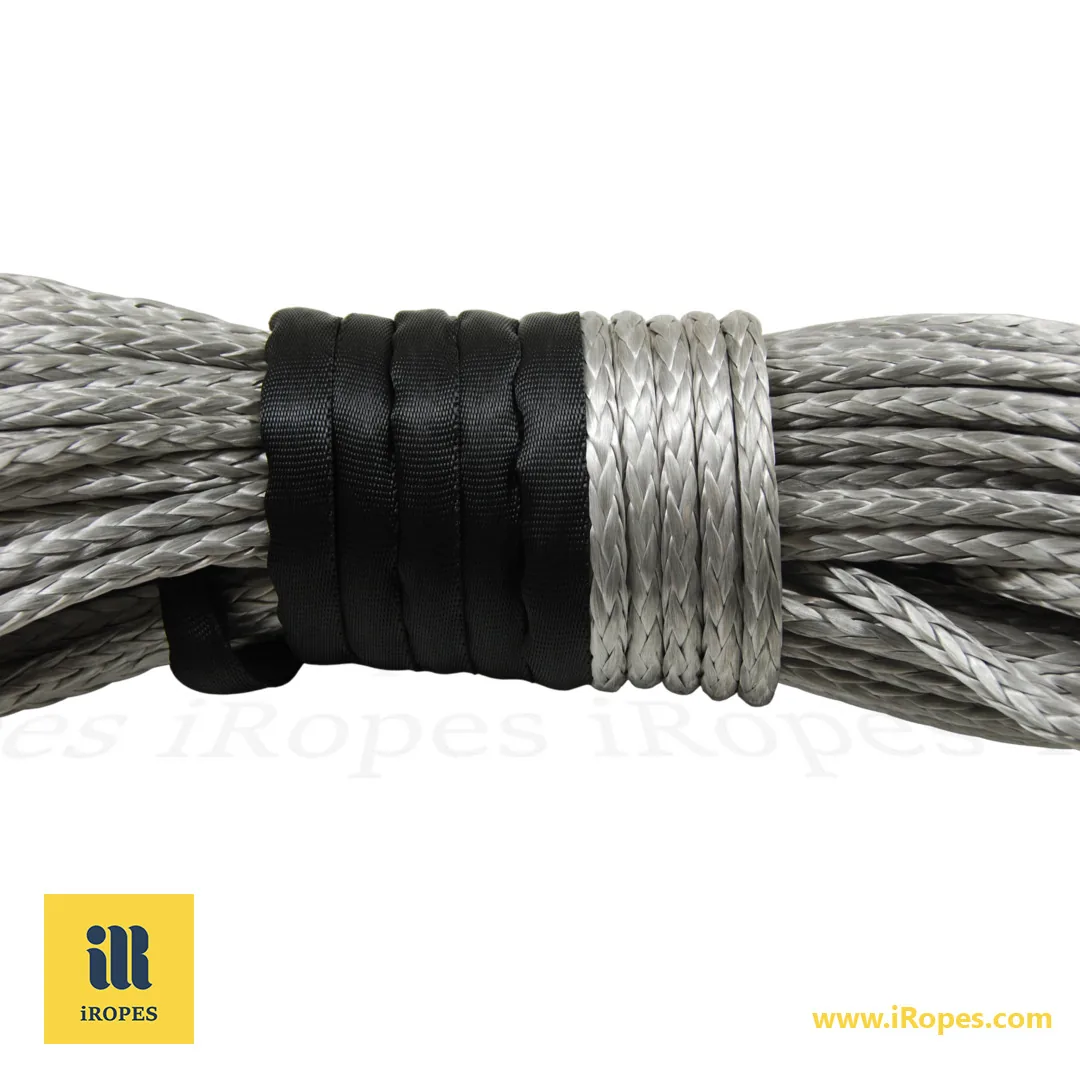
12 mm portable rope winch provides ~7,275 lb minimum breaking strength while weighing about 20 % less than comparable steel cable, helping speed recoveries on rugged trails.
What you’ll gain – 7 min read
- ✓ Reduce rope weight by about 20 % versus steel, making handling and storage easier.
- ✓ Help accelerate pull‑in on typical off‑road obstacles.
- ✓ Tailor diameter, colour, reflective strips and OEM branding.
- ✓ Use a simple eye‑splice that retains 100 % of strength, avoiding the ~30 % loss of a knot.
You’ve probably been lugging a clunky steel cable on every trail, assuming heavier means stronger – but that extra mass is stealing your recovery time and safety. What if a 12 mm portable rope winch could help reduce pull‑in time while shedding weight? In the sections below we reveal the exact specs, customisation tricks, and a splice method that turns that assumption on its head.
Portable Rope Winch
After exploring why a winch is essential for off‑road travel, let’s focus on the portable rope winch itself. Imagine pulling a stuck 4×4 out of a sand trap without the bulk of a steel drum – that lightweight freedom starts with the rope you choose.

The core advantages of a portable rope winch boil down to three practical traits that matter when you’re knee‑deep in mud or sand:
- Low weight – a 12 mm polyester line weighs about 20 % less than an equivalent steel cable, making it easier to handle and store.
- High tensile strength – despite its lightness, the rope delivers around 7 300 lb minimum breaking strength, enough for most 4×4 recoveries.
- Reduced snap‑back – the rope’s lower mass and low‑stretch design minimise sudden recoil.
Those attributes translate directly into faster, smoother recovery on rugged trails. Thanks to its low‑stretch construction, the winch reaches full pull smoothly, helping you shave minutes off a rescue. On a recent trip, we swapped a steel cable for a portable winch rope; the vehicle was freed more quickly, and the crew felt a noticeable drop in the “jerk” that can unsettle a winch drum. The common question “Is polyester winch rope better than steel cable?” is answered by the facts: polyester is lighter, resists corrosion, and its lower mass reduces snap‑back risk, making it the safer choice for most off‑road scenarios.
Safety gains extend beyond snap‑back reduction. The rope’s fibre construction tolerates heat well and resists abrasion, so you can run it over fairleads and recovery gear without compromising strength. Moreover, the flexible line allows smoother spooling, lowering the chance of rope‑line twists that could damage the winch. It also will not rust in wet or salty environments.
"After swapping my steel cable for a portable rope winch, I recovered a stuck 4×4 faster and felt far safer on the descent."
With those performance and safety perks in mind, the next step is to see how customisation options—diameter, colour, reflective strips and OEM branding—can fine‑tune a portable winch rope for your specific off‑road adventures.
Portable Winch Rope
Having seen how a lightweight rope can shave minutes off a recovery, the next question is what the rope itself is made of and how you can shape it to suit your rig. The material you choose sets the baseline for durability, while the custom‑fit options turn a good rope into the perfect partner for your off‑road adventures.

When it comes to the core of a portable winch rope, double‑braided polyester (DBP) dominates the market. Compared with nylon, polyester tolerates temperatures up to 240 °C, so a hot drum or a sun‑baked trail won’t degrade its strength. HMPE (Dyneema) is lighter but sacrifices heat resistance, while aramid fibres excel in cut resistance but lose flexibility in cold weather. For most 4×4 recoveries, the DBP blend strikes the right balance of low stretch, abrasion endurance, and predictable performance.
Customization Levers – Tailoring Your Rope
Customization Levers
Beyond the base material, you can specify diameter (including 12 mm and other sizes), core construction (parallel‑core for extra stiffness or twisted‑core for flexibility), and colour palettes that match your vehicle livery. Reflective strips woven into the sheath boost night‑time visibility, while OEM branding lets you imprint logos on the rope, its bag, or the colour‑box. All options are produced in ISO‑9001‑certified facilities, guaranteeing that the finish you receive mirrors the design you approved.
Choosing the right diameter is more than a numbers game. A 12 mm line delivers roughly 7 300 lb minimum breaking strength, while larger diameters increase capacity for heavier rigs or steeper inclines. Core type influences how the rope behaves under load: parallel cores keep the line straighter during a pull, whereas twisted cores dampen vibration when the winch cycles.
Accessory Integration – Making the Connection
Even the best‑engineered rope needs the right hardware to unlock its potential. Below are the three most common accessories that keep a portable winch rope performing safely and efficiently.
- Thimble – metal eye reinforcement that protects the rope’s termination from abrasion and preserves breaking strength.
- Eye splice – an eye‑splice retains nearly 100 % of the rope’s MBS, far better than a simple knot.
- Termination options – snap‑hooks, steel loops, or custom‑branded eye fittings let you match the connector to your winch’s drum and load requirements.
Answering a common query, “Do I need a thimble on my winch rope?” – if you regularly pull loads above 5 000 lb or run the line over rough edges, a thimble is strongly recommended. It spreads the load across a larger surface area, preventing the fibre from cutting into the metal eye.
With the material, custom dimensions, colour cues, and accessory suite defined, you now have a portable winch rope that feels tailor‑made for the terrain you tackle. Next, we’ll translate those specs into the exact length and splice technique you’ll need for a flawless off‑road recovery.
12mm winch rope
After looking at the ways you can customise a winch line, the next logical step is to examine the size that most 4×4 enthusiasts reach for – the 12mm winch rope. Its balance of strength and manageability makes it a go‑to choice for rugged trails.
The rope measures exactly 12 mm (½ in) in diameter and is built to withstand a minimum breaking strength of about 7 300 lb. It is stocked in four factory‑tested lengths – 164 ft, 328 ft, 656 ft and 984 ft – allowing you to match rope reach to vehicle height and obstacle distance without excess slack.

Why does the 12mm size sit at the sweet spot for 4×4 winches and capstan systems? Its low‑stretch polyester core keeps the line tight under load, which means the winch drum spins smoothly and the capstan’s friction stays consistent. At the same time, the diameter fits the majority of ½‑inch drums without the need for adapters, so installation is a quick‑clip job.
Powerful
High‑strength construction delivers the pulling power needed for most 4×4 recovery situations.
Capstan
Low‑stretch fibres keep tension steady, protecting capstan gears from sudden spikes.
Fit
Sized for many ½‑inch drums, it fits most aftermarket winches without modification; always confirm compatibility with your manual.
Versatile
Lengths from 164 ft to 984 ft let you select the exact reach required for any obstacle.
Common questions pop up when you start comparing options. The minimum breaking strength of a 12 mm winch rope sits at roughly 7 300 lb. Always ensure the rope’s MBS comfortably exceeds your winch’s maximum line pull with an appropriate safety factor. It is commonly used with popular brands such as WARN, Superwinch and Smittybilt; verify drum size and rope compatibility in your manual. In terms of cost, a 328‑ft coil usually falls between US$250 and US$400, while the longest 984‑ft version can range from US$730 to US$930 depending on colour and any added accessories.
Pricing for the 12 mm winch rope varies with length and finish: 164 ft – US$155 – US$210, 328 ft – US$250 – US$400, 656 ft – US$500 – US$730, 984 ft – US$730 – US$930.
Now that you know the exact specifications and why the 12 mm size fits so naturally into off‑road rigs, the next step is to decide which length and accessory combo will give you the most reliable recovery on your favourite trails.
Choosing the Right Length & Accessories
Now that you understand why the 12 mm winch rope fits so naturally on a 4×4, the next logical step is to match the correct length and the right accessories to your adventure. Picking the proper combination ensures you can pull out of a sand trap, a river crossing or a steep hill without second‑guessing your gear.
- Load rating – verify the rope’s minimum breaking strength exceeds your winch’s pull rating.
- Rope length – choose a coil that reaches the highest obstacle plus a safety margin of at least 10 ft.
- Accessories – decide between a thimble, eye splice or snap‑hook, and whether you need reflective strips for night work.
When it comes to installing the line, a clean eye splice beats a knot every time because it retains virtually 100 % of the rope’s strength. The process is simple: trim the tail, create a loop, feed the standing part through the splice‑forming tool, and tighten with a pulling wrench. A thimble fitted to the eye protects the fibre from abrasion and distributes the load evenly, especially on loads over 5 000 lb. Avoid knots; they can reduce capacity by 30 % or more.

Maintenance is straightforward: store the rope off the ground in a dry, shaded area, coil it loosely to avoid kinks, and inspect the sheath for cuts or UV fading every six months. Replace the rope if inspection suggests its capacity has dropped by about 30 % of MBS, or sooner if you notice glazing, cuts, or flattened strands. This rule of thumb keeps the recovery process safe and predictable.
Explore our customised rope solutions to match exact load, length, and branding requirements.
Protection & Delivery
Secure, fast, and compliant
IP Protection
Your proprietary designs stay confidential throughout manufacturing and shipping.
Global Shipping
Direct pallet delivery to customer locations worldwide.
Custom Packaging
Choose non‑branded bags, colour boxes or cartons that showcase your brand.
Tailored Solutions
From design to delivery
OEM & ODM
We turn your specifications into a finished winch rope with ISO 9001‑certified production.
Colour & Branding
Match rope hues to your vehicle livery or add reflective strips for night visibility.
Full‑Scale Support
From design mock‑up to after‑sales service, we handle the whole process.
Need a Customised Rope Solution?
By now you’ve seen how a portable rope winch can shave minutes off a recovery, how a portable winch rope offers low weight, high tensile strength and safety features, and why the 12mm winch rope is the sweet‑spot for most 4×4s. Combined with iRopes’ ability to engineer customised rope diameters from 0.4 mm to 60 mm for off‑road, sailing, kite, paragliding, lifting and trailer applications, you can create a solution that matches your exact load, length and branding requirements.
If you’d like expert advice on selecting the right length, accessories or colour‑code for your next adventure, simply complete the enquiry form above and our specialists will help you design a rope that fits your vehicle and mission perfectly.