Swap your winch cable for a 100 % nylon kinetic energy strap and cut recovery shock by up to 50 % while gaining 15 % better abrasion resistance than the 90 % polyester‑based alternatives common on the market.
≈4‑minute read: What you’ll gain
- ✓ Reduce peak shock loads by up to 50 % for smoother, safer recoveries.
- ✓ Longer service life versus polyester straps thanks to superior abrasion durability.
- ✓ Lower total cost of ownership through fewer replacements and less downtime.
- ✓ Enjoy ISO 9001‑certified OEM/ODM customisation with IP protection.
Most mechanics still reach for a steel winch cable or a polyester snatch strap, assuming higher stretch means weaker performance. In reality, a 100 % nylon kinetic energy strap stores and releases energy efficiently, reducing recoil by around half and improving durability in abrasive conditions. Because roughly 90 % of market options use polyester, moving to iRopes’ 100 % nylon design delivers clear gains in resilience and lifespan. Discover how swapping the cable for this custom‑engineered recovery rope transforms safety, durability and cost in a few practical steps.
kinetic energy strap – Definition, physics and material advantages
A kinetic energy strap is an elastic recovery rope that stretches under load, stores kinetic energy, and then releases it to pull a vehicle forward. This principle reduces shock and helps protect both winch and vehicle.

How the physics works
When the strap is tensioned, the vehicle’s kinetic energy becomes elastic potential energy within the fibres. As the strap elongates—typically 30‑35 %—it behaves like a spring, delivering force progressively rather than with a sudden jerk. The result is smoother, more controlled recovery with markedly lower recoil.
Material comparison: 100 % nylon vs 90 % polyester
- Resilience – Nylon’s natural elasticity allows greater controlled stretch while returning to shape, supporting longer service life than polyester.
- UV resistance – Expect up to 20 % better UV resistance, which matters in desert and coastal environments.
- Abrasion durability – Tougher outer construction resists cuts and sand‑blasting, outlasting polyester by about 15 % in comparable use.
Typical applications and load capacities
Off‑road drivers use kinetic energy straps in sand, mud, snow and rocky terrain where shock loads could damage gear. In commercial, tree work or marine contexts, the same energy absorption helps protect equipment. Load capacity is expressed as Minimum Breaking Strength (MBS). Common ranges are 10 k lb (4.5 t) to 48 k lb (21.8 t), with diameters typically 12–30 mm depending on construction. A practical rule of thumb is to select an MBS at least three times your vehicle’s gross weight.
“Switching to a 100 % nylon kinetic strap cut our winch‑cable issues and gave us confidence on steep dunes—its stretch feels like a safety net.” – J. Miller, off‑road mechanic
Understanding the strap’s physics and material strengths sets the foundation for comparing it with traditional tow straps and winch cables, which we’ll explore in the next section.
energy rope – Comparison with tow straps and winch cables
With the fundamentals clear, we can now compare a kinetic energy rope to older recovery solutions.
An energy rope differs fundamentally from a steel winch cable and a conventional tow strap. A winch cable is a rigid steel line with virtually no stretch. A tow strap is a woven fabric with limited elongation—often under 20 %—so it offers modest shock absorption. In contrast, a kinetic energy rope is engineered to flex significantly, turning a sudden pull into a smooth, controlled draw that protects vehicle, winch and anchor points.
Because the rope’s elasticity dissipates kinetic forces, the recoil experienced during recovery is far less severe. This reduced shock translates to lower wear on winch gears and a safer environment for everyone nearby.
Can you use a kinetic rope for winching? Yes—use it as a winch damper or an auxiliary recovery line, and never exceed its MBS. Used correctly, it smooths operation and reduces peak loads.

Safety
Energy rope absorbs shock, reducing recoil forces that can damage winch gear.
Cost
Higher upfront price but longer lifespan lowers total ownership cost.
Lifespan
Nylon construction resists UV and abrasion, outlasting polyester straps in harsh use.
Safety
Rigid cables transmit full shock, increasing risk of gear failure.
Cost
Low initial cost, but frequent replacements raise long‑term expense.
Lifespan
Metal cables corrode; woven straps wear quickly in abrasive environments.
Takeaway
When the recovery task demands both shock mitigation and durability, the energy rope offers a balanced solution that outperforms static cables and conventional straps on safety, long‑term cost and wear resistance.
With a clear picture of how the rope stacks up against older gear, the next step is selecting the exact diameter and strength that matches a vehicle’s weight—details covered in the sizing guide that follows.
replace winch cable with strap – Step‑by‑step replacement guide and safety checklist
After the appropriate size and strength have been identified, the logical next phase is a safe swap of the existing winch cable. The guidance below covers preparation, required hardware, and an operator‑friendly sequence to use a kinetic strap in place of the cable while maintaining safe recovery practice.
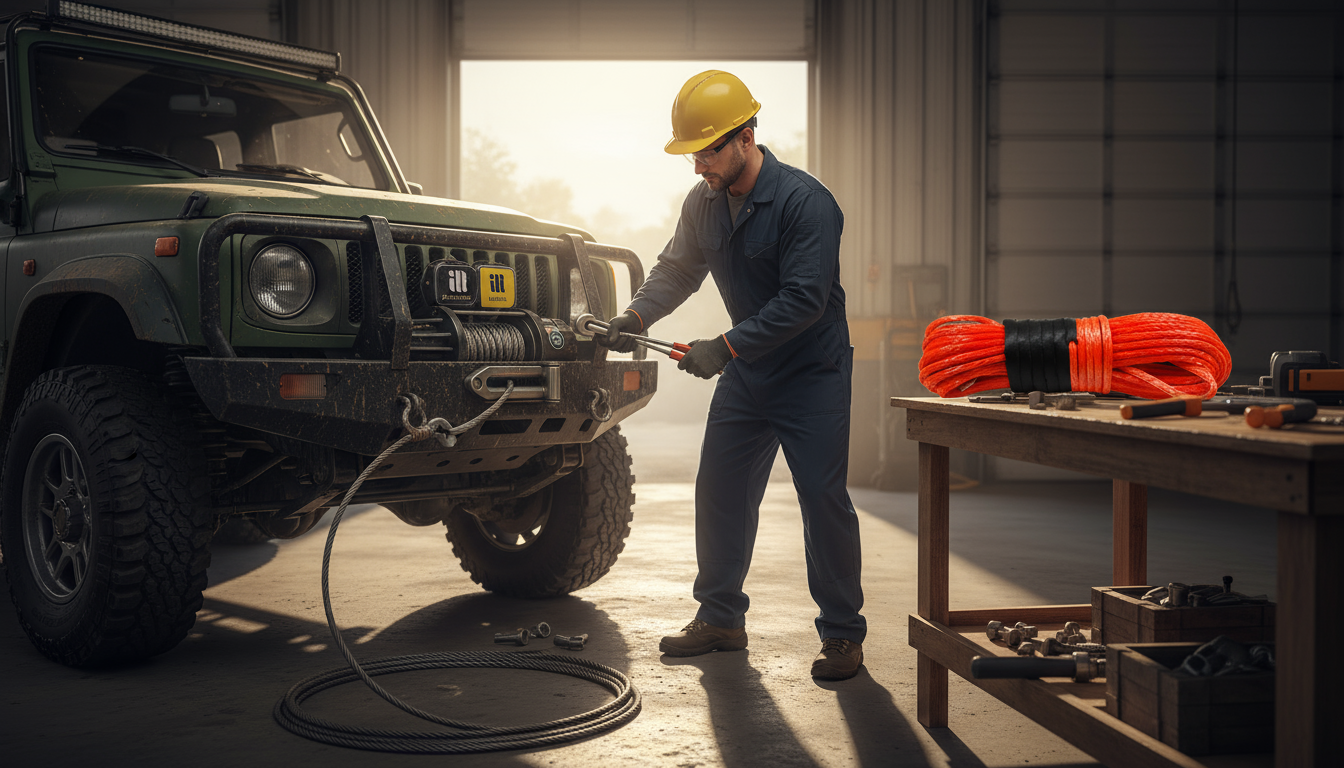
Safety checklist – Ensure the winch is isolated and the vehicle is on level ground; wear gloves, eye protection, and steel‑toed boots; inspect the kinetic strap for cuts, abrasions, or UV damage; confirm all shackles are rated for the strap’s MBS; establish a clear spectator zone at least three metres away. Tools required – rated bow or soft shackles, a spanner set for winch bolts, a winch line damper, and a 100 % nylon kinetic strap sized to your vehicle’s weight.
- Secure the vehicle and isolate winch power. Chock wheels and confirm the drum cannot rotate unexpectedly.
- Unspool and remove the steel cable from the drum, retaining the original faster or drum lock for reuse.
- Fit a drum‑safe termination (rope lock, bolt‑on eye, or thimble). Attach a rated soft shackle or hook as the new winch leader.
- Connect the kinetic strap between rated recovery points on the stranded and recovery vehicles using rated shackles. Do not spool the strap on the drum.
- Place a damper on the line and perform a low‑load test. Keep bystanders clear and target 20–30 % elongation under load without exceeding 1⁄3 of the strap’s MBS.
The practical answer to “How do I replace a winch cable with a strap?” is to remove the rigid cable, install a safe drum leader, and use a kinetic strap externally between vehicles. This method keeps loads controlled, preserves winch components, and delivers smoother recovery.
With the replacement complete, the next discussion will highlight iRopes’ custom‑engineered nylon solutions and the OEM/ODM advantages that set their kinetic straps apart from off‑the‑shelf alternatives.
Custom nylon solutions and iRopes OEM/ODM advantages
When a recovery fleet requires gear that endures harsh climates, repetitive pulls, and high UV exposure, iRopes’ 100 % nylon kinetic energy strap provides resilience that polyester‑based products cannot match. Nylon’s controlled elongation maintains predictable performance across wide temperature swings, whether you operate in desert dunes or alpine snowfields. In addition, the outer construction resists abrasion in sandy, gritty environments, supporting consistent strength over time.
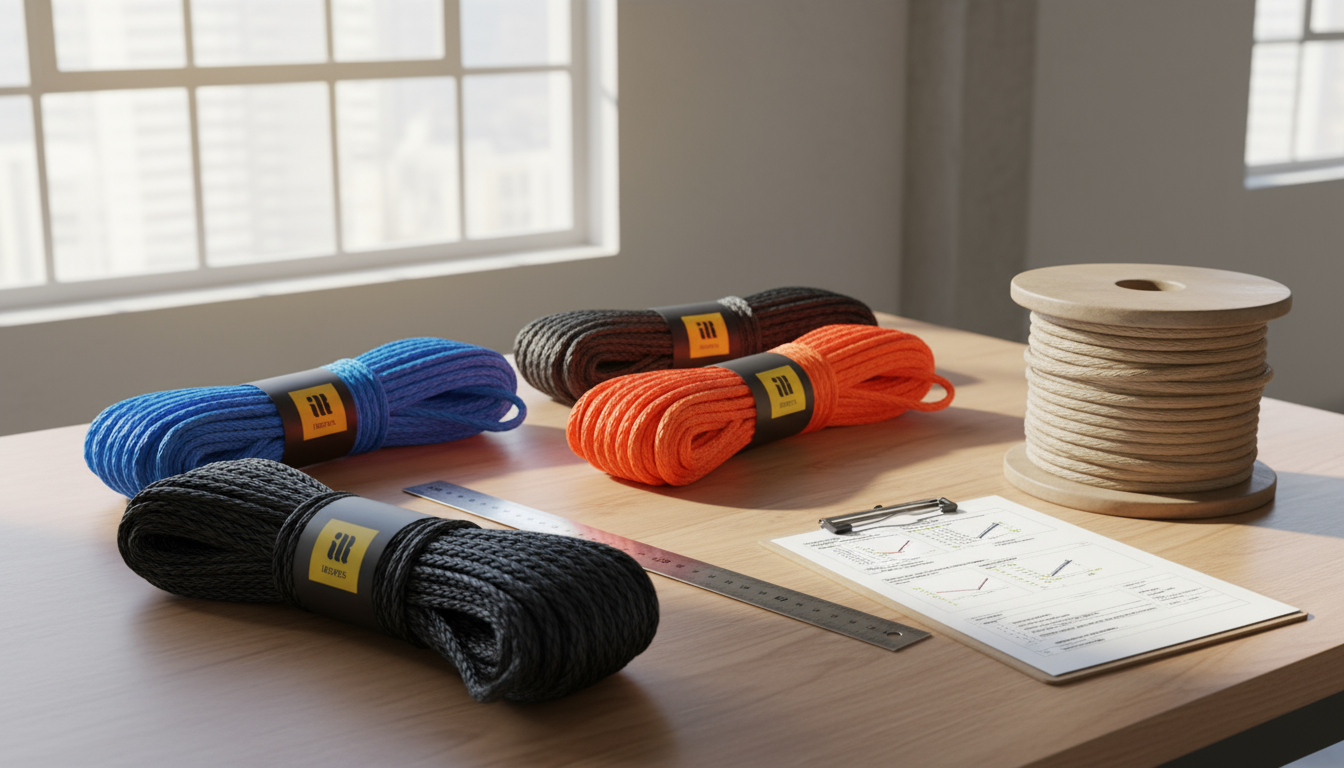
The OEM/ODM programme lets wholesale partners specify every aspect of the product. Material selection is fixed at pure nylon, while colour palettes range from high‑visibility orange to corporate branding hues. Logos, part numbers, or safety warnings can be woven into the sheath, and cut‑to‑length options minimise waste. Heavy‑duty shackles, thimbles, and loop terminations are also configurable, creating a turnkey solution that aligns with your visual identity and technical requirements.
iRopes Nylon Benefits
Why pure nylon outperforms alternatives
Thermal stability
Delivers consistent, predictable performance across hot and cold environments.
Wet performance
Works reliably when wet; the strap drains and dries quickly to maintain handling and safety.
Longevity
Enhanced abrasion and UV resistance extends service life, reducing replacement cycles.
Standard Polyester
Typical drawbacks
Limited elongation
Lower stretch reduces shock absorption during dynamic recovery.
UV sensitivity
Needs additional stabilisers to match nylon’s long‑term UV performance.
Shorter lifespan
Higher wear in abrasive conditions leads to more frequent replacements.
All iRopes products are manufactured under ISO 9001‑certified processes, helping ensure each batch meets strict dimensional tolerances and tensile‑strength specifications. For customers who share proprietary designs, iRopes applies dedicated intellectual‑property protection throughout the production cycle, from material sourcing to final packaging. This security enables partners to introduce unique branding without risk of design leakage. As a leading top‑quality nylon rope supplier, we ensure every strand meets your performance standards.
Ready to upgrade?
Request a free custom‑design quote today and let iRopes engineer a nylon kinetic strap to replace winch cable with strap for your recovery application. Explore our custom nylon winch cable solutions for superior strength and durability.
Need a personalised solution for your recovery gear?
You've seen how a kinetic energy strap stores and releases load, why an energy rope outperforms rigid winch cables, and the safest way to replace winch cable with strap in the field. By choosing iRopes’ 100 % nylon construction—unlike the 90 % polyester straps most suppliers offer—you gain superior resilience, UV resistance and a longer service life. Our OEM/ODM team can tailor colour, length, branding and accessories to match your fleet’s exact requirements, with IP protection at every step.
If you’d like a custom design, cost estimate or sizing advice, simply complete the form above and our specialists will get back to you with a personalised plan. You may also consult our winch cable size guide for detailed sizing recommendations.
