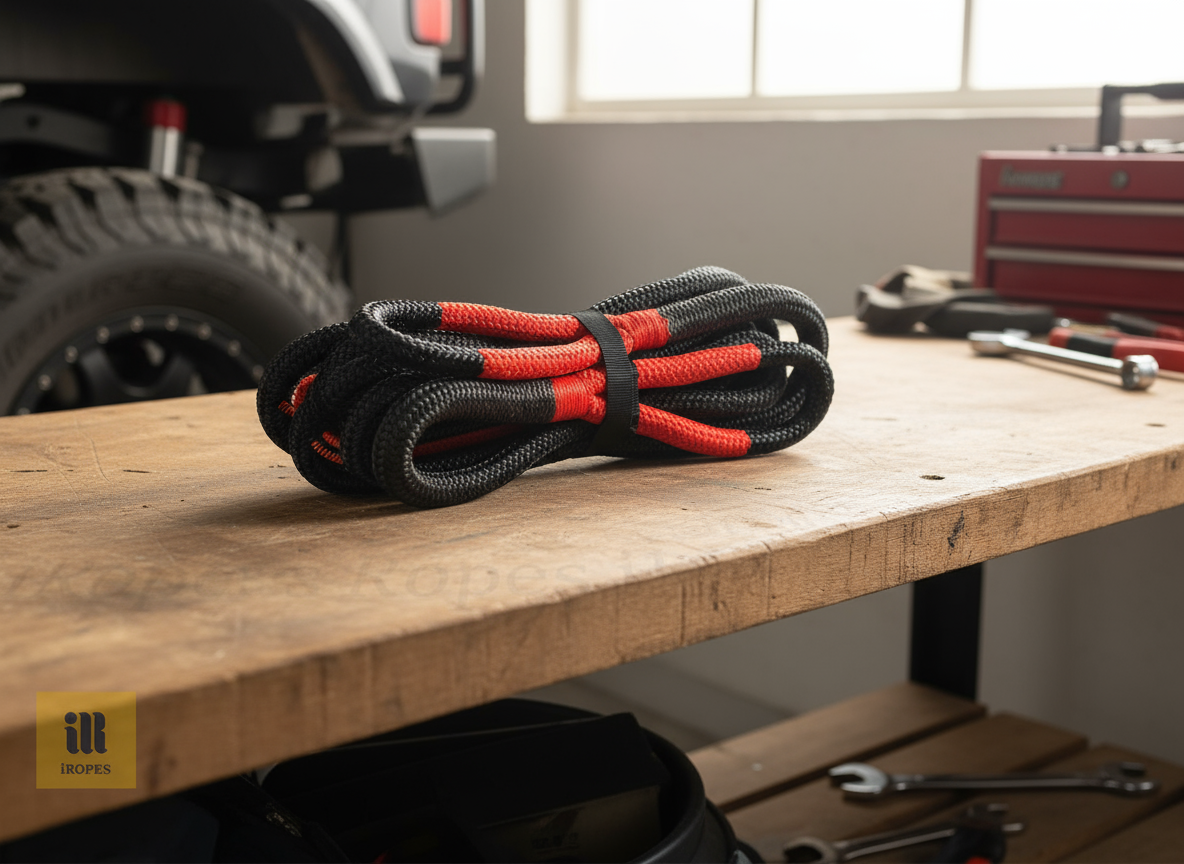
A 1‑inch kinetic recovery rope delivers a 2 500 lb working load limit and stretches ≈ 30 %, enabling smoother, faster recoveries than a static tow strap while reducing shock loads on vehicles.
What you’ll gain – ≈ 4 min read
- ✓ Speed up recoveries compared with rigid tow straps.
- ✓ Reduce the risk of vehicle damage thanks to the rope’s controlled elastic stretch.
- ✓ Safely handle loads up to 2 500 lb with a 4:1 safety factor.
- ✓ Customise colour, length and branding – fast OEM turnaround.
Most off‑road crews still rely on rigid tow straps, assuming they’re the only trustworthy option. Yet the physics of a kinetic recovery rope – storing energy in a 30 % stretch and releasing it like a spring – can shorten pull‑out time and protect your drivetrain, a fact many overlook. In the sections ahead, we’ll outline the key specs, a practical safety checklist, and the OEM tweaks that transform this advantage into your everyday rescue routine.
kinetic recovery
After visualising that off‑road rescue moment, it’s time to understand what kinetic recovery really means. The term describes an elastic rope that stores kinetic energy when stretched, then releases it to help pull a stuck vehicle out of trouble.
What is a kinetic recovery rope? It is a high‑elongation nylon active rope that stretches up to 30 % under load, temporarily storing energy and then delivering a rapid, controlled pull—often called the snatch‑strap effect.
The physics is simple yet powerful: as the rope elongates, the kinetic energy builds like a spring. When the load peaks, the rope contracts, adding force beyond a static pull. The result is a smoother, often quicker recovery with far less shock to the vehicle’s drivetrain.

When you compare this behaviour with traditional recovery tools, the safety advantages become clear.
- Static tow strap – little to no stretch, delivering a harsh jolt that can damage suspension or drivetrain.
- Steel chain – completely rigid, producing shock loads that may bend frames or snap components.
- Kinetic rope – about 30 % elongation, absorbs shock, reduces vehicle‑damage risk and improves operator comfort.
Because the rope’s elasticity cushions the pull, you’ll notice less strain on equipment and a lower chance of sudden shock loads. The controlled release also keeps by‑standers safer, as any recoil is significantly moderated compared with a chain.
The elastic recoil of a kinetic rope acts like a spring, adding extra force without jerking the vehicle, which translates into safer, more efficient recoveries for both you and your equipment.
Understanding these fundamentals sets the stage for choosing the right size—whether a 1 inch or 2 inch kinetic recovery rope—so you can match strength to the vehicle you intend to rescue.
1 inch kinetic recovery rope
With the fundamentals clarified, let’s examine the specifications that make the 1 inch kinetic recovery rope the go‑to choice for many off‑road enthusiasts.
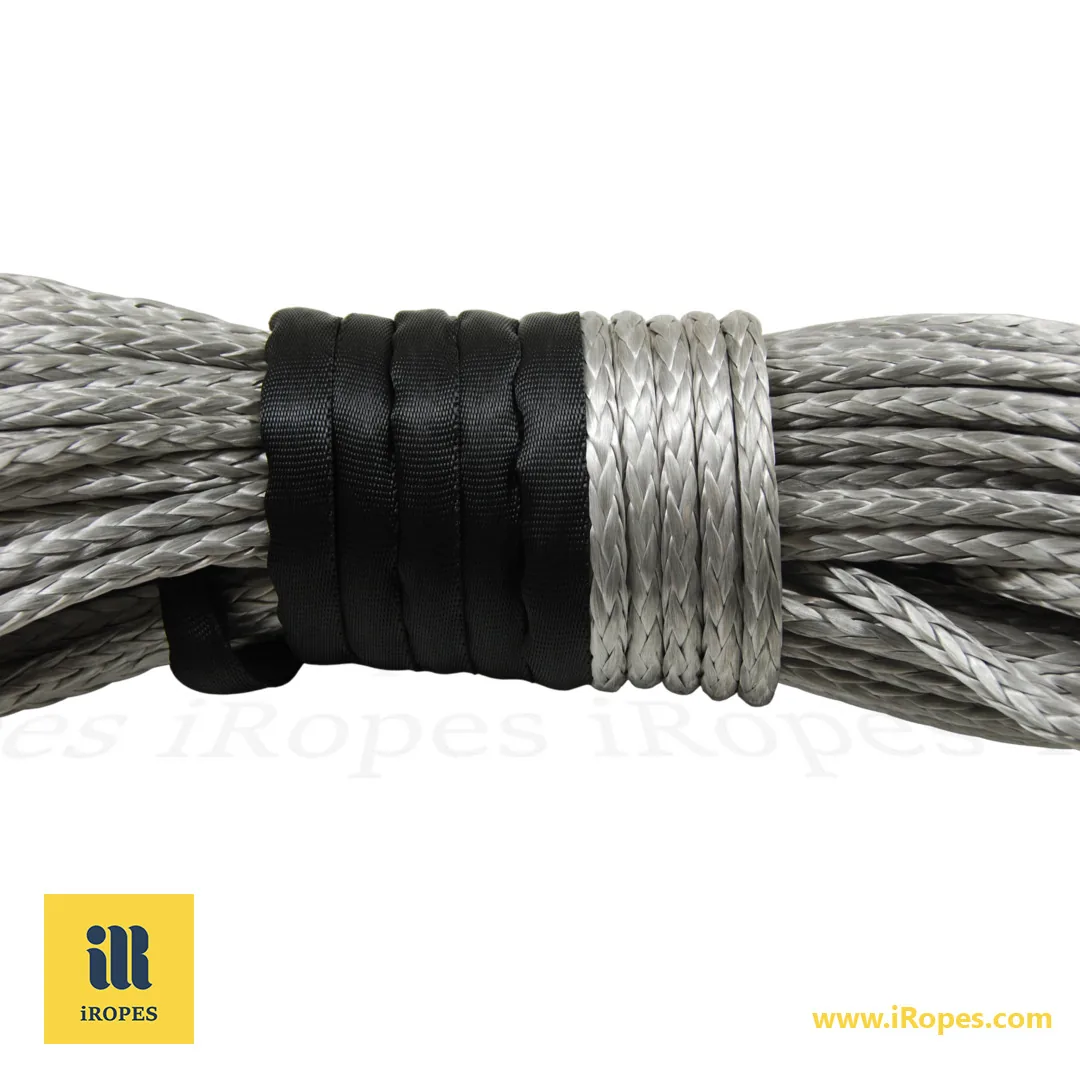
The rope is built from Yunli’s high‑elongation nylon active rope – a material prized for its strength‑to‑weight ratio and wear resistance. It has been praised by customers at home and abroad and has become the designated supplier for brand customers in Australia, America and the Middle East.
- MBS – 10 000 lb (minimum breaking strength), providing a solid safety margin for typical 4×4 recoveries.
- WLL – 2 500 lb (MBS divided by 4), the recommended working load limit for safe operation.
- Stretch – about 30 % elongation under load, the elastic behaviour that creates the snatch‑strap effect.
- Weight – roughly 9 lb for a 30‑ft length, easy to pack without adding bulk.
- Lengths offered – standard 20 ft and 30 ft, with custom cuts up to 50 ft for specialised rigs.
These numbers translate directly into everyday decisions. Knowing the WLL helps you select the right rope for your vehicle class, while the modest weight keeps the rope portable on long trail rides.
| Metric | Value |
|---|---|
| Working Load Limit (WLL) | 2 500 lb |
Beyond raw numbers, the rope’s high‑tenacity nylon is UV‑stabilised and engineered to resist cuts and abrasion, so you can trust it to withstand repeated mud‑splashes, rocky terrain and harsh sunlight.
Customization Options
iRopes can tailor the 1 inch kinetic recovery rope to match your brand identity – choose from a palette of colours, specify exact lengths, add logo‑embossed eye loops, and rely on ISO 9001‑certified quality control for every batch.
If you need more pull for heavier rigs, the 2 inch version steps up the strength while keeping the same elastic feel, preparing you for the next level of off‑road recovery.
2 inch kinetic recovery rope
The 2 inch kinetic recovery rope is built from double‑braided, high‑elongation nylon. This construction raises the minimum breaking strength (MBS) to roughly 115 k lb, giving a working load limit (WLL) of about 28 750 lb when the industry‑standard 4:1 safety factor is applied. Because the rope still elongates close to 30 % under load, it retains the familiar “snatch‑strap” recoil while delivering the brute force required for heavy‑duty recoveries.

Below is a concise side‑by‑side comparison that highlights the key differences between the 1 inch and 2 inch versions.
| Feature | 1 inch rope | 2 inch rope |
|---|---|---|
| MBS | 10 000 lb | 115 000 lb |
| WLL | 2 500 lb | 28 750 lb |
| Ideal vehicle class | ATV/UTV, mid‑size 4×4 and utes | Tractors, dump trucks, heavy‑duty rigs |
| Typical price (US) | $150‑$200 | $480‑$640 |
| Weight (30 ft) | ~9 lb | ~35 lb |
Answering a common query, “Is a 2‑inch kinetic recovery rope worth the extra cost?” – it depends on the recovery scenario. For vehicles that regularly exceed typical 4×4 masses or operate in muddy, uneven terrain, the higher MBS and WLL provide a valuable safety margin. The added weight and price are justified when the rope must withstand repeated high‑load pulls without exceeding its design limits.
Pros: higher breaking strength, larger working load limit, better for heavy‑duty tractors.
Cons: heavier to carry, higher purchase price, less compact for backpacking.
Real‑world proof comes from a Midwest farm where a 2 inch kinetic rope rescued a 12‑tonne farm tractor that had slipped into a deep mud pit. The vehicle applied a controlled pull, the rope stretched about 28 %, then released the stored energy, allowing the tractor to roll free without stalling. The crew reported no drivetrain issues, and the rope showed no visible wear after the operation.
Choosing the right size
Match rope diameter to vehicle weight and recovery environment for optimal performance.
With the heavy‑duty advantages clarified, the next step is to embed safety habits into every pull and explore how iRopes’ OEM/ODM expertise can tailor a rope that fits your exact recovery workflow.
Safety and Customisation
Having explored the strengths of the 1‑inch and 2‑inch ropes, the next logical step is to lock in safe habits before every pull and then consider how iRopes can tailor a rope to your exact workflow.
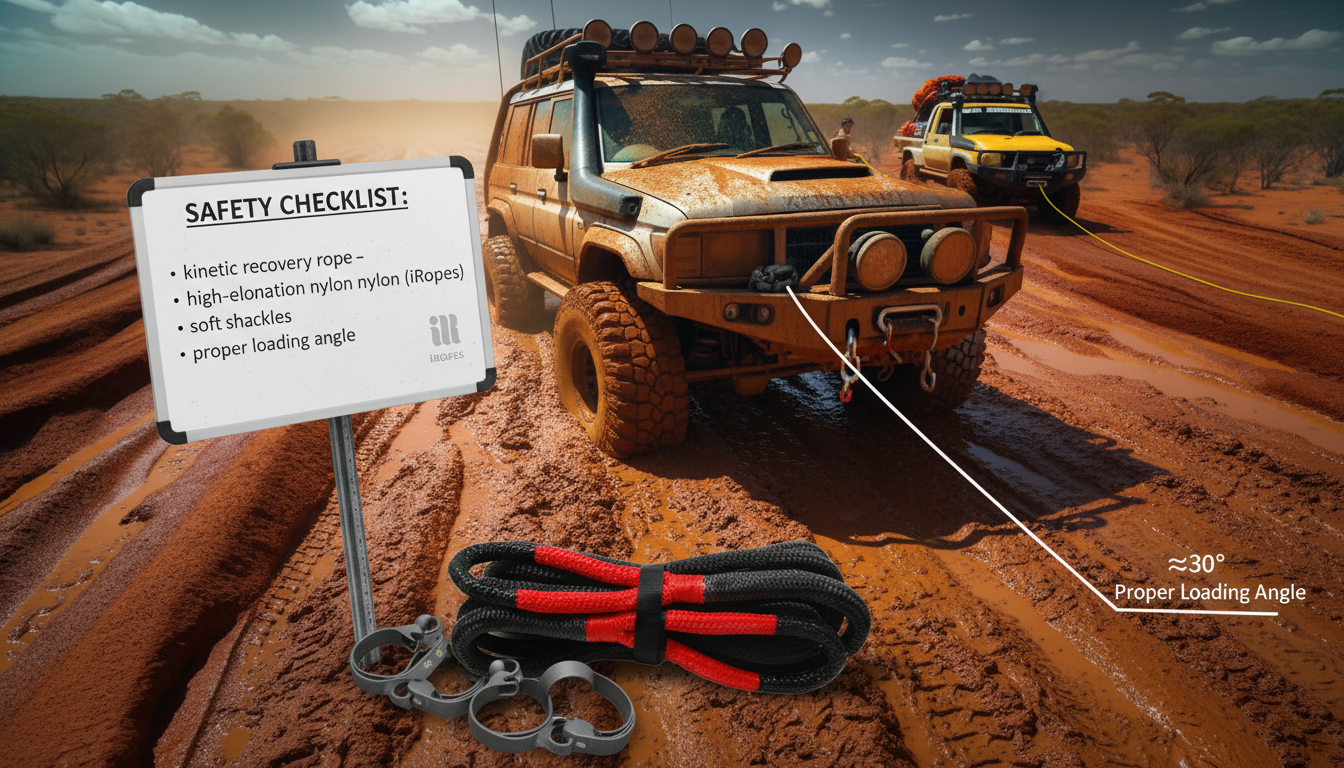
- Pre‑use visual inspection – walk the rope length looking for cuts, frays or discolouration.
- Check the MBS label – confirm the minimum breaking strength matches the rope you purchased.
- Inspect soft shackles – check the braid, sleeve and stopper knot for wear or grit.
- Verify rope length – make sure the coil provides enough slack for your intended recovery distance.
- Keep the pull straight – align vehicles to minimise side loads and avoid sharp angles.
- Clean before use – rinse off mud or sand that could hide damage.
- Avoid sharp edges – route the rope away from rocks, metal brackets or protruding bolts.
- Use a soft‑shackle attachment – prevents chafe and distributes load evenly across the closed‑eye loop.
- Test a gentle pull – give the system a light tug to verify everything is seated correctly.
- Post‑use storage – coil loosely in a dry bag away from direct sunlight.
For a deeper comparison of rope materials, see our article synthetic winch rope vs steel cord, which explains why a flexible synthetic line often outperforms a steel chain in off‑road recovery.
- Open the soft shackle by loosening the stopper knot and enlarging the loop.
- Pass the shackle through the rope’s closed‑eye loop and the rated recovery point.
- Seat the loop over the stopper knot, then dress the shackle so fibres lie flat.
- Pre‑tension by hand to lock the stopper knot firmly in place.
- Perform a brief test pull before applying the full recovery force.
Regular maintenance extends the life of your kinetic rope. After a muddy outing, rinse it with fresh water and wipe dry to prevent salt or grit from abrading the nylon fibres. Keep the rope out of direct sunlight when stored; if using any UV protectant, follow the manufacturer’s guidance. When the rope is not in use, store it loosely in a breathable bag, away from chemicals and extreme temperatures.
iRopes’ OEM/ODM service lets you shape every visual and performance detail. Choose a custom diameter that matches your vehicle class, request any colour that fits your branding, add logo‑embossed eye loops, and rely on ISO 9001‑certified quality control at each production stage. Intellectual‑property protection safeguards your designs, and our global logistics network ships finished pallets directly to your warehouse, ready for immediate distribution. Learn how to create a tailor‑made rope in our guide Customizing Your Perfect 1000 Feet of Rope with iRopes.
Need a custom solution for your rescue operations?
By now you know how kinetic recovery works, the safety edge it provides over static straps, and why iRopes’s high‑elongation nylon active rope – Yunli’s material with high strength and wear resistance – is very suitable for off‑road rescue. The 1 inch kinetic recovery rope gives a lightweight, 30 % stretch pull for typical 4×4s, while the 2 inch kinetic recovery rope supplies the brute strength needed for tractors and heavy‑duty rigs, all backed by ISO 9001‑certified quality control and full custom branding. Yunli has been praised by customers at home and abroad and is the designated supplier for brand customers in Australia, America and the Middle East.
If you’d like personalised advice on selecting the perfect rope size, colour, or accessory package, simply fill out the inquiry form above and our specialists will tailor a solution to your exact needs. Explore our full range of rope colors and cable options to find the perfect match for your brand.