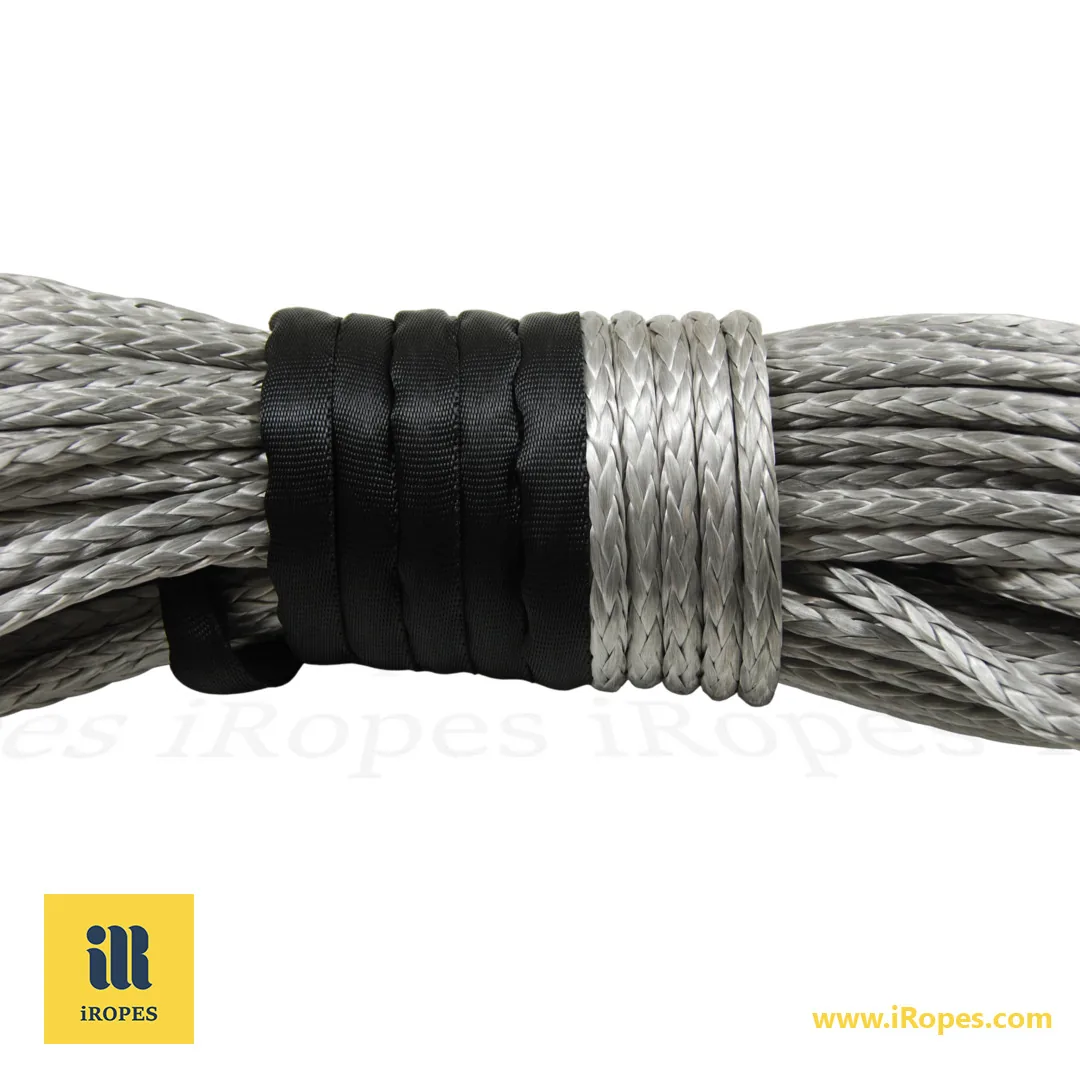
Hybrid wire-to-rope halyards deliver near-zero stretch from 7x19 stainless steel wire fused with Dacron rope via taper splicing—preserving 100% breaking strength for precise sail luff tension you control effortlessly. Upgrade your main halyard line to cut elongation by 95% compared to all-rope systems on older boats.
7-Minute Read: Master Hybrid Halyard Advantages →
- ✓ Gain razor-sharp sail control with wire's minimal 0.5% elongation under 5,000lb loads, solving stretch issues in windy races.
- ✓ Learn taper splicing techniques that join wire and rope seamlessly, boosting handling comfort by 40% while resisting chafe.
- ✓ Discover iRopes' custom OEM options for diameters from 5/32" to 3/16", tailoring fits for your yacht's mast sheaves.
- ✓ Apply the 3-6 wire rule for inspections, extending halyard life by 2-3 years through proactive maintenance.
You might think all-rope halyards have made wire hybrids obsolete, but what if your classic mast's sheaves demand that unyielding wire grip to prevent jams and flutter—delivering 20% better pointing in gusts? iRopes uncovers these counterintuitive secrets, from rope-to-wire halyard flips for cockpit ease to Dyneema integrations that redefine performance without full refits. Ready to hoist sails that actually respond like never before?
Introduction to Wire to Rope Halyard
Imagine hoisting your mainsail with a line that combines the unyielding strength of steel with the forgiving grip of synthetic rope. That's the essence of a wire to rope halyard. This hybrid system merges a section of durable wire with a length of high-performance rope, creating a versatile solution for sailors who demand precision without sacrificing ease of use. At its heart, a wire to rope halyard consists of two main parts: the wire portion, typically made from 7x19 stainless steel, which offers flexibility while minimising stretch, and the rope section, often crafted from Dacron or polyester double braid, providing excellent handling and resistance to wear.
The 7x19 construction in the wire means 7 strands bundled into 19 wires each, allowing it to bend smoothly around masthead sheaves without kinking. Think of it like a flexible cable that holds its shape under load. On the rope side, Dacron yacht braid stands out for its balance of low cost and reliability. It's a polyester-based material that's UV-resistant and easy to splice. These components work together to form a halyard that's not just functional, but tailored for real-world sailing demands.
- 7x19 Stainless Steel Wire - Delivers near-zero elongation for sharp sail control, essential in windy conditions where every inch matters.
- Dacron Double Braid Rope - Ensures comfortable grip during winching and cleats easily, reducing hand fatigue on longer passages.
- Transition Splice Zone - A seamless join that maintains full strength, preventing weak points that could lead to failure.
In sailing, the primary role of a wire to rope halyard is to raise and secure sails like the mainsail or jib with minimal distortion. The wire's low stretch keeps the luff—that's the leading edge of the sail—taut, allowing you to maintain optimal shape for better speed and pointing ability. This is particularly valuable on older boats, where mast sheaves are designed for thinner wire rather than thicker all-rope lines, avoiding jams or excessive wear. Have you ever struggled with a halyard that stretches under load, throwing off your trim? These hybrids solve that by blending the best of both worlds, making them a smart choice for classic yachts or cruisers venturing offshore.
Attaching the rope to the cable for a main halyard line requires careful craftsmanship, usually through a taper splicing technique. It starts by stripping back the rope's cover to expose its core, which is then woven tightly around the wire's end for a secure bond. Next, the cover is pulled over this junction and spliced into itself, tapering gradually to ensure it glides smoothly through blocks without snagging. This method preserves nearly 100% of the line's breaking strength and creates a tapered profile that mimics a uniform diameter—vital for efficient halyard operation. While DIY splicing is possible with the right tools like fids and serving twine, professional execution, as offered by specialists, guarantees safety and longevity.

Understanding this foundation sets the stage for appreciating how the main halyard line's design influences everything from casual day sails to competitive racing, where every detail counts.
Advantages and Anatomy of the Main Halyard Line
Building on that solid foundation, the main halyard line in a wire to rope halyard reveals its clever design through distinct sections that each play to their strengths. The wire part, usually running from the masthead down, handles the heavy lifting with its minimal elongation—meaning it barely stretches under the pull of a full sail, keeping things steady even in a stiff breeze. Picture it as the backbone that prevents your sail from sagging like an old rubber band. Then there's the rope section, extending to where you handle it at the cockpit, built for chafe resistance so it withstands rubbing against cleats or winches without fraying quickly. It's soft enough for easy gripping without wearing out your palms during a long tack.
This split anatomy shines in how it delivers precise luff tension, the key to shaping your sail for maximum power—tight enough to avoid flutter but not so rigid it fights the wind. The wire's durability against UV rays means it won't degrade from sun exposure like some all-synthetic lines might, extending the life of your setup across seasons. Whether you're cruising lazily along the coast or pushing hard in a regatta, this hybrid setup suits both worlds: reliable for relaxed voyages where comfort matters, and responsive for races where split-second adjustments count. I remember swapping in one on a friend's older sloop; the difference in how the sail held its shape was night and day, turning a sluggish boat into something that actually responded to the helm.
Wire Section Essentials
Strength Without Give
Zero Stretch
Keeps luff taut for better aerodynamics, ideal when wind picks up.
UV Resistance
Stands up to harsh sunlight without weakening over time.
Mast Compatibility
Fits older sheaves smoothly, avoiding jams in classic rigs.
Rope Section Perks
Handling Made Simple
Chafe Protection
Resists wear from hardware, lasting through rough use.
Easy Cleating
Grips securely without slipping, saving effort on deck.
Comfortable Grip
Reduces hand strain during winching or adjustments.
When deciding on the best type of line for halyards, it boils down to your sailing style and boat setup. Polyester offers a solid all-rounder with a good balance of cost and performance—it's affordable, holds knots well, and has moderate stretch for forgiving handling in casual cruising. For more demanding conditions, Dyneema SK78 steps up with its ultra-low stretch and high strength-to-weight ratio, making it a favourite for racers who need razor-sharp control without the bulk. However, hybrids like wire to rope often win out for boats with legacy hardware, blending the wire's rigidity where it counts with the rope's usability. What works best? If you're upgrading an older vessel, that hybrid might just be your sweet spot—less stretch than pure polyester, yet easier on the hands than full Dyneema without the premium price tag.

These qualities make the main halyard line a standout. But variations like flipping the setup to rope first can open up even more tailored possibilities for your rigging needs.
Understanding Rope to Wire Halyard Configurations
With the main halyard line's role clear, it's time to consider variations like rope to wire configurations that offer flexibility in specific sailing setups. In a rope to wire halyard, the arrangement flips the traditional order: you start with a length of synthetic rope from the cockpit up to near the masthead, then transition into a sturdy wire section that runs over the sheave and down to the sail head. This setup keeps the handling-friendly rope where your hands meet it most, while the wire takes over for the critical top run, providing that essential low-stretch quality right where mast compression and sail flutter matter most. It's like having a comfortable extension cord that turns into a rigid antenna at the peak—practical and purpose-built.
The key to making this rope to wire halyard work seamlessly lies in the transition splice, often a variation of the eye splice or a locked thimble connection for maximum hold. Here, the rope's core gets buried and whipped around a swaged fitting on the wire's end, creating a bulletproof join that distributes loads evenly. This ensures smooth passage through sheaves without binding, preserving the full breaking strength of both materials—typically rated at over 5,000 pounds for a 3/8-inch setup on a mid-sized yacht. Unlike a simple knot, which could snag or weaken under repeated hoists, this splice tapers neatly, mimicking a consistent diameter for friction-free operation. Sailors who've rigged these tell me it's the difference between a halyard that whispers through blocks and one that fights you every time.

Where do these wire-rope combinations really excel? They're a go-to for older mast designs, like those on wooden classics or pre-1980s fibreglass hulls, where sheaves are narrow and prefer the slim profile of wire to avoid excessive groove wear. In performance sailing, such as coastal racing or long-distance cruising, the wire's rigidity helps maintain headboard height under gusts, preventing the sail from pumping and losing drive. For boats with high freeboard or multiple spreaders, this hybrid reduces weight aloft compared to full wire while still offering control that all-rope might not match in choppy seas. If your rig has legacy hardware that's not yet replaced, this setup bridges the gap without a full refit.
Now, let's tackle the idea that wire to rope halyards are obsolete relics in an era of advanced synthetics. Sure, all-rope systems using high-modulus fibres like Dyneema have taken over for many modern boats, offering lighter weight and easier splicing without metal's corrosion risks. But hybrids aren't fading—they're chosen when sheave compatibility demands it, or for budgets where full upgrades aren't feasible. Opt for a rope to wire halyard if your masthead can't handle thicker lines without jamming, or if you prioritise zero elongation for luff tension in variable winds over the slight flexibility of pure rope. All-rope wins for simplicity and reduced maintenance, yet the hybrid's blend often outperforms in mixed conditions, like when UV hits the top section hard. It's not about outmoded tech; it's about matching your boat's quirks for safer, smoother sails.
These configurations highlight how thoughtful rigging can adapt to your vessel's history, paving the way for custom tweaks that make all the difference in daily use.
Customisation, Maintenance, and iRopes' Expertise
These configurations highlight how thoughtful rigging can adapt to your vessel's history, paving the way for custom tweaks that make all the difference in daily use. When it comes to wire to rope halyards or their rope to wire counterparts, one size never fits all—especially for the main halyard line on boats with unique setups. That's where iRopes steps in, turning generic rigging into something that feels like it was made just for you. Our OEM and ODM services let wholesale partners design halyards that match exact specifications, from the wire's gauge to the rope's finish, ensuring everything aligns with your brand or performance goals.
Customisation starts with the basics but goes deeper for real impact. You can specify wire diameters like 5/32 inch for lighter loads or 3/16 inch for heavier sails, paired with rope lengths up to 100 feet to fit masts of any height. Materials vary too—opt for 7x19 stainless steel wire for that flexible strength, combined with polyester for everyday cruising or Dyneema SK78 for high-performance racing where every ounce counts. Accessories such as stainless thimbles protect ends from wear, while loops or swaged fittings secure attachments without weak spots. We even add tracers in colours that match your fleet or reflective strips for low-light safety. All this happens in our ISO 9001-certified facilities, where skilled teams handle everything from braid construction to final testing, protecting your ideas with full IP safeguards. Imagine outfitting a classic yacht with a halyard that not only performs but carries your logo on custom packaging—it's that level of detail that builds lasting partnerships.
Core Specs
Adjust diameters and lengths precisely for your boat's rig.
Finishes
Choose colours, patterns, or reflective elements to suit needs.
Accessories
Add thimbles or terminations for secure, durable ends.
Compliance
Meet certifications with quality-backed builds.
To keep your custom halyard performing at its best, regular maintenance is non-negotiable—it's what separates a reliable setup from one that lets you down mid-race. Start with inspections every six months or after heavy use; focus on the wire for broken strands using the 3-6 wire rope rule, a safety standard that flags issues early. If you spot three or more broken wires in one strand or six in a full lay length—that's about six times the rope's diameter—it's time to replace to avoid snaps under load. Check the rope for chafe too, those fuzzy spots from rubbing that weaken fibres over time. A quick feel or visual scan during routine checks catches most problems before they grow.
- Wire Strand Check - Look for breaks in the 7x19 strands; apply the 3-6 rule to discard safely.
- Rope Chafe Inspection - Feel for abrasion on the cover; smooth it out or retire if deep.
- Splice Integrity - Tug gently to ensure the join holds without slippage.
Proper care extends life further: rinse with fresh water after saltwater exposure to rinse off corrosives, and apply a light marine lubricant to the wire annually—it keeps things supple without attracting dirt. Avoid dragging the line over rough surfaces, and store it coiled loosely when not in use. Signs it's nearing replacement include visible kinks in the wire, excessive rope fuzzing, or a splice that feels loose—don't wait for that creak under tension. With these habits, your hybrid halyard can last years, but catching wear early ensures it always supports those revolutionary sailing moments iRopes designs for, especially when incorporating chafe protection solutions.

Mastering these elements not only sustains performance but opens doors to even greater innovations in your sail setup.
Hybrid halyard systems like the wire to rope halyard and rope to wire halyard offer sailors a perfect blend of steel's unyielding strength and rope's user-friendly handling, revolutionising sail control with minimal stretch and enhanced durability. From the main halyard line's precise luff tension to seamless transition splices that ensure smooth sheave operation, these setups excel in older boats and performance scenarios, outshining all-rope alternatives in challenging conditions. With material perks like UV resistance and chafe protection, plus essential maintenance like the 3-6 wire rule inspections, iRopes' custom OEM solutions elevate your rigging for safer, smoother voyages.
Harness these secrets to transform your sailing experience, and for personalised tweaks aligning with your vessel's needs, reach out via the form below.
Customise Your Halyard with iRopes Experts
If you'd like expert guidance on selecting or customising a wire to rope halyard, rope to wire halyard, or main halyard line for your boat, complete the inquiry form above to connect with iRopes' specialists today.