Discover the hidden specs that prevent 90% of marine rope failures—nylon's 25% stretch absorbs docking shocks, while Dyneema delivers 15x steel's strength at 1/7th the weight, safeguarding your boat, yacht, or shipyard operation from disaster. These tailored insights are crucial for securing vessels and optimising industrial marine use.
Unlock Marine Rope Mastery in ~10 Minutes →
- ✓ Master material choices: Learn how nylon cuts anchoring risks by 30% through superior shock absorption, saving your vessel from sudden snaps.
- ✓ Solve construction puzzles: Identify double braid's low-stretch edge—under 10% elongation—for precise yacht rigging that boosts control by 40% in high winds.
- ✓ Gain customisation expertise: Tailor diameters and lengths to your boat size, ensuring 20% higher load capacity via iRopes' OEM precision.
- ✓ Achieve shipyard resilience: Select HMPE for 100-ton mooring loads, extending rope life 3x in harsh saltwater with ISO-backed durability.
You think any sturdy rope will do for your yacht's mooring—until a rogue wave tests that assumption and costs thousands in repairs. But what if overlooked specs like 12-strand braiding's torque resistance could slash that risk, revealing why standard lines fail under 5 tonnes while custom ones endure 50? Dive deeper to uncover iRopes' tailored solutions that transform vulnerability into unshakeable sea-readiness, arming you with the exact blueprint for disaster-proof marine operations.
Decoding Materials and Constructions in Marine Boat Rope
Imagine yourself on the water with your recreational boat. The waves pull at the dock as you try to secure everything safely. In such moments, the right marine boat rope becomes your best ally, absorbing shocks and holding steady without fail. At iRopes, a leading rope manufacturer based in China, we have spent years perfecting these essentials, drawing on materials that stand up to the sea's relentless demands. Let's break down what makes a good marine boat rope perform, starting with the core materials that give it life.
Nylon stands out as a go-to choice for many boaters, thanks to its impressive shock absorption. Picture this: during docking or anchoring, sudden jerks from wind or current could snap a weaker line. However, nylon stretches just enough—up to 20-30% under load—to cushion those impacts, then snaps back without permanent damage. It is perfect for recreational setups, where you are not dealing with massive vessels but still require reliability in choppy conditions. Materials like nylon handle saltwater corrosion better than natural fibres, keeping your gear durable over seasons of use.

Now, let's consider constructions—the way the rope is built—as this can make or break its performance. For boat docking, what type of rope works best? A 3-strand twisted construction offers great elasticity, twisting like a sturdy spring to flex with the boat's movement. It is straightforward to handle and splice if needed, making it ideal for tying off at the marina. On the flip side, double braid provides superior grip and control; think of it as a smooth, covered powerhouse that is easier to coil and less prone to kinking. If you are securing lines on a windy day, this setup allows for quick adjustments without fraying your nerves—or the rope.
Choosing the right specifications ultimately depends on your vessel's size. For a 20-foot runabout, aim for 3/8-inch diameter lines approximately 15-20 feet long per side; larger boats up to 40 feet might require 1/2-inch ropes extending 25-30 feet. These dimensions ensure even load distribution in saltwater, where constant exposure can weaken lesser materials over time. Here, durability means resisting the brine's bite, so always factor in a safety margin—typically one-third of the breaking strength for working loads.
Do not overlook polypropylene for lighter towing jobs, such as pulling a dinghy or setting up barriers. It floats, which is a lifesaver if it goes overboard, and its low weight makes handling a breeze on smaller crafts. However, here is a practical tip: while it is budget-friendly, UV rays can degrade it faster than nylon, so store it out of direct sun when not in use. Regular rinsing with fresh water after saltwater exposure extends its life, preventing the brittle fade sometimes seen on neglected gear.
- Match diameter to boat length: For vessels under 25 feet, 3/8-inch works well; scale up for stability on bigger hulls.
- Calculate length with extras: Add 1.5 times the freeboard height for secure loops without strain.
- Inspect for wear monthly: Look for fuzzing or discolouration to catch issues early in harsh marine settings.
These everyday choices keep things simple and safe for your boating trips. However, as we move to more finely tuned applications, you will see how precision elevates performance on grander scales.
Precision Specs for Marine Yacht Rope in High-Performance Sailing
Having explored ropes tailored for everyday boating adventures, let's shift to the sophisticated demands of luxury vessels where precision is paramount. On a sleek yacht cutting through the waves during a regatta or a leisurely cruise, every line must respond instantly and hold firm under precise control. This is the realm of marine yacht rope, engineered for speed and reliability, rather than just basic holding power. Unlike the more forgiving nylon setups we discussed for recreational boats, which prioritise stretch to absorb dockside jolts, yacht lines demand minimal elongation to keep sails trimmed sharp and the hull stable. At iRopes, a specialist in comprehensive OEM and ODM services, we craft these high-performance essentials to meet the exacting needs of sailing enthusiasts and superyacht owners worldwide.
At the heart of superior yacht performance are advanced fibres like polyester and Dyneema, which set marine yacht rope apart from standard boat options. Polyester delivers consistent low stretch—typically under 10% at working loads—making it ideal for halyards that hoist sails without sagging over long runs. It is tough against saltwater and sunlight, holding its shape when standard ropes might slacken. Then there is Dyneema, an ultra-high-molecular-weight polyethylene that is 15 times stronger than steel by weight, yet floats effortlessly. For sheets that control jib angles in a stiff breeze, its near-zero stretch ensures commands translate directly to the canvas, preventing the frustrating lag you might experience with less refined gear. Ever wondered what separates a casual sail from competitive racing? It is these fibres that give yacht crews the edge, turning potential drifts into seamless manoeuvres.
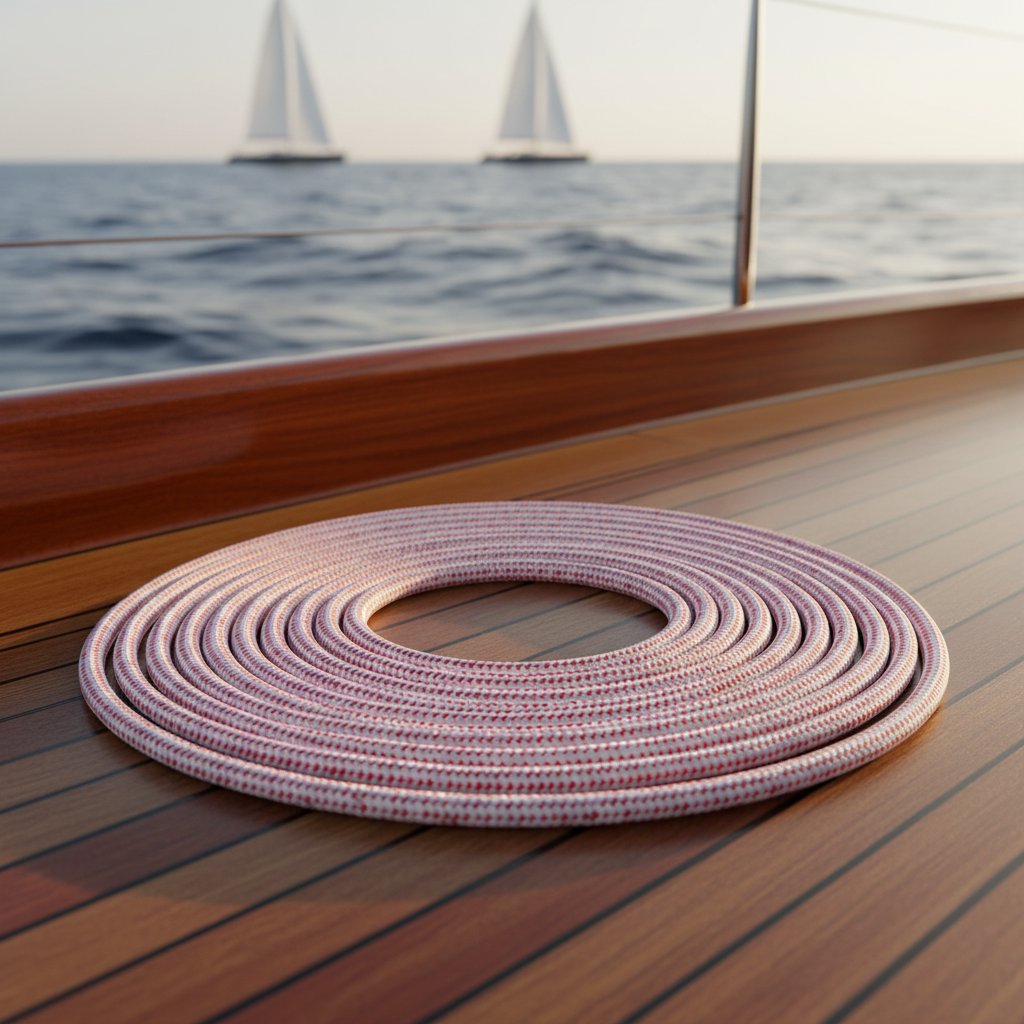
Construction also plays a pivotal role, with double braid and single braid leading the way for smooth rigging. Double braid wraps a firm core in a flexible cover, providing the grip needed for winches while running quietly through blocks—perfect for sheets that see constant adjustments. Single braid, often in Dyneema, offers a hollow design that is lightweight and easy to splice on the fly, ideal for halyards where every gram counts. But how do you choose the right diameter for yacht mooring? Start with your vessel's displacement: for a 40-foot yacht, 5/8-inch lines can handle typical loads up to 5 tonnes, scaling to 3/4-inch for larger superyachts facing tidal surges. Factor in the bollard's size and add a 20% safety buffer to avoid overload during gusts.
Customisation elevates these specifications further, allowing yacht owners to infuse their brand into every detail. We at iRopes can weave in custom colour patterns—say, nautical blues fading to white—for visual appeal on deck, or add accessories like stainless thimbles that protect eyes from chafe during mooring. For superyachts, this means ropes that not only perform but also reflect the owner's style, from embroidered logos to glow-in-the-dark tracers for night operations.
Finally, abrasion resistance and breaking strength are non-negotiable for dynamic loads in racing or cruising. Polyester covers shrug off repeated friction against rails, while Dyneema's breaking strength can exceed 50,000 pounds in 1/2-inch diameters, far outpacing boat ropes under the same stress. In a sudden squall, this means your yacht stays on course, not adrift. Consider a scenario from last season's coastal races: a team swapped to our Dyneema sheets and shaved minutes off their times, all because the lines held without creeping. This showcases the immediate and quantifiable benefits of selecting the right material and construction.
- Assess vessel displacement: Multiply boat weight by 1.5 for safe mooring diameter.
- Test for elongation: Opt for under 5% stretch in high-wind areas.
- Verify certifications: Ensure lines meet ISO standards for offshore use.
These refined choices keep luxury vessels gliding effortlessly, but in the heavier lifts of shipyards, even tougher demands await.
Robust Specifications for Shipyard Rope in Industrial Marine Use
From the elegance of yachting, we now turn to the rugged world of industrial operations, where ropes must withstand extreme conditions in shipyards. Handling massive vessels means dealing with forces that could crush lesser lines—think towing a 200,000-tonne tanker through turbulent waters or lifting cargo containers in relentless coastal winds. In these high-stakes environments, shipyard rope is not just about holding on; it is the backbone of safety and efficiency. At iRopes, we specialise in building these robust solutions to meet the brutal demands of mooring, towing, and lifting, ensuring operations run without a hitch. Our precision manufacturing and quality assurance, backed by ISO 9001 certification, guarantee reliability for wholesale customers.
For shipyard tasks, heavy-duty materials like HMPE—high modulus polyethylene, a synthetic powerhouse similar to Dyneema—and Technora, an aramid fibre known for its heat and cut resistance, rise to the challenge. HMPE offers an incredible strength-to-weight ratio, sometimes 15 times stronger than steel, while floating in water to avoid underwater snags during towing. Technora steps in for scenarios with friction or high temperatures, like securing loads near engines, where it resists melting under stress. What ropes are used in shipyard operations for large vessels? These fibres handle mooring lines that secure giants against docks, towing setups that pull ships into dry docks, and lifting slings that hoist heavy gear overhead, all while shrugging off saltwater's corrosion and UV exposure that would degrade everyday synthetics in months. This makes them indispensable.

Construction matters just as much, with multi-strand designs like 12-strand braiding delivering the superior strength and flexibility needed for torque-heavy jobs. This setup weaves fibres into a compact, low-stretch form that flexes without kinking during repeated winch cycles, outperforming simpler twists in endurance tests. For a supertanker mooring, a 4-inch diameter 12-strand line might support working loads up to 100 tonnes, bending smoothly around massive cleats without binding. This construction ensures longevity and prevents costly failures.
Safety hinges on compliance with certifications and working load limits, especially for cargo securing and personnel access. Ropes must meet standards from bodies like the International Maritime Organisation, where the working load—often one-fifth of the breaking strength—ensures no snap under dynamic pulls. In practice, this means lines rated for at least 50 tonnes in breaking strength for routine shipyard lifts, with clear labelling to prevent overloads that could endanger crews or equipment. This rigorous adherence to safety standards is crucial for preventing accidents. For enhanced mooring safety, explore ship mooring ropes that align with OCIMF guidelines to reduce snap-back risks significantly.
Heavy-Duty Materials
For Extreme Loads
HMPE Fibres
Ultra-strong and lightweight for towing massive hulls without added drag.
Technora Aramid
Heat-resistant for friction-heavy lifts near machinery.
Low Water Absorption
Maintains full strength in wet conditions for reliable mooring.
Key Constructions
Built for Durability
12-Strand Braid
Balances power and bend for flexible handling in tight spaces.
High Torque Resistance
Prevents twisting during winch operations on large vessels.
Splicing Compatibility
Allows quick repairs onsite for uninterrupted workflows.
Custom terminations and chafe protection seal the deal for harsh environments. Think spliced eyes reinforced with thimbles to connect securely to bollards, or integrated guards that ward off abrasion from rough hulls during towing. For large vessel applications, guidelines suggest diameters from 2 to 6 inches based on tonnage—say, 3 inches for a 50,000-tonne freighter—with chafe sleeves every 10 feet on exposed runs to extend service life beyond a decade. These custom engineering solutions make all the difference, particularly when every operation counts towards deadlines and budgets.
Grasping these industrial-grade details shows how tailored approaches can address even the toughest marine challenges ahead, providing cost-effective and reliable solutions.
Customisation and Key Factors for Securing All Marine Ropes
Grasping these industrial-grade details shows how tailored approaches can address even the toughest marine challenges, whether you are outfitting a small craft or managing a bustling port. Now, let's turn to what ties it all together: customisation that fits your exact needs across boats, yachts, and shipyards. At iRopes, a leading rope manufacturer, we do not just supply ropes; we collaborate to create them from the ground up, ensuring every line enhances safety and efficiency. This is where our comprehensive OEM and ODM services shine, adapting to your operational demands with precision, backed by our ISO 9001 certification.
Start with the basics of personalisation. We begin by assessing your setup—recreational docking, high-speed yacht rigging, or heavy shipyard towing—and select materials that align perfectly. Need something lightweight yet tough for a yacht tender? We will blend polyester with HMPE for that balance. Lengths get dialled in based on your vessel's specifics; for instance, how do you choose the right length? Measure from the cleat to the farthest tie-off point, then add twice the freeboard height plus a little extra for adjustments in rough seas. For a 30-foot yacht, that might mean 40-foot lines to handle swells without pulling too tight. Accessories come next: thimbles for smooth turns around winches or custom loops that snap into place during quick manoeuvres. These tweaks are not afterthoughts; they are engineered to boost handling and reduce wear, drawing from years of feedback from wholesale partners who have seen turnaround times cut in half with our setups.

Critical specifications keep these custom pieces performing under pressure. UV stability is key in sun-baked harbours, where unprotected lines might fade and weaken after a season; we coat ours with stabilisers that maintain 90% strength after 500 hours of exposure. Chemical resistance wards off fuels or cleaners that could eat through standard synthetics, vital for shipyard environments near spills. And for wholesale clients, our intellectual property (IP) protection means your unique designs—like a branded pattern for your fleet or specialised solutions—stay confidential from concept to shipment. These elements are not just checkboxes; they ensure your investment lasts, potentially saving thousands in replacements over time. This approach guarantees unparalleled cost-effectiveness and design integrity. To optimize your setup, consider the ultimate guide to custom 3/4 and 1/2 marine rope for tailored diameters suited to your vessel's requirements.
Once in use, best practices for maintenance and inspection keep everything sharp. Rinse lines with fresh water after every saltwater outing to flush out crystals that cause brittleness. Inspect monthly: feel for soft spots or glazing that signal internal wear, and retire any line showing more than 10% strength loss from tests. For storage, coil loosely in a shaded spot to avoid heat build-up. These habits extend life by years, letting you focus on the water rather than worries.
Material Tweaks
Adapt fibres for your load—nylon for bounce, Dyneema for zero give.
Length Precision
Custom cuts ensure no slack or snap in varying conditions.
Durability Boosts
UV and chemical guards for long-term reliability offshore.
Global Reach
ISO-backed delivery straight to your dock worldwide.
Backing it all is our global delivery network and ISO 9001 certification, which guarantees every batch meets rigorous tests for consistency. Shipments arrive on schedule, palletised for easy integration into your operations, whether in Sydney or Seattle. This reliability ensures smooth sailing, turning potential headaches into seamless logistics. Timely delivery and punctual order fulfilment are key components of our service.
From the shock-absorbing nylon in marine boat rope for recreational docking, to the low-stretch Dyneema in marine yacht rope for high-performance sailing, and the heavy-duty HMPE in shipyard rope for industrial towing, selecting the right specifications is crucial for vessel safety across all categories. iRopes, based in China, tailors materials like polyester for UV resistance or Technora for heat endurance based on size and operations, ensuring durability in saltwater while offering OEM customisations for seamless integration. These insights empower you to choose ropes that prevent disasters and enhance efficiency on any craft or facility. We are committed to being a strategic partner, offering comprehensive rope solutions with dedicated IP protection. For vessel-specific advice, dive into choosing the best marine rope, whether 1/4 inch or 2 inch, to match your operational scale.
Building on these tailored solutions, partnering with experts can refine your setup for optimal performance. Our focus is on wholesale customers in developed countries, providing custom rope solutions that meet diverse needs.
Need Bespoke Marine Rope Advice? Get Personalised Guidance
If you are ready to discuss custom specifications for your boats, yachts, or shipyard needs, fill out the inquiry form above—our team at iRopes is here to provide tailored recommendations and quotes to safeguard your operations and elevate your brand. Partner with us for quality, customised rope solutions and unparalleled expertise.
