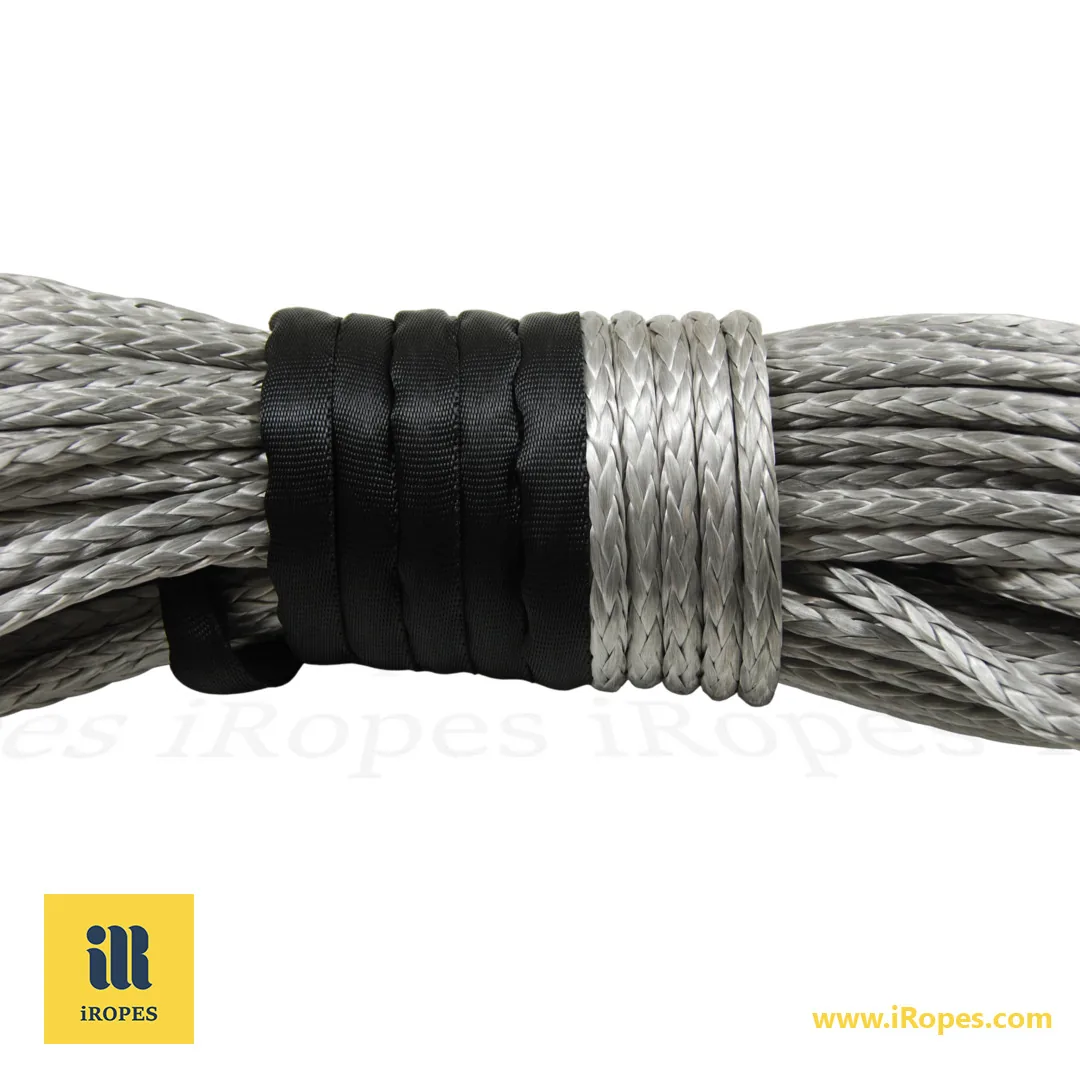
A 10 mm 12‑plait UMWPE (also called UHMWPE) winch cable delivers up to 20 % higher tensile strength (≈ 7 950 kg) and is ≈ 80 % lighter (≈ 7.6–8 kg/100 m) than a comparable 10 mm steel cable—giving you stronger, safer pulls without the weight penalty.
Key wins in just ≈8 min read
- ✓ ≈ 20 % stronger breaking load – about 7 950 kg versus 6 530 kg for a 10 mm steel cable.
- ✓ ≈ 80 % weight reduction – only ≈ 7.6–8 kg per 100 m compared with 38.1 kg for steel.
- ✓ Lower snap‑back energy, cutting operator injury risk when failures occur.
- ✓ Potentially lower lifecycle cost thanks to reduced wear, freight savings and easier handling.
Many installers still reach for a coil of steel, convinced it’s the only rugged option. Yet a 10 mm 12‑plait UMWPE winch cable consistently outperforms in strength‑to‑weight and handling, while improving safety. In this guide, we unpack breaking load, snap‑back risk and maintenance so you can choose confidently between a 10 mm steel wire rope and a modern synthetic alternative.
Understanding the 10mm steel cable: definition, standards, and basic load capacity
Now that safety is in focus, let’s look at what actually makes a 10 mm steel cable tick. Whether you’re fitting a 4×4 winch or specifying an industrial hoist, start with the cable’s anatomy, the standards it meets, and its load‑capacity numbers.

A 10 mm steel cable typically comprises a central core (fibre or steel) surrounded by seven strands, each built from 19 wires – the classic 7×19 construction. The nominal 10 mm diameter is measured to the outermost wires. Core type, strand count and wire grade together dictate tensile properties and fatigue resistance.
Manufacturers follow recognised standards to guarantee consistency. In Europe, DIN EN 13414‑1 is commonly cited for wire‑rope slings and testing, while in North America ASTM A1023 defines requirements for steel wire rope. Conforming to these specifications supports the load ratings claimed on data sheets.
- Vertical hitch (single‑point lift) – typical safe working load about 1.2 t (≈ 1 200 kg)
- Basket hitch (double‑point lift) – typical safe working load about 2.4 t (≈ 2 400 kg)
- Breaking strength – about 64.10 kN (≈ 6 531 kg) for a 10 mm 7×19 galvanised construction
When you ask, “What is the load capacity of 10 mm wire rope?”, those figures form the baseline. Manufacturers commonly apply a safety factor of around 5× to the breaking strength to set the safe working load (SWL), which aligns with the ≈ 1.2 t vertical and ≈ 2.4 t basket ratings above.
With the fundamentals clear, you can compare a 10 mm steel cable to newer options like a 10 mm winch cable made from 100 % 12‑plait UMWPE. Next, we’ll see how construction types and safety rules impact performance.
Key characteristics of a 10mm steel wire rope: construction types and safety inspections
Now that you’ve seen how basic load figures are set, consider how the rope’s internal geometry and surface treatment shape real‑world behaviour. The strand layout determines how easily the cable bends around a winch drum or sheave and how it resists fatigue.

Three constructions dominate the market for a 10 mm diameter rope:
- 7×19 – offers high flexibility, ideal for winches that must coil tightly.
- 6×36 – provides a good balance of abrasion resistance and fatigue life.
- 6×37 – similar to 6×36 with subtle differences in wire count and lay; flexibility and strength are comparable.
Finish selection should match the environment. Galvanised steel adds a rust‑resisting zinc layer that holds up in damp conditions. Stainless steel resists salt‑spray and marine exposure but costs more. PVC‑coated ropes give a smoother surface for easier handling, while a black polymer‑coated finish can reduce glare and hide grime.
WorkSafe NB states that any rope showing three broken wires in a single strand or six broken wires overall must be retired immediately, because the remaining metal cannot reliably carry the intended load.
Those “3‑wire” and “6‑wire” guidelines are the backbone of a practical inspection routine. After each heavy use, run a visual check: count broken wires in each strand and tally any that span the rope. If you hit the thresholds, replace the rope before the next lift.
Answering another common query: “What is the breaking strength of 10 mm wire rope?” For a 7×19 galvanised 10 mm cable, it’s about 64.10 kN (≈ 6 531 kg). Other constructions and cores vary by grade and manufacturer, so always confirm the exact value on the product data sheet.
With construction, finish, and inspection rules clear, you’re ready to weigh these steel options against a 10 mm UMWPE winch cable and choose the best balance of weight, strength and handling.
Advantages of a 10mm winch cable made from 100% 12‑plait UMWPE with polyurethane coating
Now that you’ve examined steel rope construction and safety, see what a modern synthetic alternative brings at the same 10 mm diameter. A 12‑plait UMWPE (UHMWPE) core with a durable polyurethane coating delivers strength, major weight savings and easy handling.

Why does the 12‑plait layout matter? Twelve strands share the load evenly and resist kinking, which helps retain strength under bend. In practice, a 10 mm 12‑plait UMWPE winch cable reaches ≈ 78 kN (about 7 950 kg) of breaking strength—roughly 20 % above a comparable 10 mm steel cable—while weighing only ≈ 7.6–8 kg per 100 m, an ≈ 80 % reduction versus galvanised steel at 38.1 kg/100 m.
Key Benefits
A 10 mm winch cable built from 100 % 12‑plait UMWPE offers higher tensile capacity, up to ≈ 80 % lower weight, added abrasion resistance from its polyurethane coating, and a smoother feel that reduces spooling friction.
If you wonder “Is winch rope as strong as cable?”, the short answer is yes—often stronger at the same diameter. Synthetic rope can exceed the ultimate load of steel while meeting the same safety factor (commonly 5:1) used to set working load limits.
- Weight advantage – roughly ≈ 7.6–8 kg/100 m versus 38.1 kg/100 m for galvanised steel, making transport and handling far easier.
- Reduced snap‑back energy – fibres store less kinetic energy than steel, lowering injury risk if a line fails.
- Drum and sheave wear – the smooth polyurethane surface reduces abrasion on hardware, extending service life.
- Corrosion immunity – unlike steel, synthetic rope is unaffected by salt spray and humidity.
- Cost outlook – upfront price can be higher than standard steel, but lower freight weight and easier handling often offset the premium over time.
Pair this rope with the ≥ 20× rope‑diameter pulley rule (a ~200 mm sheave for a 10 mm line) and you’ll notice a smoother, quieter pull as the polyurethane coating glides on metal. Maintenance also simplifies: quick visual checks for fraying, cuts or UV damage are usually enough, and there’s no risk of rust.
In practice, the lighter line lets you carry longer lengths on the same pallet—useful for off‑road expeditions and marine trailers where space and weight matter. The blend of strength, safety and handling makes a 10 mm winch cable in UMWPE a compelling upgrade if you’re tired of wrestling a heavy steel coil.
Next, here’s how to match these characteristics to your winch, environment and budget—plus the maintenance steps that keep any line working safely.
Choosing the right 10mm cable solution and maintenance best practices
Now that you’ve seen how a 10 mm winch cable can outperform a traditional steel line, the key is matching the right rope to your winch, environment and budget. The guide below covers the factors that matter, how iRopes can tailor a solution, and the upkeep that preserves safety.
Selection Factors
Key aspects to weigh
Load demand
Estimate the maximum pull and apply the industry‑standard safety factor (often 5:1) to choose a line with adequate SWL.
Environment
Corrosive marine air favours stainless steel or UMWPE/UHMWPE, while dusty off‑road work can benefit from a PVC‑coated 10 mm steel wire rope.
Budget
Initial price per metre is only part of the picture; include freight weight, expected lifespan and maintenance time in your total cost.
What to Look For
Guidance for each factor
Rated SWL
Choose a line whose safe working load comfortably exceeds your calculated demand to allow for shock loading.
Finish & core
Galvanised steel offers cost‑effective protection; stainless steel resists salt; UMWPE with polyurethane is the lightest, most corrosion‑resistant option.
Lifecycle cost
Account for the lower freight weight of UMWPE and faster manual handling alongside purchase price when comparing options.
iRopes’ OEM/ODM service lets you order the exact length you need, backed by ISO 9001 quality assurance and IP protection for your design. Whether you require a custom‑coloured sheath, specific thimbles or non‑branded/customer‑branded packaging (bags, colour boxes or cartons), our factory can meet the brief with timely delivery and global pallet shipping. Discover UHMWPE advantages over traditional slings and how they translate into real‑world performance.

When it comes to installing the line, follow these simple steps:
- Splicing/termination – use manufacturer‑approved terminations: for steel, a correctly swaged ferrule with a thimble; for synthetic, a locked Brummel or long bury per the rope maker’s specification.
- Thimble placement – fit a stainless‑steel thimble at every eye to prevent chafing and distribute load evenly.
- Lubrication – apply a dedicated wire‑rope lubricant to steel; synthetic rope needs only rinsing and drying before storage.
For deeper insight on why synthetic rope outperforms traditional winch wire rope, see our detailed analysis here.
Routine maintenance is straightforward. Inspect the line after each heavy use, looking for frayed strands, flattening, surface abrasion or any sign of UV damage on the polyurethane coating. For a 10 mm steel wire rope, the “3‑wire” and “6‑wire” thresholds still apply—replace the rope as soon as you spot three broken wires in a single strand or six broken wires in total.
How often should you replace a 10 mm steel cable? A practical rule is to perform a full visual inspection every ≈ 250 hours of operation or after any impact event, and to retire the rope once it meets the 3‑wire/6‑wire condition—whichever occurs first.
By aligning the selection matrix with iRopes’ custom‑length capability, you can order a line that suits your pulley size (minimum 20× rope diameter—≈ 200 mm sheave for a 10 mm rope) and your budget, then keep it performing safely with the inspection routine above. Next, we’ll recap the key takeaways so you can purchase with confidence.
Ready for a Tailored 10 mm Cable Solution?
For personalised guidance on selecting the right line for your application, complete the form above and our specialists will get in touch.
This guide shows that while a 10 mm steel cable delivers proven durability, its weight and snap‑back risk can limit performance. By contrast, the 10 mm 100% 12 Plait UMWPE winch cable with Polyurethane coating offers about 20 % higher breaking strength, an ≈ 80 % reduction in weight and smoother handling—making it a stronger, safer, lighter and easier‑to‑handle alternative. Understanding a 10 mm steel wire rope’s construction, inspection rules and how they compare with synthetic helps you match the right line to load, environment and budget.
If you need a custom‑length solution, specific colour coding or IP‑protected branding, fill out the form above and iRopes’ engineers will tailor a product that fits your exact requirements. For more on selecting the optimal line, read our ultimate guide to choosing the best winch line.