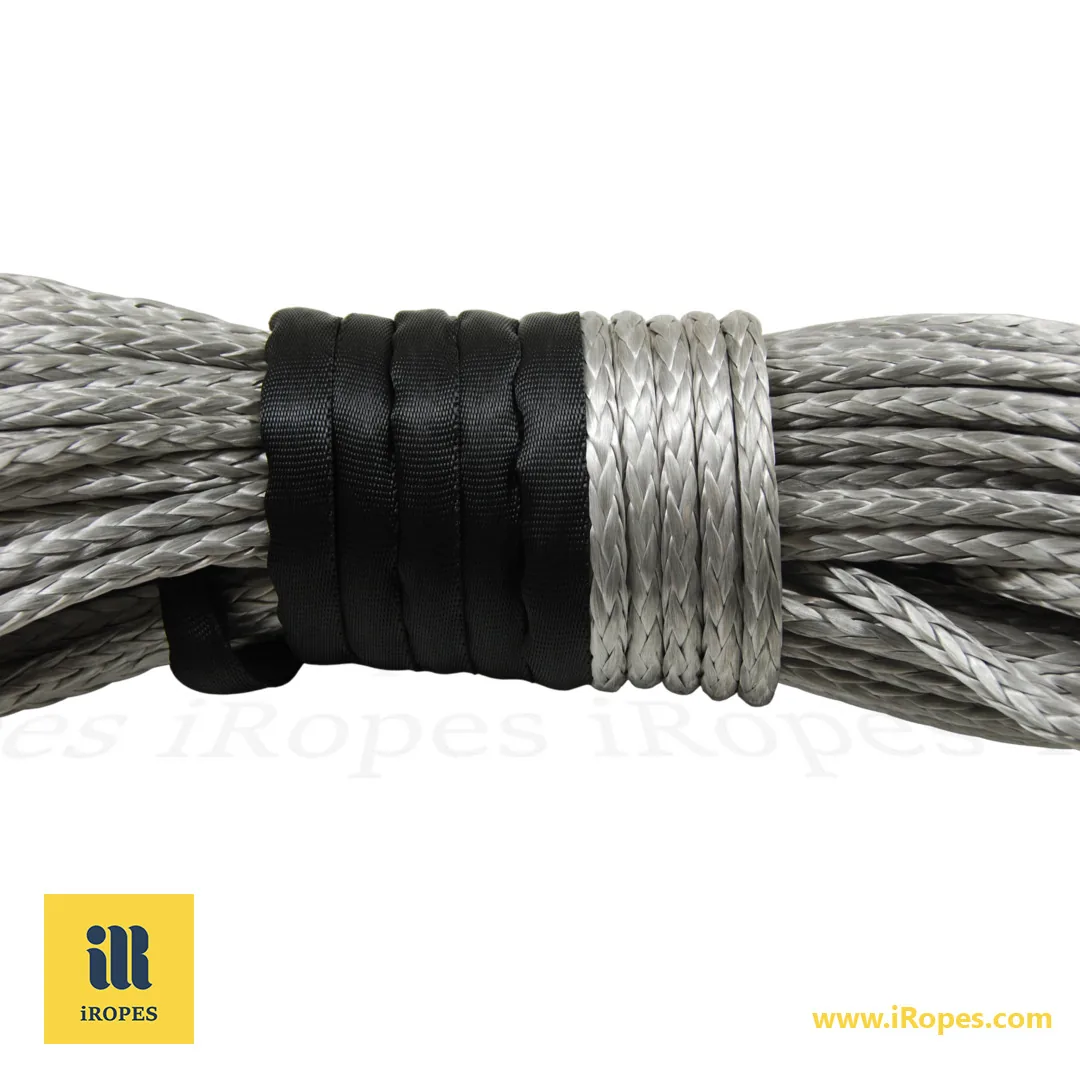
Nylon rope can achieve around 120 000 lb break strength in a ½‑in line — a level that outperforms comparable polyester at the same diameter and remains easy to handle in the field.
Read time: ~2 min
- ✓ Higher tensile strength than polyester for the same diameter – lift heavier loads without extra bulk.
- ✓ 3‑6 % stretch under working load provides natural shock‑absorption, helping reduce peak tension in mooring use.
- ✓ UV‑stable finishes help extend service life in marine conditions.
- ✓ Custom colour, branding and ISO 9001–backed quality with fast turnaround.
You’ve probably been told that polyester is the safe, low‑cost workhorse for ropes, but the numbers tell a different story. Nylon’s blend of high break strength, controlled stretch and dependable abrasion resistance delivers performance that engineers value in active ropes, mooring ropes and power ropes. In the sections that follow, we’ll unpack how these advantages translate into a super strong rope and how iRopes can engineer the perfect nylon solution for your toughest projects.
Super Strong Rope
When you hear “super strong rope”, you’re really talking about a line that can bear huge loads while staying light enough to handle. In rope‑making, the two numbers that matter most are tensile strength—the force required to snap the fibre—and the Safe Working Load (SWL), which is the safe limit you should never exceed. Think of it like a car’s power‑to‑weight: the higher the ratio, the more efficient the performance.

- Tensile strength – measured in pounds or newtons; a ½ in nylon rope can reach roughly 120 000 lb before breaking.
- Safe Working Load (SWL) – typically 1/5 to 1/8 of break strength, giving a practical load limit of around 15 000 lb for that same rope (FoS = 8).
- Weight‑to‑strength ratio – how much rope you need to lift a given load; lighter ropes win when the ratio is high.
Strength‑to‑Weight Comparison
| Material | Relative Break Strength | Relative Weight (per 100 m) | Typical SWL Guidance |
|---|---|---|---|
| UHMWPE (Dyneema) | Very high (strongest weight‑for‑weight) | Very light | Apply FoS 5–8 to rated break strength |
| Nylon | High | Light | Apply FoS 5–8 to rated break strength |
| Polyester | Moderate–High | Light–moderate | Apply FoS 5–8 to rated break strength |
Set side by side, it’s clear why UHMWPE tops the list for strength‑to‑weight, yet nylon still offers an excellent balance of strength, elasticity and cost for many demanding jobs.
Which rope material is strongest?
- UHMWPE (Dyneema or Spectra) – highest strength‑to‑weight, up to 15 × steel.
- Nylon – high tensile strength with notable stretch, good for shock‑absorbing applications.
- Polyester – lower stretch, better UV resistance, but less ultimate strength.
So, if you need the absolute lightest line that can still haul massive loads, UHMWPE is the answer. If you value a bit of give and strong handling durability for marine or industrial work, nylon is your go‑to strong rope material. Ready to pick the right line for your next project?
strong nylon rope
If you’re after a material that balances raw pulling power with a forgiving give, the strong nylon rope often becomes the first choice for engineers and riggers alike. Its blend of tensile strength, controlled stretch and surface durability makes it a workhorse for demanding environments.

Nylon’s mechanical profile spans a wide range. A 6 mm (¼ in) line typically breaks around 2 200 lb, while a 12 mm (½ in) strand can reach roughly 120 000 lb. Elongation is modest at low loads—about 3 % at 10 % of break—rising to around 6–7 % at 30 % of break, providing a natural shock‑absorbing cushion.
Key Nylon Stats
Tensile strength: ≈ 2 200 lb (¼ in) → ≈ 120 000 lb (½ in) → up to ≈ 500 000 lb (3 in).
Elongation under load: ≈ 3 % at 10 % load; ≈ 6–7 % at 30 % load.
Abrasion resistance: durable for marine and industrial contact points.
Why does this matter for active ropes, mooring lines and power‑haul applications? The controlled stretch cushions sudden loads on winches, while the tough surface handles gritty contact with dockside hardware. UV‑stabilised finishes keep colour from fading, and the rope can be spliced quickly with a simple loop – a practical advantage when downtime costs money.
When the question “Nylon vs polyester – which is stronger?” pops up, the quick answer is:
Nylon offers higher tensile strength and greater elasticity, ideal for shock‑absorbing roles; Polyester provides lower stretch and superior UV stability, better suited to static loads where minimal elongation is prized.
“In marine mooring, nylon’s blend of strength and controlled stretch reduces peak tension on anchors, extending the service life of both rope and hardware.” – senior offshore rigging engineer
So whether you’re rigging a yacht, securing a crane, or powering a winch, the strong rope material that nylon provides delivers the balance of power and resilience that makes a super strong rope straightforward to work with.
strong rope material
Building on the discussion of nylon’s performance, let’s explore the design factors that upgrade a standard line into a truly super‑strong rope. By fine‑tuning construction, core choice and surface treatment, manufacturers can lift load capacity and durability without adding unnecessary bulk.
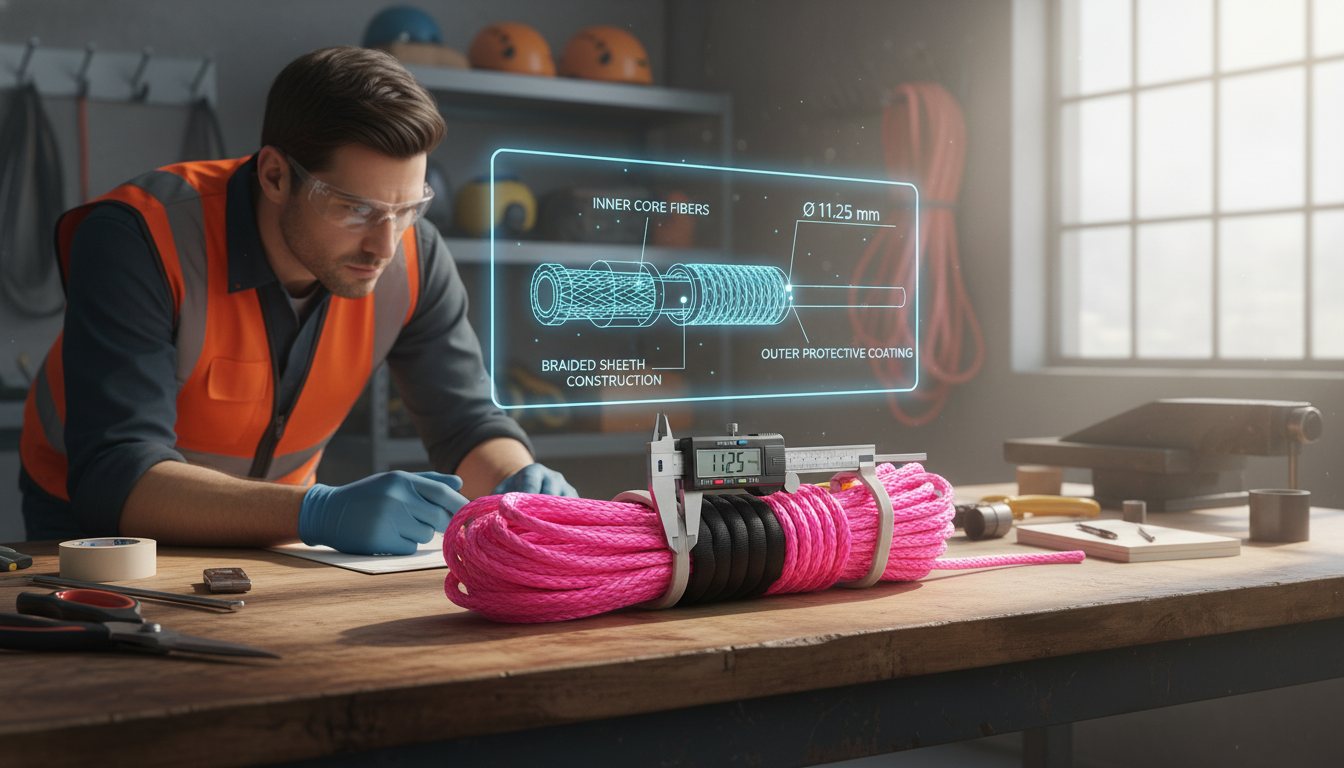
What makes a rope super‑strong? It combines high‑tenacity fibres, an optimal braid architecture, a protective coating, and a well‑sized diameter‑to‑strength ratio. Each element contributes to the final safety rating and durability.
Construction Basics
Core and braid choices
Core Type
Parallel or fibre cores define load distribution and flexibility.
Braid Pattern
Double‑braid, solid‑braid or kernmantle constructions maximise strength and handling.
Coating
Polyurethane, PVC or marine finishes shield against abrasion and UV.
Performance Gains
How design boosts strength
Diameter Ratio
Optimising diameter‑to‑strength minimises weight while meeting the required SWL.
Material Blend
Combining nylon with high‑modulus fibres can raise stiffness where low stretch is needed.
Safety Factor
Apply an industry Factor of Safety (FoS = 5–8) to tested break strength for a reliable SWL.
ISO 2307 defines how manufacturers determine rope characteristics and measure breaking force under standardised laboratory conditions. After obtaining the break strength (B), apply a prudent safety factor to size the rope: SWL = B ÷ FoS. For example, a ½ in nylon rope with ≈ 120 000 lb break strength and FoS = 8 yields an SWL of about 15 000 lb.
ISO 2307 sets the method and conditions for measuring rope breaking force. Ratings are based on multiple specimens per size tested under consistent laboratory conditions.
Understanding these construction choices and safety calculations empowers you to specify a rope that meets exact load requirements while remaining lightweight. With that foundation, iRopes can tailor a custom solution that aligns with your project’s performance and certification needs.
Custom Solutions and Next Steps
Having matched the engineering fundamentals to your load requirements, the next logical step is to turn those numbers into a tangible product. iRopes’ end‑to‑end OEM/ODM service lets you pick the exact fibre, specify the colour that matches your fleet, embed your branding, and keep every design detail under strict IP protection.

Material
Choose the fibre grade – UHMWPE, nylon, polyester – matched to load, stretch and environment.
Colour & Brand
Apply your corporate hue, logo or colour‑code, printed on the sheath or reflected in the packaging.
IP Guard
NDAs and full IP ownership protect your proprietary design from concept to delivery.
Test & Ship
ISO 2307 testing available, on‑time pallet dispatch, and non‑branded or customer‑branded packaging ensure reliability worldwide.
Case study snapshot: an offshore operator required a ¾ in custom strong nylon rope with enhanced UV and abrasion resistance for mooring lines. iRopes delivered a colour‑coded, UV‑stabilised product that lowered line‑failure incidents by roughly 30 % over a year, saving about $12 k annually in replacements and downtime.
Get Started
Request a quote, download the full spec sheet, or speak directly with our sales engineers – we’ll turn your load requirements into a super strong rope solution.
Need a custom rope solution? Get expert guidance below
You’ve learned how tensile strength, stretch and construction turn ordinary fibres into a super strong rope, and why the strong nylon rope is the preferred choice for active, mooring and power applications. By selecting the right core, braid and coating, manufacturers achieve a strong rope material that meets ISO 2307 testing standards while fitting your branding and IP requirements. If you’d like personalised advice on material selection, colour, packaging or load specifications, simply complete the form above and our ISO 9001‑certified team will tailor a solution for your project. For deeper insight into nylon performance, explore the advantages of flat‑braided nylon rope.