For most offshore lifts, a synthetic rope sling outperforms steel: around 15× the tensile strength per kilogram and roughly 1/7 the weight, often cutting handling time and fatigue.
≈3‑minute read – What you’ll unlock
- ✓ Trim lift weight by up to 85% (about 1/7 the mass of an equivalent steel sling).
- ✓ Reduce corrosion‑related downtime thanks to inherent rust resistance.
- ✓ Benefit from very low stretch for more precise positioning.
- ✓ Specify UV‑stabilised, salt‑water‑resistant construction for marine duty.
You’ve probably heard that steel is the go‑to for heavy‑duty lifts, but the numbers tell a different story. Our side‑by‑side analysis shows a synthetic rope sling beats a steel sling on weight, corrosion resistance, and handling efficiency — yet many rigs still reach for metal. Read on to discover the criteria that flip the verdict and how to apply them to save time and cost on your next lift.
Understanding Synthetic Rope Sling Materials and Construction
When you first encounter a synthetic rope sling, the lightweight feel and vibrant colour can be surprising. Unlike the cold steel of a traditional sling, these ropes combine high tensile strength with flexibility, making them ideal for lifts where weight, corrosion resistance, or ease of handling matter. Below we unpack what gives a synthetic rope sling its performance edge.
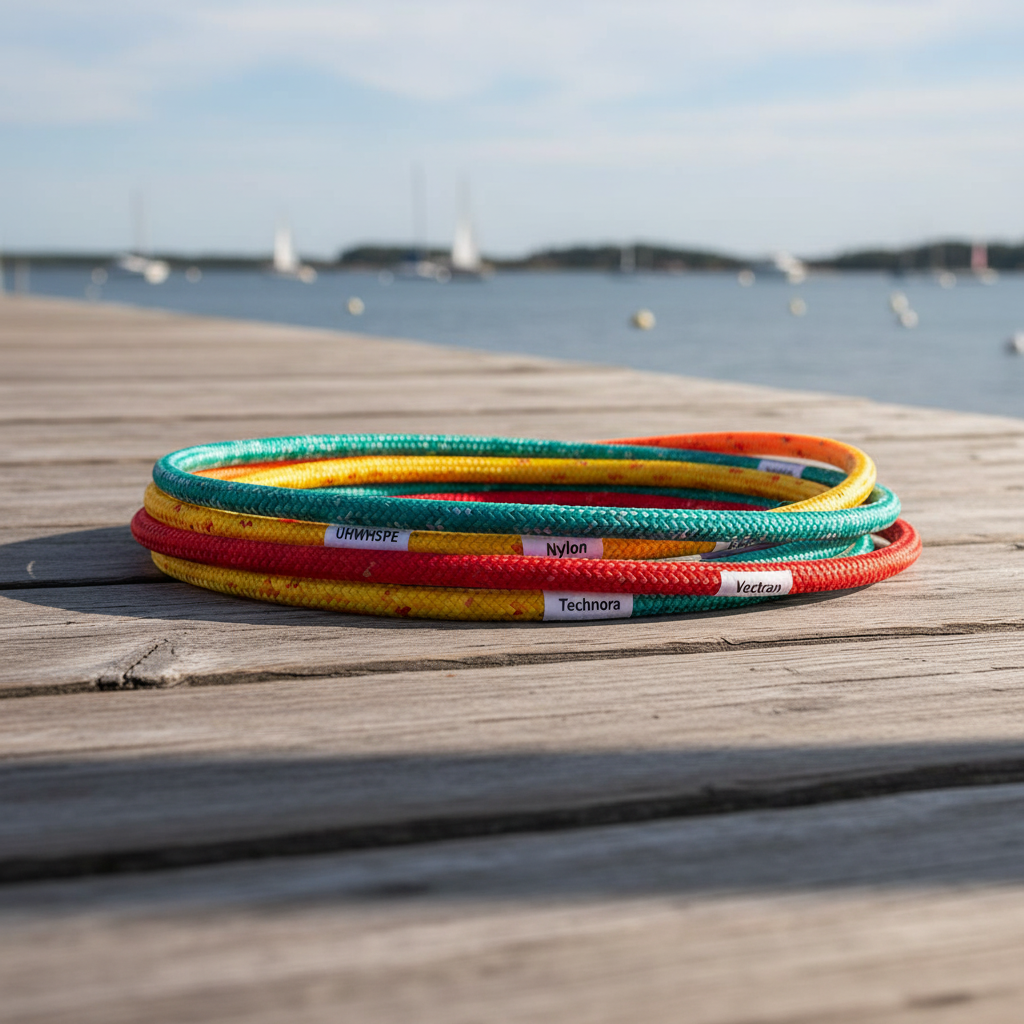
- UHMWPE (Dyneema®) – ultra‑light, around 15× stronger than steel per kilogram, low stretch.
- Polyester – excellent UV resistance, good abrasion tolerance, moderate elongation.
- Nylon – high elasticity, superior shock‑absorption, manages impact loads.
- Kevlar (aramid) – high heat resistance with minimal stretch.
- Technora – combines high tensile strength with excellent heat resistance.
- Vectran – maintains stiffness in wet conditions, good fatigue life for repetitive lifts.
Synthetic rope can be prepared with different structures and strengths according to requirements. Choosing the right fibre is only part of the story; how the fibres are assembled determines the sling’s real‑world behaviour. The three most common constructions each trade off strength, flexibility and handling in distinct ways.
- Braided – interwoven strands create a smooth, round profile that resists kinking and distributes load evenly.
- Twisted (lay‑rope) – fibres are spun together, giving slightly higher elongation that can soften shock loads.
- Parallel‑core – individual cores run straight through the sheath, maximising load‑bearing capacity while keeping the outer surface flexible.
So, when should you reach for a synthetic sling rather than a steel sling? If your job requires any of the following, a synthetic rope sling is usually the smarter choice:
- Weight savings are critical – a ½‑inch UHMWPE sling weighs a fraction of an equivalent steel wire‑rope, easing rigging and lowering transport costs.
- The environment is corrosive or marine‑focused – synthetic ropes do not rust, and marine‑grade variants resist salt‑water damage.
- Flexibility around irregular loads is needed – the braid or twist allows the sling to wrap snugly around odd shapes without damaging the load.
- Floatability is required – unlike steel, synthetic slings float, adding a safety layer for water‑based lifts.
In scenarios where extreme heat, abrasive contact, or very high static loads dominate, a steel sling may still be preferable. Understanding these material and construction nuances lets you match the sling to the task, ensuring safety, efficiency, and long‑term reliability.
Comparing Steel Sling Performance and Use Cases
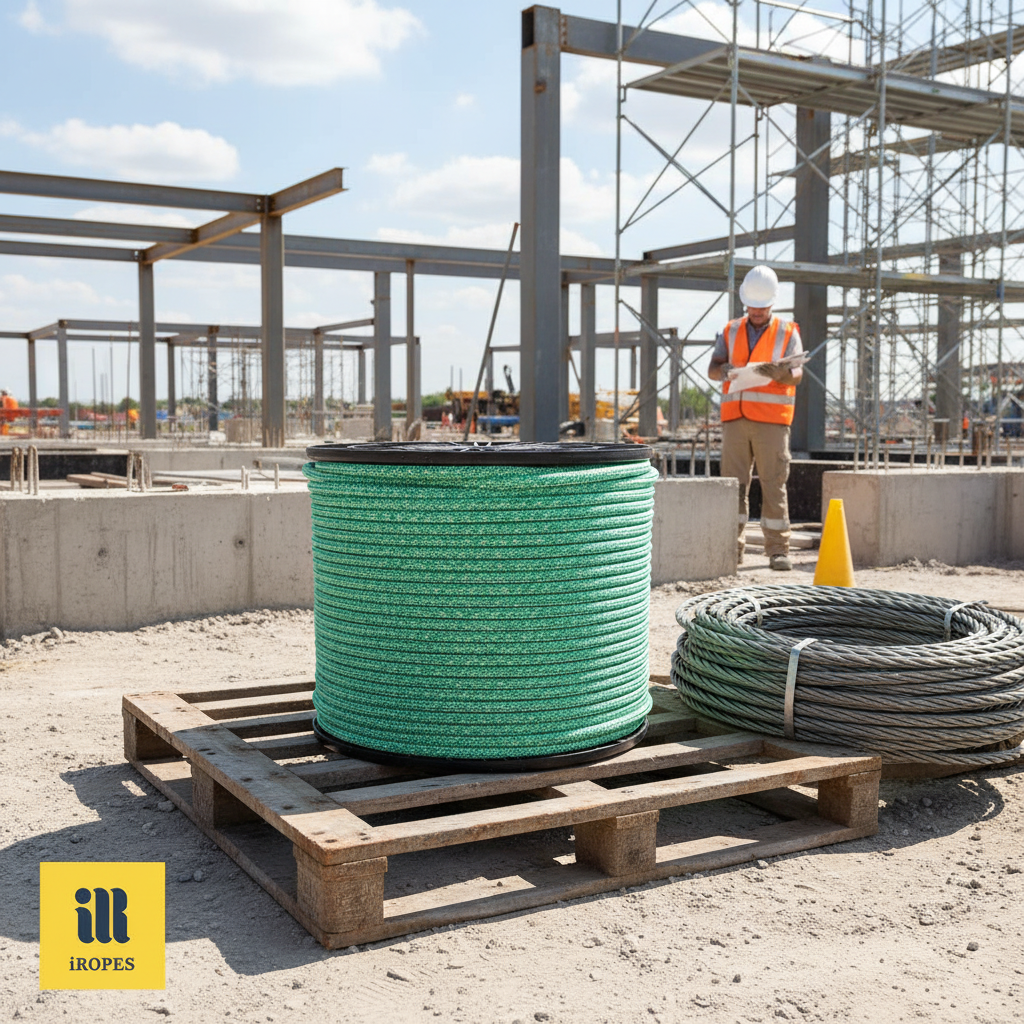
After noting that extreme heat or heavy abrasion can tilt the balance toward a steel sling, it’s useful to see exactly what the metal option brings to the table. The added mass may feel like a drawback, but it also translates into dependable strength where other materials start to falter.
Two main configurations dominate the market: wire‑rope slings and chain slings. Wire‑rope slings consist of multiple steel wires twisted into a flexible, rope‑like strand that can be looped or terminated with eye bolts. Chain slings, built from interlocking steel links, excel in high‑temperature environments and when a rigid, low‑stretch line is required. Both types share a common advantage—steel’s high modulus means minimal elongation under load, which is critical for precise positioning.
Key Specs
A ½‑inch steel wire‑rope sling weighs roughly 17 lb per 12 ft and can support a Working Load Limit of about 10 000 lb when rated at a 5:1 safety factor. Temperature tolerance reaches up to 400 °F (204 °C), far beyond the limits of most synthetic rope slings.
When comparing strength‑to‑weight ratios, steel’s performance is far lower than UHMWPE—approximately 1:15 by mass. The trade‑off is predictable, low‑stretch behaviour that many riggers trust for precise lifts. Load capacity remains stable even after repeated cycles, and steel does not suffer UV‑induced degradation that can erode polymer fibres over time.
Environmental durability is another decisive factor. Galvanised or stainless finishes provide excellent corrosion resistance in marine or chemical settings, while the metal retains its mechanical properties at temperatures well above the 180 °F (82 °C) ceiling of UHMWPE ropes. In hot‑forge or foundry work, where ambient heat can exceed 300 °F, a steel sling is often the only safe choice.
“For exacting lifts in harsh, high‑heat environments, a steel sling’s low stretch removes guesswork.” – Certified rigger
For those still weighing the choice, the Working Load Limit (WLL) of a synthetic rope sling is calculated by dividing its Minimum Breaking Strength by the chosen safety factor—typically between 5:1 and 9:1. For example, a rope with a 60 000 lb breaking strength and a 5:1 factor yields a WLL of 12 000 lb, a figure that often matches or exceeds a comparable steel sling of the same diameter.
Ultimately, the decision hinges on the specific lift: if temperature extremes, precise positioning, or a need for a low‑stretch line dominate, the steel sling’s durability and predictability make it the clear winner.
Benefits of Synthetic Marine Rope for Offshore Applications
After exploring the strengths of steel slings, let’s dive into why a synthetic marine rope often becomes the go‑to choice when you’re working on a rig, a vessel, or any offshore site where weight, corrosion and visibility matter.
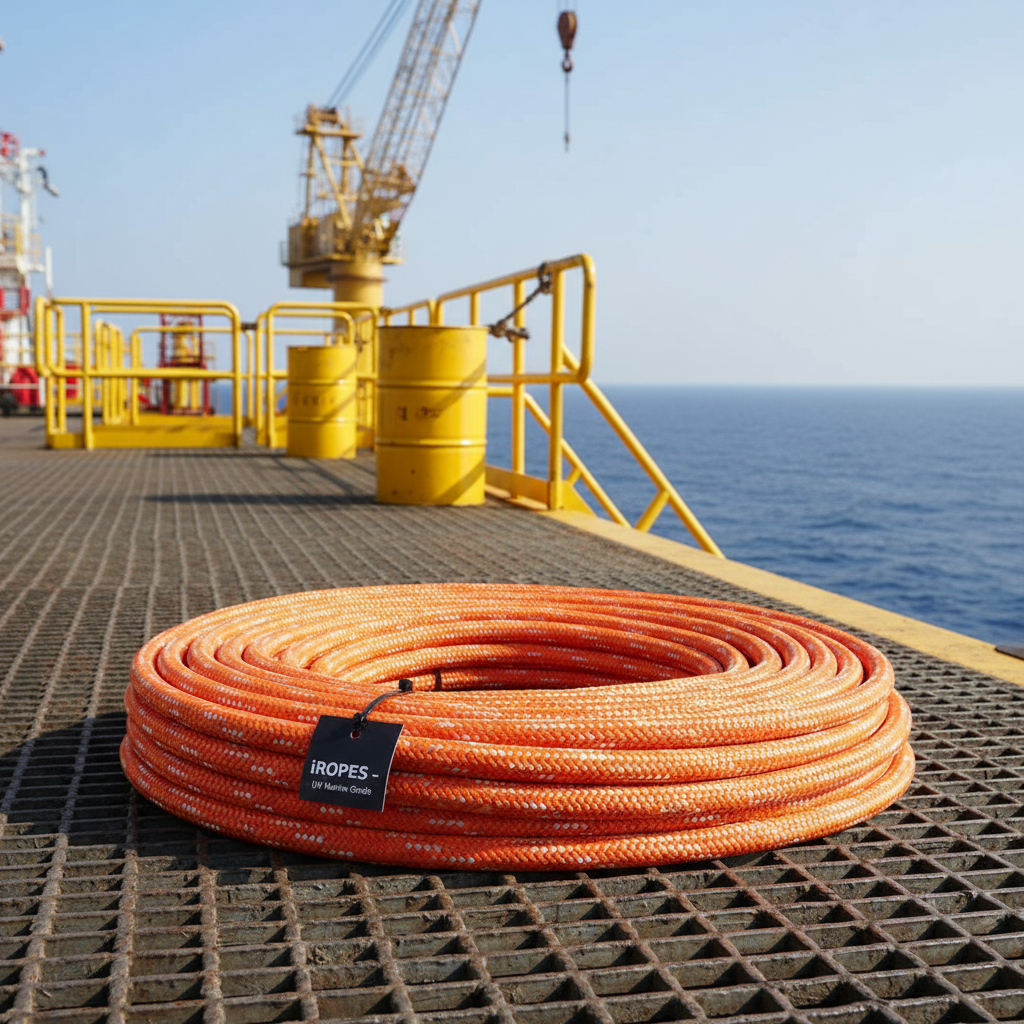
What makes a rope “marine‑grade” isn’t just a label – it’s a set of engineered features. A UV‑stabilised coating helps shield the fibres from sun exposure, while selected polymer blends resist salt‑water degradation, preserving tensile strength. Because the rope’s core is buoyant, it floats, adding a safety margin if the line drops over water.
Performance specs matter as much as the coating. UHMWPE strands provide useful strength up to about 180 °F (82 °C). Uncoated synthetics can lose around 10% strength after five years of UV exposure; UV‑stabilised coatings help mitigate this. Abrasion‑resistant covers further guard against chafing on rig rails or winch drums, so the rope can handle offshore realities without frequent replacement.
UV‑Coated
Resists sun‑induced degradation, extending service life in exposed environments.
Salt‑Resistant
Polymer selection and coatings help prevent salt‑water damage, keeping strength intact.
Mooring
Provides reliable, floatable lines for vessel and platform anchoring.
Offshore Lifting
Handles heavy loads on rigs while remaining lightweight for easy handling.
So, can synthetic marine rope be used for offshore mooring? Absolutely—its floatability, salt‑water resistance and UV‑protected strength make it a viable alternative to traditional steel lines for many rig‑to‑platform connections, provided the rope’s Working Load Limit matches the mooring load and it complies with site standards.
Understanding these marine‑grade advantages sets the stage for the next step: a practical selection guide that walks you through safety factors, inspection schedules and cost analysis, ensuring you pick the right rope for any offshore challenge. For a deeper dive into marine‑grade options, explore our guide to the best marine mooring rope.
Regular UV checks are essential; include the rope in your pre‑use inspection and schedule periodic reviews every 6–12 months, depending on service conditions.
Understanding these marine‑grade advantages sets the stage for the next step: a practical selection guide that walks you through safety factors, inspection schedules and cost analysis, ensuring you pick the right rope for any offshore challenge.
Selection Guide, Safety Practices, and Cost Considerations
After seeing how a synthetic marine rope can stay buoyant and resist salt‑water, the next step is turning that knowledge into a purchasing decision. Below you’ll find the calculations, inspection rules, cost considerations, and custom options that help you choose the right sling for any lift.
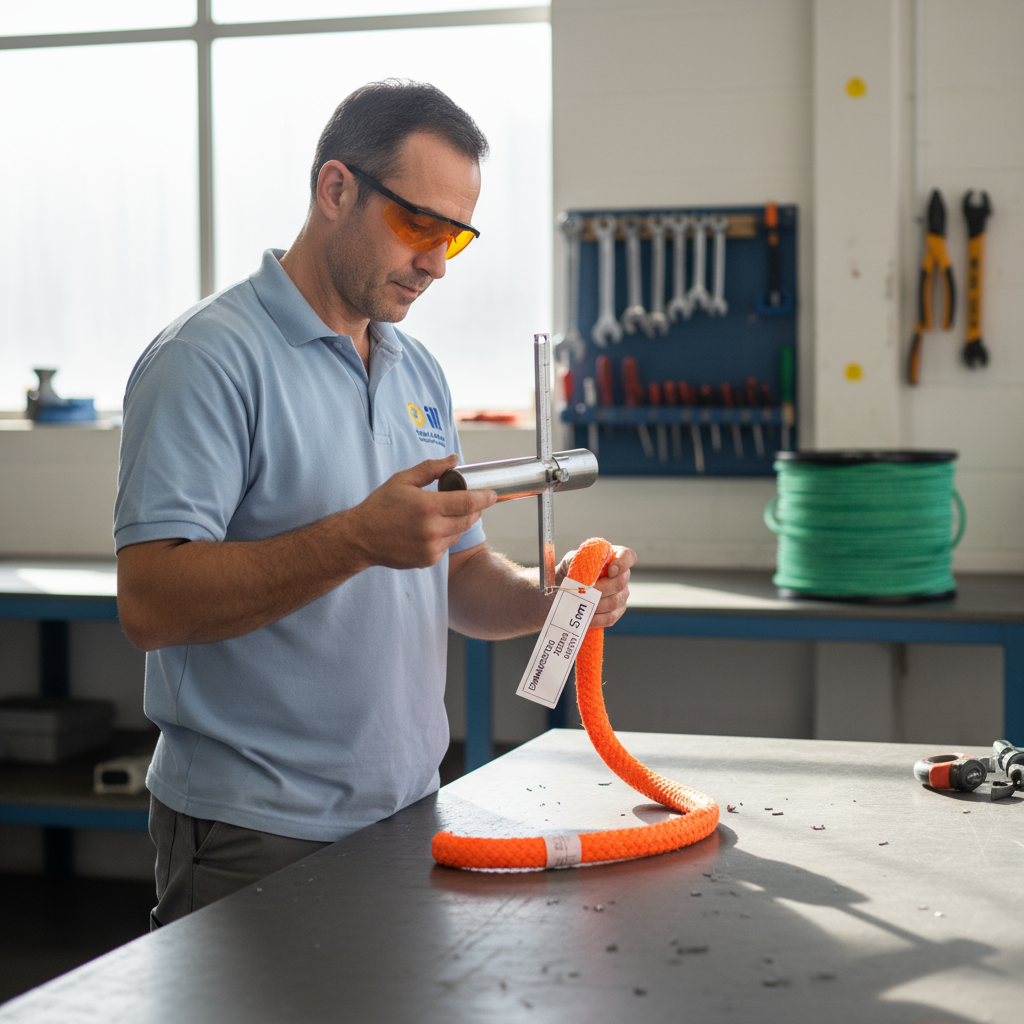
Calculating a Working Load Limit (WLL) starts with the material’s Minimum Breaking Strength (MBS). Divide MBS by a safety factor that matches the application—5 : 1 for general lifts, up to 9 : 1 for high‑risk environments. For example, a 30 mm synthetic rope sling rated at 45 000 lb MBS using a 6 : 1 factor yields a WLL of 7 500 lb. If the rope faces chemicals, sharp edges, or abrasive surfaces, increase the safety factor accordingly. In some regions you may also see Safe Working Load (SWL) used similarly.
Inspection frequency should follow the Occupational Safety and Health Administration (OSHA) 1910.184 and ASME B30.9 guidelines. Perform a pre‑use visual inspection each shift. Schedule periodic inspections at least every 12 months in normal service, or every 6 months in severe service or marine environments. The checklist below covers the essentials.
- Visual signs – look for cuts, abrasion, glazing, or UV‑coat wear.
- Label integrity – ensure markings are legible and not faded.
- Core condition – check for broken fibres, hard spots, or core separation.
- Hardware check – inspect thimbles, shackles, and loops for corrosion or deformation.
- Documentation – record the date, inspector, findings, and any corrective actions.
When it comes to lifecycle cost analysis, purchase price is only part of the story. A synthetic rope sling weighs far less than a steel sling, which reduces handling labour, transport effort, and equipment wear. Steel slings can offer long service in hot or abrasive settings but may require corrosion control. Use the comparison below to visualise the trade‑offs.
Synthetic Rope Sling
Lightweight performance
Weight
About one‑seventh the mass of an equivalent steel sling, cutting transport and handling costs.
Corrosion
Inherent resistance to salt‑water; no rust‑prevention cycles required.
Maintenance
Regular visual checks and timely replacement of worn covers keep uptime high.
Steel Sling
Durable strength
Temperature
Operates safely up to about 400 °F (204 °C), far beyond polymer limits.
Load stability
Low‑stretch behaviour supports precise positioning.
Replacement cycle
Long service in high‑heat or abrasive settings, with added corrosion‑control steps.
Finally, consider customisation. iRopes can tailor a synthetic rope sling to match your brand or operational need, including custom large‑diameter solutions. Choose the exact diameter and length, request colour‑coding for quick identification, add eye‑loops, thimbles, or specialised terminations, and specify non‑branded or customer‑branded packaging (bags, colour boxes, or cartons). Backed by ISO 9001 quality systems, comprehensive OEM/ODM services, and dedicated IP protection, iRopes delivers on specification and ships directly to your location worldwide.
Armed with these calculations, inspection habits, cost insights, and custom options, you can decide whether a synthetic rope sling or a steel sling delivers the best value for your next lift.
You’ve learned how UHMWPE, polyester, nylon, Kevlar, Technora and Vectran can be combined into braided, twisted or parallel‑core constructions to meet marine‑grade demands, and when their lightweight advantage outweighs the low‑stretch strength of a steel sling. By weighing mass, corrosion resistance, temperature, and cost, you can pick the optimal synthetic rope sling or steel sling for your lift, appreciate the benefits of synthetic marine rope for offshore applications, and customise diameter, colour, and accessories with full IP protection.
Need a custom solution or expert advice?
For personalised recommendations based on your specific project, please complete the form above – our team is ready to help you fine‑tune the perfect sling solution.
