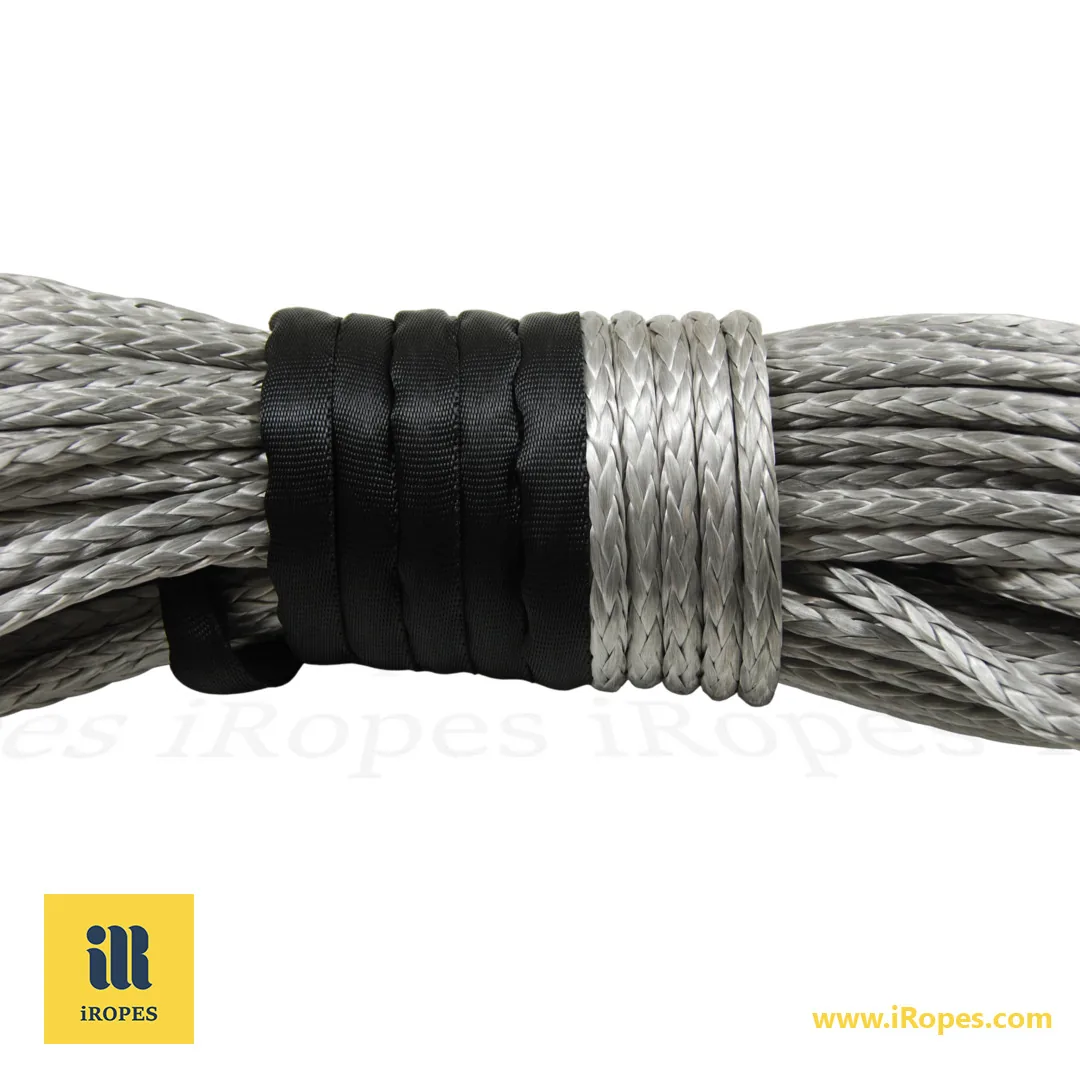
Polyester is the best all‑round fibre for marine mooring rope applications. Nylon offers greater elasticity and can be finished harder for certain solutions — and iRopes can customise either material to your specifications.
Quick wins for your mooring line
- ✓ Polyester maintains near‑dry strength when wet and resists UV and abrasion.
- ✓ Nylon’s higher elasticity helps absorb shock loads in rough conditions.
- ✓ iRopes’ OEM/ODM service delivers custom colour, core and branding with timely, global delivery.
- ✓ ISO‑9001 certified quality and dedicated IP protection support consistent performance and reliability.
Many boaters reach for nylon, assuming its stretch will best protect their hull. However, nylon can lose about 10–15% of its dry strength when saturated. If you want the best mooring rope for everyday conditions, polyester helps preserve strength in wet environments while you tailor elasticity to suit your mooring set‑up. In the sections below, we outline practical material choices and custom‑design steps that improve shock absorption and extend service life.
double mooring pendant – Understanding Design and Benefits
After visualising a boat that never swings wildly in a storm, the next step is to understand the hardware that makes that stability possible. The double mooring pendant is the unsung hero that turns a simple line into a reliable, load‑sharing system.
Definition and purpose
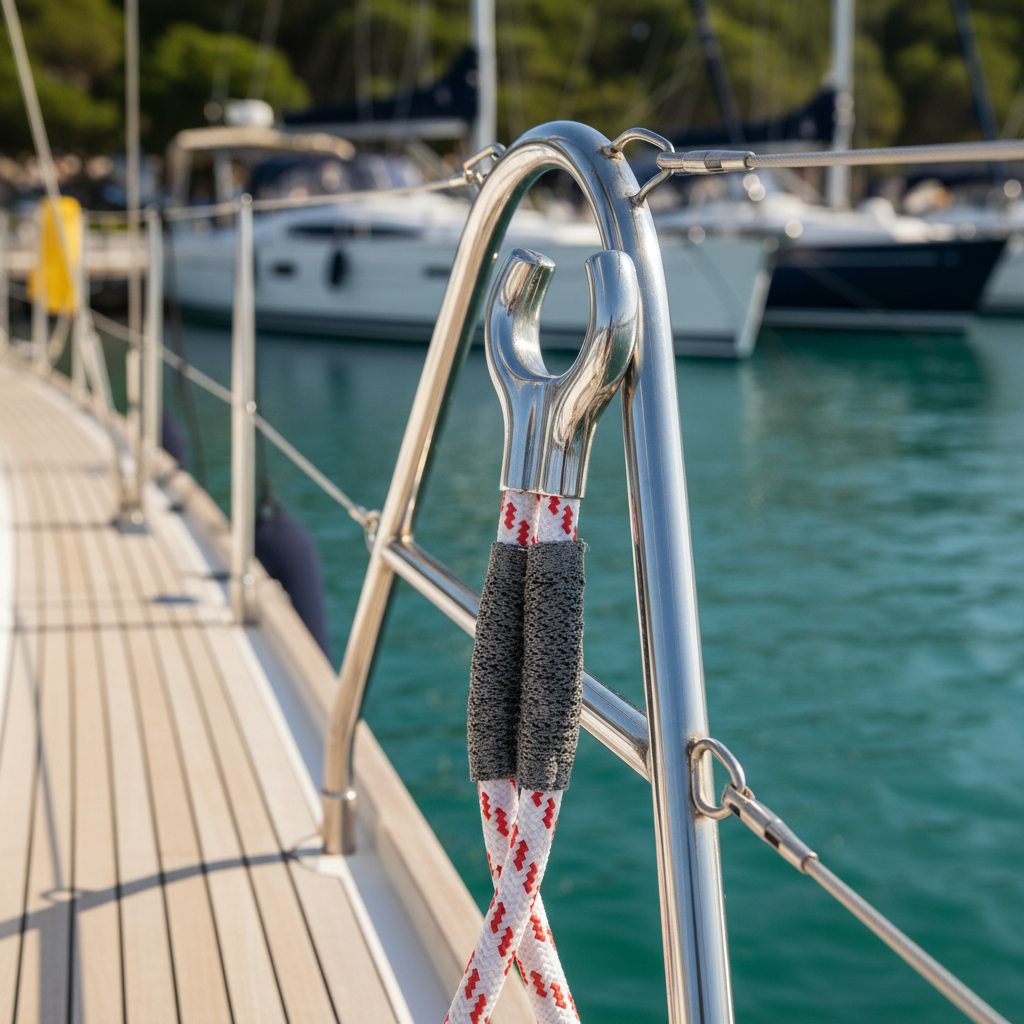
A double mooring pendant is a Y‑shaped line that connects a single mooring point to two bow cleats. Its purpose is to split the tension generated by wind, current and boat movement so each leg and cleat carry a share of the total load. This reduces side‑pull, keeps the bow pointing into the wind, and adds redundancy if one leg fails.
Key components
- Thimble – a stainless‑steel insert that protects the eye splice from abrasion and spreads load evenly.
- Eye splice – a permanent, strong loop formed by weaving the rope strands back into themselves, eliminating the weak point of a knot.
- Chafe guard – a protective sleeve that shields the rope where it bends around the thimble, extending service life in salty, abrasive conditions.
Y‑shape geometry and load‑sharing advantages
The geometry of the pendant creates two arms that diverge from a central junction. When wind pushes the bow, the forces travel down each arm, sharing the load across both lines and cleats. This configuration also aligns the vessel with the mooring buoy, minimising sideways drift. In practice, a 24‑foot cruiser equipped with a properly sized double pendant will stay steadier than one using a single line, especially when a sudden gust hits.
A Y‑shaped pendant splits the force between two anchor points, reducing side‑pull and keeping the bow pointed into the wind. The redundancy also means if one line parts, the other still holds the boat.
What are the advantages of a double mooring pendant? By sharing load, it lessens the strain on each line, which translates to longer rope life and fewer replacements. The dual‑line arrangement keeps the boat aligned with the buoy, improving handling in shifting winds. Finally, the built‑in redundancy offers peace of mind: if one arm fails, the second arm continues to hold the vessel.
With a clear picture of how the pendant works, the next logical question is which rope material will best complement this design. Let’s explore the options that make a marine mooring rope truly perform under the demands of saltwater, UV exposure, and varying loads.
marine mooring rope – Material Choices and Performance
Having examined how a double mooring pendant distributes load, the next factor that dictates whether a vessel stays securely on the swing is the composition of the marine mooring rope itself. Different fibres react to salt, UV radiation and dynamic forces in distinct ways, so selecting the right material often determines whether a line endures seasons of service or degrades quickly.

Polyester emerges as the most versatile option for a best mooring rope in the majority of cruising scenarios. Its fibres retain near‑dry strength when saturated, resist ultraviolet degradation, and exhibit low stretch, which helps keep the boat’s heading steady. The material also tolerates abrasion from chafe guards and stainless‑steel thimbles, extending service life without constant adjustment.
Polyester – the all‑round champion
Its UV resistance prevents brittleness, while the fibre’s minimal water uptake keeps breaking strength consistent in wet conditions. The modest elongation offers enough give to absorb shock without allowing excessive swing, making it ideal for most moorings.
Nylon, technically known as polyamide, introduces a higher degree of elasticity, allowing it to act as a built‑in shock absorber when waves buffet the mooring buoy. This characteristic is valuable for vessels that experience rapid load spikes, such as fishing boats or high‑performance racers. In addition, a harder finish can be achieved through specialised coating, giving the rope a smoother surface that reduces chafe against metal fittings. The trade‑off is a 10–15% loss of dry tensile strength once the fibre is saturated — a factor to consider in environments with constant immersion.
- Consistent strength in wet conditions
- High elasticity for shock absorption
- Ultra‑high tensile strength for specialised use
Dyneema (ultra‑high‑molecular‑weight polyethylene) represents the premium tier, delivering tensile strengths far beyond polyester or nylon while remaining exceptionally lightweight. Its very low stretch makes it suitable for high‑speed craft that cannot tolerate noticeable rope movement, but the higher cost and potential creep under continuous load mean it is best reserved for specialised applications.
Addressing a common query, the strongest mooring rope in dry tests is technically polyamide (nylon). Yet it often loses about 10–15% when waterlogged, leaving polyester as the most reliable all‑round performer in real‑world marine conditions. Consequently, for most vessels seeking durability, UV resistance and consistent breaking load, polyester remains the recommended choice.
With a clear grasp of each fibre’s behaviour, the next step is to translate those characteristics into concrete sizing decisions. By applying the MBLSD × 1.05 formula and consulting the diameter‑strength chart, you can identify the exact rope diameter that satisfies the required breaking load, paving the way toward selecting the best mooring rope for your boat.
best mooring rope – Selection, Sizing, and Customisation
Having explored the material options, the next step is to size the rope correctly. Start with the Minimum Breaking Load of the design in dry conditions (MBLSD). Multiply MBLSD by 1.05 to obtain the required load figure (often called LDBF). Then select a rope whose rated Minimum Breaking Load meets or exceeds that number, with an additional safety margin where conditions demand.
A 5/8 in polyester line (≈ 9,350–10,400 lb MBL) is a common choice when your calculated requirement is around 9,000 lb. If in doubt, step up one size for extra safety.
If you prefer a visual reference, the grid below pairs common diameters with typical breaking strengths. Choose the next size up if your calculation lands exactly on a listed value — it builds in a useful safety cushion without a noticeable weight penalty.
Diameter Options
Strength at a glance
½ in
≈ 5,750–6,400 lb MBL — common for smaller runabouts, tenders and light loads.
5/8 in
≈ 9,350–10,400 lb MBL — a frequent choice for many mid‑size cruising boats.
¾ in
≈ 12,800–13,800 lb MBL — suited to heavier yachts or light commercial craft.
Safety Guidance
Sizing rules
Calculate load
Start with the design’s MBL (MBLSD), then apply the 1.05 multiplier.
Apply safety factor
Select a rope that exceeds the calculated requirement; when unsure, step up one size.
Consider environment
UV exposure, salt spray and temperature influence long‑term performance and service life.
iRopes takes the sizing step a notch higher with its customisation suite. You can specify the core type — a polyester core for steady pull or a hybrid option that blends strength with reduced stretch. Colours range from classic marine‑blue to high‑visibility orange, and reflective yarns can be woven for night‑time safety. Branding is straightforward: we can add your logo on the rope sheath, on the packaging bag, or both, and we safeguard your design under our IP‑protection program. Packaging options include non‑branded or customer‑branded bags, colour boxes or cartons, and we ship pallets directly to your location worldwide.
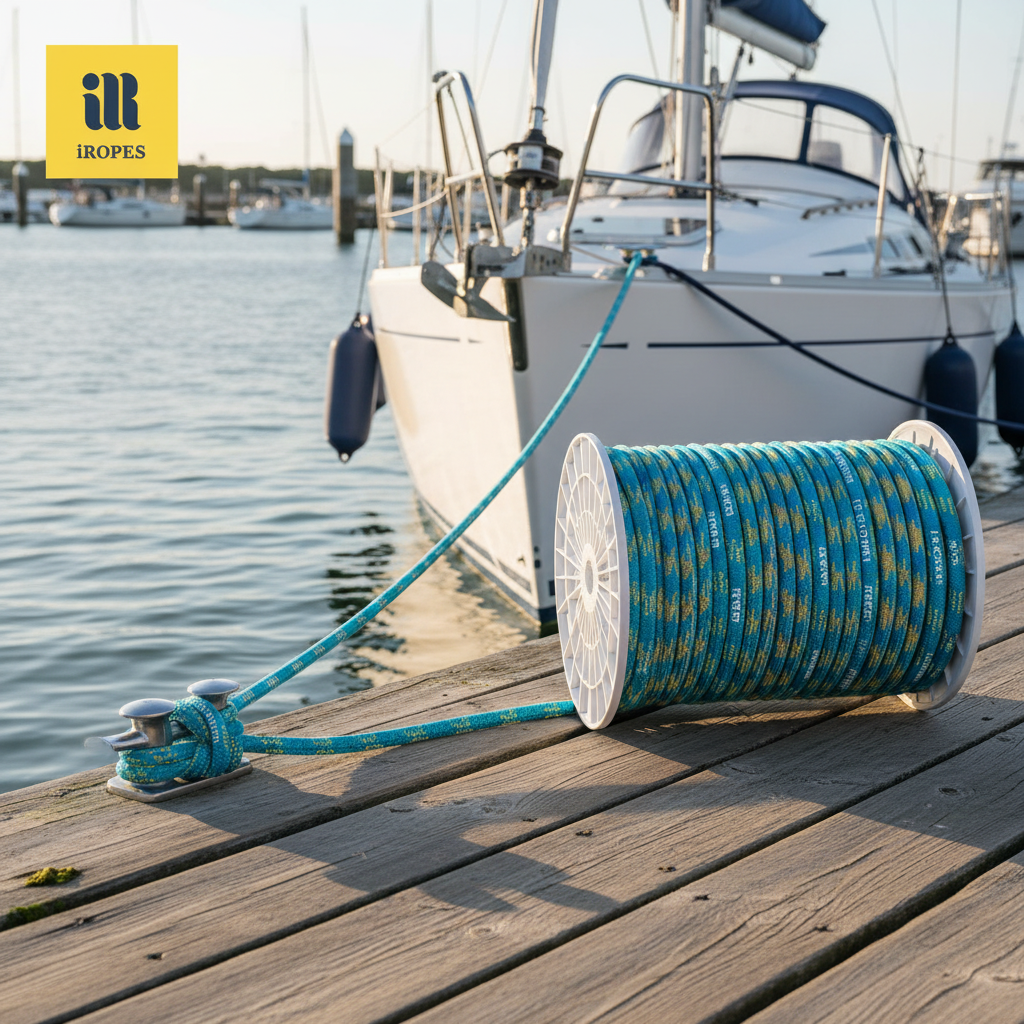
When you combine the correct diameter, an appropriate safety margin, and iRopes’ bespoke options, the result is a rope that meets engineering requirements and aligns with your vessel’s operational and branding needs. Finally, correct installation and routine inspection will keep your mooring system in top condition.
Get a personalised mooring solution
By now you understand how a double mooring pendant splits load, why polyester is the best all‑round fibre for marine mooring rope, and when nylon’s extra elasticity and harder finish can be advantageous. Using the MBLSD × 1.05 formula and our diameter‑strength guidance lets you select the best mooring rope for your vessel, then iRopes tailors colour, branding, core type and IP protection to match your exact needs.
If you’d like expert advice or a free custom quote, simply fill out the form above — our rope specialists are ready to help you design the perfect solution.