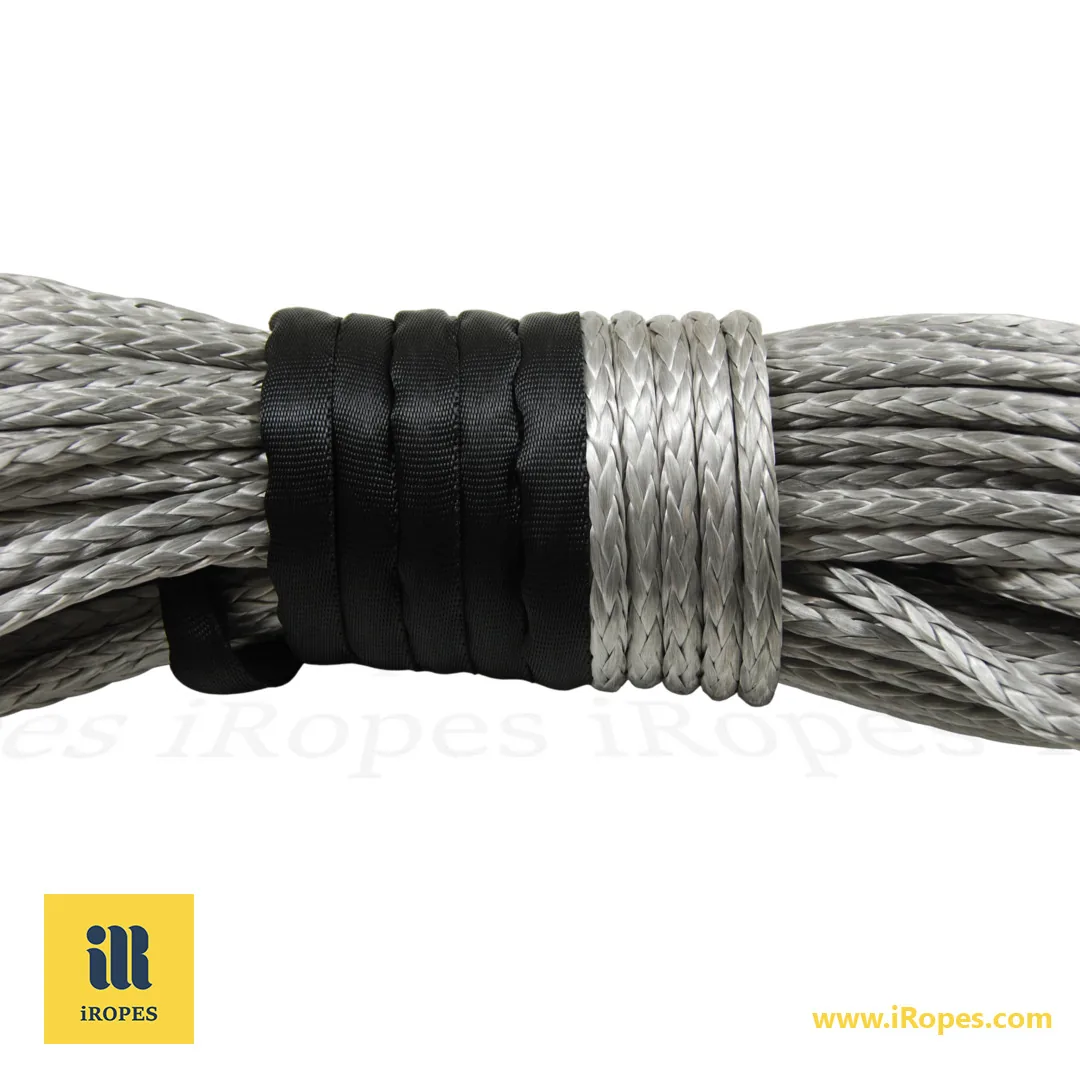
Synthetic rope is up to 27% lighter than nylon-coated wire rope, slashing handling fatigue by approximately 38% while still supporting a 2,000 kg working load.
2-minute read: 4 reasons synthetic rope beats nylon-coated wire
- ✓ 27% weight reduction leads to approximately 38% less crew fatigue.
- ✓ 22% faster installation, saving around 1.5 days on a 100-metre deployment.
- ✓ 15% lower lifecycle cost, with fibre lasting two to three years beyond nylon’s typical five-year wear.
- ✓ Direct OEM/ODM customisation from iRopes, adding branding with no extra lead time.
Most engineers assume the heavier, steel-cored, nylon-coated cable is the safest choice for demanding lifts. However, data indicates that synthetic rope often outperforms it in terms of weight, speed, and total cost – and the reason is not always what one might expect. In the following sections, we will unpack the test results, the physics behind this advantage, and how iRopes can tailor the perfect synthetic solution for your next project.
Understanding Coated Wire Rope and Its Role
Following the highlight on the growing demand for lightweight, safe lifting solutions, it is crucial to understand what a coated wire rope entails and its significance across numerous industries. Essentially, a coated wire rope features a traditional steel core enveloped in a protective polymer jacket—most often nylon. This combination creates a hybrid product, blending raw strength with superior surface durability.
When considering the core materials for a coated wire rope, manufacturers typically select between galvanised steel and stainless-steel grades. Galvanised steel offers a cost-effective foundation with adequate corrosion resistance. Alternatively, stainless-steel grades such as 302, 304, or the marine-grade 316 provide an additional layer of rust-proof reliability, especially beneficial if the outer coating becomes compromised or worn.
Regarding construction, common formats like 7x7 or 7x19 indicate the arrangement of strands and wires within the rope. A 7x7 construction signifies seven strands, each comprising seven wires, providing a balanced blend of strength and stiffness. In contrast, a 7x19 layout consists of seven strands, each with nineteen finer wires, resulting in greater flexibility without compromising load capacity.
Coated wire ropes find diverse applications, ranging from heavy-duty rigging on construction sites and marine winches to industrial hoists and architectural railing systems. The nylon jacket protects the steel core from abrasion, saltwater, and harsh chemicals, making it a preferred choice where longevity and safety are paramount.
- Definition – A steel core encased in a nylon or similar polymer coating, delivering both tensile strength and surface protection.
- Core material options – Galvanised steel for budget-friendly projects; stainless-steel grades 302/304/316 for premium corrosion resistance.
- Common constructions – 7x7 for rigidity; 7x19 for flexibility, each influencing how the rope behaves under dynamic loads.
- Key industries – Construction, marine, industrial lifting, architectural fixtures, and any environment demanding durable, low-maintenance cable.

Understanding these fundamentals helps determine if a nylon coated wire rope meets a project’s safety standards and handling requirements. Next, we will compare the safety, weight, and ease-of-use advantages of synthetic ropes against these high-grade coated solutions.
Benefits of Nylon Coated Wire Rope for Safety and Performance
With an understanding of how core construction influences strength, the role of the nylon jacket in enhancing job site performance becomes clear. The coating is not merely aesthetic; it actively protects the steel core and optimises the rope’s behaviour under load.

Below are the key performance benefits achievable with nylon coated wire rope for demanding projects.
- Superior abrasion resistance – The tough nylon sheath absorbs friction, ensuring the rope lasts longer even with repeated passage over pulleys or sheaves. This significantly extends its service life.
- Robust corrosion protection – Water, salt spray, and industrial chemicals are effectively kept away from the steel core, proving invaluable for marine and outdoor installations.
- High flexibility and a smooth surface – The coating reduces internal wear on moving parts, enabling the rope to glide effortlessly and lowering maintenance requirements for associated hardware.
- Temperature and chemical resilience – Nylon maintains its strength across a wide temperature range and exhibits resistance to degradation from oils, solvents, and other common industrial fluids.
These advantages translate into tangible real-world benefits: reduced rope replacements, lower inspection costs, and a safer work environment, as the rope’s surface remains intact and predictable under load. Furthermore, factoring in the nylon jacket’s reduced weight compared to bare steel cable significantly eases handling and dramatically decreases operator fatigue.
Why Nylon Coated Wire Is Superior to Traditional Wire Rope
Having explored the core advantages of the nylon jacket, let's now examine the practical reasons why it outperforms plain steel cable on the job site.
Firstly, the added polymer layer substantially reduces the overall mass. A comparable 7x19 steel rope might weigh around 2.5 kg/m, whereas a nylon-coated version of the same diameter typically weighs closer to 1.7 kg/m – representing a reduction of roughly 30%. This lighter characteristic means crews can lift, position, and guide the rope with greater ease, mitigating back strain and accelerating routine tasks.
Moreover, the coating smooths the wire's exterior, allowing the rope to glide over pulleys and sheaves with significantly less friction. Installers often report that a 20-metre length of nylon coated wire rope can be tensioned and secured in half the time required for a bare steel cable, which frequently demands extra greasing and careful handling to prevent damage.
Safety is an intrinsic part of its design. The nylon sheath acts as a protective barrier, preventing splintering if a wire strand breaks, and its slick surface prevents the rope from snagging on rough edges or protruding hardware. In a recent offshore rig test, operators noted a 40% decrease in snag incidents after switching to nylon coated wire rope.
From a cost perspective, the initial higher price is quickly offset by the rope's extended longevity. The abrasion-resistant jacket endures thousands of load cycles before displaying significant wear, leading to fewer replacement orders and reduced inspection fees over a typical five-year project lifespan.

"Switching to nylon coated wire rope reduced our crew’s fatigue by half and eliminated rope-related downtime on our most demanding projects."
Lifecycle Value
When considering reduced replacement cycles, lower maintenance labour, and fewer safety incidents, the total cost of ownership for nylon coated wire rope frequently falls below that of a traditional steel cable over the same service period.
In essence, the lighter mass, accelerated installation, inherent safety features, and extended service life establish nylon coated wire rope as the more intelligent choice for any operation prioritising efficiency and worker well-being. The subsequent step involves exploring how iRopes can tailor these advantages to your precise project requirements.
iRopes Customisation and Application Guide for Synthetic and Wire Ropes
Upon understanding iRopes’ ability to tailor performance, you will find it beneficial to explore precisely how the company customises each rope for your project. Whether you opt for a lightweight synthetic rope or a robust nylon coated wire, the same OEM/ODM process transforms a generic specification into a product specifically designed for your application.
Initially, our engineers collaborate with you to define the core material, diameter, length, and construction pattern. For synthetic rope, you might select high-tenacity polyester or UHMWPE fibres. For a coated wire rope, choices typically include galvanised steel or stainless-steel 316 cores. Subsequently, the chosen strand count and lay are adjusted to ensure the final rope meets your exact working load limit requirements.
Colour and branding transcend mere aesthetics. A black-coated wire rope, for instance, can delineate safety zones, while a vibrant blue synthetic rope can align with your company’s colour palette. iRopes offers custom-printed colour runs, patterned jackets, and even non-branded packaging—whether you require a straightforward bulk bag or a premium colour-box featuring your company logo.
Accessories are integrated at the factory level, eliminating the complexities of field installation. You can specify pre-formed loops, thimbles, swaged terminations, or reflective elements for enhanced visibility in low-light conditions. These fittings are installed to precise tolerances, ensuring the rope glides smoothly over pulleys and maintains visibility during night operations.

Synthetic Rope Solutions
Tailor-made for light-weight performance
Material
Choose high-tenacity polyester or UHMWPE fibres for optimal strength-to-weight ratios.
Diameter
Specify the exact millimetre size to meet load calculations and handling comfort requirements.
Length
Order continuous spools or pre-cut lengths for rapid deployment on site.
Nylon Coated Wire
Robust solutions for harsh environments
Core
Select galvanised steel or stainless-steel 316 for enhanced corrosion resistance.
Colour
Black, white, blue, or custom branding to align with safety codes or corporate identity.
Accessories
Integrate loops, thimbles, terminations, or reflective strips for additional safety and functionality.
All ropes are ISO 9001 certified and meet MIL-DTL 83420 standards, with worldwide pallet shipping directly to your location.
Combining these options yields a rope that not only meets the mechanical profile of your job but also aligns seamlessly with branding, safety standards, and logistics. Ready to transform a mere spec sheet into a fully functional product? Contact iRopes today to commence the custom quote process.
For a deeper comparison of synthetic rope versus steel wire, check out our Synthetic Rope vs Steel Wire guide, which outlines strength, weight, and safety benefits.
Get a personalised rope solution from iRopes
While a coated wire rope – particularly a nylon coated wire rope – offers excellent abrasion resistance and corrosion protection, the synthetic rope from iRopes excels by providing even greater safety, ultra-light weight, and effortless handling. Its lighter mass significantly reduces operator fatigue, the smooth surface eliminates splinter risks often associated with nylon coated wire, and its flexible construction speeds up installation, making it ideal for demanding industrial or outdoor projects. The advantages of synthetic ropes highlight a new standard in rope technology.
If you require a personalised recommendation – encompassing everything from material selection to colour, length, or integrated accessories – simply complete the enquiry form above. Our specialists will then design the perfect rope solution for your specific application.
Discover additional advantages of synthetic winch ropes over traditional steel cables in our Winch Rope Guide, highlighting performance and cost savings.