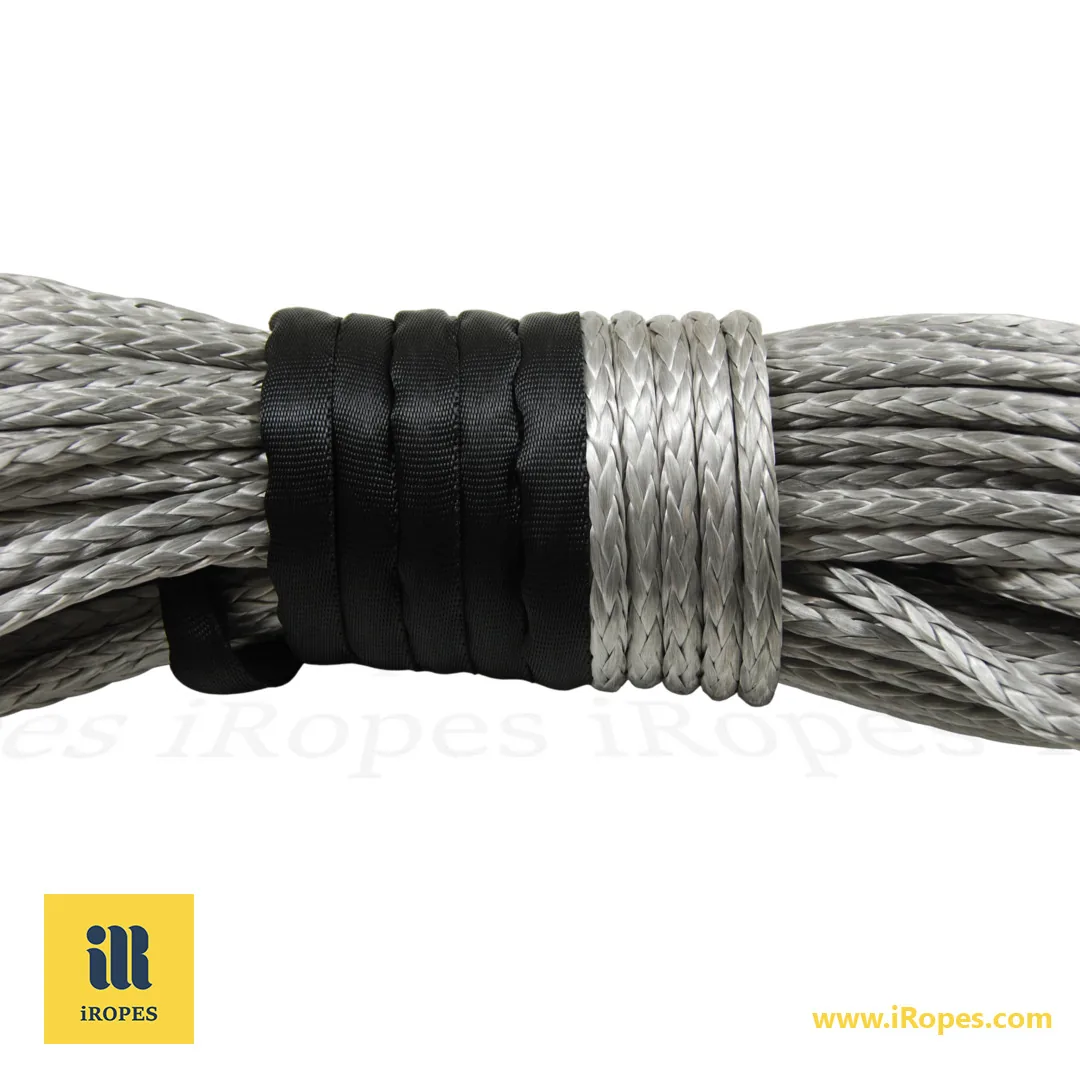
Synthetic winch rope is up to 86% lighter than steel cable, yet delivers 30% more breaking strength per kilogram. This offers a clear win-win for both handling and safety.
What you’ll gain – ~4‑minute read
- ✓ Reduce handling weight by 86% (a 100‑ft steel cable drops from 65 kg to just 9 kg).
- ✓ Boost pull efficiency by up to 70% thanks to 70% lower friction in rope guides.
- ✓ Cut failure risk: synthetic rope’s progressive fraying offers a 45‑second warning before total breakage, unlike the instant snap of steel.
- ✓ Lower overall cost of ownership: rope life can be up to 3.2× longer, significantly slashing replacement expenditure.
You’ve probably been told that steel cable is the only rugged choice for winching. However, the numbers tell a different story. This guide uncovers why a synthetic rope, paired with the right winch rope guide, outperforms steel in terms of weight, safety, and efficiency. It’s not just about material strength; hidden factors make the rope guide an undisputed champion, as you’ll soon discover.
Understanding Cable Guide Wire Systems
Many winch owners often dread handling heavy steel cables. A well‑designed guide can transform a risky operation into a smooth, controlled experience. A cable guide wire functions as a small mechanical aid. It steers the line onto the drum, keeping its path straight and significantly reducing unwanted wear.

The core function of a cable guide wire is to align the line with the winch drum groove. This prevents the rope or cable from slipping off or grinding against metal edges. By doing so, the guide minimises heat build‑up, extends the life of the line, and allows the winch to pull more efficiently.
- Roller fairlead – uses rotating bronze rollers to allow the line to glide. This design is ideal for steel cables requiring low‑friction handling.
- Hawse fairlead – features a smooth, rounded opening without moving parts. It’s perfect for synthetic ropes, which require gentle contact to prevent abrasion.
- Cable tensioner – a spring‑loaded device designed to maintain constant line tension. It reduces slack and improves spool consistency.
When a steel cable runs through a roller fairlead, the rollers absorb the side load, reducing stress on the cable’s strands. This means fewer dents and a lower chance of kinking. The result is a noticeable boost in winch efficiency, as the drum can pull a straighter line with less resistance.
“A properly installed guide acts as a quiet guardian, preventing a winch line from turning into a dangerous projectile.”
Safety is integral to every aspect of a guide system. Always verify that the guide’s load rating exceeds the winch’s maximum pulling capacity; otherwise, it could fail. Before each use, inspect the rollers or smooth surfaces for any signs of corrosion. A damaged guide can easily become a pinch point, transforming a routine recovery into a serious hazard. Simple habits, such as regularly lubricating roller bearings and ensuring the guide sits flush with the winch housing, significantly contribute to long‑term reliability.
Understanding the mechanics behind a rope guide helps address a common query: the rope guide mechanism simply keeps the line centred on the drum. It achieves this using either rotating rollers or a smooth channel, both designed to minimise friction and accurately guide the rope’s path. With this fundamental understanding, the next logical step is to match the correct rope guide design to your synthetic winch rope for optimal performance.
Choosing the Ideal Rope Guide for Your Winch
Having clarified how a rope guide keeps the line centred, the next crucial decision involves selecting the guide that best complements a synthetic winch rope. The right winch rope guide not only smooths the pull but also protects the rope from premature abrasion, extending its lifespan.

Designs that work with synthetic rope
Synthetic fibres perform best when the guide provides a low‑friction path. Three mainstream designs currently dominate the market for optimal performance:
- Roller‑type fairlead – Incorporates precision‑machined rollers. When paired with polymer‑coated rollers, it handles high‑strength synthetics without gouging or damage.
- Hawse fairlead – A smooth, rounded opening machined from aluminium or stainless steel. This design is ideal for ropes that require gentle contact, such as those made from synthetic materials.
- Hybrid tension‑assist guide – Combines a fixed channel with a spring‑loaded tensioner. This keeps the line taut and precisely centred, especially during rapid recovery pulls.
Matching guide construction to rope material and load
The guide’s load rating must always exceed the winch’s maximum pulling capacity to prevent it from becoming a failure point. For ultra‑light Dyneema‑based ropes, an anodised aluminium hawse offers ample strength while effectively preventing heat build‑up. Heavy‑duty polyester ropes, conversely, benefit from roller‑type guides that distribute the load across multiple bearings, thus preventing localised stress.
When an application involves frequent high‑tension cycles—such as off‑road recovery or marine winching—selecting a guide with sealed bearings and corrosion‑resistant hardware is crucial. Conversely, for compact equipment where space is at a premium, a low‑profile hawse fairlead is often the preferable choice.
Why rope guides are vital for reducing friction and wear
Every degree of friction directly translates into lost pulling power and increased heat. A well‑engineered guide can reduce the coefficient of friction by up to 70%, allowing the winch motor to operate much closer to its rated efficiency. Lower friction also ensures that synthetic fibres retain their tensile strength for longer periods, as it minimises heat‑induced degradation.
In practice, crews often report noticeably smoother pulls and fewer rope inspections once a compatible guide is installed. The reduced wear not only extends the rope’s life but also significantly lowers the total cost of ownership by decreasing the frequency of replacements and associated downtime.
What is the rope guide mechanism?
At its core, the rope guide mechanism consists of moving or static surfaces designed to keep the line aligned with the winch drum groove. In roller guides, small rollers rotate around an axle, enabling the rope to glide with minimal resistance. Hawse guides, on the other hand, rely on a polished channel through which the rope slides. Tension‑assist guides further enhance this by incorporating a spring‑loaded plate that presses the rope against the channel walls, effectively eliminating slack and preventing issues like bird‑nesting.
Therefore, choosing the appropriate rope guide critically depends on understanding the rope’s construction, the expected load, and the specific operating environment. With the correct pairing, the winch system will deliver peak performance, offer safer handling, and require longer service intervals. This detailed understanding sets the stage for exploring why a synthetic rope system with an optimal guide significantly outperforms traditional steel cable.
Why a Winch Rope Guide Beats Steel Cable
Having explored how a rope guide keeps the line centred, the real advantage becomes clear when the line itself is a synthetic rope rather than a steel cable. A winch rope guide, paired with modern fibres, results in a noticeable reduction in overall system mass. This makes every pull feel lighter and more controlled.

The weight savings translate directly into easier manoeuvrability on site. A 100‑ft length of Dyneema‑based rope can often be lifted and positioned with just one hand, whereas the same length of steel cable commonly requires two people or mechanical assistance. Less mass on the drum also means the winch motor consumes less power, thereby extending battery life in off‑road or marine applications.
Safety also improves dramatically. When a steel cable snaps, the sudden recoil can violently launch the broken strand like a projectile, endangering anyone nearby. Synthetic ropes, in contrast, tend to fray gradually and often retain much of their length, providing the operator with a crucial warning before total failure. This “progressive failure” mode significantly reduces the chance of a sudden snap‑back and allows for a controlled stop.
Always maintain a clear exclusion zone of at least three metres behind the winch when using synthetic rope, as even a frayed strand can whip under load with considerable force.
Beyond safety, performance metrics show significant improvement. Synthetic fibres boast a superior strength‑to‑weight ratio, delivering up to 30% more breaking strength per kilogram than steel. Their inherent flexibility allows the rope to bend around pulleys without kinking, preserving its tensile capacity over thousands of cycles. When the rope slides through a well‑designed rope guide, friction can drop by up to 70%, enabling the winch to pull closer to its rated torque and reducing undesirable heat build‑up on the drum.
Custom Options from iRopes
iRopes excels at tailoring synthetic winch rope to match your exact load, diameter, colour, and performance requirements. You can choose specific core types, strand counts, and even incorporate reflective elements to create a rope that integrates seamlessly with any guide you select. This ensures optimal performance for your unique needs.
When rescuers or recovery crews ponder whether to choose rope or steel cable, the critical factors are weight, safety, and efficiency. Synthetic rope, appropriately guided by a winch rope guide, offers lighter handling, a safer failure mode, and superior pulling efficiency. This makes it the preferred choice for most modern winching tasks.
Understanding these significant benefits sets the stage for the next crucial step: installing the guide correctly, meticulously spooling the rope, and maintaining the entire system for long‑term reliability and performance.
Installation, Maintenance, and Safety Best Practices
Building on the performance advantages already covered, a correctly fitted rope guide and diligent upkeep are essential for maintaining a winch system’s reliability day after day. These practices ensure both optimal function and safety.

The installation procedure proceeds step-by-step as follows:
- Secure the guide to the winch mounting plate using the supplied bolts, ensuring you torque them to the manufacturer’s exact specifications.
- Next, thread the synthetic rope through the guide’s channel. Confirm that the line lies flat and is free of any twists as it passes through.
- Adjust the guide so the rope exits the fairlead at an approximate 45‑degree angle relative to the drum groove, then tighten the set‑screws securely.
- Finally, perform a test pull at half load to verify smooth travel and confirm that the rope remains perfectly centred on the drum.
Regarding spooling, the industry consensus directly answers the frequent query, “Does winch cable go over or under the spool?” The safest and most common practice is under‑spooling. In this method, the line wraps from the bottom of the drum. This keeps the pulling direction away from the vehicle’s chassis and significantly reduces the chance of the rope catching on the ground or other obstacles.
Over‑Spool
The rope winds over the top surface of the drum, causing the pull line to sit above the winch. This arrangement can increase the risk of ground contact and makes the line more prone to snagging on various obstacles.
Under‑Spool
The rope is drawn from beneath the drum. This methodology keeps the load line safely away from the vehicle chassis, providing a cleaner and far more controlled recovery path.
Routine inspection is both simple and critically important. Before each use, carefully scan the rope for any frayed strands, exposed cores, or abrasion marks. Simultaneously, check the guide’s rollers or channel for corrosion, verify that bolt torque remains correct, and confirm that all termination fittings are free of cracks. A quick visual scan, followed by a tactile check for irregularities, typically catches most issues before they escalate into serious hazards.
Safety Essentials
Always keep the work area clear, use tag lines to provide stability, and ensure the winch is anchored to a solid, immovable point before initiating any pull operation.
Adhering to these practices maximises the lifespan of the winch rope guide, while also effectively protecting operators from the recoil hazards that can plague traditional steel cables. With the guide properly installed, the rope correctly spooled, and a disciplined inspection routine firmly in place, the system will reliably deliver the promised weight savings, efficiency, and crucial peace of mind.
Ready for a custom winch rope solution?
You’ve seen firsthand how synthetic winch rope significantly cuts weight, dramatically reduces recoil risk, and delivers superior pulling efficiency when compared to traditional steel cable. When these advantages are paired with the right cable guide wire and a meticulously designed rope guide, the entire winch rope guide system maximises these benefits. It offers smoother spooling, considerably lower friction, and a substantially longer service life.
iRopes’ comprehensive OEM/ODM capabilities mean you can tailor virtually every aspect of your rope – from material, diameter, and colour to specialised performance features and even reflective elements. This ensures your custom rope precisely matches any specific application, making certain your winch system performs safely and reliably, even across the most demanding environments globally.
If you'd like to receive expert advice on selecting or customising the perfect rope and guide package for your needs, simply complete the enquiry form above. Our specialists will then get in touch with you promptly, providing personalised recommendations tailored to your unique requirements.