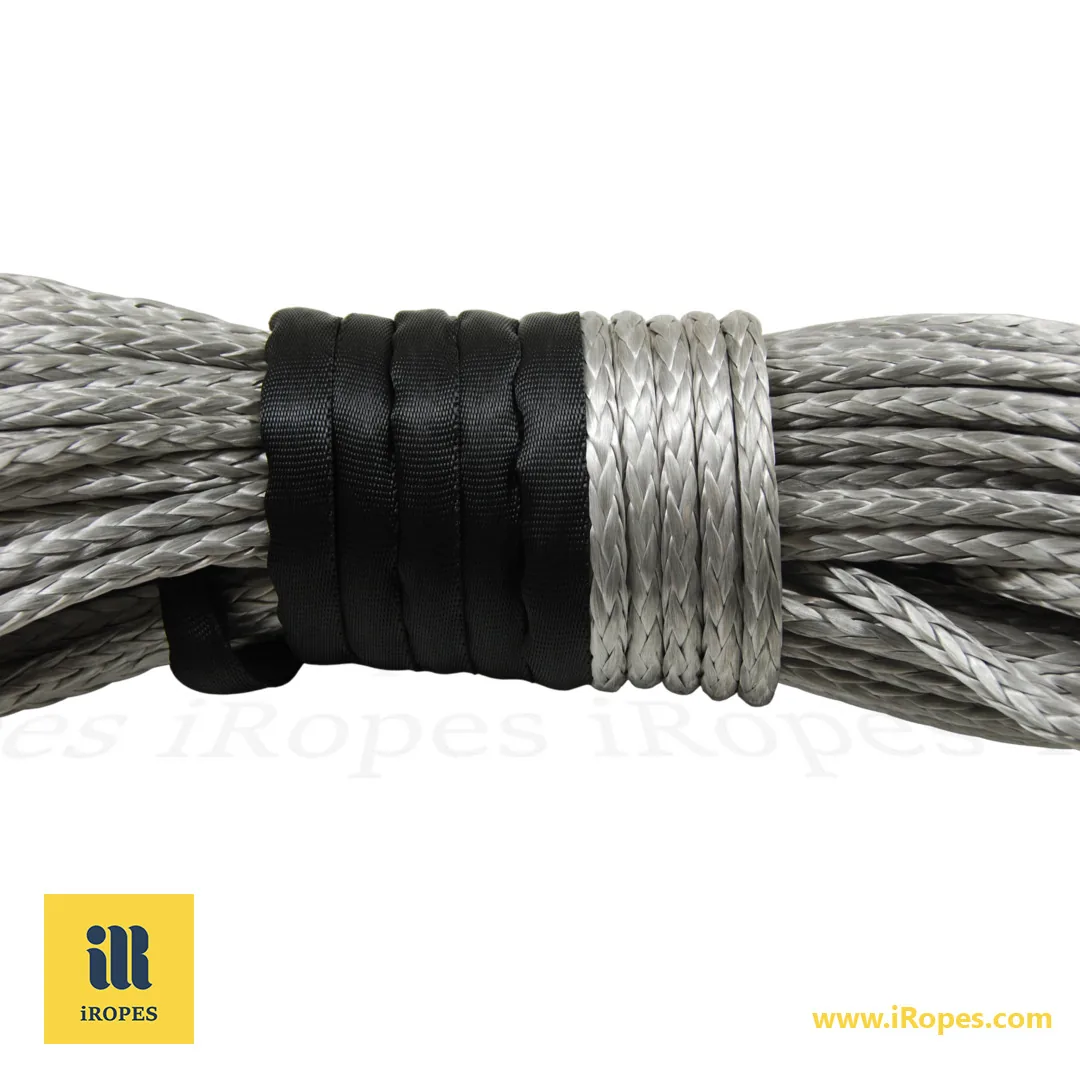
iRopes’ 3/8″ synthetic winch rope: 25,500 lb breaking strength, 1/7 the weight of steel, and low‑recoil, no‑stretch control for safer, more precise recoveries.
Quick guide – What you’ll gain
- ✓ Low‑recoil safety – soft‑fail behaviour reduces dangerous snap‑back and improves safety for everyone nearby.
- ✓ 25,500 lb breaking strength – about 27% stronger than typical 3/8″ synthetics and more than double a 5/16″ steel cable rating.
- ✓ 80% weight reduction – roughly one‑seventh the mass of an equivalent steel cable, making handling and spooling easier.
- ✓ Low‑maintenance care – UV‑resistant sleeves and a no‑stretch design simplify inspection and upkeep.
Many winch users still believe “steel never snaps,” yet the real danger comes from stored‑energy recoil that can turn a broken cable into a projectile. What if your line could deliver 25,500 lb of pull with reduced snap‑back, weigh a fraction of steel, and include options for UV and abrasion protection? ← Discover how iRopes’ 2024 no‑stretch synthetic dispels the myths and gives you precise control.
Understanding steel winch cable breaking: causes and myths
Building on safety concerns, it’s vital to examine why steel winch cable breaking occurs and which long‑standing beliefs about steel cables simply aren’t true.
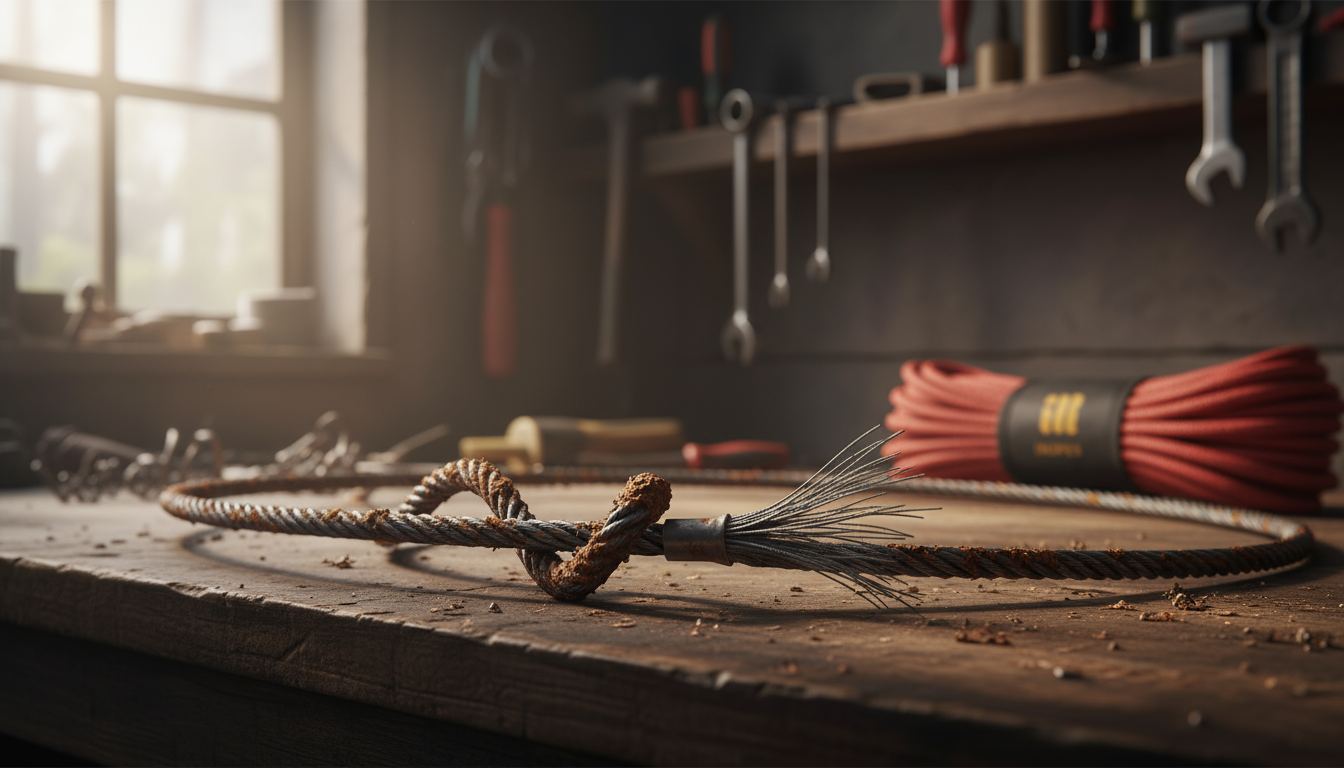
Three primary factors trigger steel winch cable breaking:
- Overloading - pulling a load that exceeds the cable’s working load limit creates tensile forces beyond its design capacity.
- Kinking or bird‑caging - sharp bends concentrate stress on individual wires, weakening the strand bundle over time.
- Corrosion - moisture and salts accelerate metal fatigue, especially in coastal or wet environments.
Each of these issues can appear independently, but they often compound. A corroded strand that is also kinked will snap far sooner than a clean, straight cable.
Myth: “Steel cables never snap and are always the safest choice.” In reality, a broken steel cable releases stored kinetic energy in a violent snap‑back that can turn the cable into a lethal projectile.
Understanding the numbers helps put the risk in perspective. A standard 5/16‑inch steel cable typically offers a breaking strength of roughly 9,800 lb. While that sounds robust, exceeding the recommended load by even a modest margin can trigger the sudden recoil that makes steel cable breaking especially hazardous.
By contrast, synthetic winch rope breaking tends to produce a low‑recoil, “soft‑fail” mode, which is why many professionals now favour synthetic lines for recovery work. However, the myths surrounding steel remain stubbornly popular, often because users focus on raw strength without weighing the safety implications of a sudden snap.
Regular inspection, proper spooling, and staying within the manufacturer’s load chart are the most effective ways to reduce steel winch cable breaking incidents. In the next section we’ll explore how recoil energy from a snapped steel cable creates real danger on the job site and why synthetic alternatives mitigate that risk.
Why steel cable breaking remains a safety concern
Building on the myths examined earlier, the next logical step is to look at the real‑world danger that steel winch cable breaking creates. When a line snaps, the stored kinetic energy does not simply disappear; it transforms into high‑velocity recoil that can strike anything in its path. This snap‑back is the reason safety briefings always warn operators to stand clear of the cable’s path.
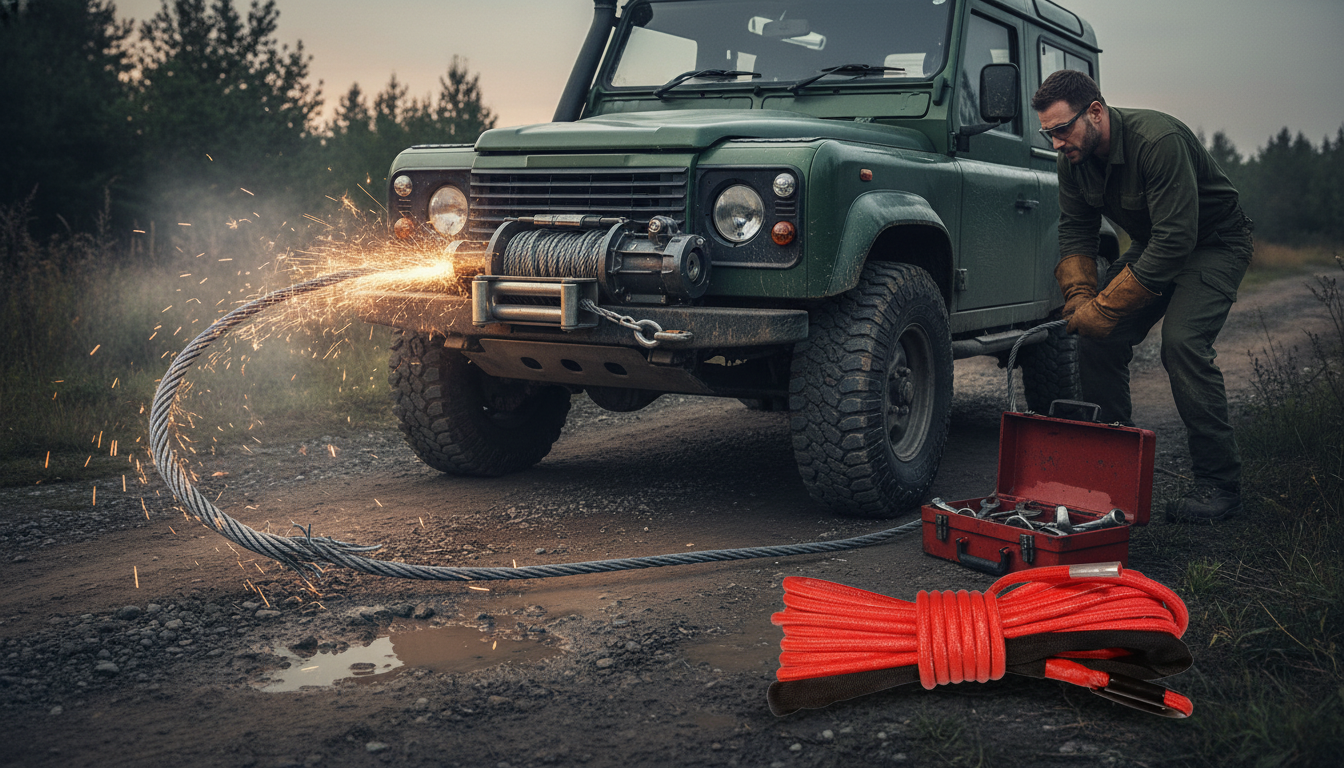
The physics are straightforward: a tensioned steel cable stores significant energy. If the cable fails, that energy is released in a moment, turning the line into a projectile that can cause severe injury or death. Unlike synthetic fibres, which tend to “soft‑fail” and absorb some force, steel has minimal stretch, so the recoil is sudden and unforgiving.
Maintenance challenges
Corrosion eats away at the steel strands, bird‑caging bends the core, and hidden fatigue can develop between inspections; regular visual checks, lubrication, and protective coatings are essential to keep the cable trustworthy.
Beyond the obvious recoil risk, steel cables demand vigilant upkeep. Even a thin film of rust can accelerate metal fatigue, while a single kink—often called bird‑caging—creates a stress concentration that acts as a premature breaking point. Because the degradation is not always visible, schedule regular inspections per manufacturer guidance and after any incident that could have introduced damage.
When the conversation shifts to synthetic alternatives, a common query surfaces: “Why can’t you use a roller fairlead with synthetic rope?” The answer lies in how the rope interacts with the fairlead’s moving parts. Roller fairleads can pinch or shear the tightly woven fibres, especially if a roller becomes worn or misaligned. The gaps between rollers also allow the line to slip, producing uneven abrasion that weakens the rope over time. By contrast, a fixed hawse fairlead guides the synthetic rope along a smooth, stationary surface, preserving its integrity and extending its service life.
- Roller fairleads can pinch or shear synthetic fibres, creating weak points that may fail under load.
- The gaps between rollers allow the rope to slip, producing uneven wear and increasing the chance of a sudden break.
- Hawse (fixed) fairleads keep the synthetic line aligned, preserving its smooth surface and extending service life.
Understanding the recoil hazard and the upkeep burden of steel lines makes it clear why many professionals now prefer synthetic winch rope for its safer failure mode. The next section will explore how modern synthetic ropes address these safety gaps while delivering record‑breaking strength.
Synthetic winch rope breaking: performance and safety advantages
Building on the safety concerns of steel lines, modern synthetic ropes address those gaps by combining high tensile capacity with a much gentler failure response. When a synthetic rope reaches its limit, the fibres elongate just enough to dissipate energy, turning a potential projectile into a controlled, low‑recoil release.
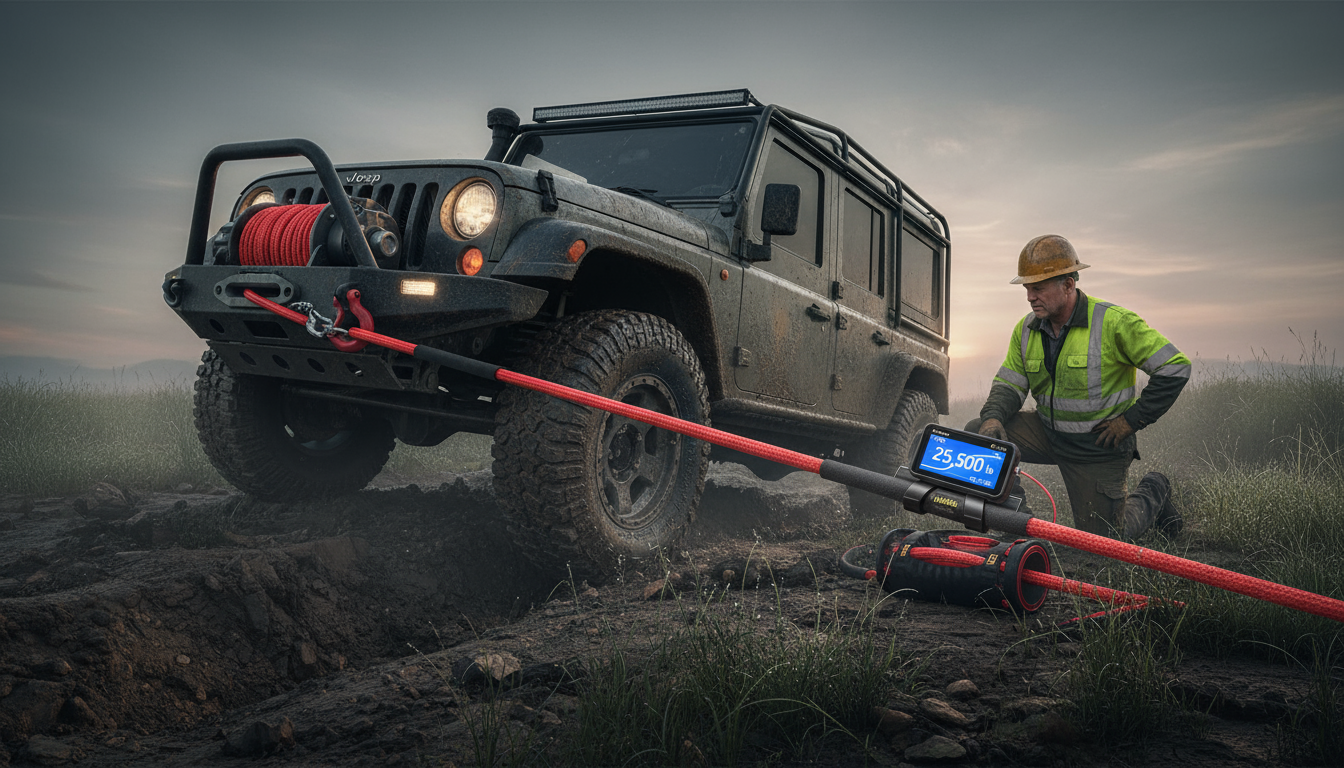
Typical 3/8 inch synthetic winch rope offers a breaking strength of roughly 20,000 lb, yet iRopes’ engineered version pushes that figure to an impressive 25,500 lb while maintaining a no‑stretch characteristic. This combination gives operators the confidence of a high‑capacity line without the sudden snap‑back associated with steel.
Is synthetic rope or steel cable better for winch applications? In most scenarios synthetic rope wins on safety, handling and comparable strength; steel cable may still be preferred only where extreme abrasion resistance is the sole priority and the user accepts the recoil hazard.
No‑Stretch Power
iRopes’ 3/8 inch synthetic line delivers 25,500 lb breaking strength while eliminating stretch for precise winching.
- Reduced recoil - the rope absorbs energy and elongates slightly, helping to prevent dangerous snap‑back.
- Higher strength‑to‑weight ratio - a 3/8 inch synthetic line can be up to one‑seventh the mass of an equivalent steel cable.
- UV and abrasion protection options - optional sleeves keep the fibre intact in harsh environments.
Understanding these performance traits sets the stage for selecting the strongest rope and applying best‑practice maintenance, topics explored in the following section.
Choosing the strongest rope: iRopes 2024 synthetic solution and best practices
After seeing how a low‑recoil, “soft‑fail” mode can reduce the dangerous snap‑back of a broken steel line, the next step is to pick a rope that gives you that safety edge while delivering record‑breaking strength. iRopes’ 2024 synthetic winch rope does exactly that, and a few straightforward habits keep it performing at its peak.

When a synthetic line reaches its limit, the fibres elongate just enough to absorb energy, turning a potential disaster into a controlled, low‑recoil release. That characteristic—synthetic winch rope breaking with reduced snap‑back—makes iRopes’ solution especially attractive for anyone who values safety as much as raw power.
iRopes Synthetic Power
Key performance highlights
Strength
25,500 lb breaking strength on a 3/8 inch line, surpassing standard synthetic ropes.
No‑Stretch
No‑stretch design ensures precise control during recovery.
Durability
UV‑resistant coating and abrasion‑guard sleeve extend service life.
Best‑Practice Tips
Maintain safety and performance
Fairlead
Use a fixed hawse fairlead; avoid roller fairleads that can damage synthetic fibres.
Inspection
Check for cuts, UV wear, glazed or flattened fibres, and hardware damage before each use; replace if damage is found.
Cleaning
Rinse with fresh water, mild soap if needed, dry completely, then store away from direct sunlight.
Choosing the right fairlead is often the first decision that determines longevity. A fixed hawse fairlead provides a smooth, stationary surface, eliminating the pinch points that roller fairleads create for synthetic fibres. Pair that with a routine visual check—looking for frayed ends, UV‑induced fading, or any abrasions—and you’ve built a simple yet powerful safety net.
Cleaning tip: Gently wash the rope with lukewarm water and a non‑abrasive soap, avoid high‑pressure jets, then air‑dry in shade before coiling.
Answering the common question, “How do I clean my synthetic winch rope?”—start with a low‑pressure water rinse, apply a mild detergent if the rope is dirty, scrub lightly with a soft brush, rinse again, and let it dry naturally away from direct heat. A clean rope not only looks professional; it maintains the fibre integrity that underpins that 25,500 lb breaking strength.
With the strongest synthetic line in 2024, the right fairlead, and a disciplined maintenance routine, you can enjoy the safety of low‑recoil performance without sacrificing raw pulling power—setting the stage for the final confidence‑boosting steps in safe winching.
By now you’ve seen how steel winch cable breaking can unleash dangerous recoil, and why steel cable breaking demands rigorous inspection and maintenance to keep sites safe. The article also highlighted that the softer failure mode of synthetic winch rope breaking reduces snap‑back, making recovery work far safer.
iRopes made the 2024 strongest synthetic winch rope – a 3/8 inch (9.5 mm) line whose breaking strength reaches 25,500 lb (11.5 tons) with no stretch on use. Our ISO 9001‑backed OEM/ODM expertise lets you customise diameter, colour, accessories and packaging, so you get a rope that fits your exact performance and branding needs.
Request a personalised rope solution
For tailored advice on selecting or designing the perfect rope for your application, please use the enquiry form above. Our specialists are ready to help you achieve optimal safety and performance.