⚠️ Standard round sling capacity charts overestimate safe loads by up to 20% in marine environments due to accelerated degradation from saltwater and UV exposure—potentially turning routine lifts into catastrophic failures.
Unlock Marine Sling Safety in Just 8 Minutes → Discover Adjusted Capacities, Inspection Mastery, and Compliance Essentials
- ✓ Derate capacities 10-20% for saltwater/UV factors to accurately calculate vertical, choker, and basket hitches, slashing accident risks by preventing overload misjudgements.
- ✓ Master 5-step inspections tailored for harsh seas, spotting cuts, abrasions, and exposed core yarns early to extend sling life by 30-50% through proactive protection.
- ✓ Align with ASME B30.9 and OSHA standards using field checklists and derating methods, ensuring compliance that avoids fines and boosts operational efficiency.
- ✓ Explore iRopes' custom marine slings with UV-resistant coatings and precise tags, delivering tailored solutions that match your yachting or offshore needs without guesswork.
You trust round sling charts for marine lifts, but what if they're silently eroding your safety margin amid relentless saltwater corrosion and sun-baked degradation? This hidden flaw has sparked incidents where seemingly solid gear failed mid-operation, endangering crews and cargo. Yet, a simple adjustment flips the script. Dive in to uncover the precise derating formulas, inspection red flags, and custom safeguards that transform vulnerability into unshakeable reliability for your next haul.
Understanding the Polyester Round Sling Chart for Marine Applications
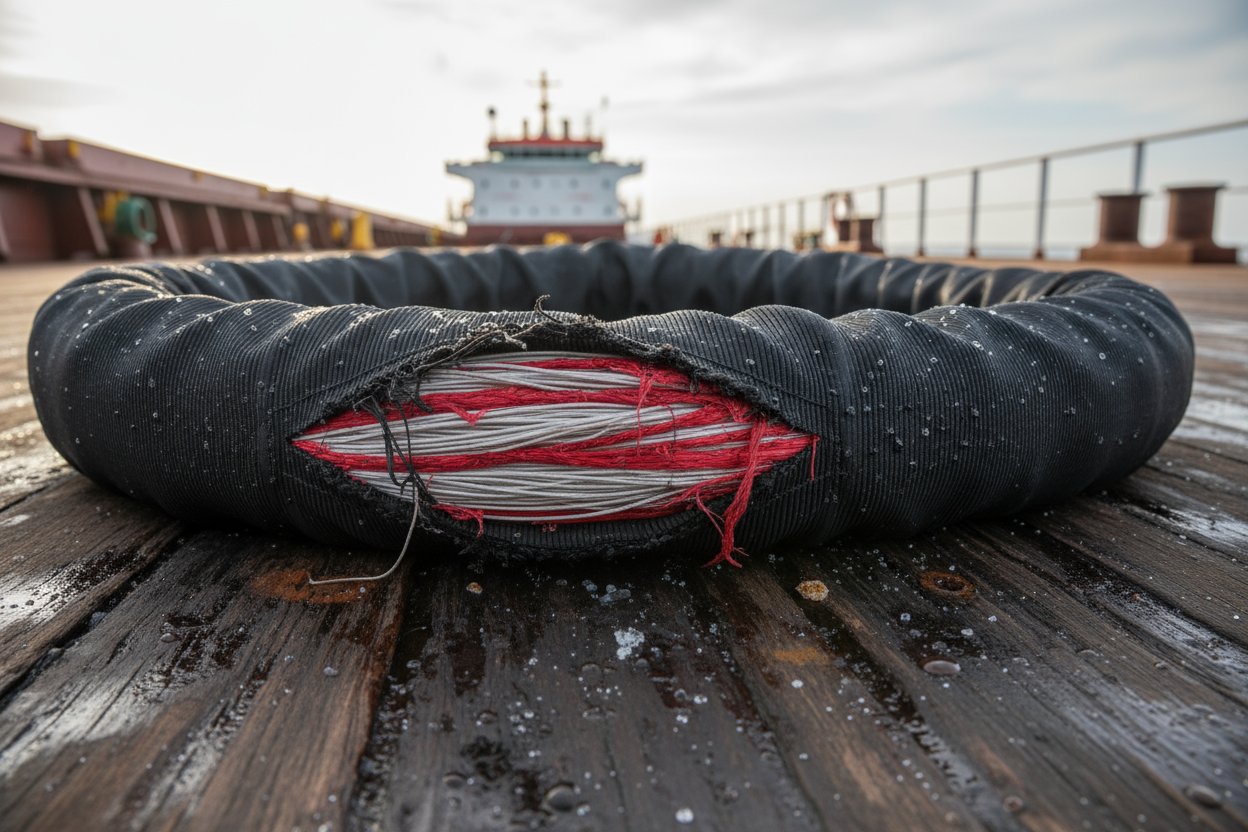
Polyester round slings are essential for lifting heavy loads in marine environments, where reliability can literally mean the difference between a smooth operation and a disaster at sea. These slings consist of an inner core made from thousands of strong polyester yarns that bear the actual load. Surrounding this core is a tough tubular jacket, often woven from the same material, which shields the core from abrasions, cuts, and environmental hazards like saltwater corrosion. What makes them particularly suited for marine exposure is the inclusion of red warning yarns woven into the jacket. If you ever see these exposed, it's a clear signal that the outer layer has been compromised, and the sling needs immediate attention. Think of the jacket as the sling's armour, designed to withstand the relentless pounding of waves and salt spray without letting the vital core suffer.
Ever wondered what those colours on a round sling actually signify? In the industry, colours serve as a quick visual guide to the sling's load capacity. This follows a standard code where purple might indicate around 2,600 pounds for vertical lifts, green 5,300 pounds, and so on up to black for heavier duties like 106,600 pounds. Despite these general guidelines, it's crucial to remember that they can vary slightly between manufacturers. Therefore, always double-check the sewn-in tag for the exact rated capacity; colours alone aren't enough to trust in high-stakes marine work.
- Construction Basics - Inner core of load-bearing polyester yarns for strength; protective jacket to fend off marine wear; red warning yarns for damage alerts.
- Marine Adaptations - Enhanced UV resistance in the jacket to combat sun exposure; saltwater-repellent treatments to prevent rapid fibre breakdown.
- Load Indicators - Tags with working load limits (WLL) tailored for wet conditions, ensuring you know the safe lifting threshold even after exposure.
To help you grasp capacities, consider this standard polyester round sling chart for common hitches. A vertical hitch uses the full WLL, while a choker reduces it by about 80% due to the bend, and a basket doubles the vertical at 90 degrees but drops with angles. Here's a simplified table based on industry norms (always verify with your sling's tag):
| Colour | Vertical WLL (lbs) | Choker WLL (lbs) | Basket 90° WLL (lbs) |
|---|---|---|---|
| Purple | 2,600 | 2,080 | 5,200 |
| Green | 5,300 | 4,240 | 10,600 |
| Yellow | 8,400 | 6,720 | 16,800 |
| Tan | 10,600 | 8,480 | 21,200 |
In marine applications, however, standard charts like this one don't tell the full story. Saltwater accelerates degradation by seeping into fibres, causing up to 20% faster strength loss compared to dry conditions. Meanwhile, UV rays from constant sun exposure embrittle the jacket over time. This means relying solely on colour might overestimate capacity—always prioritise the tag, which includes marine-adjusted ratings if customised. Have you ever pulled a sling from service after spotting early UV fuzzing? It's a small step that prevents big problems.
At iRopes, we take this further with customization options for marine-specific polyester round slings. You can specify diameters from 6mm to over 50mm, lengths up to 100 metres, and even add UV-stabilised jackets or chemical-resistant coatings to meet compliance like ASME B30.9. Our skilled team, backed by ISO 9001 certification, crafts these with your branding in mind, ensuring they handle the unique demands of yachting or offshore work without compromising on safety. While these charts offer a solid baseline, their shortcomings in salty, sun-baked settings expose a deeper issue worth exploring next.
The Fatal Flaw in Round Sling Capacity Chart for Marine Environments
Those shortcomings we touched on earlier, specifically how saltwater and sun eat away at your sling faster than expected, point straight to the biggest problem with standard round sling capacity charts. They inherently assume ideal conditions—dry, controlled environments. However, out on the water, circumstances can change rapidly. Marine factors significantly accelerate degradation from constant moisture soaking in, corrosive salt crystals grinding fibres, and harsh chemicals from fuels or cleaning agents. Consequently, standard charts often overestimate safe loads, potentially putting your crew and equipment at risk without you even realising it. It’s akin to using a road map that ignores the potholes; you might set out confidently, but reality can hit hard. For deeper insights into why slings fail in marine hauls and practical fixes, check out Why Travel Lift Slings Fail Marine Hauls and How to Fix It.
To truly understand this flaw, let’s break down how you read a round sling capacity chart in practice. First, locate your sling’s specifics on the tag—ignoring colours for now—and find the vertical capacity, which represents the full working load limit (WLL) when the load hangs straight down. From there, adjust for the hitch type you’re using. A vertical hitch gives you 100% of that WLL, as you’re simply lifting directly. For a choker hitch, where the sling loops around the load and back through itself, capacity drops to about 80% due to the stress from the bend; this is comparable to squeezing the sling tighter, which reduces its strength. Basket hitches, which wrap under the load without choking, double the vertical capacity at a perfect 90-degree angle but require angle adjustments if the legs spread out.
Calculating the *actual* capacity gets trickier with angles, especially in marine setups where rigging might shift with waves. For instance, if your sling’s vertical WLL is 5,300 pounds, in a basket hitch at 60 degrees between legs, you’d apply a reduction factor of roughly 1.73. You then divide the combined vertical capacity (which is double the single-leg vertical capacity at 90 degrees) by this factor to find the safe load for the pair, approximately 6,130 pounds in this example. However, remember that formulas like this, often derived from standards like ASME B30.9, are based on dry tests. In wet, salty air, it's wise to add a 10-20% derating factor specifically for environmental exposure, depending on how long the sling has been in use. Hardware compatibility also matters; ensure shackles have a pin diameter at least as large as the sling’s body to avoid pinching in damp conditions, which could further reduce capacity.
- Identify Vertical WLL - Check the tag for the base load rating in pounds or tonnes.
- Select Hitch Multiplier - Vertical: 1x; Choker: 0.8x; Basket at 90°: 2x.
- Adjust for Angle - Use factors like 2 for 60°, 1.41 for 45°—multiply legs' capacities and divide by the factor.
- Apply Marine Derate - Subtract 10-20% for saltwater/UV exposure based on usage history.
For marine verification, always perform a quick field check: measure the sling’s current diameter against the original specification. If it’s noticeably swollen from moisture, it’s prudent to reduce its capacity by 15%. Also, ensure it’s paired with compatible wet-rated hardware to prevent slippage. This adjusted approach significantly enhances safety compared to blindly trusting the standard chart.
Picture this scenario: A few years back, a yacht crew in the Gulf loaded cargo using a standard chart’s numbers for a green sling in a basket hitch. On paper, they calculated a safe lift of 10 tonnes. However, after weeks in humid, chemical-laced air, unseen corrosion began to weaken the sling’s internal structure. During a subsequent lift, the sling unexpectedly parted, sending gear overboard and narrowly avoiding injury to a deckhand. This incident, documented in industry logs, occurred because the environmental factors were not adequately considered. Real-time, adjusted checks could have flagged the hidden wear, underscoring that on-the-spot assessments can truly save lives.
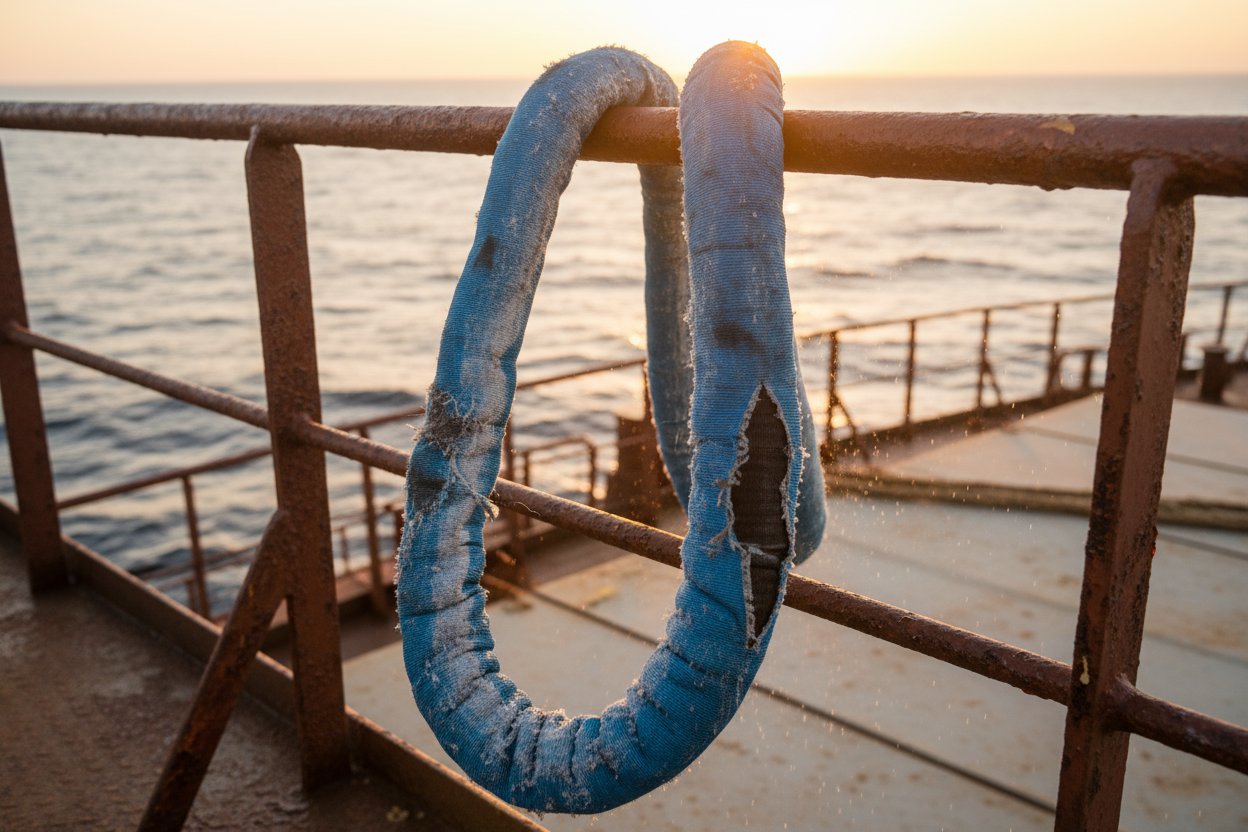
Therefore, spotting these risks early through diligent, hands-on evaluation is where true protection begins, especially when standard charts fall short in the face of the sea’s relentless demands. This critical proactive measure leads us to the indispensable protocols of round sling inspection, a topic we will now explore in detail.
Mastering Round Sling Inspection in Harsh Marine Conditions
Spotting those hidden risks we discussed calls for a hands-on approach that extends beyond glancing at a chart—it’s about getting up close with your gear before every lift. In the relentless push-pull of marine work, where saltwater soaks everything and waves add unpredictable stress, regular inspections keep your polyester round slings from turning into liabilities. Think of it as a quick health check for your most trusted lifting partner. Skip it, and you might miss the subtle signs that could spell trouble mid-operation.
So, how do you inspect a round sling effectively? Start with the basics: pre-use checks happen right before each lift, giving the sling a full visual once-over and a gentle flex to feel for stiffness from salt buildup. For frequent inspections, conduct these after every use or shift, focusing on areas hit hardest by the sea—like ends that drag across decks slick with brine. Periodic inspections, perhaps monthly or after heavy exposure, involve a deeper dive. This might mean stretching the sling out in good light to spot any sneaky wear from constant moisture. In marine settings, always rinse off salt residue post-inspection to slow that corrosive creep, and dry it thoroughly to avoid trapped dampness weakening the fibres over time.
- Pre-Use Scan - Run your hands along the length, checking for soft spots or unusual swelling from absorbed seawater.
- Frequent Review - Look closely at contact points for early fraying caused by rubbing against wet hardware.
- Periodic Deep Check - Measure diameter against original specs; saltwater can cause up to 5% expansion before strength drops noticeably.
Now, knowing when to pull a sling from service is just as vital—it’s not worth the risk if damage compromises its hold. Exposed core yarns from cuts scream immediate retirement, as they mean the load-bearing heart is vulnerable. Edge abrasions that fuzz up the jacket, especially from sharp boat fittings, signal ongoing wear that could lead to failure under tension. Heat from engine proximity might leave charred patches or a brittle feel, whilst chemical spills discolour and stiffen the material. Any knots twist the structure unevenly, slashing capacity by half or more. Furthermore, if the tag’s faded beyond reading—with core details like WLL gone—retire it immediately. These aren't minor issues; in a salty spray, they accelerate rapidly.
To proactively combat these issues, wrap edge guards around sharp corners during lifts to shield against chafing from rocking loads. For storage, hang slings in shaded, dry spots away from deck moisture; UV rays bake in brittleness, and biofouling from algae clings in humid corners, inviting more decay. A simple cover during downtime dramatically reduces exposure. Have you noticed how a well-protected sling often outlasts its battered mates? It's those small, consistent habits that add years to its life.

For on-the-go help, grab our downloadable checklists and diagrams. They outline every step with sketches of common marine pitfalls, all grounded in iRopes’ ISO 9001 processes that ensure every sling starts strong. Print them for the deck; they're your quick reference when conditions turn rough. Adhering to these routines not only spots issues early but also aligns your setup with the broader rules that keep operations compliant and crews safe, which is a fitting transition to our next topic.
Ensuring Safety and Compliance with Marine Sling Standards
Those thorough inspections you now have down pat are a strong start, but they only go so far without backing from solid regulations that set the bar for what’s safe out on the water. In marine operations, where slings face relentless exposure, standards like ASME B30.9 provide the blueprint for sling fabrication, use, and maintenance—think of it as the rulebook ensuring your gear holds up under tension without surprises. OSHA layers on workplace safety mandates, requiring documented training and equipment checks to prevent accidents that could turn a routine lift into a crisis. Then there's WSTDA-RS-1, which dives into web sling specifics, offering guidelines for testing and retirement that align perfectly with synthetic materials like polyester. For marine adaptations, these standards call for extra scrutiny on environmental factors. For instance, ASME suggests derating capacities by up to 15% in corrosive settings to account for saltwater’s sneaky strength sapping, while OSHA pushes for logs tracking exposure time to flag when a sling’s nearing its limit. It’s not just about ticking boxes—these rules adapt to the sea’s chaos. They demand you factor in humidity that swells fibres or chemicals that etch away at the jacket.
Putting these standards into daily action means adopting smart habits around storage and handling that keep your slings battle-ready longer. After a wet lift, always rinse off salt with fresh water to halt corrosion in its tracks. Then, store them coiled loosely in a shaded, ventilated spot away from direct sunlight and deck puddles—UV can cut polyester life by half if left unchecked. Handling-wise, avoid dragging them over rough surfaces or sharp edges; instead, lift and position carefully to prevent snags that invite abrasions. Temperature limits hover around 90°C maximum for polyester, but in marine heat from engine bays, drop that to 60°C effective to dodge softening. Have you ever felt a sling go limp after baking in the tropics? Chemical exposure also demands compatibility checks. Oils or acids can degrade fibres 30% faster, so segregate slings from fuel spills and use barriers during cleanup. These practices aren’t extras—they stretch your investment while dodging compliance pitfalls.
Storage Essentials
Cool, Dry, Protected
Avoid Sunlight
UV rays embrittle the jacket; cover or shade to prevent 50% faster aging in marine sun.
Control Moisture
Rinse post-use and dry fully; trapped salt leads to uneven wear and early failure.
Coil Properly
Loose coils prevent kinks; hang if possible to maintain shape against humidity.
Handling Tips
Gentle and Precise
No Dragging
Lift clear of decks to avoid cuts from barnacles or fittings in rough seas.
Chemical Barriers
Use sleeves near spills; polyester resists mild acids but not prolonged contact.
Temp Awareness
Keep below 90°C; hot zones soften fibres, slashing hold during critical lifts.
That’s where partners like iRopes step in, turning these standards into reality with customised, IP-protected slings built for marine grit. Our precise manufacturing, from selecting UV-stabilised yarns to embedding compliant tags, ensures every piece meets ASME and OSHA head-on while fitting your exact needs—like reinforced ends for choker hitches in yachting. For more on revolutionary options like UV-proof endless polyester slings that enhance marine lift durability, explore Revolutionize Marine Lifts with UV-Proof Endless Polyester Slings. We handle the details so you focus on the job, with global shipping keeping your supply chain tight.
For hands-on support, dive into ASME B30.9 documents at their site or OSHA’s free rigging guides online—they’re gold for auditing your setup. WSTDA-RS-1 outlines are just a click away too. If tailoring slings to your operation feels overwhelming, reach out to our experts; they’ll walk you through options that lock in safety without the guesswork. Building on this foundation sets the stage for lifts that run smooth and incident-free.

Navigating the treacherous waters of marine lifting demands more than relying on a standard polyester round sling chart, as we’ve seen. The fatal flaw lies in their failure to account for accelerated degradation from saltwater, UV exposure, and chemicals, potentially slashing capacities by 20%. By applying marine-adjusted verification methods, such as derating factors and hitch-specific calculations, combined with rigorous round sling inspection protocols, you can spot critical issues like exposed core yarns, abrasions, or illegible tags early. Our step-by-step guides highlight retirement indicators and proactive protections, ensuring compliance with ASME B30.9 and OSHA, while iRopes’ custom solutions deliver enhanced durability for your operations. To better understand marine rope specifications, including capacity verification and inspection criteria, refer to Understanding Marine Rope Specifications and Uses.
These insights equip you to extend sling life and prevent incidents, but tailoring to your exact needs—from UV-stabilised jackets to precise load specifications—takes it further. Download our field checklists for on-deck reference, and lean on expert guidance to optimise safety and efficiency at sea.
Ready for Custom Marine Sling Solutions? Connect with iRopes
If you're seeking personalised recommendations on round sling capacity chart adjustments or custom polyester round slings for your marine setup, the inquiry form above is your direct line to our specialists. We'll help refine your approach for peak performance and compliance.
