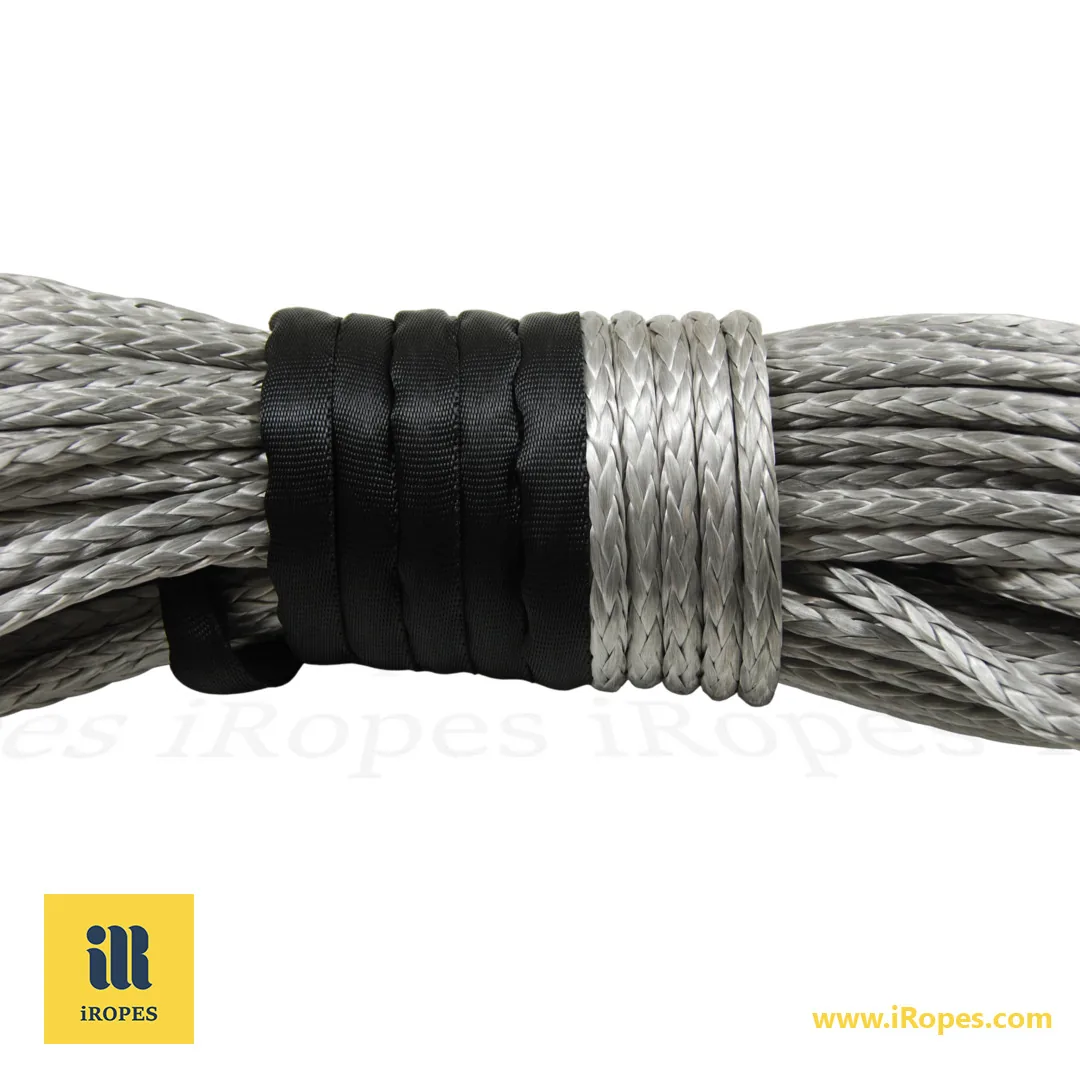
Nylon core rope delivers 15‑25% elongation at break for shock‑load absorption. When wet, it retains ≈80% of its dry tensile capacity.
What you’ll master in a 6‑minute read
- ✓ Capture up to 25% stretch to cushion dynamic loads, extending equipment life.
- ✓ Achieve tensile strengths of 30 kN for a 12 mm rope – ≈ 3 × the capacity of comparable polyester lines.
- ✓ Benefit from abrasion resistance 3 times higher than natural fibres, cutting replacement costs.
- ✓ Unlock bespoke specs (diameter, colour, reflective trims, OEM/ODM) with ISO‑9001‑backed precision.
Most engineers assume any high‑strength rope behaves the same under load. Yet, nylon’s 15‑25% elongation turns shock into safety, fundamentally reshaping marine dock lines, arborist rigging, and industrial slings. In the sections below, we’ll dissect each construction, reveal its exact performance metrics, and show how iRopes’ custom options allow you to achieve the right balance of stretch, strength, and durability for your toughest jobs.
Defining the nylon core rope and its core concept
When you first feel the supple grip of a rope, the material beneath the surface typically performs most of the heavy lifting. Nylon, a synthetic polyamide, combines high tensile strength with a natural stretch that lets it absorb sudden shocks. This inherent trait makes it a preferred choice for demanding industrial ropes.

However, a rope is more than a single strand. In a nylon core rope, the core acts as the hidden backbone, typically surrounded by a protective sheath. For double‑braid designs, both the core and the outer braid consist of nylon. Conversely, kernmantle constructions pair a nylon core with a polyester sheath. This arrangement allows engineers to precisely balance elasticity, durability, and abrasion resistance within a single product.
The core provides three practical benefits crucial for any worksite:
- Shock absorption – The stretchy core dampens sudden loads, protecting both equipment and operators from damage.
- High tensile strength – Nylon’s molecular bonds give the rope a high breaking load capacity while keeping it remarkably lightweight.
- Durable against abrasion – The core’s fibre density inherently resists wear from rough surfaces and repeated flexing.
Ultimately, quality is just as important as the material itself. iRopes manufactures every nylon core rope in ISO 9001‑certified facilities. We apply strict tolerances and conduct multiple inspection stages to guarantee that each metre meets its promised performance.
“Every nylon core rope leaving our factory carries ISO 9001 certification, ensuring the exact strength and stretch you expect on site.”
Understanding these core principles sets the stage for exploring the specific constructions that bring these advantages to life.
Nylon Core Rope Constructions Explained
With the core advantages fresh in mind, let’s explore how the way a nylon core rope is built translates those benefits into real‑world performance.
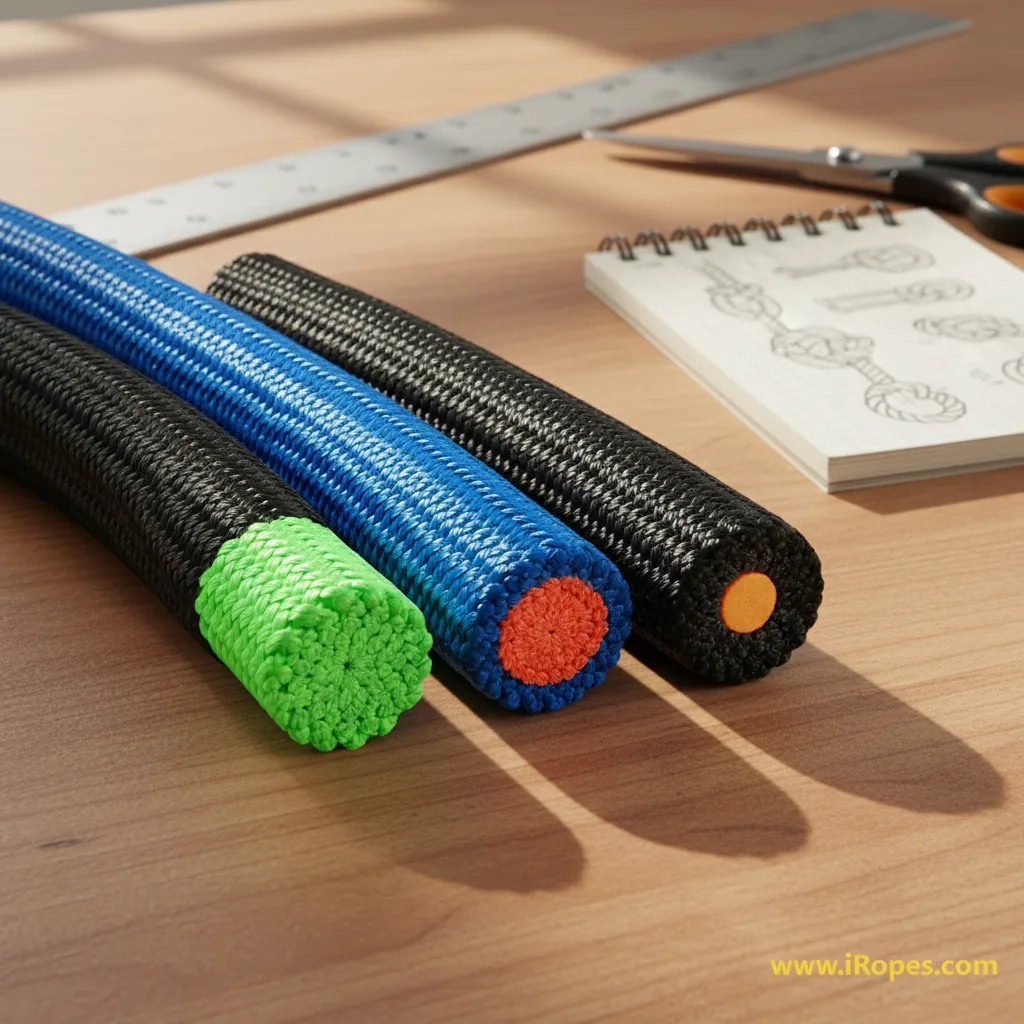
Each construction allows for swapping the outer material or braid pattern while retaining the resilient nylon core at the heart of the rope.
- Double braid – A tight outer braid surrounds the nylon core, delivering maximum strength and a smooth feel.
- Kernmantle – A polyester sheath encases the nylon core, marrying low‑stretch control with core elasticity for rescue work.
- Other variants – Solid braid, 3‑strand twists, or wire‑core hybrids adapt the core to niche tasks such as flagpole halyards or heavy‑duty towing.
Choosing the right build often hinges on the specific environment and load characteristics you expect from the rope.
Dynamic Strength
The nylon core absorbs shock loads, making double‑braid ropes perfect for marine anchoring and heavy‑duty recovery applications.
Smooth Handling
A tight outer braid reduces snags, providing arborists with a comfortable grip when lowering limbs.
Low‑Stretch Sheath
Polyester outer layers limit elongation, giving kernmantle ropes precise control for rescue and rope‑access tasks.
Hybrid Protection
Combining a nylon core with a polyester sheath balances elasticity and abrasion resistance for demanding industrial jobs.
Understanding these builds allows you to match the rope’s inner resilience with an outer sheath that suits the job. Whether you need the supple give of a double braid for a dock line or the controlled response of a kernmantle for a rescue rig, the right combination is key. The next step is to explore how these choices translate into performance metrics across key industries.
Key Performance Properties of Nylon
Having seen how the braid and sheath work together, the next question is how the material itself behaves under load. The intrinsic qualities of a nylon core rope ultimately determine whether it will survive the shock of a sudden jerk or hold steady under a constant pull.

When a nylon rope reaches its breaking point, it typically stretches between 15% and 25% of its original length. This elongation isn’t wasted; it acts like a built‑in cushion, transforming a potentially damaging impact into a manageable load. In practical terms, a 12 mm dock line can absorb the sudden pull of a wave without snapping, providing the crew with precious seconds to secure the vessel.
- Elongation – 15‑25% at break, providing crucial shock‑load absorption.
- Abrasion resistance – Polyamide fibres endure repeated rubbing on rough surfaces with remarkable durability.
- Chemical tolerance – Resists oil, gasoline, and most common solvents, maintaining integrity in harsh environments.
- UV exposure – Holds up significantly better than natural fibres but will degrade gradually over many years of direct sunlight.
These strengths, however, come with a few trade‑offs that buyers should carefully consider before committing to a specific rope.
- Wet‑strength loss – Up to 20% reduction when saturated, which can significantly affect marine applications.
- Sinking tendency – With a specific gravity above 1, the rope will not float, limiting its use as a safety line on water.
- Heat sensitivity – A melting point around 210°C means prolonged exposure to high temperatures can weaken the fibres.
- High stretch – While beneficial for shock absorption, excessive elongation can be undesirable in static rigging where dimensional stability is paramount.
Temperature plays a subtle but decisive role. In environments where flames or hot machinery are present, the polymer softens well before the 210°C threshold, reducing the rope’s load‑bearing capacity. This means a higher factor of safety is essential for high-temperature applications.
“When temperature exceeds 180°C, nylon’s tensile strength can drop by more than 30%. Therefore, selecting a sheath material that shields the core becomes essential for exceptionally high‑heat tasks.”
Balancing these performance attributes with the right construction transforms a generic rope into a tailored solution. The upcoming section will explore the industries that benefit most from these characteristics and how iRopes can customise a nylon core rope to meet exact project requirements.
Industry Applications and Customisation Options
Having examined how nylon’s inherent elasticity and abrasion resistance shape performance, let’s now look at the sectors that reap the biggest rewards from those traits.

In the marine world, dock lines, anchor lines, and mooring solutions demand a rope that can absorb the sudden surge of a wave without snapping. The controlled stretch of a nylon core rope provides that essential cushioning effect, allowing crews to secure vessels quickly while protecting hardware from damaging shock loads.
Arborists rely on the same stretch, but for a different purpose. Bull ropes and rigging must gently lower heavy limbs; the core’s elasticity slows the descent, significantly reducing the impact on both the tree and the operator’s equipment.
Industrial and commercial environments push the rope in yet another direction. Lifting slings, towing lines, and safety‑critical rope‑access setups all benefit from nylon's high tensile strength and superior abrasion resistance. When an application requires precise control, pairing nylon with a polyester sheath in a kernmantle style offers an ideal solution for rescue rigs, while still absorbing unexpected loads effectively.
It’s worth noting the common concerns that surface when choosing nylon for certain applications. The material can absorb water, which may diminish strength in prolonged wet conditions, and it does not float—factors that are particularly critical for offshore use. Additionally, extreme heat can soften the fibres, so always evaluate applications near open flames or hot machinery carefully.
Customisation at iRopes
From diameter and length to colour matching corporate branding, iRopes tailors every aspect of a nylon core rope solution. Choose reflective or glow‑in‑the‑dark elements for enhanced night‑time visibility, add loops, thimbles or specialised terminations, and benefit from comprehensive OEM/ODM services that protect your intellectual property throughout production.
Whether your operation demands a bright‑orange dock line for easy identification, a black arborist rope with reinforced eye splices, or a custom‑packed pallet ready for global shipment, iRopes combines ISO 9001‑certified precision with flexible design expertise. This ensures we deliver exactly the rope your operation demands, every single time.
Understanding the Benefits and Uses of Nylon Rope Material prepares you for the final piece of the puzzle: selecting the right specifications to precisely match your workload. We'll explore this next.
Need a custom solution? Get expert advice
For those who desire a personalised rope specification, the inquiry form above connects you directly with our design specialists. We’ve shown how the material's elasticity, shock‑absorption, and abrasion resistance, combined with tailored constructions, deliver reliable performance across marine, arborist, and industrial tasks. With ISO 9001‑certified manufacturing and flexible OEM/ODM options, iRopes can turn these features into a rope that perfectly fits your exact load, environment, and branding needs. If you’re ready to optimise your application, let us help you specify the perfect nylon core rope.