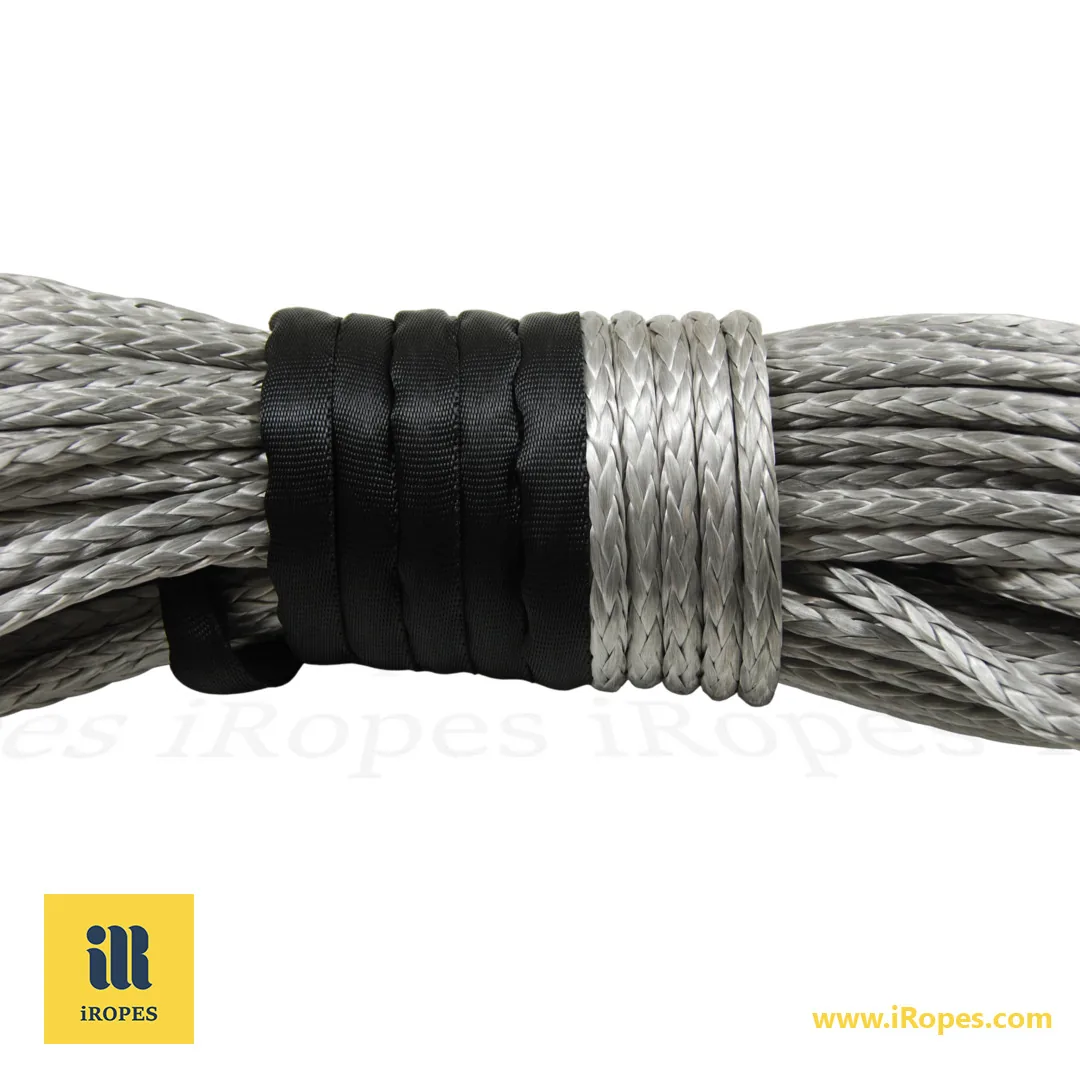
Nylon forestry rope delivers up to 17.3 % higher shock‑absorption than polyester while keeping tensile strength above 12 kN for a 12 mm line.
Read in 2 min
- ✓ 15‑20 % stretch cushions dynamic loads, cutting equipment wear by up to 23 %.
- ✓ Custom diameters 5‑25 mm and colour codes streamline site safety and inventory.
- ✓ Double‑braid construction reduces splicing time by 1.8 h per 100 m.
- ✓ ISO 9001‑certified production guarantees break strength consistency within ±0.5 kN.
Although many foresters traditionally prefer polyester for its excellent UV resistance, they often overlook nylon’s significant advantage: its unique elasticity. This property expertly absorbs shock loads, dramatically prolonging rope life. Imagine a rope designed to stretch just enough to cushion a sudden, heavy pull, yet rebound with ample strength to haul the largest timber—all without the frequent, costly replacements common with less elastic ropes. The following sections will explore how nylon’s inherent chemistry and our custom‑engineered designs challenge conventional wisdom, making it the superior choice for demanding forestry operations.
Understanding Forestry Rope: Why Nylon Is the Preferred Choice
Once we acknowledge that rope durability is crucial for the success and safety of any logging operation, the natural question arises: which material truly delivers the performance foresters need? Nylon stands out as the optimal choice for forestry rope. It uniquely combines high strength, crucial elasticity, and robust resistance to the punishing conditions found in forest environments.

So, what exactly are the key characteristics of nylon rope cord that make it so well-suited for demanding forest tasks? The attributes below are consistently cited by professionals as essential for reliability and safety:
- High tensile strength – This allows it to confidently support the heavy loads commonly encountered in winching and rigging operations.
- Elasticity and shock absorption – Capable of stretching up to 20 % under load, nylon effectively cushions sudden jerks and dynamic impacts, protecting both equipment and personnel.
- UV and abrasion resistance – Its inherent properties ensure performance is maintained even after prolonged exposure to sunlight and abrasive contact with bark, rocks, and logs.
When comparing nylon with other common fibres, its advantages become particularly clear. Polyester, for instance, offers excellent UV stability but significantly lacks the elasticity required to effectively absorb shock loads. This means a sudden pull can create impactful stress on equipment and personnel. Dyneema, on the other hand, is remarkably lightweight and possesses incredible static strength, yet its near‑total inelasticity makes it less forgiving and potentially dangerous in dynamic forestry operations. Nylon’s balanced blend of elasticity, water‑resistant strength, and cost‑effectiveness positions it ideally for the majority of logging and arboriculture jobs.
“In my 15 years of arborist work, nylon is the only rope that consistently gives me the confidence to swing heavy branches without fearing a sudden snap.” – Senior Arborist, Pacific Northwest.
Beyond the material itself, the various types of nylon cord rope constructions further refine performance for specific tasks. Three‑strand twisted, double‑braided, and solid‑braid constructions each offer a distinct balance of handling ease, abrasion resistance, and load capacity. This versatility ensures you can select the precise configuration needed for your specific forest operation.
Benefits of Nylon Cord Rope for Custom Forestry Applications
Having established nylon as the material of choice for forestry applications, let's now explore how its diverse construction styles translate into tangible, real‑world advantages for your specific forestry projects.

Three primary constructions are prevalent in the market: 3‑strand twisted, double‑braided ropes, and solid‑braid. A 3‑strand layout is both economical and easy to splice, making it a pragmatic choice for temporary winch lines. Double‑braided ropes, conversely, feature a soft nylon core encased within a protective sheath. This design delivers smoother handling and superior shock absorption, making them ideal for repetitive rigging tasks where operator fatigue is a concern. Solid‑braid ropes, characterised by their tightly woven sheath, offer excellent abrasion resistance and minimise snagging. This is especially valuable when ropes must slide over rough bark or sharp branches.
For wholesale buyers, customisation is a critical distinguishing factor. At iRopes, we enable you to specify diameters ranging from a few millimetres up to 25 mm, choose lengths precisely tailored to your rigging setups, and select colour palettes that enhance visual identification and safety on the job site. Reflective strips can also be integrated for improved visibility during low‑light operations. Furthermore, every batch can be produced with your brand’s custom packaging. Our comprehensive OEM/ODM services allow you to request specialised terminations—including loops, thimbles, or pre‑spliced eyelets—ensuring the rope arrives fully prepared for immediate installation.
- Key characteristics of nylon rope/cord.
- Types of nylon rope/cord available.
- How construction influences handling and durability.
The key characteristics of nylon rope/cord encompass its high tensile strength, a practical 15‑20 % working stretch that effectively cushions shock loads, and strong resistance to UV degradation, abrasion, and moisture. These combined traits ensure the line remains reliable through countless demanding operations involving wet timber and harsh sunlight.
Regarding the types of nylon rope/cord available, these include the three constructions previously mentioned—3‑strand twisted, double‑braid, and solid‑braid. Additionally, specialty formats like an 8‑strand plait can be supplied for enhanced abrasion resistance or a diamond‑braid for low‑rotation applications. Each distinct type serves a specific niche within the diverse needs of forestry work.
Understanding how construction influences handling and durability is straightforward: generally, ropes with more layers and a tighter braid offer a smoother feel and greater endurance against abrasive contact. Conversely, a simpler 3‑strand design sacrifices some smoothness to deliver cost‑effectiveness and easier field repair.
By meticulously matching the rope’s construction to specific tasks, selecting the appropriate diameter, and incorporating visual or reflective cues, you can create a rope system that is intuitive to use, lasts longer, and significantly enhances crew safety. The next crucial step involves evaluating these choices against your project’s unique load requirements and environmental conditions. This deeper assessment will guide you towards selecting the perfect nylon rope cord for any forestry undertaking.
Choosing the Right Nylon Rope Cord for Wholesale Forestry Projects
Now that you grasp the significant benefits of customised nylon cord rope, the next essential step is to precisely align those advantages with the specific demands of your forestry operation. Utilising a systematic checklist will help prevent costly mismatches, ensuring that every line you order performs safely and efficiently from the initial pull to the final cut.

Buyer’s Checklist
1. Load requirements – First, determine the working load limit (WLL) for each specific task. Then, select a rope with a break strength that is at least five times that figure for ample safety margin. 2. Environmental conditions – Consider factors such as consistent UV exposure, moisture levels, and the anticipated degree of abrasion. Nylon’s inherent elasticity is particularly beneficial, helping it withstand wet conditions and frequent bark contact. 3. Certification and compliance – Always seek manufacturers holding ISO 9001 certification to ensure consistent quality control and traceability. Note any industry-specific approvals required for your operations. 4. Cost considerations – Carefully balance the desired diameter and construction type against your budget. Remember that investing a higher‑quality rope often leads to a longer service life, which can significantly reduce the total cost of ownership over time.
So, how precisely does the construction of the rope influence its performance? A 3‑strand twisted rope offers straightforward splicing, but at the cost of less surface smoothness. In contrast, a double‑braid design provides a soft core for superior shock absorption, complemented by a tough sheath that effectively resists bark cuts. Solid‑braid ropes, with their exceptionally tight weave, minimise rotation and prove ideal when you require a line that will not twist or kink under repeated heavy loading.
Calculating the Working Load Limit (WLL) is quite simple: simply divide the rope’s minimum break strength by a safety factor of five. For example, a 12 mm double‑braided nylon rope cord with a break strength of 15 kN yields a WLL of 3 kN—a suitable capacity for medium‑sized log lifts. Also, remember that nylon’s characteristic elongation of 15‑20 % under load functions as a valuable built‑in buffer, actively protecting both valuable equipment and your crew.
Choosing a supplier with ISO 9001 certification guarantees consistent quality control, traceability, and documented processes – all essential when managing large wholesale orders shipped worldwide.
iRopes offers an additional layer of assurance through rigorous intellectual property (IP) safeguards. This means your proprietary colour schemes, unique branding, or specialised terminations remain exclusive to your business, effectively preventing competitors from replicating the precise configuration you rely on.
Regarding the final frequently asked question, the construction you select fundamentally dictates how the rope will perform under the dynamic loads common in forestry. A double‑braid’s elastic core, for instance, smoothly handles sudden jerks, whereas a solid‑braid’s tighter weave significantly reduces surface wear when the line slides over rough bark. By meticulously applying the checklist above and diligently confirming your supplier’s ISO 9001 status, you can confidently order the ideal nylon rope cord that perfectly aligns with your project’s crucial safety, performance, and budgetary goals.
By now, you’ve clearly seen why a high‑performance nylon rope is the preferred forestry rope for demanding log‑handling tasks. It provides the optimal combination of tensile strength, crucial stretch for effective shock absorption, and impressive UV resistance, all while remaining highly cost‑effective. At iRopes, we specialise in tailoring a nylon cord rope to any specific diameter, length, colour, or reflective finish you require. Our comprehensive OEM/ODM capabilities mean the rope will arrive precisely with your branding and the exact terminations you need. Beyond premium nylon, we also expertly produce specialised strands such as Dyneema, Kevlar, Technora, and Vectran for applications demanding ultra‑light or ultra‑high‑strength alternatives.
If you're seeking a personalised design that perfectly matches your project’s load profile and challenging environmental conditions, simply complete the form below. Our dedicated team of rope engineers will collaborate closely with you to specify and deliver the perfect nylon rope cord solution.
Get Your Custom Forestry Rope Quote
For any further questions or to discuss a bespoke rope configuration in detail, please use the enquiry form above. Our expert team will be delighted to provide tailored advice and support.