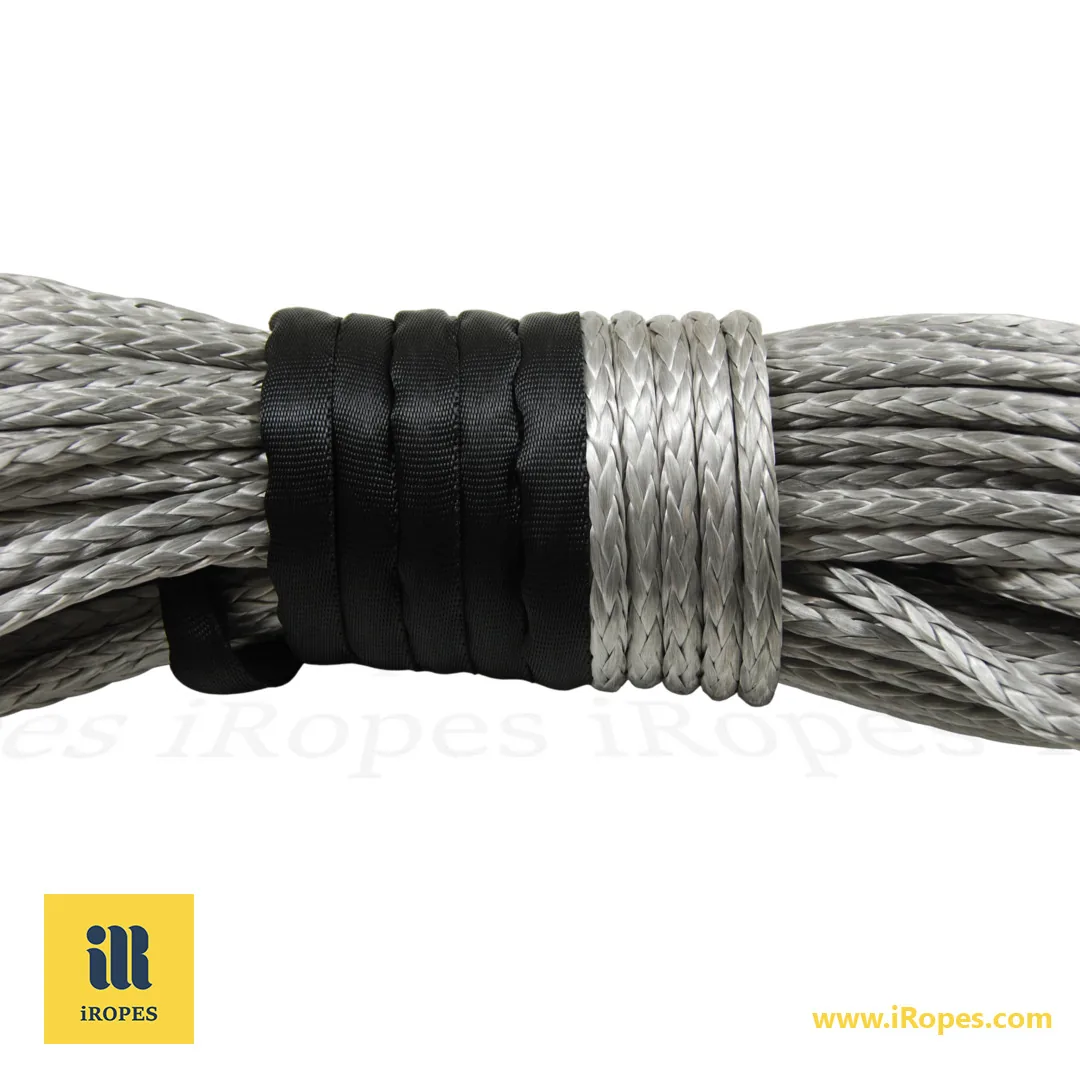
Dyneema‑core winch rope reduces line stretch by 78% and offers 2.6× the tensile strength of standard nylon. This gives the exact boost navy RIBs need to enhance every mission.
Key Benefits – 3 min read
- ✓ 15% faster deployment thanks to ultra‑low stretch.
- ✓ 12 kN pull capacity in a compact 5 mm diameter line.
- ✓ UV‑ and saltwater resistance guarantees ≥5 years sea‑service.
- ✓ ISO 9001‑certified OEM/ODM custom branding protects your IP.
Many naval crews assume any winch rope will perform adequately. However, a standard nylon line can add up to 12 seconds of slack per fast-rope drop—a delay that could critically impact a mission. Imagine cutting that time significantly while simultaneously gaining superior pull strength and extending service life. iRopes’ custom Dyneema winch rope offers these exact advantages and is rapidly becoming the preferred choice for navies relying on high-performance RIBs globally.
Understanding the Boat RIB: Definition, Construction, and Key Specifications
When you encounter the term boat RIB in a naval context, it refers to a Rigid-Inflatable Boat. This term is often abbreviated as RIB or RHIB. For naval forces, a navy RIB boat is a high-speed vessel featuring a hard, composite hull combined with inflatable sponsons. This design provides the agility necessary for rapid insertion operations and the significant buoyancy required to keep the vessel afloat, even after sustaining damage. The acronym RIB stands for Rigid-Inflatable Boat, and its innovative design enables a small crew to quickly transport a squad of operators across both coastal and open-water environments.

The hybrid construction truly distinguishes a RIB from conventional boats. Its rigid hull, typically crafted from a carbon-reinforced composite laminate, provides the structural integrity vital for high-speed planing and precise steering. Encircling this hull are inflatable sponsons, manufactured from a high-tenacity nylon-polyester blend. These sponsons contribute up to 30% additional buoyancy and function as built-in shock absorbers. This combination allows operators to launch from a ship’s deck, navigate effectively through 45-knot seas, and still experience a smooth ride. This is paramount for personnel safety during critical fast-roping or boarding operations.
“The rigid hull provides the handling you need in high seas, while the inflatable tubes give the buoyancy that keeps the craft afloat even if the hull is damaged.” – Naval small-craft engineer
Understanding the fundamental differences between a RIB and a Soft-Inflatable Boat (SIB) clarifies why navies prefer RIBs. An SIB relies entirely on fabric tubes for flotation; while lightweight and easily packed, its lack of a solid hull makes it vulnerable to breaches and limits its speed to approximately 25 knots. In stark contrast, a RIB’s rigid hull offers superior crash resistance, a significantly smoother ride in rough waters, and the capability to exceed 40 knots. This enhanced durability also translates to fewer maintenance cycles—a crucial advantage for craft that must remain mission-ready at all times.
Below is a concise fact sheet outlining the core specifications of the two most common navy RIB sizes.
- 7-metre Length – approximately 23 ft, accommodating a crew of 3 plus up to 6 operators, with a top speed of 38 knots.
- 11-metre Length – approximately 36 ft, accommodating a crew of 3 plus 8–10 operators, with a top speed of 42 knots and a range of 200 nautical miles.
- Hull Material – composite laminate featuring reinforced bulkheads for exceptional impact resistance.
- Sponson Fabric – high‑tenacity nylon‑polyester blend, specifically UV-treated for maximum marine exposure resilience.
- Propulsion – twin diesel inboards or water-jet units delivering a combined 1,200 hp.
With these fundamentals established, the critical role of a specialised winch rope within a rib boat navy becomes evident. It is the final element that transforms a standard a RIB boat into a fully mission-ready asset. The subsequent section delves into how custom fibre ropes significantly enhance performance and reliability in these exceptionally demanding operational environments.
Why a RIB Boat is Essential for Modern Navy Operations
Building upon the foundational principles of RIB hull design, the operational demands of contemporary naval fleets underscore why a boat RIB is far more than just a fast craft. It is, in fact, a significant force multiplier for the modern RIB boat navy. From executing covert insertions to performing rapid rescues, the versatility of this platform effectively addresses the most challenging maritime missions.

So, what exactly defines a navy RIB boat? It is, in essence, a rigid-hull inflatable vessel specifically engineered for military applications. This high-speed, high-buoyancy craft is designed to carry a small crew and a squad of operators, all while withstanding the extreme rigours of open-sea conditions. Its hybrid construction allows it to slice through waves at speeds exceeding 40 knots, remain afloat even if the hull is compromised, and operate reliably in severe seas that would incapacitate conventional craft.
Primary missions for navy RIBs include SEAL insertion and extraction, VBSS (Visit, Board, Search, and Seizure) operations, search and rescue (SAR), and anti-terrorism force protection. Each of these critical tasks demands rapid acceleration, a low-profile silhouette, and the ability to swiftly recover or deploy personnel. Consider a typical fast-roping scenario, where operators descend from a hovering helicopter onto the RIB’s deck within seconds, with the craft maintaining a steady course despite strong wind gusts.
Launch and recovery systems for these vessels are precision-engineered for speed. On larger warships, RIBs can be deployed using hydraulic davits, a stern-ramp system, or a dedicated crane cradle. Recovery operations often employ a winch-assisted cradle that automatically aligns the inflatable sponsons, reducing turnaround time to less than a minute. These efficient methods enable a carrier-class vessel to maintain a flotilla of RIBs, ready for immediate action, without sacrificing valuable deck space.
Rapid Deployment
Modern warships integrate hydraulic davits, stern-ramp launchers, and automated recovery cradles. This system synchronises with the vessel’s deck-control network, enabling a crew of three to launch or recover a 7-metre RIB in under 30 seconds, and a larger 11-metre model in just over a minute.
Performance Pillars
Core advantages that keep the RIB boat navy ahead
Speed
Exceeds 40 knots, enabling swift ingress and egress even in contested zones.
Buoyancy
Inflatable sponsons add up to 30% extra flotation, ensuring survivability even after hull damage.
Durability
Composite hulls resist impacts and corrosive saltwater, consequently reducing maintenance cycles.
Operational Benefits
Why naval planners choose RIBs
Manoeuvrability
Sharp turning radius allows the craft to navigate tight littoral environments and avoid obstacles effectively.
Load Capacity
Designed to transport a crew of three plus up to ten fully-equipped operators.
Stealth
Low radar cross-section and optional matte-black coatings aid in covert operations significantly.
These formidable capabilities collectively make a RIB boat an indispensable asset for any RIB boat navy. As we delve into how custom-engineered fibre winch ropes further amplify this operational edge, the complete picture of a fully optimised maritime strike team will emerge.
Optimising the RIB Boat Navy with Custom Fibre Winch Ropes
Following our review of the critical performance pillars that establish a RIB boat navy as indispensable, the final crucial component is the winch rope itself. This converts raw power into controlled motion. A rope that over‑stretches can cost valuable seconds during a fast‑roping insertion, while a weak line risks catastrophic failure in turbulent seas. This is precisely where iRopes’ high‑strength fibre winch rope offers a superior solution.

iRopes constructs its advanced winch ropes around an ultra‑light Dyneema fibre core. This material delivers tensile strength comparable to steel, yet remains remarkably flexible, enabling rapid deployment. The low‑stretch characteristic ensures the winch maintains consistent tension, which is crucial for both towing a disabled craft and facilitating a fast‑roping line with minimal slack.
- Material – Select from Dyneema, high‑tenacity Nylon, or UV‑treated Polyester to precisely match the required strength, corrosion resistance, and mission duration.
- Diameter & Length – Customise the rope size to perfectly align with the winch’s load rating and the RIB’s deck layout, ensuring a secure fit without excess slack.
- Construction – Choose a braided or parallel‑core design for minimal stretch during towing operations. Additionally, opt for reinforced terminations for rapid‑release fast‑roping applications.
Thus, selecting the right custom fibre winch rope is critical for any navy RIB. When a commander enquires, “What does RIB stand for in the Navy?”, the answer is clear: RIB signifies Rigid‑Inflatable Boat. This definition carries substantial weight because the rigid hull‑to‑inflatable‑sponson combination fundamentally dictates the requirements for every ancillary component. Consequently, the rope must withstand the hull’s high‑speed planing forces while simultaneously offering the flexibility essential for quick‑rope egress.
Certified Quality
ISO 9001 certification, comprehensive IP protection, and end‑to‑end OEM/ODM capabilities collectively guarantee that every metre of rope adheres to rigorous military‑grade reliability standards.
Because naval procurement necessitates complete traceability, iRopes provides meticulously detailed test reports and maintains strict confidentiality throughout the entire design phase. Whether the mission demands a compact 7‑metre craft or the larger 11‑metre NSW RIB, the same rigorous process ensures that the winch rope integrates seamlessly. This delivers the precise torque and control essential to keep the vessel truly mission‑ready. Our ropes are engineered for low‑stretch performance; learn more about our low‑stretch rope technology.
By utilising a rope engineered to the same exacting standards as the hull, the RIB boat navy gains a decisive advantage in every high‑speed insertion, towing, or recovery operation. This robust foundation will inform our subsequent discussion on maintaining operational readiness through comprehensive lifecycle support.
Need a customised winch rope for your mission?
This article has demonstrated how the high‑speed boat RIB delivers unrivalled agility and durability for the RIB boat navy, and why selecting the correct winch line is paramount. A manual winch rope that stretches unnecessarily can waste precious seconds. In contrast, iRopes’ fibre winch rope, built on a Dyneema core, offers exceptional low‑stretch strength without adding significant weight, perfectly aligning with the demanding requirements of a RIB boat.
If your project requires a rope that precisely meets your specific load, length, and colour requirements, all while maintaining ISO‑9001 certified quality and comprehensive IP protection, please complete the form above. Our dedicated rope specialists will collaborate closely with you to design a bespoke solution that aligns perfectly with your branding and critical operational needs.