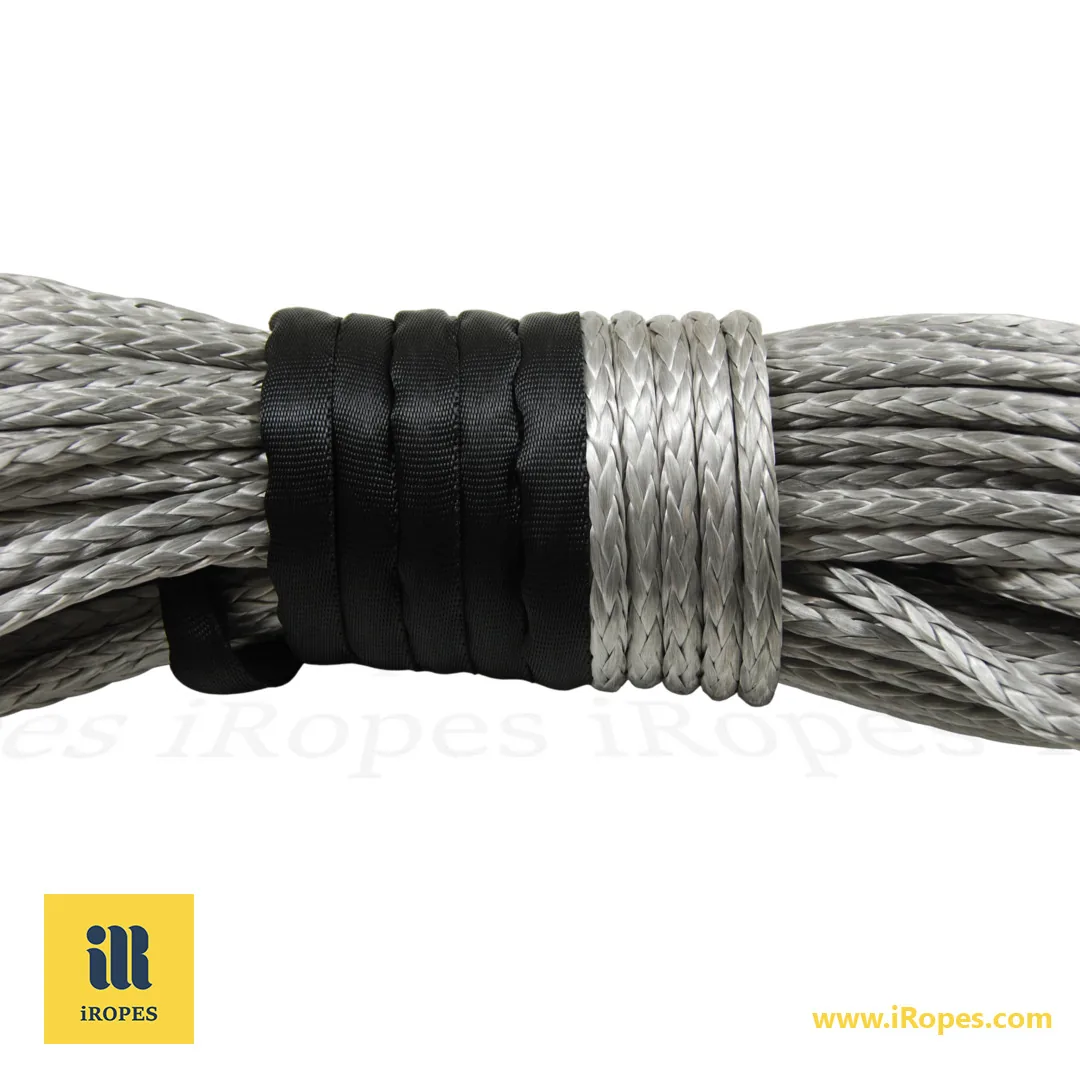
Industrial ropes and slings that last up to 2.7 times longer – a 1‑inch wire rope reaches a breaking load of 45 tonnes, while UV‑stable polyester retains 98% of its strength after five years of outdoor use.
An 8‑minute guide to superior rope performance
- ✓ Extend service life by up to 2.7x versus standard ropes
- ✓ Reduce lift weight by 70% using UHMWPE slings
- ✓ Cut inspection downtime by 35% with colour‑coded wear indicators
- ✓ Secure ISO‑9001‑certified quality and global delivery within 2‑4 weeks
Most industrial operations rely on heavy steel wire rope for demanding lifts, assuming it is always the safest option. However, a properly engineered UHMWPE sling can deliver a 30% higher break strength while weighing a fraction of steel equivalents. This significantly reduces handling fatigue and cuts transport costs. Discover how iRopes’ custom‑engineered solutions challenge this misconception, enabling you to lift smarter, not harder.
Understanding Industrial Rope: Types, Materials, and Construction
Given the critical role of high‑performance lifting gear, it’s essential to understand the fundamental components of the products themselves. Whether your task involves rigging a construction site or outfitting a marine vessel, the composition of your chosen industrial rope directly influences safety, longevity, and cost‑effectiveness.
What are the main types of industrial rope?
The market generally categorises industrial ropes into three broad families. Each type is defined by its material and construction method, offering distinct benefits for various applications:
- Wire rope – typically made from steel strands arranged in specific patterns like 6x19 or 6x37. These often incorporate an Independent Wire Rope Core (IWRC) or Fibre Core (FC) for enhanced flexibility and performance.
- Synthetic rope – composed of high‑performance fibres such as industrial polyester filament, industrial nylon filament, UHMWPE, Technora, Kevlar, or Vectran. These ropes are commonly braided or twisted for smooth handling and superior strength.
- Hybrid rope – combines a steel core with synthetic sheathing. This innovative construction offers the inherent strength of wire with the added abrasion resistance and flexibility of fibre.
Wire rope constructions and core types explained
A 6x19 wire rope configuration features six strands, each containing nineteen individual wires. This design provides a good balance between flexibility and resistance to wear. For harsher conditions, the denser 6x37 construction offers superior abrasion protection, making it ideal for demanding mining or offshore environments. Core choices also play a crucial role: an Independent Wire Rope Core (IWRC) helps the rope maintain its shape and strength under heavy loads, while a Fibre Core (FC) significantly reduces overall weight and can improve fatigue performance due to its inherent elasticity.
Properties of synthetic industrial rope materials
Each synthetic fibre offers unique characteristics tailored to specific industrial needs. Polyester, for instance, exhibits low stretch and excellent UV stability, making it a reliable choice for long‑term outdoor lifting operations. Nylon provides higher elongation, enabling it to absorb shock effectively, which is perfect for dynamic loads such as tow lines. UHMWPE (Ultra High Molecular Weight Polyethylene), often branded as Dyneema, boasts an exceptional strength‑to‑weight ratio that surpasses steel; it also floats on water and offers strong resistance to chemicals. For applications requiring extreme heat or cut resistance, advanced fibres like Technora, Kevlar, and Vectran are well‑suited, commonly found in aerospace or defence rigging.
Industrial rope versus industrial sling: clarifying the distinction
The term “industrial rope” broadly refers to the raw, continuous line itself. In contrast, an “industrial sling” is a specific application of rope or wire rope, configured with specialised terminations such as eyes, loops, or hooks for dedicated lifting tasks. Essentially, a sling is a finished product that integrates the rope’s material and construction into a safe, robust, and load‑bearing assembly.
“Choosing a rope with the right construction is often the single most effective way to extend service life and maintain safety margins on demanding lifting operations. This decision is critical for long-term operational efficiency.”
Key considerations for material selection
When selecting the most appropriate industrial rope for an application, ask yourself these crucial questions:
- Will the operating environment expose the rope to chemicals, saltwater, or extreme temperatures?
- Do you require a low‑stretch line for precise load positioning, or a high‑elasticity line for effective shock absorption?
- Is the weight of the rope a significant concern for manual handling or transportation logistics?
Thoughtfully answering these questions will help you narrow down the extensive catalogue of industrial ropes to the exact specification that ensures your operation runs safely and efficiently.

Now that we’ve clarified the fundamentals of rope types and construction, our next step is to explore how these choices directly translate into selecting the optimal industrial sling for your specific lifting scenario.
Choosing the Right Industrial Sling for Your Application
Definition and primary function of an industrial sling
An industrial sling is a specialised assembly, typically made from rope or wire rope, expertly terminated with eyes, hooks, or loops. These terminations create a ready‑to‑use lifting device. Its primary function is to securely connect a load to lifting equipment, bridging that gap while consistently maintaining a reliable safety margin during operations.
Wire rope versus synthetic slings: a comparison
Wire rope slings offer superior tensile strength and excellent heat resistance, making them ideal for heavy‑duty crane lifts and demanding offshore rigs. Conversely, synthetic slings—commonly woven from industrial polyester filament, industrial nylon filament, or UHMWPE—provide several advantages, including lighter weight, reduced stretch, and enhanced flexibility for conforming around irregular load shapes. The choice between these two types ultimately depends on balancing factors such as load intensity, handling comfort, and the extent of exposure to corrosive or abrasive environmental conditions.

Primary material options for synthetic slings
When an industrial sling is manufactured from synthetic fibres, the most common and effective choices include:
- Industrial Polyester Filament – known for its low stretch properties, excellent UV stability, and strong abrasion resistance, making it suitable for outdoor lifts and prolonged exposure to sunlight.
- Industrial Nylon Filament – offers higher elongation, which allows it to absorb shock effectively. This characteristic makes nylon slings particularly well‑suited for dynamic loads, such as in towing applications.
- UHMWPE (Dyneema®) – stands out for being ultra‑lightweight and possessing a strength‑to‑weight ratio superior to steel. It also floats on water and exhibits remarkable resistance to most chemicals.
How to select the right industrial sling for your needs
- Evaluate load capacity – Always verify that the Working Load Limit (WLL) of the sling precisely matches or safely exceeds the maximum weight of your load, ensuring the appropriate safety factor is applied.
- Consider the operating environment – Take into account factors such as temperature extremes, potential exposure to chemicals, saltwater, or UV radiation. These environmental considerations dictate whether a wire rope or a specific synthetic fibre is the most suitable choice.
- Assess abrasion and cut resistance – Choose a material specifically designed to withstand potential contact with rough surfaces or sharp edges. In this regard, UHMWPE and Technora‑blended slings often excel due to their exceptional resilience.
Quick tip
Before every lift, carefully inspect your industrial sling for any signs of frayed fibres, corrosion on terminations, or broken wires. Even a small defect can quickly escalate into a significant—and potentially costly—safety issue.
Armed with these critical selection criteria, you are now better equipped to compare the overall performance of industrial ropes and slings. The next section will help you move towards a solution that perfectly balances strength, durability, and your budget.
Comparing Industrial Ropes: Strength, Durability, and Cost
Now that you’ve thoroughly weighed the various selection criteria, let’s delve into how the performance numbers truly stack up. Understanding the real‑world capabilities of each rope family will help you discern whether the initial purchase price or the long‑term value holds more importance for your specific operations.
For instance, a 1‑inch wire rope, heat‑treated to achieve a tensile strength of 200 kN, typically boasts a breaking load of around 45 tonnes. In comparison, a synthetic rope of the same diameter—whether it’s made from industrial polyester filament, industrial nylon filament, or UHMWPE—usually offers a breaking load between 30 and 40 tonnes. Crucially, it weighs less than half as much. This significant weight saving can dramatically reduce rigging fatigue and lower transportation costs, especially for projects that involve moving thousands of metres of line.
Wire Rope
Ideal for heavy‑duty lifting
Ultimate Tensile Strength
Steel cores inherently deliver the highest break‑strength per diameter, establishing wire rope as the preferred choice for static, high‑load lifts.
Temperature Resilience
Wire ropes can operate safely in high temperatures, up to 204°C (400°F), making them perfectly suited for hot‑work environments and fire‑exposed rigs.
Abrasion Toughness
Their dense 6x37 lay construction provides superior wear protection, making them highly effective on rough surfaces and in abrasive chutes.
Synthetic Rope
Offers lightweight versatility
Weight Savings
UHMWPE lines weigh under 30% of comparable steel ropes, significantly easing manual handling and reducing the load on lifting cranes.
UV & Chemical Resistance
Industrial polyester filament retains strength even after prolonged sun exposure, while UHMWPE effectively resists most oils and solvents, extending its lifespan.
Flexibility & Stretch
Industrial nylon filament’s higher elongation absorbs shock effectively, whereas industrial polyester filament offers low stretch, crucial for precise load positioning.
Cost considerations extend beyond the initial purchase price. For instance, a high‑grade wire rope might have a higher cost per metre, yet its lifespan in a gritty quarry environment can significantly outlast that of a cheaper synthetic line needing frequent replacement. Conversely, in marine environments where relentless corrosion is a factor, an industrial polyester filament sling can outlive its steel counterpart, delivering a superior return on investment despite potentially higher upfront costs.
When budgeting for industrial ropes and slings, remember to factor in less obvious costs such as inspection time, expected downtime for replacements, and any necessary protective gear. These hidden expenses often significantly outweigh the raw material price alone.
Safety standards provide a comprehensive framework that ties the entire picture together. iRopes’ production line is ISO 9001 certified, ensuring that every batch of rope undergoes documented and rigorous testing before it leaves our factory. For lifting assemblies, the ASME B30.9 standard specifies the Working Load Limits (WLL) and inspection intervals that must be followed strictly, regardless of whether you are using a steel‑core rope or an industrial polyester filament sling.

By carefully weighing breaking strength, wear resistance, lifecycle cost, and the essential certifications that uphold each product, you can confidently choose the optimal industrial rope for your needs. This considered approach ensures your projects continue to move safely and profitably. The next section explores how iRopes customises these choices into bespoke solutions, perfectly tailored for your exact workflow.
iRopes Custom Solutions: OEM/ODM, Quality Assurance, and Global Delivery
Having thoroughly compared the performance metrics of different industrial rope families, the next logical step is to consider how these insights can be translated into a product that perfectly integrates with your specific workflow. iRopes excels at precisely this, transforming raw specifications into a ready‑to‑use industrial rope or industrial sling. These bespoke products arrive on‑time, are correctly branded, and are meticulously protected against potential intellectual‑property risks.

Our comprehensive OEM/ODM platform allows you to specify every variable that influences performance. Whether your project demands a high‑modulus UHMWPE line for challenging offshore lifts or an industrial polyester filament sling engineered to resist UV‑induced degradation, our dedicated engineering team can expertly adjust the material, diameter, length, colour, and termination style. This meticulous approach ensures that every custom solution precisely matches your engineering drawings and operational requirements.
Material & Size
Select from industrial polyester filament, industrial nylon filament, UHMWPE, Technora, Kevlar, or Vectran; specify the exact diameter and length needed to achieve precise load ratings.
Colour & Branding
Customise ropes to match corporate colours or incorporate reflective strips for enhanced visibility. We can also print logos directly onto the rope or its packaging for a cohesive brand presence.
Terminations & Accessories
Choose from a wide array of end fittings, including eyes, loops, thimbles, shackles, or custom‑engineered splices, enabling the creation of a complete and safe lifting assembly.
IP Protection
All design data is securely encrypted. Our legal team meticulously ensures that your proprietary concepts and innovations remain strictly confidential throughout the entire process.
Custom Packaging
From colour‑coded bags designed for easy identification to custom‑printed cartons featuring your branding, we meticulously tailor the packaging to seamlessly integrate with your distribution network.
Worldwide Delivery
Benefit from direct pallet shipping to diverse locations worldwide, including ports, warehouses, or job sites. Our tracking is seamlessly integrated into your ERP for streamlined logistics.
At iRopes, quality control is intricately embedded into every production stage. After an industrial rope is formed, it undergoes a rigorous series of tensile‑load tests, meticulous visual inspections, and precise dimensional checks before being sealed in its final package. The comprehensive data from each test is digitally logged and made accessible on demand, providing you with full traceability without the cumbersome need to chase paper certificates.
When you’re ready to transition your concept into a tangible product, simply complete our online brief. Provide details regarding your preferred material choice, required diameter, length, colour scheme, and any specific terminations. Our dedicated engineering team will promptly conduct a feasibility study, provide a detailed quotation, and outline the expected lead time. Thanks to our extensive network of fulfilment centres, most custom orders are delivered within two to four weeks, even to remote overseas ports.
Get started with your custom rope solution
Request your bespoke quote today and experience fast, secure delivery worldwide.
Need a personalised rope solution?
You have now gained a comprehensive understanding of how wire and synthetic constructions, along with precise material choices and critical load criteria, significantly influence performance. You also know that iRopes can transform these specifications into a tailor‑made product. Whether you specifically require a UV‑stable industrial polyester filament line, a low‑stretch industrial nylon filament rope, or an ultra‑light UHMWPE industrial rope, our expert OEM/ODM team can meticulously adjust the diameter, colour, terminations, and packaging, all while rigorously protecting your intellectual property. Additionally, we manufacture high‑strength industrial sling solutions that precisely meet exact load ratings. Our extensive catalogue of industrial ropes encompasses wire, synthetic, and hybrid options. With ISO‑9001 certified quality control and reliable worldwide delivery, we are committed to helping you achieve superior durability, enhanced safety, and an optimal return on investment.
For a bespoke quote or expert technical advice, please complete the form provided above. Our specialists will then tailor a solution that perfectly aligns with your precise needs.