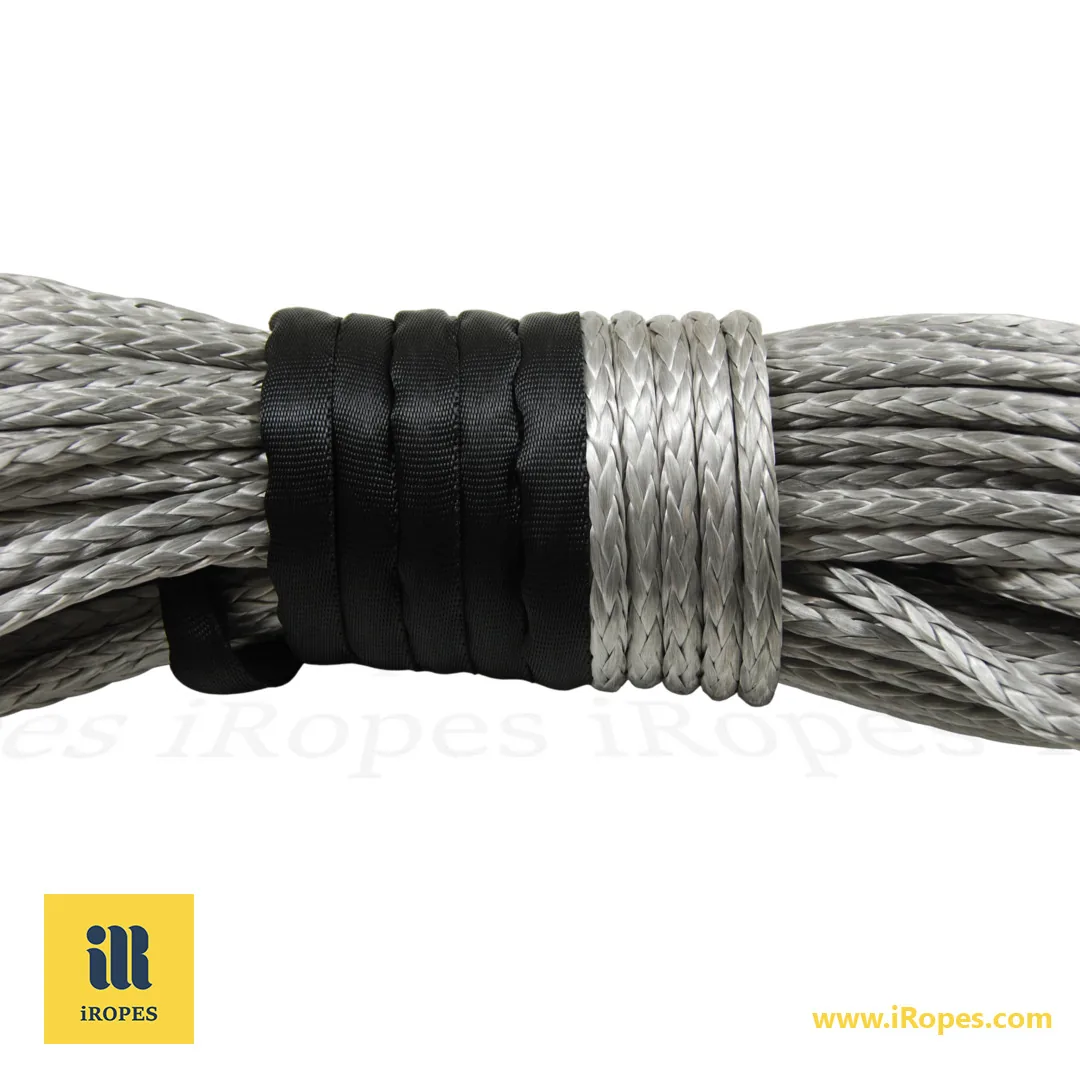
You can slash hawser weight by 73% while retaining 7 × the tensile strength of steel – iRopes’ UHMWPE lines deliver steel-equivalent pull at a fraction of the mass.
Key Gains – An Insightful 5-Minute Read
- ✓ Reduce freight cost by up to 73% by cutting rope weight.
- ✓ Boost safety with 7 × load capacity compared to traditional steel rope.
- ✓ Align with ISO 9001 and custom branding for a stronger market presence.
- ✓ Get global pallet delivery in 7–10 days, keeping projects on time.
Most engineers assume the heaviest rope is automatically the strongest, yet the latest synthetic blends challenge that idea. Imagine replacing a steel-weight hawser with a line 70% lighter, delivering seven times the pull capacity, and customising it to your brand’s colours. This article unravels the science, explores the real-world savings, and demonstrates how iRopes® turns this paradox into your competitive edge. With 15 years of expertise as a leading rope manufacturer in China, iRopes offers a vast range of 2348 cordage options, from marine and racing sports to industrial and safety applications.
Hawser Rope for Sale: The Backbone of Heavy-Duty Operations
Having introduced why material quality matters, let’s now focus on the heavyweight of the rope world: the hawser. This robust line secures massive ships, pulls offshore platforms, and endures the harshest marine conditions with unwavering reliability.

Definition and Primary Marine Applications
A hawser is a thick, heavy-duty rope specifically designed for mooring, towing, and anchoring large vessels. While a “rope” can refer to anything from a garden line to a climbing cord, a hawser is purpose-built for extreme loads, long lengths, and constant exposure to saltwater. This distinction is crucial when you need a line to hold a cargo ship steady in a gale or securely manage offshore operations.
Material Options and Performance Benefits
- Polyester: Offers low stretch, excellent UV resistance, and strong abrasion tolerance for long-term mooring stability.
- Nylon: Its higher elasticity provides superior shock absorption, which is particularly useful when sudden loads occur during towing operations.
- UHMWPE (Ultra-High Molecular Weight Polyethylene): This ultra-lightweight material is up to seven times stronger than steel wire of equal diameter, exhibiting very low elongation and floating in water. Its low density (≈0.97g/cm³) means it remains buoyant, while its resistance to UV, abrasion, and chemicals ensures exceptional durability in harsh environments.
- Polypropylene: Known for its buoyancy, though generally not as strong as other options for heavy-duty applications.
Construction Types and Why They Matter
- 8-strand: Provides a good balance of flexibility and strength, making it suitable for general-purpose mooring.
- 12-strand: Offers increased load capacity and reduced elongation, ideal for high-tension towing requirements.
- Double braid: Combines a tightly braided cover with an inner core, delivering superior abrasion resistance and a smoother surface for easier handling and improved longevity.
“When a vessel is anchored in a storm, the hawser’s ability to absorb shock while holding firm can be the difference between safety and disaster.” – Senior Marine Engineer, Oceanic Shipping Ltd.
Understanding these material and construction choices helps you select the optimal line for your specific project. Once the heavy lifting is complete, lighter-duty options such as cord rope for sale often become essential. We will explore these versatile alternatives next.
Cord Rope for Sale: Versatility for Diverse Needs
Transitioning from the heavyweight hawsers, cord rope for sale offers a lighter-duty alternative that fits neatly into everyday projects, from camping gear to small-boat rigging. These ropes provide impressive versatility for both recreational and industrial tasks.
Cord rope serves a surprisingly wide range of applications. Outdoor enthusiasts rely on it for tent guy lines and hammock suspensions, while industrial workshops use it for securing equipment, bundling cables, and creating temporary lift points. Its flexibility and manageable size make it ideal for situations where a massive hawser would be excessive.

When selecting cordage, each fibre brings its own distinct characteristics. Cotton delivers a natural feel and excellent knot-holding ability, making it popular for craft projects and low-stress ties. Nylon supplies high elasticity, which effectively absorbs shock during dynamic loads such as winch pulls. Polyester stands out for its moisture resistance and retains tensile strength even when wet – a handy trait for marine-adjacent use. HMPE (high-modulus polyethylene) — another name for UHMWPE — pushes the envelope with an exceptional strength-to-weight ratio, offering up to seven times the strength of steel wire at a fraction of the mass. iRopes offers advanced synthetic fibres like Technora™, Kevlar™, and Vectran™ for specialised cordage solutions, each with specific advantages for challenging environments.
- Assess the environment where the rope will be used.
- Match the rope’s breaking strength to the expected load.
- Pick a diameter that balances handling comfort with adequate capacity.
Diameter & Length Considerations
Choosing the ideal diameter involves calculating the required breaking strength, then adding a suitable safety margin. For most light-duty applications, a 6 mm cord provides roughly 1 kN of strength, while a 12 mm line can handle up to 5 kN. Length should include extra slack for knots or splices, typically 10–15% longer than the measured distance.
Which rope is best for mooring lines? For most small to medium vessels, polyester-based cord rope strikes the best balance: it resists UV degradation, performs effectively when wet, and offers low stretch, ensuring the boat remains securely positioned without excessive slack. However, nylon is also a popular choice for mooring lines due to its shock-absorbing elasticity.
Braided Rope for Sale: Strength, Durability, and Handling
After exploring how cord rope balances flexibility with strength, we now examine the construction that often outperforms twisted designs: braided rope. Its unique structure makes it a superior choice for many demanding applications.

What makes braided rope stronger than twisted alternatives is the way each strand is woven in a tight, criss-cross pattern. This geometry spreads tension across every fibre, ensuring that a single cut or abrasion does not compromise the entire line’s integrity. The smooth surface also reduces friction on pulleys and winches, leading to less wear and a longer lifespan.
Materials commonly used in braided ropes include nylon for excellent shock absorption, polyester for low stretch and UV resistance, and UHMWPE for its exceptional strength-to-weight ratio. Advanced fibres such as Technora™ or Kevlar™ are also employed in specialised versions that must endure extreme heat or abrasive seabed contact, ensuring maximum performance in critical conditions. For a deeper dive into braided rope constructions, see our guide on understanding braided rope meaning and solid braided poly rope.
Choosing the right braid pattern and material depends on the intended load, environmental exposure, and handling preferences. Whether you need a smooth single braid for sailing rigging or a rugged double-braid construction for offshore mooring, the specific details of its construction will determine its overall durability and performance. Learn more about selecting the best mooring rope material in our article choosing the best mooring rope material for your needs.
Buying Guide & Customisation: Finding Your Ideal Rope Solution
Having explored the strengths of braided rope, it’s now time to translate that knowledge into a practical buying strategy. Whether you are after a hawser rope for sale, a cord rope for sale, or a braided rope for sale, the right choice hinges on a handful of decisive factors and the bespoke capabilities of your supplier.
Key Factors to Consider When Buying Any Rope
Selection Essentials
What matters most before you click ‘order’
Material Match
Pick a fibre whose strength-to-weight ratio, UV resistance, and chemical durability align precisely with your operating environment.
Diameter & Length
Calculate the required breaking strength, then add a safety margin suitable for your application; choose a length that includes extra slack for knots or splices.
Load Capacity
Match the rope’s rated load to the peak forces in your application, meticulously considering dynamic spikes and potential shock loads.
Compliance & Certification
Assuring quality and meeting industry standards
ISO 9001
All production lines are meticulously audited to ISO 9001 standards, guaranteeing consistent quality from fibre selection to the finished rope.
Marine Classifications
Ropes can be supplied with BV, CCS, ABS, LR, NK, or DNV certificates to satisfy stringent offshore and marine regulations, crucial for international trade.
Custom Test Reports
We provide comprehensive third-party test data on tensile strength, elongation, and abrasion resistance upon specific request, ensuring full transparency.
iRopes’ OEM/ODM Customisation Capabilities and Branding Options

Our OEM and ODM services allow you to dictate every detail, from fibre blend and braid pattern to colourway and termination hardware. Need a rope that carries your corporate emblem? We can print or emboss it directly onto the sheath, then seal the product in non-branded or custom-branded packaging such as bags, colour boxes, or cartons. This unparalleled flexibility means the same high-quality line can serve as a discreet safety rope for internal use or as a premium-branded accessory for your customers, truly embodying your brand identity.
Ordering Process, MOQ, and Global Shipping Logistics
Typical Minimum Order Quantities (MOQ) start at 100 metres for standard diameters; bespoke colours or special terminations may require 500 metres. Once an order is confirmed, we ship pallets directly from our Chinese factories to your specified locations worldwide, offering flexible FOB, CIF, or DDP options to seamlessly integrate with your supply chain.
Because we maintain an extensive inventory of popular sizes, many customers receive their rope orders within 7–10 days after payment. For large-scale projects, our efficient logistics team coordinates staggered deliveries to keep your site consistently stocked without necessitating excessive warehousing.
One common point of confusion we often clarify is the difference between a hawser and a cable. A hawser is defined as a single, thick synthetic or natural fibre rope built for heavy-duty mooring and towing. In nautical terms, a cable can refer to a bundle of three hawsers twisted together (known as cable-laid rope) or to an entirely different product, such as an electrical conduit. Understanding this crucial distinction prevents mis-specifying a line that could be either over-engineered or under-performing for your specific task.
Armed with these comprehensive considerations, you are now ready to move from selection to procurement, confident that every specification aligns perfectly with your performance, compliance, and branding goals.
Get a Personalised Rope Recommendation
By now, you understand how material choice, strand count, and braid pattern dictate whether a hawser rope for sale, cord rope for sale, or braided rope for sale meets the specific demands of marine, industrial, or outdoor projects. Leveraging iRopes’ 15 years of expertise, we combine advanced synthetic fibres—including UHMWPE, Technora™, Kevlar™, Vectran™, and premium polyamide or polyester—with bespoke coatings, ISO 9001-backed quality, and full OEM/ODM customisation. This allows us to deliver ropes that precisely align with your performance, branding, and compliance needs. Explore why synthetic rope often outperforms marine steel cable in our piece why choose synthetic rope over marine steel cable.
For a customised solution that fits your exact specifications, simply fill out the enquiry form above. Our dedicated rope specialists will partner with you to engineer the ideal rope, ensuring superior quality and tailored performance for your business.