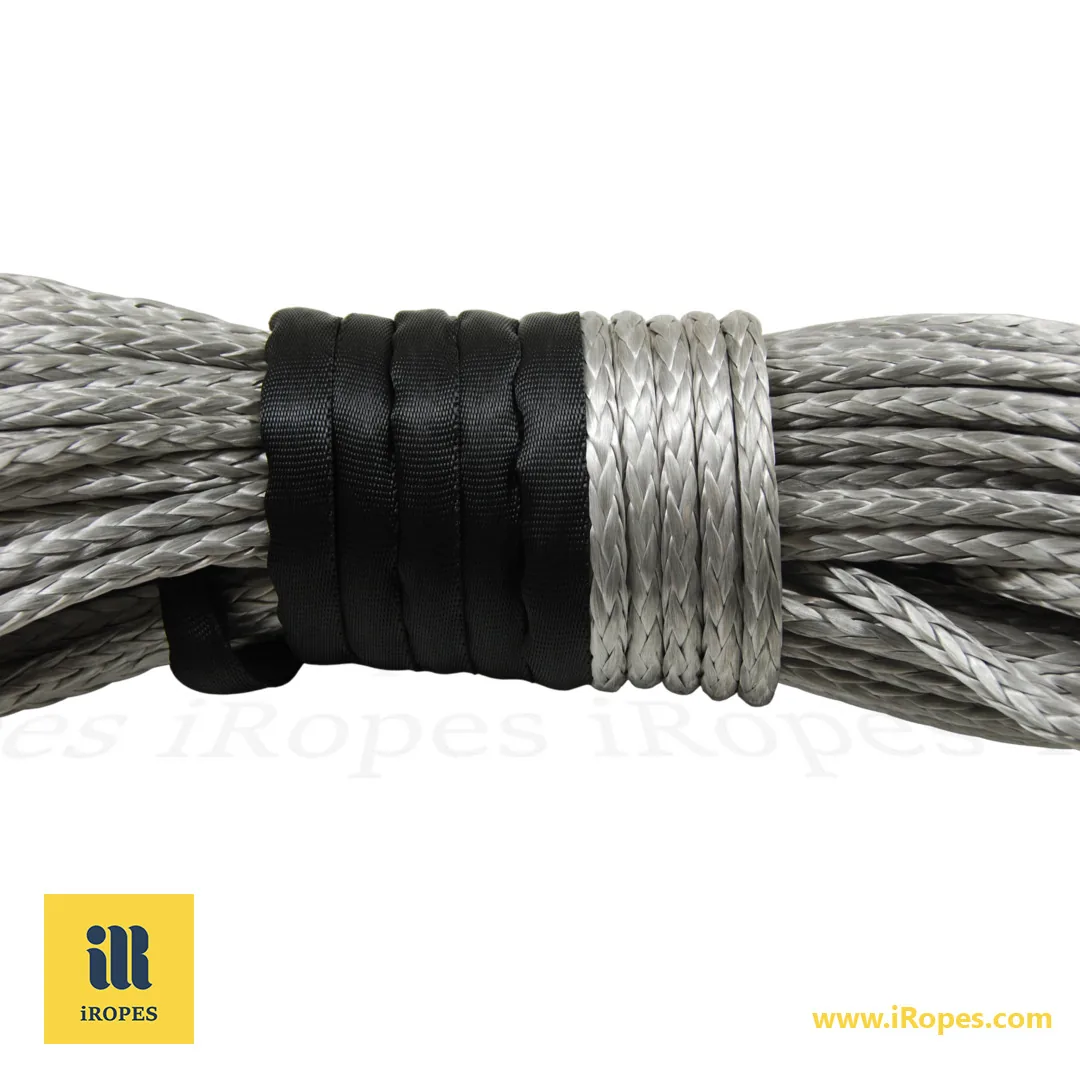
Most off‑roaders think any steel winch line will survive, yet selecting the right 16 wire cable and material improves usable capacity and reliability. Synthetic options can weigh 60–70% less than comparable steel.
≈ 3 min read – Why the right winch cable transforms your recovery
- ✓ Match pull capacity to your winch rating with iRopes’ custom‑diameter options.
- ✓ Cut rope weight by 60–70% using synthetic blends, reducing fatigue and reel‑in time.
- ✓ Apply a 2:1–4:1 safety factor to extend cable life and reduce risk.
- ✓ Add OEM/ODM branding and reflective packaging to speed on‑site identification.
You probably tighten your winch cable the same way every guide tells you, assuming a heavier steel line is automatically safer. What you’re missing is a simple, data‑driven method to pick the exact strand count, diameter and material so you maintain rated pulling power while shedding needless weight. Keep reading to uncover the practical approach iRopes uses to engineer the best winch cable for your setup, plus when a planned winch cable splice is the smart move for repairs and custom terminations.
Understanding the 16 wire cable: construction, specs, and applications
When a winch pulls a vehicle out of a ditch, the cable does the heavy lifting – literally. Knowing how a 16 wire cable is described and how wire‑rope construction works helps you pick a line that won’t snap under load and will last season after season.

“16‑wire” or “16‑strand” often describes ropes with sixteen strands in the outer braid (common in synthetic). By contrast, steel winch cables typically use wire‑rope constructions such as 6×19 or 6×37, which balance strength and flexibility.
Two constructions dominate the market, each shaping how the cable behaves when you’re pulling a heavy load.
- 6×19 – Six bundles of nineteen wires each; offers a strong balance of flexibility and abrasion resistance, making it a favourite for off‑road winches that encounter rocks and roots.
- 6×37 – Six bundles of thirty‑seven finer wires; provides excellent flexibility, ideal for tight‑radius drum setups, but sacrifices a bit of surface durability compared with 6×19.
- Core type – Pair either construction with galvanised or stainless wires and different core types to tune corrosion resistance and handling for your environment.
Beyond construction, the specifications you’ll compare when selecting a line are straightforward:
- Diameter options – Common sizes run from 3/16 in (≈ 0.19 in) up to 7/16 in (≈ 0.44 in). Larger diameters increase both breaking strength and weight.
- Minimum breaking strength (MBS) – A 3/16 in steel cable typically breaks around 10 000 lb; choose higher diameters for higher loads.
- Working load limit (WLL) – Apply a safety factor of 2:1 or 4:1. For example, a 3/16 in cable with a 10 000 lb MBS yields a 5 000 lb WLL at a 2:1 factor, guiding you to match the winch’s rated capacity.
Understanding these points equips you to match the cable to your winch’s power and the terrain you’ll face. Once you’ve settled on the right construction and size, the next step will be choosing the best winch cable type for your vehicle and workload.
How to select the best winch cable for your vehicle and workload
Now that you understand the basics of 16‑wire construction, the next step is matching the cable to the power of your winch and the terrain you’ll tackle. As a rule, select a line whose MBS, when divided by your chosen safety factor (2:1 or 4:1), comfortably exceeds your winch’s rated load.

When you ask yourself “What is the best cable for a winch?”, start by looking at three key factors: the winch’s rated pull, the expected working environment, and how much the rope will weigh in your kit. Steel lines excel in abrasive conditions, while synthetic ropes win on weight and ease of handling.
- Weight – Synthetic ropes can be up to 70% lighter than steel, making them easier to reel in and store.
- Durability – Steel offers superior abrasion resistance on rocky trails; synthetic fibres resist moisture and rot.
- Cost & UV resistance – Steel is usually cheaper, but a UV‑protected synthetic line can last longer in sunny climates.
To translate those factors into a concrete choice, use the size‑by‑application matrix below. Pick the row that matches—or exceeds—your winch’s maximum pull, then select a length that fits the typical recovery distance you encounter.
| Winch rating (lb) | Recommended cable diameter | Typical length (ft) |
|---|---|---|
| Up to 6 000 | 3/16 in (≈ 0.19 in) | 50–100 |
| 6 001–10 000 | 1/4 in (0.25 in) | 75–150 |
| 10 001–12 000 | 3/8 in (≈ 0.38 in) | 80–100 |
Remember to apply a safety factor of 2:1 or 4:1 depending on how aggressive your off‑road plans are. A higher factor may lead you to choose the next larger diameter for added peace of mind.
Size‑by‑application matrix
Match your winch’s pull rating to a cable diameter that provides a comfortable safety margin. iRopes can cut any length to order, so you never have to settle for a standard size that leaves you short on reach or over‑engineered for the job.
Choosing between steel and synthetic isn’t just about specs; think about how you’ll handle the rope on the trail. If you often pull in steep, muddy climbs, a lightweight synthetic line reduces fatigue when re‑spooling. If you’re hauling heavy equipment across rocky outcrops, a steel line’s abrasion resistance may save you costly replacements. Either way, the right diameter paired with the appropriate safety factor will give you the best winch cable for the job.
Once you’ve settled on the optimal type and size, the next logical step is learning how to splice or customise the line to fit unique lengths or attachment needs.
Winch cable splice: methods, tools, and step‑by‑step guide
Now that you’ve picked the right line for your winch, the next question is whether you can adapt it to the exact length or configuration you need. A well‑executed winch cable splice turns a damaged section into a fresh, reliable link, and it also lets you create custom loops for specialised rigs.

Why would you splice a line? Common reasons include repairing a frayed end, shortening a cable that’s too long for a new drum, or adding a loop that matches a unique hook configuration. Each scenario saves you from buying a brand‑new cable and keeps the winch operating at peak performance.
Flemish eye
Creates a permanent loop by interweaving the rope strands and securing with a swaged sleeve; ideal for permanent eye‑hooks and, when correctly executed, often retains about 90–95% of original strength.
Swage sleeve
Cold‑forms a metal sleeve onto the rope end; quick to install and provides a reliable termination that resists slipping under high loads when swaged to specification.
Mechanical ferrule
Uses a pre‑shaped metal ferrule or fitting that clamps over the rope; delivers consistent, manufacturer‑rated performance. Always follow the fitting’s published capacity.
Strength rating
Correctly executed terminations can approach the rope’s original efficiency. Verify the method’s rating, and proof‑test the assembly before service.
Here’s a concise answer to the common question “How do I splice a winch cable?” – follow these five steps and you’ll have a safe, reliable splice:
Step 1 – Prepare. Cut the rope cleanly, trim any frayed fibres, and mark the desired splice length.
Step 2 – Gather tools. Use a quality swaging tool and correct sleeves for steel, or a fid, tape and shears for synthetic. A heat gun can shrink protective tubing over the finished splice.
Step 3 – Form the eye or attach the sleeve. For a Flemish eye on steel, interlace the strands and slide on the sleeve; for synthetic, form a locked Brummel or long‑bury eye and maintain the correct taper.
Step 4 – Secure. Swage the sleeve to specification for steel terminations, or complete the required buries for synthetic. Use the heat gun only to shrink protective tubing – never to melt fibres.
Step 5 – Inspect. Confirm the splice is uniform, with the sleeve fully seated or the buries smooth and complete. Proof‑test up to the working load before returning to service.
Always wear gloves, keep the winch disengaged during setup, and never exceed the working load limit when testing a freshly spliced cable. Stand clear of the line of pull.
With a solid, proof‑tested splice in place, you can treat the line like a factory‑made cable within the termination’s rated capacity. iRopes can also produce a custom‑spliced cable to your exact specifications, so you can avoid field repairs and keep your operation moving.
iRopes custom solutions, maintenance tips, and next steps
Now that you know how to splice a line, the final piece of the puzzle is making sure the cable you take to the trail stays strong, clean and recognisable. Whether you need a brand‑new rope built to exact dimensions or a quick refresher on care, iRopes has the expertise to keep your recovery gear performing at its best.

iRopes started with a resolution to make the best, highest‑quality, industry‑leading recovery rope available. As a reliable manufacturer, our mission is to understand how rope works so we can provide exceptional rigging solutions and offer the highest‑quality ropes and straps that are lightweight, strong and safe. iRopes has a wide range of synthetic ropes, including winch rope, rigging line, recovery kinetic rope, soft shackle, towing rope and strop, ready‑made rope sets for you to choose from OEM and ODM.
Regular inspection and proper storage are the cheapest insurance you can buy for a winch line, turning a potential failure into a simple routine.
Custom OEM/ODM
Tailor‑made rope solutions
Material
Choose steel, stainless, galvanised and coated options, or high‑modulus synthetic fibres, to optimise strength and corrosion resistance.
Colour
Colour‑code each line for quick identification; add reflective strips for night safety.
Branding
Print your logo on bags, boxes or directly on the rope sheath for a professional look. Non‑branded packaging is also available.
Maintenance Checklist
Keep your cable reliable
Inspect
Look for frayed strands, corrosion or broken fittings before each use.
Clean
Wipe with a damp cloth; avoid solvents that could weaken the sheath.
Store
Coil loosely in a dry container; keep away from chemicals and areas with intense UV.
Case in point: a European off‑road fleet approached us for a 12 000 lb winch line that could be spotted in low light. We supplied a 3/8″ × 90′ stainless‑core cable with a Dyneema outer sheath, added an orange reflective coating, and printed the company logo on each package. After 18 months of daily use the fleet reported zero failures and achieved a 30% weight reduction compared with their legacy steel cable.
If you’re ready to move from “good enough” to the best winch cable for your rig, request a free custom rope quote today. Simply tell us your winch rating, preferred material and any branding details, and iRopes will deliver a solution that fits like it was built for your vehicle.
Need a personalised winch‑cable solution?
Armed with a clear grasp of 16 wire cable construction, the safety‑factor matrix and the step‑by‑step winch cable splice guide, you can now select the best winch cable for your vehicle, choose the right diameter, and maintain it with confidence. iRopes’ ISO 9001‑certified OEM/ODM service includes IP protection, custom packaging and global pallet shipping, turning a standard line into a lightweight, strong recovery solution built for your specific scenarios.
If you’d like a personalised recommendation or a custom‑engineered line that meets your exact specifications, simply complete the form above. For more detailed advice, see our ultimate guide to choosing the best winch line. Our specialists will work with you to deliver the perfect rope for every off‑road challenge, on time and on budget.