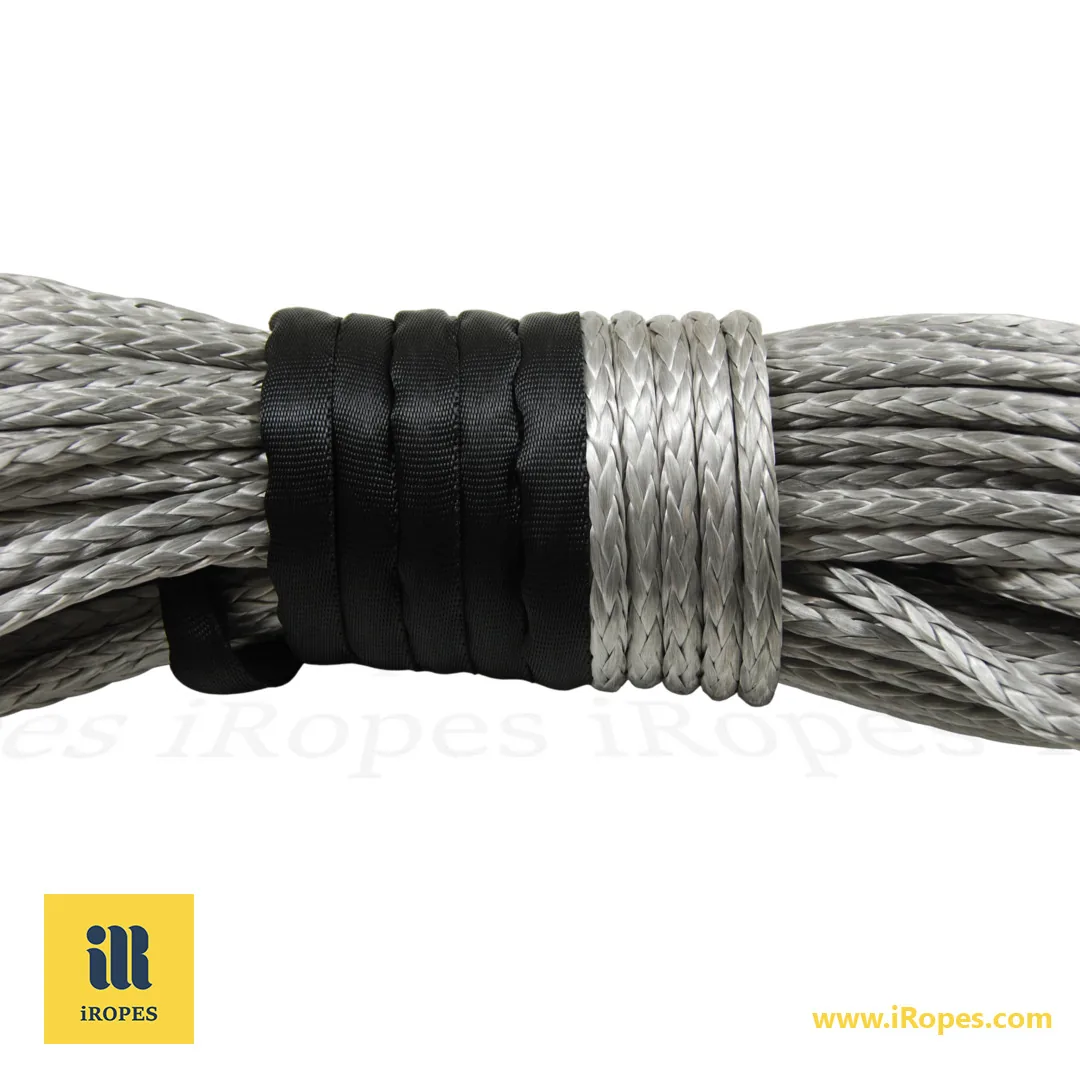
A 1‑inch black rope can lift up to 17,236 kg (38,000 lbs) and resist UV degradation for 5 years or more. This makes it the benchmark for demanding marine, industrial, and safety applications globally.
Quick Scan – Discover the iRopes Difference
- ✓ Choose the right material: UHMWPE offers a 17,236 kg (38,000 lbs) break strength, while polyester provides a 10,886 kg (24,000 lbs) break strength. Match the load capacity to your budget and specific needs.
- ✓ Optimise construction: A double‑braid construction reduces stretch by up to 30% compared to a twisted rope, offering greater stability for high-stakes operations.
- ✓ Extend service life: Black pigment, combined with advanced UV stabilisers, reduces UV degradation to approximately 0.2% per month. This significantly extends the rope's operational lifespan in outdoor environments.
- ✓ Leverage iRopes’ OEM/ODM: Benefit from custom lengths, integrated branding, and ISO‑9001 quality assurance, with delivery typically within 14 days for wholesale orders.
Many engineers assume that a thicker rope automatically translates to more strength. However, the truth is that the fibre choice and the rope's internal architecture dictate up to 45% of its load-bearing capacity. At iRopes, we've perfected this formula. We combine ultra‑high‑molecular‑weight polyethylene (UHMWPE) with an advanced double‑braid core. This design delivers exceptional break strength while keeping stretch below 2%, a critical factor for precision applications. Find out how this innovative approach can trim weeks from your project timelines and substantially reduce ongoing maintenance costs.
Understanding Black Rope Types, Materials, and Construction
When selecting a rope for demanding marine, industrial, or safety tasks, the colour is more than just an aesthetic choice. Black ropes offer discreet aesthetics alongside performance-enhancing additives for UV stability. However, the rope's underlying material and construction fundamentally determine its performance under load. Let's delve into the core ingredients that transform a simple strand into a reliable, high-performance tool.

The fibres used set the initial baseline for a rope's strength and stretch characteristics. Synthetic options are prevalent in the market due to their ability to be engineered for specific, challenging environments.
- UHMWPE (Ultra-High-Molecular-Weight Polyethylene): Offers the lowest stretch and highest specific strength, making it ideal for applications requiring extreme durability and minimal elongation
- Technora™: A heat‑resistant aramid fibre engineered to maintain its performance integrity even at elevated temperatures, perfect for high‑friction or heat‑exposed uses.
- Polyester: A versatile fibre chosen for its excellent UV resistance and predictable elongation characteristics, balancing strength with environmental stability.
- Polyamide (Nylon): Known for its high elasticity and shock absorption, nylon is robust and provides good resistance to abrasion and common chemicals.
- Kevlar™: A high‑strength aramid fibre renowned for its exceptional cut and impact resistance, often used in protective and high‑stress applications.
- Vectran™: A high‑performance liquid crystal polymer fibre offering low creep and minimal stretch, ideal for applications requiring long‑term stability under continuous load.
The chosen fibres are then assembled into three distinct construction families. Braided ropes feature tightly intertwined fibres, resulting in low stretch and superior abrasion resistance. Twisted ropes, typically with three strands rotating around each other, provide classic handling characteristics and good knot retention. Lastly, wire rope, including black wire rope, consists of steel strands configured in patterns like 7x7 or 6x19, offering exceptional load capacity crucial for heavy industrial tasks. This clear distinction addresses common queries regarding the differences between these rope construction types.
Our ISO‑9001 quality system rigorously inspects every batch. This ensures that each black rope—whether braided, twisted, or wire—consistently meets specific tensile and abrasion standards. As a result, our customers can have complete confidence in the rope's performance for the most demanding marine or industrial jobs.
Understanding key performance metrics facilitates an accurate comparison of rope products. Tensile strength indicates the maximum force a rope can withstand before failure, while the working load limit (WLL) incorporates a safety factor for routine operations. Black pigment and polymer stabilisers enhance UV resistance, safeguarding the rope from sun‑induced degradation. Abrasion resistance, measured by its capacity to endure friction against rough surfaces, is particularly vital for applications like off‑road recovery and marine dock lines.
Even specialised products, like a 1‑inch black rope, adhere to this rigorous evaluation framework. Its larger diameter inherently increases its breaking strength, often pushing into the tens of thousands of pounds. This makes it a preferred choice for heavy‑duty mooring or arborist rigging. By carefully selecting the appropriate fibre—such as UHMWPE for ultra‑light, high‑strength applications or polyester for prolonged UV exposure—and matching it with the optimal construction, you can tailor a rope that satisfies both regulatory WLL requirements and real‑world durability expectations.
iRopes integrates all these variables under a unified ISO‑9001 certified quality management system. Every spool, from black braided ropes for yacht decks to black wire ropes for defence‑grade hoists, undergoes stringent tensile testing and visual inspection before dispatch. This systematic approach guarantees that the specifications you receive precisely match the data sheets, thereby eliminating guesswork when calculating load charts for your project.
Now that we've established a clear understanding of material and construction fundamentals, let's explore why the 1‑inch black rope has earned its reputation as the heavyweight champion for heavy‑duty applications.
The Benefits of 1 Inch Black Rope for Heavy‑Duty Applications
Building on fundamental material and construction principles, the 1‑inch black rope excels because its substantial thickness directly translates into raw pulling power. Simultaneously, its black pigment actively shields the rope from harmful UV‑induced degradation. This potent combination establishes the rope as a trusted workhorse, essential for projects demanding both immense strength and lasting durability.
When you specify a 1‑inch diameter, the chosen fibre material critically defines the rope's performance envelope. Choosing the right black marine rope for your needs helps you evaluate UHMWPE, polyester, and Technora™ options side by side. UHMWPE delivers unparalleled specific strength with minimal stretch, making it ideal for high‑tension applications. Polyester offers a balanced profile of UV resistance and predictable elongation, suitable for general heavy‑duty use. Technora™ provides robust, heat‑stable toughness, crucial for environments experiencing significant temperature fluctuations.

Material Profiles: Typical 1‑inch Black Rope
- UHMWPE Double‑Braids: Approximately 17,236 kg (38,000 lbs) breaking strength; WLL around 3,447 kg (7,600 lbs).
- Polyester Solid Braid: Approximately 10,886 kg (24,000 lbs) breaking strength; WLL around 2,177 kg (4,800 lbs).
- Technora™ Hybrid: Approximately 13,607 kg (30,000 lbs) breaking strength; WLL around 2,721 kg (6,000 lbs).
Typical breaking strengths for 1‑inch variants span a wide range, from approximately 10,886 kg (24,000 lbs) for polyester‑based ropes to an impressive 17,236 kg (38,000 lbs) for advanced UHMWPE designs. By applying the industry‑standard safety factor of 5, the resulting working load limits range between 2,177 kg (4,800 lbs) and 3,447 kg (7,600 lbs). This comfortably covers a broad spectrum of heavy‑duty lifting and marine mooring scenarios.
- Marine Mooring: The rope’s high tensile capacity and UV‑stable black pigment ensure its reliability on docks and offshore rigs, enduring harsh marine conditions.
- Industrial Rigging: Its minimal elongation under load guarantees precise positioning of heavy machinery during critical lift‑and‑place operations, enhancing safety and efficiency.
- Arborist Work: The substantial diameter provides a secure arresting line for tree‑removal crews. Meanwhile, the black colour cleverly conceals wear from bark friction and prolonged sunlight exposure.
You might be wondering about the types of black rope available in a 1‑inch diameter. The market primarily offers three main categories: synthetic fibre ropes (including UHMWPE, polyester, and Technora™), steel‑core black wire ropes (commonly 7x7 or 6x19 constructions, often with a vinyl coating), and hybrid options like black braided ropes that combine a fibre core with a protective sheath. All are available in the standard 1‑inch (25.4 mm) size, and iRopes can precisely custom‑tune the construction to meet your project’s exact load and environmental specifications.
Given that wholesale buyers frequently require bespoke lengths, precise colour matching for branding, or specialised terminations, iRopes' comprehensive OEM/ODM capability allows for the exact customisation of 1‑inch black ropes. Whether you need a large spool for a shipyard winch or a batch of pre‑spliced arborist lines, our efficient production process caters to your specific demands. The same ISO‑9001‑certified processes that ensure consistency across our entire product catalogue also guarantee that every 1‑inch roll meets its declared breaking strength and WLL, providing unwavering quality.
Having examined the strength, load limits, and core use cases of 1‑inch fiber ropes, the next logical step is to explore how black wire rope enhances these capabilities further in demanding industrial environments.
Black Wire Rope: Strength, Coating Options, and Industrial Uses
Building on the robust reputation of the 1‑inch black rope, you'll discover that black wire rope elevates performance even further, positioning it as the ultimate choice for the most demanding industrial tasks. Its inherent strength and durability are unparalleled. Understanding wire rope sling capacities and types provides a deeper look at how these ropes are rated and applied.
When considering wire rope construction, the most common strand arrangements are the 7x7, prized for its flexibility and ease of handling; the 6x19, which strikes an optimal balance between strength and flexibility; and the 6x26, engineered for the highest load capacities. The internal core structure also plays a critical role: an Independent Wire Rope Core (IWRC) adds superior rigidity and strength, whereas a fibre core offers reduced weight while still delivering reliable performance.
The choice of outer protection is equally vital. A vinyl‑coated black wire rope provides a smooth, grip‑friendly surface that effectively shields the steel from moisture and corrosive chemicals. This significantly extends its service life, especially in coastal or humid operating conditions. In contrast, a bare stainless‑steel variant delivers maximum tensile strength and withstands extreme temperatures. However, it requires more careful handling to prevent surface damage and maintain its integrity.
Industries heavily reliant on this powerful combination of strength and protection include defence installations, where secure hoists are paramount. Heavy‑lifting operations on construction sites demand consistent Working Load Limits (WLLs) for safety. Additionally, conveyor‑system manufacturers depend on these ropes for smooth, continuous operation through pulleys, day after day.

If you're wondering whether black wire rope is exclusively available in a vinyl‑coated form or if solid‑steel versions also exist, the answer is that both options are readily available. Manufacturers offer a vinyl‑coated version, optimised for corrosion resistance and enhanced handling. Concurrently, a bare stainless‑steel rope is provided for applications demanding the utmost tensile capacity and resilience to high temperatures.
While black wire rope is frequently supplied with a durable vinyl coating for superior corrosion resistance and improved handling, a solid stainless‑steel version is also available. This un‑coated option is chosen when maximum tensile capacity and heat tolerance are the paramount requirements for an application.
Black Braided Rope: Flexibility, Performance, and Versatile Uses
After exploring the sheer strength of black wire rope, let's now turn our attention to a construction that expertly balances robust power with exceptional flexibility and ease of handling. Black braided rope delivers a level of suppleness and versatility that steel strands simply cannot match. This makes it the ideal choice when your application requires a rope that can fluidly curve around winches, cleats, or tree limbs without compromising its critical load capacity.

Three primary braid architectures dominate the market. A double braid construction interweaves two distinct layers of fibres, creating a compact core that resists elongation effectively while maintaining crucial flexibility for navigating tight corners. A solid braid employs a single, continuous weave, resulting in a slightly stiffer rope. This construction excels where predictable, low‑stretch behaviour is critical for precise rigging and stability. The hollow braid design features an empty core channel, which not only lightens the line but also allows water or air to pass through, significantly reducing drag in marine environments and simplifying the splicing process. The Strength of Black Double Braided Nylon Rope for Marine Use provides a detailed case study of this architecture in action.
The material chosen for your black braided rope intrinsically influences both its UV stability and abrasion durability. Polyester‑based black braids are engineered with integrated UV‑inhibiting pigments, ensuring that prolonged sun exposure will not render the rope brittle or compromise its strength. When you opt for UHMWPE fibres, you benefit from the lightest weight and highest specific strength, with the black coating providing an additional layer of defence against UV degradation. For applications in high‑temperature environments, Technora™ adds vital thermal resilience, all without detracting from the rope's discreet dark finish.
What are the best applications for black braided rope? In yachting, the low‑stretch double braid is invaluable for securing deck hardware and serves as an aesthetically pleasing, discreet mooring line that seamlessly blends with a vessel’s exterior. Arborists frequently favour the hollow braid due to its hollow core, which readily accommodates splices, and its inherent flexibility, allowing the line to wrap smoothly around tree branches. Campers value a solid‑braid for shelter ties, as it effectively resists abrasion from rocky ground yet remains supple enough for quick and reliable knot tying. Off‑road recovery teams rely on the rope’s ability to flex over winch drums without kinking, maintaining its integrity under load. Enthusiastic event designers even leverage the matte black colour for decorative rope‑lighting installations, where the material needs to recede discreetly under stage lighting, blending into the surrounding environment.
Flexibility
Double‑braid designs offer superior flexibility, bending easily around pulleys and capstans while maintaining their full load capacity.
Low Stretch
Solid braid constructions effectively limit elongation, making them ideal for precision positioning and applications requiring inherent stability.
UV Protection
The combination of black pigment and UV‑stable polyester actively resists sun degradation, significantly extending the rope's lifespan in outdoor conditions.
Abrasion Toughness
Hollow braid designs effectively distribute wear across multiple strands, leading to exceptional abrasion toughness and a remarkably long service life.
Because a rope’s performance is intrinsically linked to both its construction and the specific fibre chosen, iRopes can precisely tailor a black braided solution. This bespoke solution will match the exact load, UV exposure, and wear resistance requirements of your specific project. As you proceed to compare all three families of ropes—fibre, braided, and wire—you will clearly see how each one uniquely fits a distinct niche within the broader landscape of rope selection.
Ready for a Custom Rope Solution?
Now that you grasp the nuanced benefits of materials, construction, and load capacities, you can clearly see why a 1‑inch black rope is the preferred choice for heavy‑duty marine or industrial lifts. You also understand why black wire rope offers unparalleled tensile capacity in the harshest environments, and how black braided rope provides crucial flexibility for yachting and demanding off‑road recovery. With over 15 years of experience in rope manufacturing in China, iRopes combines ISO‑9001 certified precision—a hallmark of quality "Made in China" products with an extensive range of synthetic fibres like UHMWPE, Technora™, Kevlar™, Vectran™, polyamide, and polyester, along with many coating options.
For personalised assistance and to discuss your unique project needs, simply complete the enquiry form above. Our experienced rope specialists will promptly get in touch to help you optimise your project with the perfect rope solution.