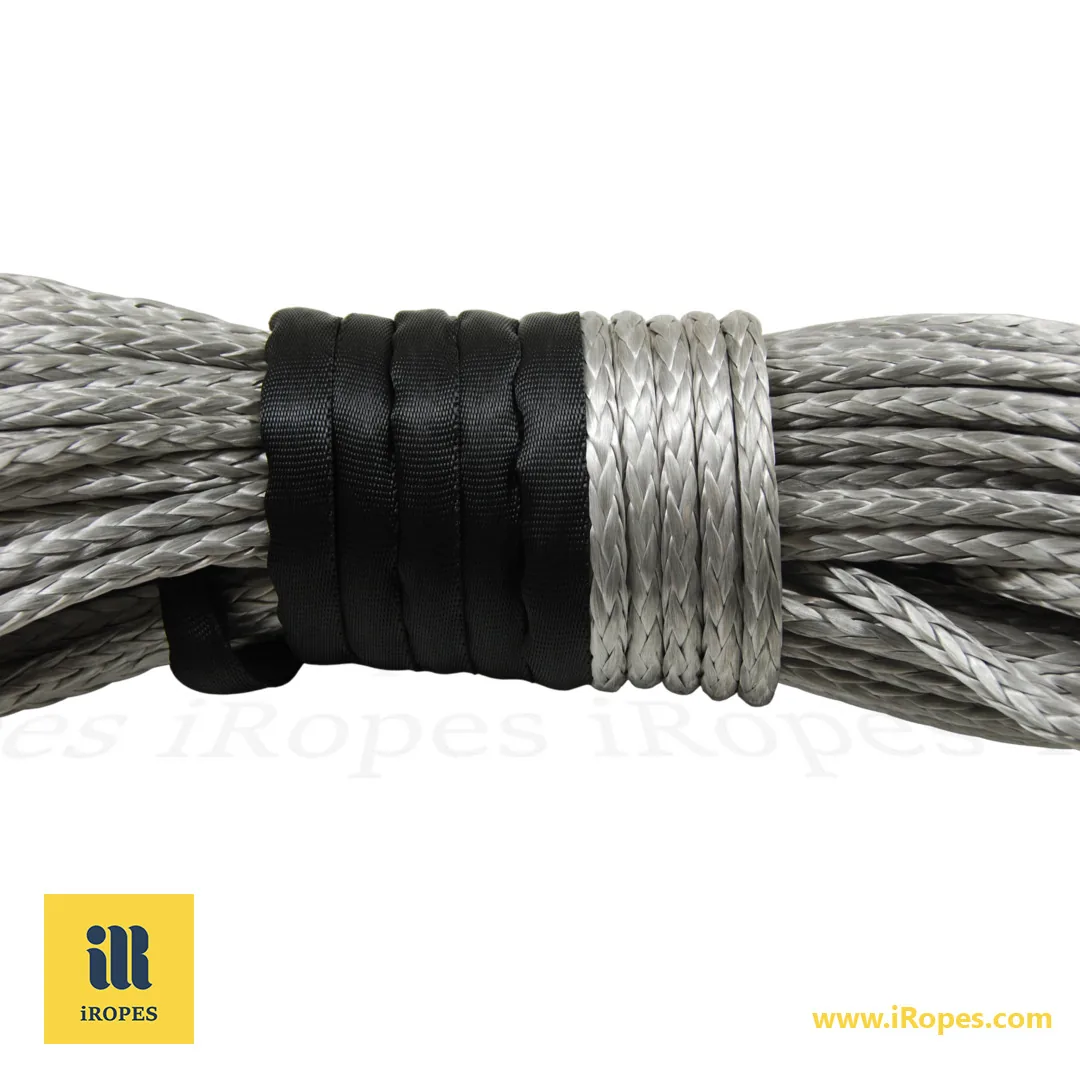
Twisted polypropylene rope delivers up to 16,500 lb breaking strength for 1-1/8″ diameters, providing a safe working load of 2,360 lb. This makes it an ideal solution for towing and marine applications.
Read in 4 min – Key Takeaways
- ✓ Up to 16,500 lb breaking strength for the largest 1-1/8″ size – suitable for heavy-duty towing.
- ✓ Apply the one-tenth rule: a 3/8″ line safely lifts ~244 lb, accounting for knot loss.
- ✓ Custom colours, lengths, and terminations help you maintain brand consistency while meeting ISO 9001 quality standards.
- ✓ UV-aware ordering and knot-strength guidance help preserve safety margins throughout the rope’s lifespan.
Many operators assume any low-cost rope will safely tow a vessel. However, a 3/8″ twisted polypropylene line can lose up to 45% of its strength when knotted, reducing its safe load to just 135 lb. Imagine if you could select the exact diameter guaranteeing a 2,400 lb break rating, stay within budget, and even incorporate your brand colours and IP-protected accessories. This guide demonstrates precisely how to size and protect your line, ensuring optimal performance and safety.
Twisted Polypropylene Rope: Definition and Construction
Building on the performance advantages we just explored, let’s clarify exactly what twisted polypropylene rope is and how its three-strand design works. This rope consists of three individual polypropylene strands helically twisted together, creating a flexible yet strong cable that floats on water and resists rot.

The three-strand layout offers more than just aesthetics; it allows for easy splicing, a feature highly valued by marine crews and towing specialists. Since each strand is made from polypropylene, the rope remains buoyant, resilient to chemicals, and lightweight, even at larger diameters.
When ordering in bulk, you’ll find a range of standard dimensions suitable for both industrial and marine environments. Typical diameters vary from 3/16 inch (≈5 mm) up to 1-1/8 inch (≈28 mm). Lengths are available in coils from 50 feet (≈15 m) to 1,200 feet (≈366 m). Colour choices are intentionally high-visibility, such as bright yellow, safety orange, stark black, or red, allowing you to meet safety standards or align with brand palettes. iRopes, a leading rope manufacturer, offers comprehensive OEM and ODM services for customised rope solutions, ensuring you get the exact specifications needed.
- Diameter Options – from 3/16″ to 1-1/8″, covering light-duty to heavy-load tasks.
- Length Flexibility – coils can be cut to any length, from a few metres to several hundred metres.
- Colour Variety – high-visibility yellow, orange, black, and red for safety or branding.
“Our OEM partners appreciate the flexibility to specify diameter, colour, and termination, transforming a standard rope into a brand-specific tool that meets precise load-rating requirements.”
Customisation Edge
Wholesale buyers often opt for OEM/ODM services from iRopes because they can dictate every parameter – from strand count to reflective elements. This ensures the rope perfectly fits their precise towing or marine workflow. iRopes’ ISO 9001-certified quality control guarantees consistent tensile standards for each batch, while also safeguarding your design with full IP protection. The company also offers competitive pricing for high-volume orders.
Understanding the basic definition and construction of twisted polypropylene rope sets the stage for the strength data you’ll see next. Here, we translate these material traits into real-world load capacities for towing and marine applications.
Twisted Polypropylene: Material Properties and Advantages
Building on the definition and construction you just explored, let’s examine how the material itself behaves in real-world conditions. The three-strand design imparts a unique combination of buoyancy, durability, and cost-efficiency to the rope, making it a preferred choice for towing and marine tasks.

Due to polypropylene’s density being lower than water, a strand of twisted polypropylene rope naturally floats. This buoyancy eliminates the need for separate buoyant sleeves when the rope is used as a dock line or tow line, saving both time and material costs. Furthermore, the polymer resists rot, mildew, and most chemicals encountered at sea—from salt spray to gasoline and oil spills. This ensures the rope maintains its performance even after prolonged exposure, a key advantage offered by iRopes' high-quality products.
Floatation
Buoyant density keeps the rope on the surface, preventing sinking during tow or dock operations.
Chemical Resistance
Unaffected by oil, gasoline, saltwater, and most acids, extending service life in harsh environments.
UV Sensitivity
Prolonged sun exposure breaks down polymer chains, reducing strength over time.
Cold Brittleness
At low temperatures, the material can become stiff and prone to cracking.
The rope’s lightweight nature is another crucial factor for bulk purchasers. A 1-inch coil weighs significantly less than an equivalent nylon line, which reduces freight costs and simplifies handling in the warehouse. Polypropylene is also non-conductive, making it safe for use around electrical equipment or in environments where static discharge is a concern. These characteristics, combined with a price point that often undercuts competing synthetics, make twisted polypropylene rope an economical choice for large-scale orders from iRopes.
Lightweight Power
Non-conductive, low-weight rope reduces shipping costs while maintaining sufficient strength for bulk towing tasks.
Every material has its trade‑offs, and polypropylene is no exception. One common question is, “What are the disadvantages of polypropylene rope?” The primary drawbacks include its low UV resistance, which can lead to strength loss after months of sun exposure, and a comparatively modest abrasion resistance when compared to polyester or nylon. In cold climates, the polymer may become brittle, increasing the risk of sudden failure if it encounters a sharp edge. When comparing twisted versus braided constructions, braided rope generally offers higher tensile strength and a softer feel. However, the twisted version excels in ease of splicing and natural buoyancy—factors that often outweigh a slight strength difference for many marine towing applications, making it a popular choice for iRopes’ customers.
Understanding these material traits prepares you for the next step: interpreting the strength tables that dictate safe working loads for each diameter. With that data, you’ll be able to select the precise rope size that meets your towing or dock‑line requirements while adhering to safety limits.
Twisted Polypropylene Rope Strength: Performance Data for Towing and Marine Use
With the construction and material traits of twisted polypropylene fresh in mind, let’s translate those attributes into the numbers that matter on the dock and for tow lines. Knowing the exact tensile and breaking strengths enables you to size the rope correctly, ensuring safety and avoiding costly downtime.

Below is a concise reference listing the most common diameters you’ll find in wholesale coils from iRopes. The breaking strength figures are derived from industry-standard tests. The safe working load (SWL) is calculated at roughly one-tenth of the breaking value, aligning with the conservative safety factors used by marine engineers.
| Diameter | Breaking Strength (lbs) | Safe Working Load (SWL) (lbs) |
|---|---|---|
| 3/16" | 650 | 90 |
| 1/4" | 1,130 | 113 |
| 3/8" | 2,440 | 244 |
| 1/2" | 3,780 | 420 |
| 5/8" | 5,600 | 700 |
| 3/4" | 7,650 | 1,090 |
| 7/8" | 10,400 | 1,490 |
| 1" | 12,600 | 1,800 |
| 1‑1/8" | 16,500 | 2,360 |
How Knots Affect the Numbers
Any knot you tie will reduce a portion of the rope’s capacity. A simple bowline can reduce strength by 30% to 40%, while more complex knots, such as a figure‑eight, may cut it by half. When planning a tow, always base the SWL on the knotted strength, not the raw breaking value, to ensure optimal safety. iRopes provides expert guidance on these crucial details.
Answering the Most Common Questions
The breaking strength of polypropylene rope varies with diameter, as our table illustrates. For the frequently asked question, “How strong is 3/8 polypropylene rope?”, the answer is a breaking strength of roughly 2,400–2,900 lbs, delivering an SWL of about 240–250 lbs after accounting for knot loss. This demonstrates the reliable performance of iRopes’ products.
When comparing twisted versus braided constructions, braided rope typically offers a higher tensile rating and feels smoother in hand. However, twisted rope excels in splicing ease and natural buoyancy, which many marine operators prioritize over the modest strength advantage of a braid. iRopes offers both options, catering to diverse customer needs across yachting, camping, and industrial applications.
- Choose the diameter that meets or exceeds the required breaking strength.
- Apply the one-tenth rule to determine a safe working load.
- Reduce the SWL further if a knot will be used in the load path.
Remember: UV exposure and cold temperatures can reduce strength over time. Therefore, schedule regular inspections and replace rope that displays signs of sun-bleaching or stiffness.
Armed with these figures, you can now match the exact rope size to the load you intend to tow, whether it’s a small fishing boat or a heavy-duty trailer. The next step is to explore how iRopes can customise your rope—by adding reflective strips, custom colours, or specialised terminations—to fit your brand and operational workflow perfectly, enhancing safety and performance across defence, off‑road, and other demanding fields. Our twisted nylon rope options provide excellent strength and durability for towing and marine applications, giving you an alternative when higher abrasion resistance is required. Additionally, our double‑braid yacht rope solutions deliver superior performance for sailing and offshore work.
Need a Custom Rope Solution?
This guide has highlighted twisted polypropylene rope as a buoyant, lightweight option for towing and marine duties. It explained its three‑strand construction and detailed how the twisted polypropylene material translates into reliable performance. By reviewing the twisted polypropylene rope strength tables, you now understand which diameter meets your safe working load, while also acknowledging trade‑offs such as UV sensitivity. iRopes is your trusted partner for high‑quality, customised rope solutions, backed by ISO 9001 certification and a commitment to competitive pricing and timely delivery.
If you need personalised advice, whether for twisted polypropylene or a 3‑strand nylon rope tailored to your exact brand, colour, and termination needs, simply complete the form above, and our specialists will assist you with comprehensive OEM and ODM services.