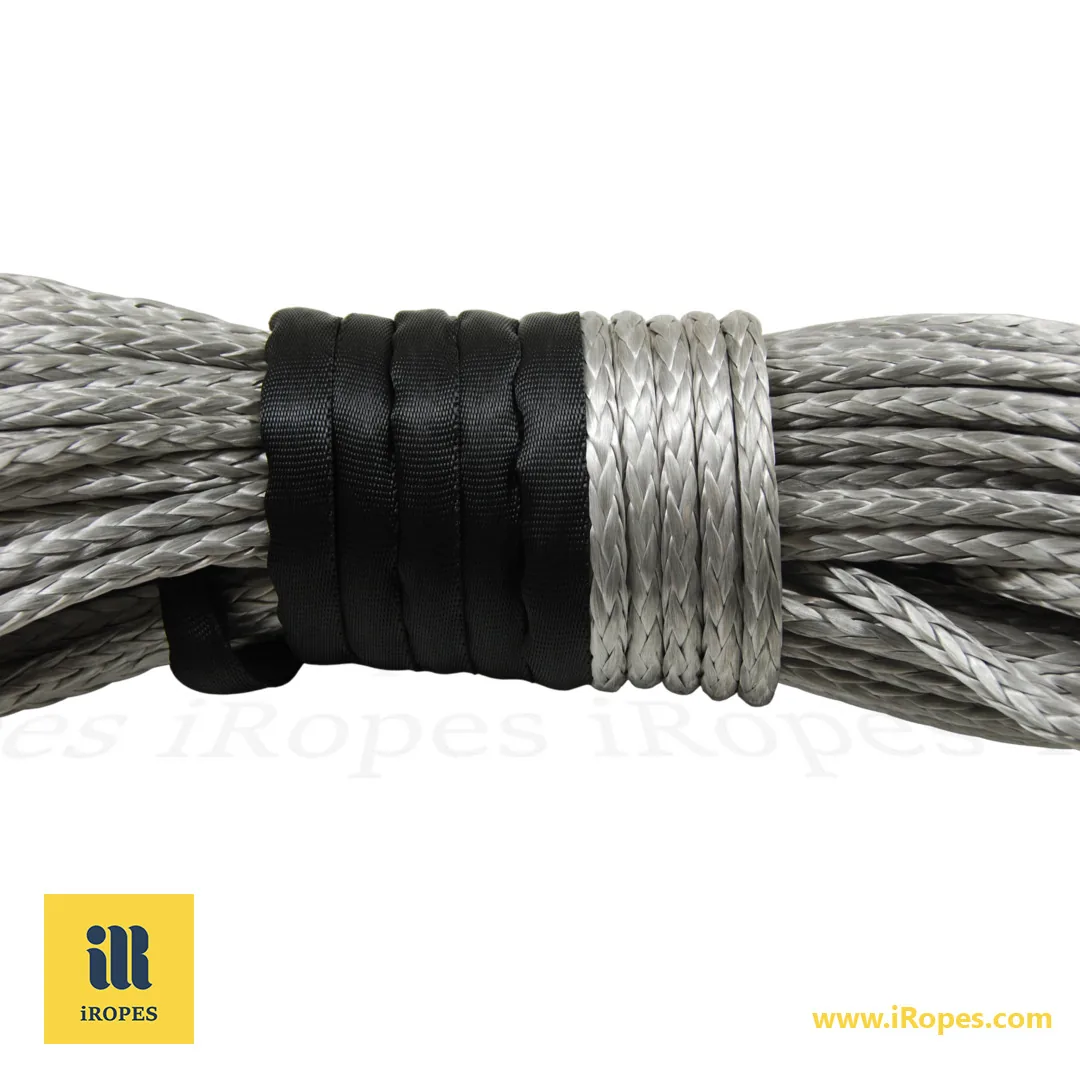
Diamond‑braid polyester rope typically offers 400–1 600 lb minimum break strength (1/8–3/8 in) with ≤ 4 % elongation at 10 % load. Its 8‑carrier jacket enhances abrasion resistance and knot‑holding compared with many twisted constructions.
Quick Wins – ≈ 2‑minute read
- ✓ Use the 8‑carrier braid diagram to size and specify rope quickly.
- ✓ Match diameter to safe working load (SWL ≈ 1/5 of break strength) to reduce failures.
- ✓ Compare per‑foot pricing; polyester is often a cost‑effective choice for low‑stretch lines.
- ✓ Work with ISO 9001‑certified manufacturers and request ASTM D‑2256 test reports to streamline approvals.
Understanding the structure of braided rope does not require a specialist’s manual. You can visualise the 8‑carrier diamond braid with a simple sketch that shows carriers crossing to form a lattice around a core. In the sections that follow, we outline practical braid geometry, explain load distribution in plain terms, and share the custom‑colour and branding options iRopes offers for OEM and ODM projects.
Understanding diamond braid polyester rope structure
After exploring why many projects demand high‑strength rope, it’s time to peel back the layers and see exactly how a diamond braid polyester rope is assembled.
What is diamond‑braid rope? It is a rope built with an eight‑carrier braid that weaves the outer strands into a repeating diamond pattern around a core. Depending on design, the core and/or jacket carry the load. This construction delivers excellent abrasion resistance, low stretch and consistent knot‑holding.
- Eight carriers – eight outer strands interlock to form the diamond lattice.
- Polyester construction – offers tensile strength, UV stability and low water absorption.
- Low elongation – typically under 4 % stretch at working loads.
- High abrasion resistance – ideal for rough surfaces and repeated flexing.
The heart of the design is the 8‑carrier braid pattern. Imagine eight thin ropes (the carriers) looping around a central core; each carrier follows a helical path that shifts one position every turn. The result is a series of diamond‑shaped gaps that help distribute stress and give the rope its signature look.

Because the carriers are separate from the core, you can customise each layer – change the colour of the outer braid, add reflective yarn, or specify core type and strand count for specialised performance. This flexibility is why manufacturers such as iRopes offer comprehensive OEM and ODM solutions with IP protection, branded packaging and direct pallet shipping.
Diamond‑braid construction balances durability, predictable handling and low stretch better than many alternative braid styles, making it a versatile choice across marine, industry and outdoor applications.
Understanding this geometry sets the stage for the next comparison: how the same braid behaves when it’s produced as a thinner cord versus a larger rope. That distinction will guide you toward the right product for any application.
Differences between diamond braid cord and rope
Now that you can picture the 8‑carrier lattice, the next logical step is to see how that same pattern behaves when it’s spun into a thin cord rather than a full‑size rope.
Both cord and rope formats commonly use polyester, so they share the material’s UV resistance and low moisture absorption. The change in diameter, however, alters how much load the product can safely carry.
- Diameter and load‑capacity – a diamond braid cord typically ranges from ≈ 2–5 mm and suits light‑duty tasks. Diamond‑braid polyester rope commonly spans 1/8–3/8 in (≈ 3–10 mm) with typical break strengths of 400–1 600 lb, enabling heavier loads.
- Typical applications – diamond braid cord excels in fishing accessories, decorative trims and light tie‑downs where flexibility and low weight matter. Rope finds its niche in anchoring, marine docking and industrial tie‑downs that demand higher tensile strength.
- Strength and flexibility – both products offer excellent abrasion resistance. Thinner cord bends more readily and threads through small hardware; larger‑diameter rope holds shape better under tension and resists stretching at load.
In short, the difference between rope and cord is primarily a matter of size and the resulting load rating; the braid construction is similar, so you get consistent handling characteristics across thicknesses.
When you handle a cord, you’ll notice it coils easily and passes through tight sheaves, while rope maintains a firmer hand under tension, which is preferable for rigging where a stable line is crucial.

Choosing wisely
Select based on safe working load. Calculate SWL as about one‑fifth of the published break strength, then choose a diamond‑braid polyester rope diameter that comfortably exceeds your maximum expected load.
With the size and strength distinctions clear, the next step is to locate a reliable source for polyester rope in the Philippines, where price, certification and import rules all play a part.
Selecting polyester rope Philippines – pricing, distributors, and regulations
Now that you can tell the difference between rope and cord, the next step is to locate a reliable supplier. In the Philippines, the market includes specialist importers in Manila, Cebu and Davao who stock 8‑carrier diamond‑braid polyester rope for a range of applications.

iRopes supplies wholesale buyers with OEM and ODM services, dedicated IP protection and ISO 9001‑backed quality assurance. The team can align colours with your branding, add reflective yarn, provide non‑branded or customer‑branded packaging, and ship pallets directly to your site. You can also request custom lengths, strand counts and core types to match your specifications.
Import duty for synthetic rope (HS 5604) is about 12 % plus a 12 % VAT. Ask your supplier for a Certificate of Origin to help avoid clearance delays.
The cost of polyester rope in the Philippines varies with diameter and order size. A 1/8 in rope typically runs around US $0.05 per foot, while a 3/8 in rope can reach US $0.20 per foot. Bulk purchases often attract a discount, especially when you combine several colour variants in a single shipment.
So, where can you buy polyester rope in the Philippines? Start with reputable local importers in the major hubs above or request a direct quote from iRopes. Ask for documentation showing manufacturing under ISO 9001 and tensile testing to ASTM D‑2256. A quick phone call or email can also confirm whether sample lengths are available for field checks before you place a large order.
Pro tip
Ask for a test report showing break strength and UV stability; it’s the fastest way to confirm you’re getting genuine diamond‑braid polyester rope.
With pricing, reliable partners and customs requirements now clear, you’re ready to move on to the practical side of ownership – inspection, safe storage and custom branding options.
Maintenance, safety, and customization options for diamond braid ropes
Having identified reliable suppliers, the next logical step is to protect your investment. Proper inspection, sensible storage and awareness of safety standards turn a high‑quality diamond‑braid polyester rope into a long‑lasting workhorse.

Start each maintenance routine with a visual sweep. Look for frayed ends, broken strands, glazing, hard spots or discolouration that could indicate heat or UV damage. Even a small nick can reduce break strength significantly.
Inspect & Store
Keep your line reliable
Visual
Check for fraying, broken strands or melted coating; any damage reduces break strength and warrants replacement.
Abrasion
Feel the jacket for flat spots and fuzzing from abrasion; if fibres are heavily worn, retire the rope.
Load‑curve
Verify that measured elongation aligns with the manufacturer’s data for your rope diameter before critical use.
Safety & Custom
Compliance and branding
Standards
ISO 9001, ASTM D‑2256 and applicable safety regulations guide marking, testing and permissible uses.
Rating
Safe working load is typically 1/5 of break strength; do not exceed SWL, and avoid overhead lifting unless the rope is specifically rated.
OEM
Choose colours, reflective yarn, branding or custom packaging while retaining required documentation and traceability.
When storing rope for extended periods, coil it loosely in a dry, shade‑protected area. Avoid direct sunlight, which accelerates UV breakdown, and keep the coil off the ground to prevent moisture wicking. A sealed, ventilated container works well for bulk pallets, especially in the humid climate of the Philippines.
Remember the safety fundamentals: select a polyester rope manufactured under ISO 9001 and tensile‑tested to ASTM D‑2256, calculate the safe working load (SWL) as one‑fifth of the published break strength, and never exceed that figure during use. If you need a line that stands out on a busy jobsite, ask about reflective yarn or high‑visibility colours—customisation that preserves compliance.
By integrating regular inspections, climate‑aware storage and strict adherence to recognised standards, you safeguard performance and extend the service life of your diamond braid polyester rope, setting the stage for a smooth hand‑over to the final conclusions of this guide.
Looking for a personalised rope solution? Fill out the form below
With the structure of braided rope now introduced, you can see how the 8‑carrier braid gives the diamond braid polyester rope its low stretch and high abrasion resistance. Recognising the size‑related distinction between diamond braid cord and full‑size rope lets you match load capacity to the task, while the buying tips for polyester rope philippines help you source reliably from trusted partners like iRopes. Apply the inspection and storage checklist to maintain peak performance, and explore OEM customisation for colour, reflective yarn or branding.
If you’d like expert guidance on selecting the right braid, customising your line or arranging logistics, simply complete the form above and our team will get back to you promptly.