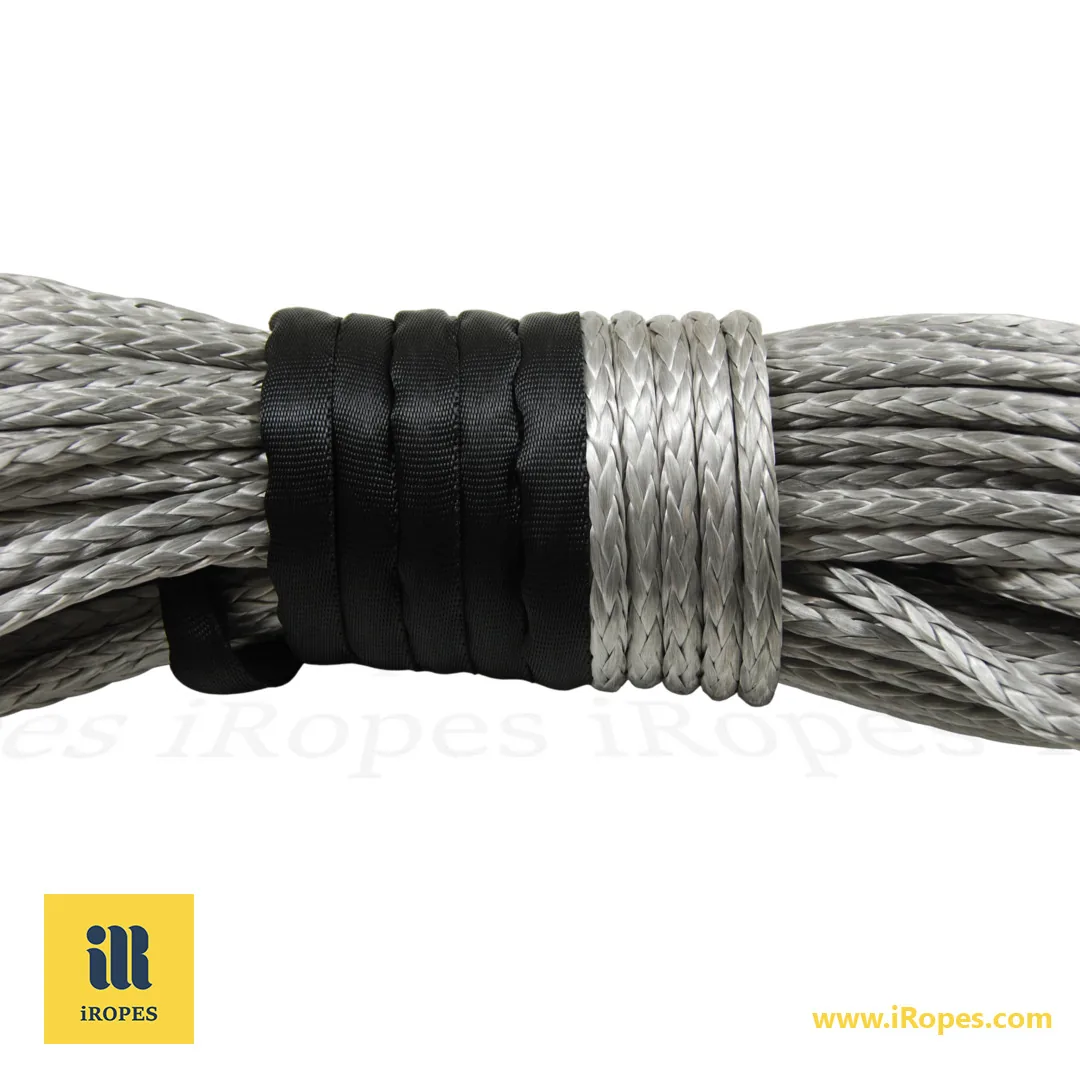
A correctly executed eye splice can retain ≈ 98% of a rope’s rated strength. In an iRopes offshore case study, a 3‑strand loop splice with black chafe webbing helped cut inspection costs by about 12% and saved up to US $28 k over three years.
What you’ll gain – 5‑minute read
- ✓ Retain up to ≈ 98% of rated strength with a correctly executed splice, unlike many knots that reduce capacity.
- ✓ Maximise usable load capacity for mooring applications with a purpose‑built loop splice.
- ✓ Cut routine inspection cost by ≈ 12% in documented offshore case studies.
- ✓ Receive an IP‑protected, custom‑branded splice design that matches your exact specifications.
Many teams still rely on conventional knots, accepting a noticeable loss in strength, even though a well‑made splice can preserve almost the full capacity of the line. In the sections that follow, we’ll cover the different types of rope splicing, material and fibre selection, and reveal the practical steps iRopes uses to craft a 3‑strand loop splice that can retain up to ≈ 98% of the rope’s rating on suitable constructions, while adding UV‑resistant chafe protection—giving you a real performance edge.
different types of rope splicing
When you need a connection that won’t slip under load, splicing beats a knot in almost every respect. A properly executed splice keeps a very high proportion of the rope’s tensile strength, distributes stress evenly across the fibres, and presents a smooth profile that resists snagging. That’s why riggers, rescue teams and industrial installers prefer splices for critical joints.
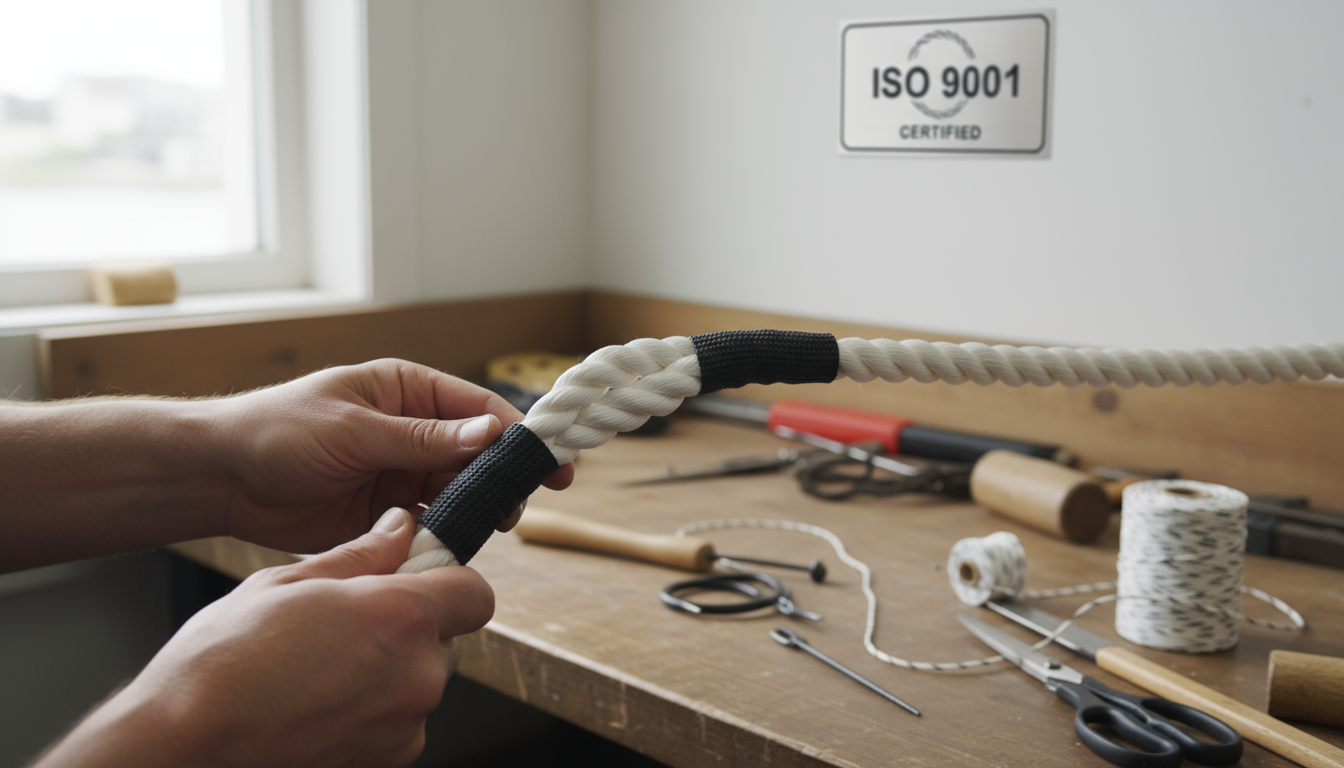
Four classic splice families cover most applications you’ll encounter:
Eye splice – creates a permanent loop; perfect for halyards and mooring lines.
Ring splice – terminates a rope onto a metal ring; used for anchor shackles.
Chain splice – joins rope to chain links; common on lifting gear.
Figure‑8 splice – forms a strong, compact knot‑like eye; favoured in climbing and rescue.
Not every rope construction can be spliced the same way. The table below summarises which build‑types accept a splice and which require a clamp or ferrule instead.
Splice Compatibility by Construction
| Construction | Can be Spliced? | Typical Uses |
|---|---|---|
| 3‑strand twisted | Yes | Anchor rodes, mooring lines |
| 8‑strand twisted | Yes | Heavy‑duty anchoring, industrial rigging |
| Single‑braid | Yes (eye, figure‑8) | Sailing sheets, rescue ropes |
| Double‑braid | Yes (eye, ring) | High‑modulus Dyneema, offshore mooring |
| Solid‑braid (locked‑core) | No – use clamps | Utility cordage, select control lines |
So, to answer the common query “What are the different types of rope splicing?” – the answer is the four families listed above, each suited to particular rope builds and end‑uses. Choosing the right combination of splice and construction ensures the joint holds as firmly as the rope itself, which is the foundation for any safe rigging system.
different types of rope material
After you’ve decided which splice family best suits your project, the next step is picking a material that will hold up under the specific conditions you face. The right rope material can mean the difference between a reliable connection and a premature failure.

In broad strokes, synthetic ropes out‑perform natural fibres when you need high tensile strength, low water absorption and excellent durability. Natural ropes such as Manila or sisal are still popular for aesthetic or biodegradable applications, but they absorb moisture and weaken under prolonged UV exposure.
- Nylon – strong, high elongation, good shock absorption; UV resistance moderate.
- Polyester – slightly lower strength than nylon, minimal stretch, excellent UV stability.
- Polypropylene – light, floats, low cost; strength and UV resistance lower than nylon.
- UHMWPE/Dyneema – highest strength‑to‑weight ratio, very low stretch, superb UV resistance.
- Kevlar – high tensile strength and excellent heat resistance; sensitive to UV and flex fatigue, so typically used with a protective cover.
When you match a rope to an application, consider three core properties: strength, UV exposure and whether the line needs to float or sink. The matrix below condenses those choices into a quick‑reference guide.
Material Matrix
Match rope to application
High strength
UHMWPE and aramids deliver the greatest load capacity per kilogram.
UV resistance
Polyester and Dyneema retain performance after prolonged sunlight exposure.
Floatability
Polypropylene naturally floats, making it ideal for buoy‑linked lines.
Application Guide
Typical uses
Mooring
Dyneema loops with UV‑stable protection excel in offshore mooring.
Rescue
Nylon’s shock absorption makes it a favourite for dynamic rescue lines.
Industrial rigging
Polyester’s low stretch and UV stability suit long‑term rigging applications.
One common question that pops up in forums is whether every rope can be spliced. The short answer: solid‑braid (locked‑core) constructions generally cannot be spliced; they require clamps or ferrules instead. This limitation matters because some core‑locked designs prioritise abrasion resistance over spliceability.
Understanding how each material behaves under load, sunlight and water lets you choose a rope that works with the splice you’ve already selected. The next part will explore the fibres that give these materials their unique characteristics, so you can fine‑tune your choice even further.
types of rope fiber
When you start looking beyond the colour or thickness of a line, the term “fibre” becomes the real differentiator. A rope fibre (also spelled “fiber”) is the individual strand that makes up the yarn, whereas the material refers to the broader polymer or natural source that those fibres are woven from. Understanding this distinction helps you match performance to the exact demands of your project.

Common fibres and what they bring to a rope
- Nylon – high elasticity, excellent shock absorption, moderate UV resistance.
- Polyester – low stretch, strong UV stability, good abrasion resistance.
- Polypropylene – light‑weight, floats, lower strength, limited UV endurance.
- Manila – natural feel, biodegradable, prone to moisture absorption.
- Sisal – coarse texture, high abrasion tolerance, limited tensile strength.
- Cotton – soft, comfortable for hand‑held lines, low durability outdoors.
- UHMWPE (Dyneema/Spectra) – ultra‑high strength‑to‑weight, very low stretch, outstanding UV resistance.
- Kevlar – exceptional tensile strength and heat resistance; sensitive to UV and flex‑fatigue, usually needs a protective cover.
- Vectran – high modulus, low creep, good chemical resistance; moderate UV stability.
Which fibre fits your application?
Think of the environment you’ll be working in. A rescue line that must absorb a fall benefits from nylon’s stretch, while a sailing halyard that demands minimal elongation leans on polyester or Dyneema. For offshore mooring, a high‑modulus HMPE rope paired with a protective sleeve delivers both strength and long‑term UV endurance.
Rescue & Climbing
Nylon for dynamic ropes; aramids (e.g., Kevlar) when heat resistance or cut protection is critical, not for dynamic falls.
Sailing & Mooring
Polyester for low‑stretch sheets, Dyneema for high‑modulus mooring loops, polypropylene for floating buoy lines.
Industrial Rigging
UHMWPE for maximum load capacity, polyester for abrasion‑heavy environments, aramids where heat resistance matters.
Eco‑Friendly Projects
Manila or sisal when biodegradability and a natural aesthetic are priorities, despite lower strength.
Quick answer to a common query
When you hear “What are the 6 types of ropes and their uses?” the short version is: nylon (dynamic rescue lines), polyester (low‑stretch sailing sheets), polypropylene (floating buoy ropes), manila (decorative or biodegradable applications), Dyneema/UHMWPE (high‑modulus offshore mooring), and Kevlar (heat‑resistant industrial lines). Each rope’s fibre dictates its behaviour, so matching fibre to function is the key to a safe, long‑lasting system.
Now that you can see how each fibre influences performance, you’re ready to explore how iRopes tailors a 3‑strand loop splice that leverages the right fibre, material and protective chafe webbing for demanding mooring jobs.
Custom 3‑Strand Loop Splice for Mooring Applications
After learning how each fibre shapes a rope’s behaviour, the next logical step is to see those choices in action. iRopes specifies a 3‑strand construction in HMPE (Dyneema) or marine‑grade polyester and finishes the eye with black chafe‑webbing – a combination widely used in mooring ropes and favoured on offshore lines.

The loop splice follows a proven sequence that experienced technicians can replicate in the field. First, unlay the three strands over a length of roughly ten times the rope diameter and set the eye size. Next, tape the ends and tuck each strand under the corresponding strand in the standing part, alternating around the rope. Make three to five full tucks, taper and dress the splice for a smooth profile. The final touch is a strip of black chafe webbing stitched or whipped over the eye; where specified, a heat‑shrink sleeve provides a neat, durable finish to protect against UV, abrasion and marine fouling.
Performance Benefits
Higher load capacity, superior UV resistance, and built‑in abrasion protection make the 3‑strand loop splice the go‑to solution for demanding mooring projects.
Because the splice preserves the rope’s original construction, it can retain up to ≈ 98% of the rated break strength on suitable constructions when executed correctly—a critical factor when a vessel’s safety depends on a single anchoring line. The chafe webbing also acts as a sacrificial layer that absorbs wear, extending the service life of the line.
Case study: an offshore platform replaced standard eye‑spliced mooring loops with iRopes’ 3‑strand loop splice. Over three years the client reported ≈ 12% lower routine inspection costs and an estimated US $28 k in savings.
When you specify a mooring system, the choice of splice often dictates the overall reliability of the installation. By opting for iRopes’ custom‑engineered loop splice, you benefit from a joint produced under an ISO 9001‑certified quality management system and backed by OEM/ODM capability. Your IP‑protected design means the splice geometry and branding are exclusive to your project.
Ready to see how a tailored 3‑strand loop splice can fit into your next offshore or harbour‑side rigging plan? The workflow starts with a simple questionnaire on load requirements, water depth and exposure conditions, after which iRopes engineers draft a material‑selection matrix and deliver a prototype ready for field testing.
Understanding how the different types of rope splicing, the different types of rope material and the types of rope fiber combine lets you choose a joint that retains a very high proportion of the line’s strength while matching the environment. The guide showed eye, ring, chain and figure‑8 splices, compared nylon, polyester, Dyneema and other synthetics, and outlined fibre‑specific performance. Building on that knowledge, iRopes 3‑Strand Loop Splice with black chafe webbing delivers a low‑profile, UV‑resistant, abrasion‑protected eye that’s ideal for demanding mooring applications.
Get a custom splice design for your project
For tailored advice on the perfect splice, material and fibre combination for your next job, just fill in the form above and our specialists will contact you.