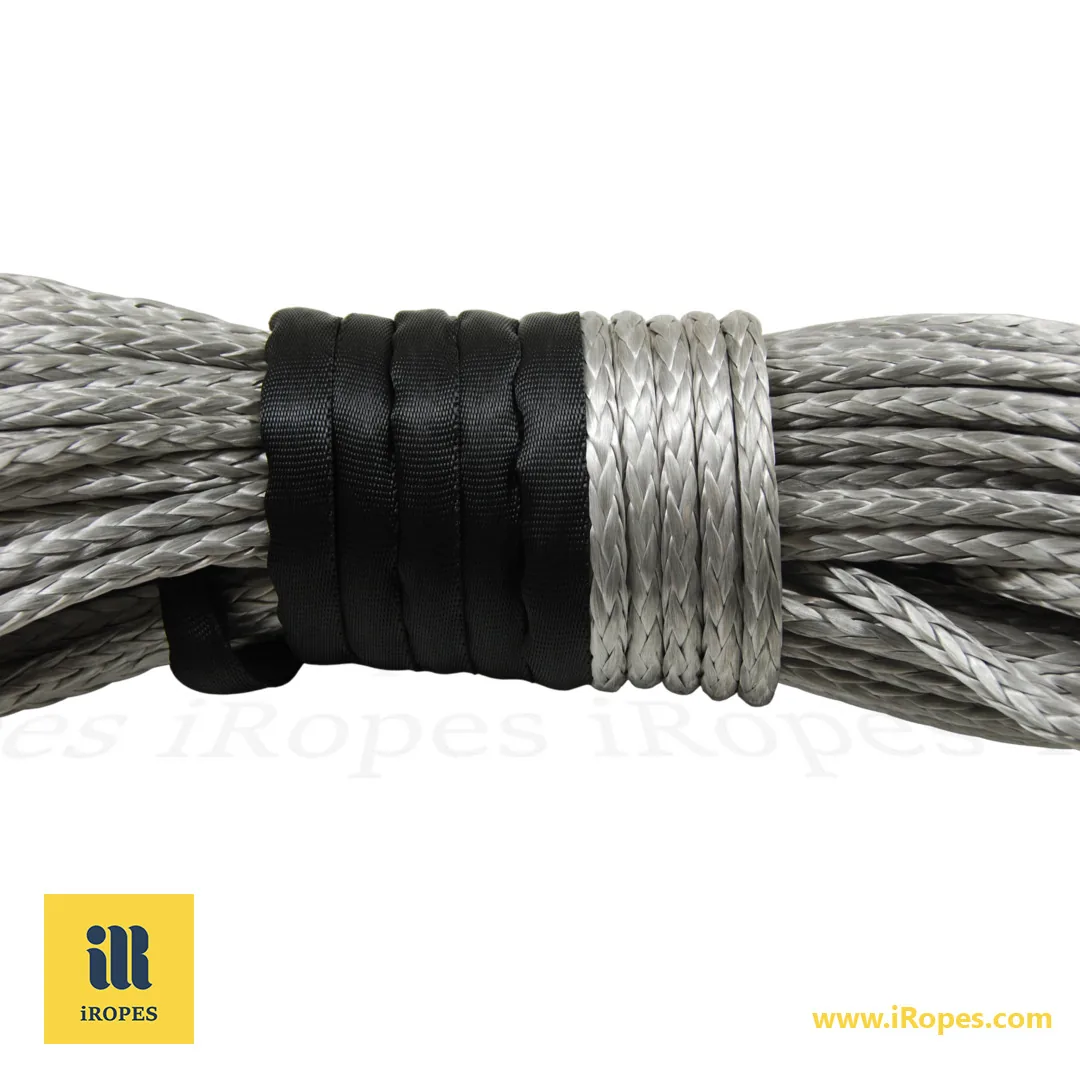
正確執行的眼環接頭可保留 ≈ 98% 的繩索額定強度。在 iRopes 海上案例研究中,使用黑色耐磨帶的 3‑股環形接頭將檢查成本降低約 12%,並在三年內節省高達 US $28 k。
您將收穫的內容 – 5‑minute read
- ✓ 正確執行的接頭可保留 ≈ 98% 的額定強度,與會降低承載力的許多結不同。
- ✓ 透過專為錨泊設計的環形接頭,最大化可用載荷容量。
- ✓ 在已記錄的海上案例中,將例行檢查成本降低 ≈ 12%。
- ✓ 獲得受 IP‑保護、客製化品牌的接頭設計,完全符合您的規格。
許多團隊仍依賴傳統打結,接受明顯的強度損失,儘管精良的接頭幾乎能保留整條繩索的全部承載能力。接下來的章節,我們將說明不同類型的繩索接頭、材料與纖維選擇,並揭示 iRopes 用於製作 3‑股環形接頭的實作步驟——此接頭在適當的繩索結構上可保留 ≈ 98% 的額定強度,同時加入抗 UV 耐磨保護,為您帶來真正的性能優勢。
different types of rope splicing
當您需要在受載時不會滑脫的連接,接頭在幾乎所有方面都優於打結。正確執行的接頭可保持繩索拉伸強度的極高比例,將應力均勻分佈於纖維上,且呈現光滑輪廓以防掛勾。這也是為何索具工、救援隊與工業安裝人員在關鍵接點上偏好使用接頭。
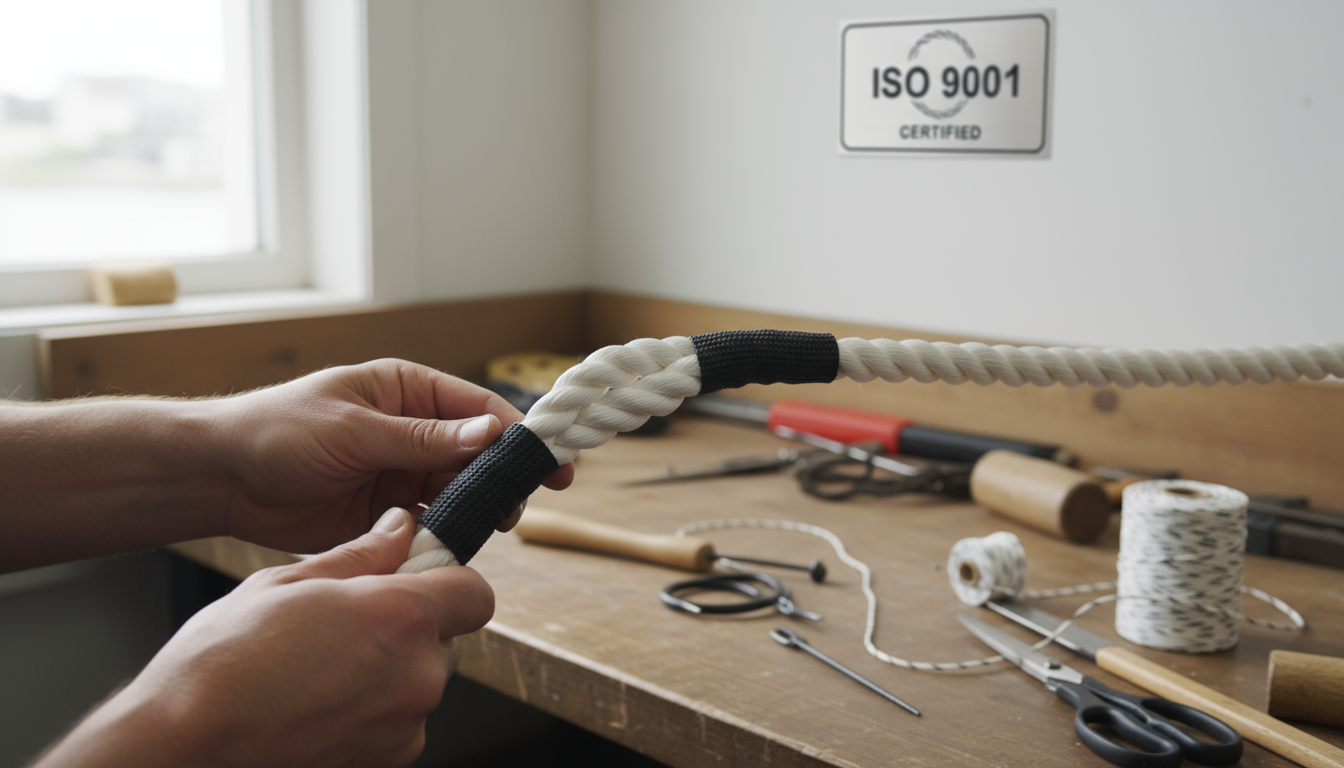
四大經典接頭族群涵蓋了您大多數會遇到的應用:
Eye splice – creates a permanent loop; perfect for halyards and mooring lines.
Ring splice – terminates a rope onto a metal ring; used for anchor shackles.
Chain splice – joins rope to chain links; common on lifting gear.
Figure‑8 splice – forms a strong, compact knot‑like eye; favoured in climbing and rescue.
並非所有繩索結構都能以相同方式接頭。下表總結了哪些結構可接受接頭,哪些則需使用夾具或套筒。
Splice Compatibility by Construction
| Construction | Can be Spliced? | Typical Uses |
|---|---|---|
| 3‑strand twisted | Yes | Anchor rodes, mooring lines |
| 8‑strand twisted | Yes | Heavy‑duty anchoring, industrial rigging |
| Single‑braid | Yes (eye, figure‑8) | Sailing sheets, rescue ropes |
| Double‑braid | Yes (eye, ring) | High‑modulus Dyneema, offshore mooring |
| Solid‑braid (locked‑core) | No – use clamps | Utility cordage, select control lines |
因此,回應常見問題「繩索接頭有哪些不同類型?」的答案即是上表列出的四大族群,每一族均適用於特定的繩索結構與用途。選對接頭與結構的組合,能讓接點的牢固度與整條繩索相當,這是任何安全索具系統的基礎。
different types of rope material
在確定最適合您專案的接頭族群後,下一步是挑選能在特定環境下持久的材料。正確的繩索材料往往決定了連接的可靠性與壽命。

概括而言,合成纖維在高抗拉強度、低吸水性與耐久性方面遠勝天然纖維。雖然麻繩或黃麻等天然繩仍因其美觀或可生物分解的特性受到青睞,但它們會吸濕且在長期曝曬下性能下降。
- Nylon – strong, high elongation, good shock absorption; UV resistance moderate.
- Polyester – slightly lower strength than nylon, minimal stretch, excellent UV stability.
- Polypropylene – light, floats, low cost; strength and UV resistance lower than nylon.
- UHMWPE/Dyneema – highest strength‑to‑weight ratio, very low stretch, superb UV resistance.
- Kevlar – high tensile strength and excellent heat resistance; sensitive to UV and flex fatigue, so typically used with a protective cover.
在為應用匹配繩索時,請考量三項核心屬性:強度、UV 曝曬以及是否需漂浮。下表將這些選項濃縮為快速參考指南。
Material Matrix
Match rope to application
High strength
UHMWPE and aramids deliver the greatest load capacity per kilogram.
UV resistance
Polyester and Dyneema retain performance after prolonged sunlight exposure.
Floatability
Polypropylene naturally floats, making it ideal for buoy‑linked lines.
Application Guide
Typical uses
Mooring
Dyneema loops with UV‑stable protection excel in offshore mooring.
Rescue
Nylon’s shock absorption makes it a favourite for dynamic rescue lines.
Industrial rigging
Polyester’s low stretch and UV stability suit long‑term rigging applications.
論壇上常見的問題是「所有繩索都能接頭嗎?」簡短回答:實心編織(鎖芯)結構通常無法接頭,必須改用夾具或套筒。此限制重要,因為某些鎖芯設計優先考慮耐磨性而非可接頭性。
了解每種材料在受載、日曬與水中表現的差異,能幫助您選擇與已決定之接頭相容的繩索。接下來的部分將探討賦予這些材料獨特特性的纖維,讓您進一步微調選擇。
types of rope fiber
當您開始關注繩索的顏色或粗細之外,真正的差異點在於「纖維」。纖維(亦寫作 fiber)是構成紗線的單根線,而材料則指這些纖維所採用的聚合物或天然來源。了解此區別有助於將性能精準匹配至專案需求。

Common fibres and what they bring to a rope
- Nylon – high elasticity, excellent shock absorption, moderate UV resistance.
- Polyester – low stretch, strong UV stability, good abrasion resistance.
- Polypropylene – light‑weight, floats, lower strength, limited UV endurance.
- Manila – natural feel, biodegradable, prone to moisture absorption.
- Sisal – coarse texture, high abrasion tolerance, limited tensile strength.
- Cotton – soft, comfortable for hand‑held lines, low durability outdoors.
- UHMWPE (Dyneema/Spectra) – ultra‑high strength‑to‑weight, very low stretch, outstanding UV resistance.
- Kevlar – exceptional tensile strength and heat resistance; sensitive to UV and flex‑fatigue, usually needs a protective cover.
- Vectran – high modulus, low creep, good chemical resistance; moderate UV stability.
Which fibre fits your application?
先思考您將作業的環境。需要吸收衝擊的救援繩索適合使用尼龍的彈性,而要求最小伸長的帆船吊索則傾向使用聚酯或 Dyneema。對於海上錨泊,高模量 HMPE 繩搭配保護套即可同時提供高強度與長期抗 UV 能力。
Rescue & Climbing
Nylon for dynamic ropes; aramids (e.g., Kevlar) when heat resistance or cut protection is critical, not for dynamic falls.
Sailing & Mooring
Polyester for low‑stretch sheets, Dyneema for high‑modulus mooring loops, polypropylene for floating buoy lines.
Industrial Rigging
UHMWPE for maximum load capacity, polyester for abrasion‑heavy environments, aramids where heat resistance matters.
Eco‑Friendly Projects
Manila or sisal when biodegradability and a natural aesthetic are priorities, despite lower strength.
Quick answer to a common query
當有人問「繩索的 6 種類型及其用途是什麼?」時,簡短回覆如下:尼龍(動態救援繩)、聚酯(低伸長帆船帆布)、聚丙烯(漂浮浮標繩)、麻繩(裝飾或可生物分解應用)、Dyneema/UHMWPE(高模量海上錨泊)以及 Kevlar(耐熱工業繩)。每條繩索的纖維決定其行為,將纖維與功能匹配是安全、耐久系統的關鍵。
現在您已了解各纖維如何影響性能,接下來即可探索 iRopes 如何客製化 3‑股環形接頭,結合正確的纖維、材料與耐磨防護帶,以應付嚴苛的錨泊任務。
Custom 3‑Strand Loop Splice for Mooring Applications
在了解每種纖維如何形塑繩索行為後,接下來的自然步驟就是看實際的應用。iRopes 在 HMPE(Dyneema) 或海事級聚酯的 3‑股結構上,最後以 黑色耐磨帶 完成眼環——此組合在海上錨泊繩索上廣受使用。

此環形接頭遵循一套經驗豐富的技術人員可於現場複製的流程。首先,將三股繩索解開約為繩徑十倍的長度,設定眼環尺寸。接著,將端頭纏上膠帶,並將每股依序塞入立繩部對應的股內,繞繩交替進行。完成三至五次完整的塞入後,收斂並整理接頭,使其呈現光滑輪廓。最後,以黑色耐磨帶縫合或纏繞於眼環;若有規範,亦可加裝熱縮套管,形成整潔耐用的成品,防止 UV、磨損與海洋污垢侵蝕。
Performance Benefits
Higher load capacity, superior UV resistance, and built‑in abrasion protection make the 3‑strand loop splice the go‑to solution for demanding mooring projects.
因為此接頭保留了繩索原始的結構,正確執行時可在適用結構上保留高達 ≈ 98% 的額定斷裂強度——這在船舶安全仰賴單一錨泊線時尤為關鍵。耐磨帶同時作為犧牲層吸收磨損,延長整條繩索的使用壽命。
案例研究:一家海上平台將標準眼環接頭的錨泊環換成 iRopes 的 3‑股環形接頭。三年內客戶報告例行檢查成本降低約 12%,估計節省 US $28 k。
在規劃錨泊系統時,接頭的選擇往往決定整體安裝的可靠度。選用 iRopes 的 客製化環形接頭,您將受益於 ISO 9001 認證品質管理系統下製作的接點,並具備 OEM/ODM 能力。您的 IP‑保護設計意味著接頭幾何與品牌專屬於您的專案。
準備好看看客製化的 3‑股環形接頭如何納入您下個海上或港口索具計畫了嗎?流程始於一份簡易問卷,內容涵蓋載荷需求、水深與曝曬條件,之後 iRopes 工程師會繪製材料選擇矩陣,並交付可於現場測試的原型。
了解繩索接頭的不同類型、繩索材料的不同類型以及纖維的不同類型,讓您能選擇保留極高比例線材強度且符合環境需求的接點。本指南說明了眼環、環形、鏈環與 Figure‑8 接頭,比較了尼龍、聚酯、Dyneema 等合成纖維,並闡述了纖維特有的性能。基於此知識,iRopes 采用黑色耐磨帶的 3‑股環形接頭提供低輪廓、抗 UV、耐磨的眼環,完美適用於嚴苛的錨泊應用。
Get a custom splice design for your project
欲獲得針對下一個工程的完美接頭、材料與纖維組合的客製化建議,只需在上方表單留下資訊,我們的專家將盡快與您聯繫。