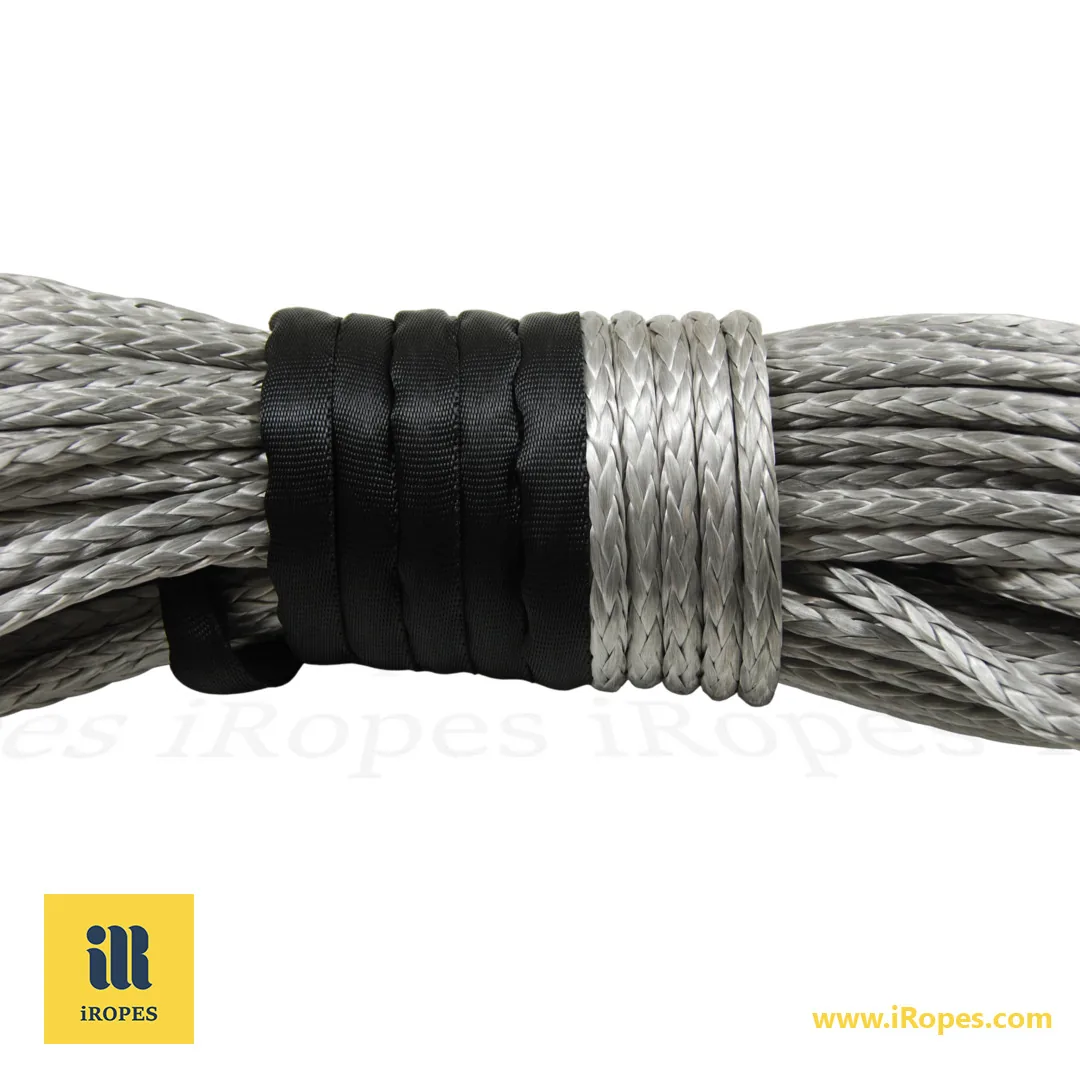
A 1/4 in Amsteel‑Blue rope delivers about 8 600 lb (≈ 3 900 kg) average breaking strength — up to 30 % higher than standard Amsteel.
≈ 2‑min read – your gains
- ✓ Reduce rope weight by 70 % vs steel.
- ✓ Get 860 lb safe load on 1/4 in with 1/10 factor.
- ✓ Custom colour, branding & reflective strips without strength loss.
- ✓ 15‑year OEM expertise, ISO‑9001 backed, on‑time delivery.
If you size ropes by weight alone, you can miss up to a 30 % strength advantage. Below, we unpack amsteel blue rope strength so you can specify with confidence and make faster, safer decisions.
Understanding amsteel blue rope strength – fibre, construction, and core benefits
With 15 years of manufacturing in China and a catalogue of 2 348 cordages for marine, racing sports, industrial, and safety uses, iRopes helps engineers get the most from Amsteel‑Blue. When you need raw pulling power without the bulk of steel, understanding the fibre and braid is the first step.
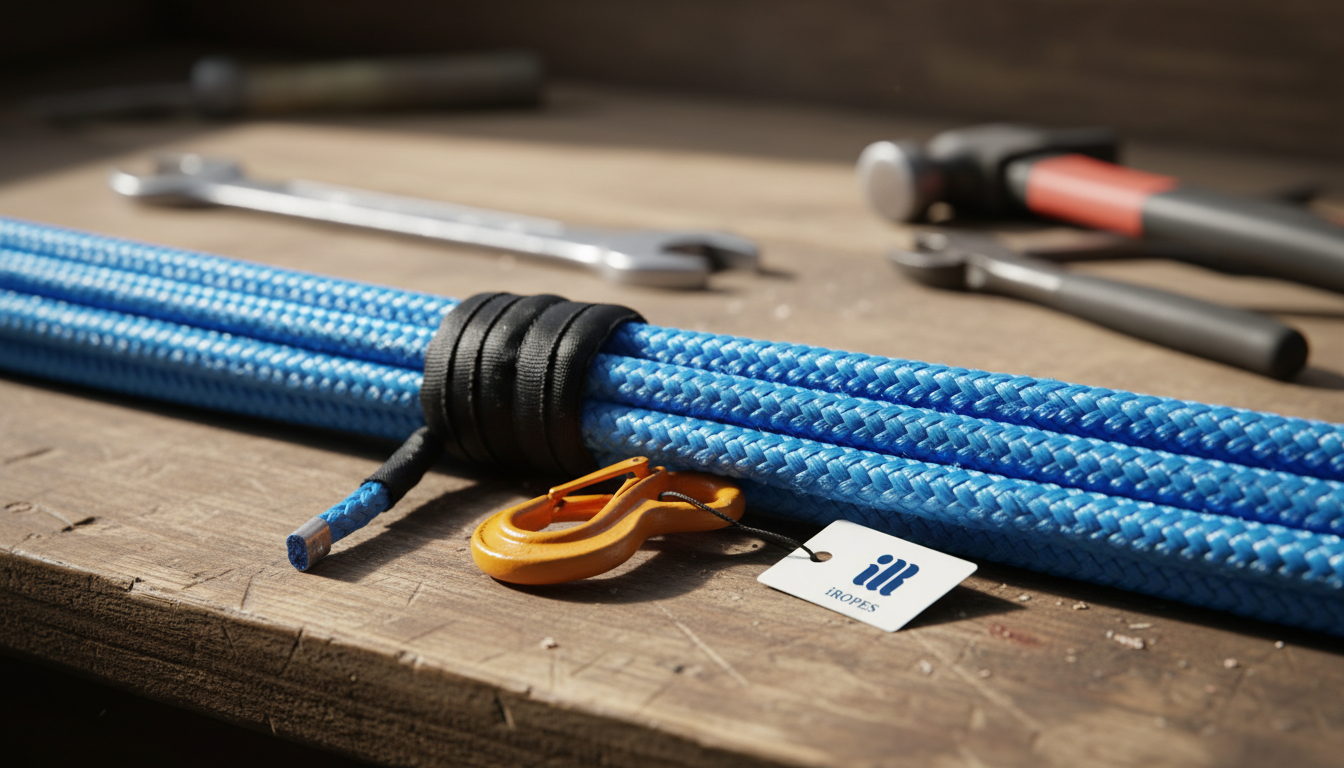
The heart of Amsteel‑Blue is high‑modulus polyethylene (HMPE), commonly known as Dyneema SK‑78. This fibre family delivers exceptional tensile properties, producing a rope that carries heavy loads yet remains remarkably light. The line is braided into a 12‑strand, torque‑free single braid that resists twisting under load — a crucial trait for winch and mooring applications.
“Amsteel‑Blue offers the highest strength‑to‑weight ratio of any synthetic rope on the market – size‑for‑size it matches steel, yet it’s 1/7th the weight.” – Samson Rope Engineering Lead
Key performance metrics that matter to engineers and riggers alike are summarised below.
- Strength‑to‑weight ratio – up to 30 % better than standard Amsteel, so a 1/4 in rope rivals steel cable while weighing roughly one‑seventh as much.
- Very low stretch – minimal elongation under load helps maintain precise control for winch and rigging tasks.
- Floatability – a specific gravity near 0.98 allows the rope to float, improving safety for marine work.
When people ask “How much weight can Amsteel rope hold?”, the answer starts with size. A 1/8 in (3.2 mm) line delivers an average breaking strength of 2 500 lb (≈ 1 134 kg). Step up to 1/4 in (6.4 mm) and the average breaking strength is 8 600 lb (≈ 3 900 kg). For heavy‑duty offshore work, a 3/8 in (9.5 mm) rope reaches 19 600 lb (≈ 8 890 kg) before failure. These figures come directly from Samson’s specification sheet and provide a reliable baseline for any design calculation.
iRopes leverages more than a decade and a half of synthetic‑fibre expertise to keep performance consistent from coil to customer. Our ISO 9001‑certified quality system covers every batch, and we can provide third‑party tensile test certificates on request to validate the amsteel blue strength you specify.
With the fibre, braid, and core benefits clear, the next step is converting breaking loads into safe working limits using appropriate safety factors.
Detailed amsteel blue strength data – specs, breaking loads, and safety factors
With composition and construction covered, it’s time to translate raw numbers into design‑ready data. Below, we outline amsteel blue strength by size so you can copy figures straight into your calculations.

| Diameter (in) | Weight /100 ft (lb) | Avg Breaking Strength (lb) | Min Breaking Strength (lb) |
|---|---|---|---|
| 7/64 (2.5 mm) | 0.30 | 1 600 | 1 460 |
| 3/16 (4.8 mm) | 0.85 | 5 400 | 4 950 |
| 5/16 (7.9 mm) | 1.90 | 13 700 | 12 500 |
| 1/2 (12.7 mm) | 4.70 | 34 000 | 31 200 |
The metric equivalents mirror the same values, expressed in kilograms and metres, allowing seamless integration into international project files.
Working load limits made simple
Safety‑factor conventions are straightforward: divide the breaking strength by the chosen factor. A 1/10 factor is typical for personal fall protection, while a 1/4 factor suits many static loads such as winch lines.
For a 3/16 in rope with an average breaking strength of 5 400 lb, the calculations are:
- WLL (1/10) = 5 400 ÷ 10 ≈ 540 lb
- WLL (1/4) = 5 400 ÷ 4 ≈ 1 350 lb
Using a 5/16 in rope (13 700 lb average break) yields safe limits of 1 370 lb (1/10) and 3 425 lb (1/4). Consequently, you get a clear safety envelope without reaching for a calculator.
Amsteel vs Amsteel Blue
Amsteel employs Dyneema SK‑60 fibres, whereas Amsteel‑Blue upgrades to Dyneema SK‑78. The newer grade lifts the strength‑to‑weight ratio by up to 30 %, delivering higher break points while keeping the rope light enough to float.
Quick reference for spec sheets
- Imperial specification table – copy‑and‑paste rows directly into engineering documents.
- Metric specification table – ready‑made for international standards.
- Working‑load‑limit matrix – includes both 1/10 and 1/4 safety‑factor columns.
All tables are available for download as a single PDF, ensuring the exact numbers you need are always at hand when drafting project specifications or performing load‑bearing calculations.
With these numbers in place, the next section benchmarks Amsteel‑Blue against other high‑performance ropes, helping you pinpoint ideal applications by diameter and safety factor.
Amsteel‑Blue vs competitors and real‑world applications
Now that the breaking loads are clear, it’s useful to see how Amsteel‑Blue compares to other high‑performance lines and where it shines in daily use.
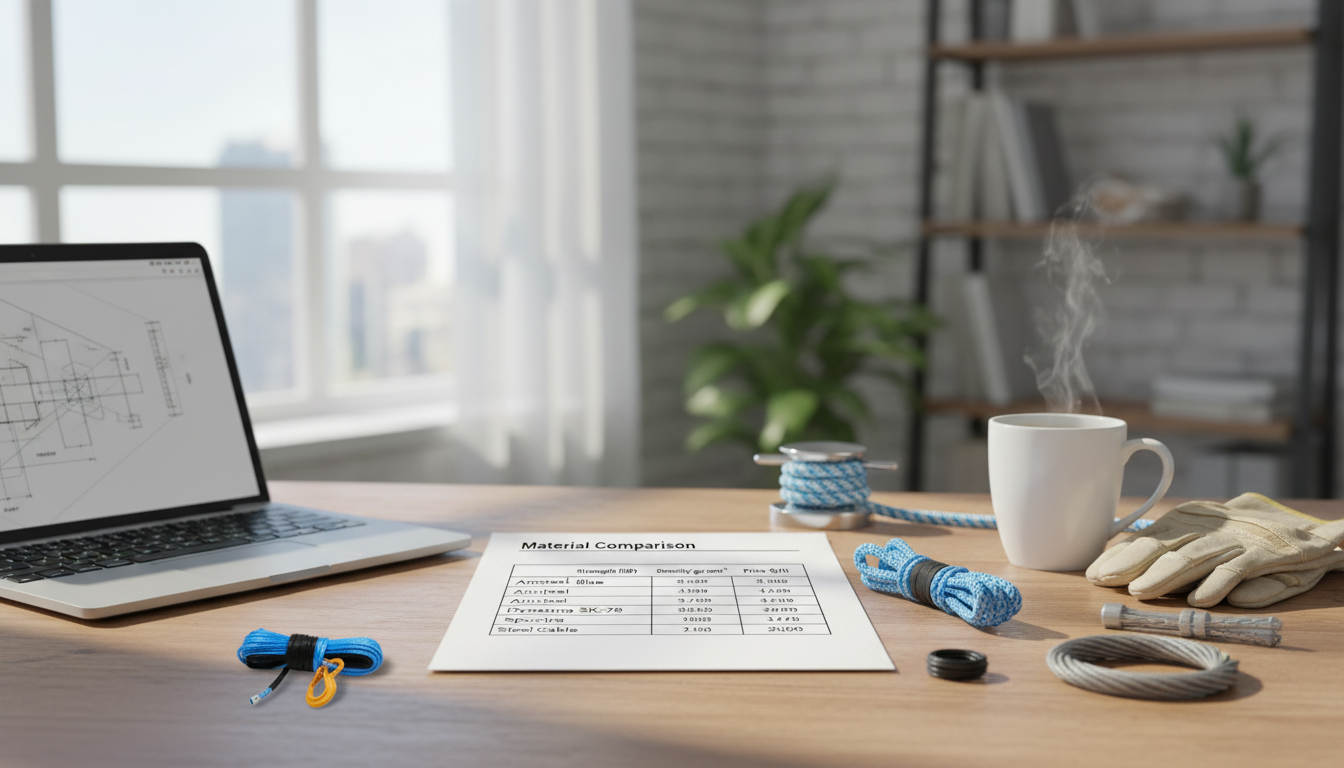
In a side‑by‑side view, Amsteel‑Blue outranks standard Amsteel thanks to its Dyneema SK‑78 fibres, and it beats Spectra and most steel cables on strength‑to‑weight. Pricing typically sits between premium HMPE options and economical steel solutions, giving engineers a balanced choice for performance and cost.
| Rope type | Relative strength | Specific gravity | Typical price (USD/ft) |
|---|---|---|---|
| Amsteel‑Blue | ≈ 1.0 × baseline (high‑grade HMPE) | 0.98 – floats | Varies by diameter |
| Standard Amsteel | ≈ 0.7 × baseline | 0.98 | Varies by diameter |
| Dyneema SK‑78 (generic) | ≈ 1.1 × baseline | 0.96 | Varies by diameter |
| Spectra | ≈ 0.9 × baseline | 0.97 | Varies by diameter |
| Steel cable | ≈ 0.6 × baseline | 7.85 – does not float | Varies by diameter |
Retail prices typically range from $0.25–$4.85 per foot depending on diameter and colour options; see the price grid for current bands.
- Torque‑free design – eliminates twist under load, ideal for winch applications.
- Floatability – specific gravity below 1 means the rope stays on the surface, a safety win for offshore mooring.
- UV resistance – Samthane coating protects colour and strength in harsh sunlight.
Can Amsteel‑Blue be used for marine mooring? Yes — it meets ABS‑MEG4 testing requirements and floats, making it suitable for offshore mooring lines and related duties.
Application snapshots
Marine winch lines – The torque‑free braid delivers smooth spooling on high‑torque winches, while the low stretch maintains precise tension control. For those seeking optimal performance, see our best rope for boat winch and mooring solutions guide.
Offshore mooring – Floatability and MEG4 compliance make the rope a reliable substitute for heavy steel wire rope in many setups, reducing deck load.
Rigging and industrial lifts – High tensile strength combined with low weight reduces crane inertia and can improve cycle times.
Rescue and racing sports – Low elongation provides accurate load feedback, crucial for life‑saving systems and competitive sailing rigs.
Key takeaway
Because Amsteel‑Blue blends high‑grade HMPE, a torque‑free braid, and floatability, it consistently outperforms standard synthetic ropes on strength‑to‑weight while remaining cost‑effective for demanding marine and industrial projects.
With a clear picture of how Amsteel‑Blue compares, the next step is exploring iRopes’ custom OEM solutions that let you fine‑tune colour, branding, and accessories for these real‑world scenarios.
iRopes custom OEM solutions, pricing, and purchasing guide
Building on the performance data, iRopes turns raw strength into a fully branded product. With a dedicated OEM/ODM line, customers can dictate every detail — from HMPE grade and diameter to labelling and packaging — while our ISO 9001‑certified quality system ensures the rope you receive matches the approved specification.

Clients can select the exact material grade, request bespoke colours, add high‑visibility reflective elements, and include logos or product codes on tags, labels, or packaging. Throughout the process, iRopes protects your intellectual property and keeps proprietary designs confidential. We also offer non‑branded or customer‑branded packaging (bags, colour boxes, or cartons) and can ship pallets directly to your location worldwide.
Colour
Choose any shade from our palette or provide a Pantone match; colour does not affect strength.
IP
Full intellectual‑property safeguards keep your designs confidential throughout production.
Lead‑time
Most standard orders ship within two weeks; larger custom projects may require several weeks depending on configuration.
Discounts
Tiered pricing rewards larger volumes — contact us for current bands and project‑specific quotes.
When prospective buyers ask “What are the price ranges for Amsteel‑Blue rope?”, the answer is straightforward: retail prices typically run $0.25–$4.85 per foot depending on diameter and colour, with bulk discounts available. Our downloadable price grid lists current tiers alongside safety‑factor‑adjusted working‑load‑limit tables, so engineers can copy the numbers directly into their specifications.
Ready to see a full spec sheet, request a tailored quotation, or speak with a sales specialist? Download the PDF below, fill in your project details, and our team will respond with a personalised proposal and lead‑time estimate.
Need a tailored Amsteel‑Blue solution? Get expert help below
You've seen how the HMPE core and torque‑free braid deliver the amsteel blue rope strength you need, and the detailed tables turn that into practical working‑load limits, safety factors, and clear advantages over competing lines. With iRopes’ 15 years of experience in China, a wide range of 2 348 cordage types, and capabilities across UHMWPE, Technora™, Kevlar™, Vectran™, polyamide, and polyester, we can convert amsteel blue strength data into a fully customised, ISO‑9001‑certified product that meets your marine and mooring rope material requirements.
If you’d like a personalised recommendation — whether you need specific diameters, colour options, reflective strips, or bulk pricing — simply fill out the enquiry form above and our specialists will craft a solution tailored to your project.