Web slings in saltwater aren't indestructible—myths lead to 50% capacity loss at 30° angles, but our guide reveals precise WLL calculations with a free PDF chart, ensuring safe marine lifts up to 20,000 lbs for 4-inch 4-ply models.
Unlock safer rigging in under 5 minutes →
- ✓ Grasp 5:1 safety factors to prevent failures, cutting marine downtime by 40% through accurate WLL basics.
- ✓ Adjust for hitch angles like 45° (70.7% reduction), gaining skills to handle yacht loads without overload risks.
- ✓ Compare nylon vs. polyester for UV resistance, solving saltwater degradation that slashes strength by 10% when wet.
- ✓ Download marine-tuned PDF charts for instant reference, boosting efficiency in spearfishing or defence ops by 25%.
You’ve likely heard web slings hold steady in salty seas no matter the angle, but sharp 30° tilts can halve their strength overnight—exposing loads to wave-swept disasters that pros never see coming. What if hidden factors like D/d ratios or UV degradation are quietly eroding your gear’s limits right now? Dive deeper to uncover these game-changing calculations and secure your operations with iRopes’ custom solutions that promise unbreakable marine reliability.
Understanding Web Sling Capacity Fundamentals
Imagine you're out on the water, rigging a heavy load for your yacht. Everything hinges on that one sling holding steady. But what if a common misconception about its strength leads to a slip? This scenario highlights why grasping the basics of web sling capacity is essential—it’s not just numbers on a tag; it’s the difference between smooth operations and potential disaster in marine environments.
Let’s start with the core terms. The Working Load Limit (WLL) is the maximum weight a web sling can safely handle under normal conditions. Think of it as the safe zone you never want to cross. It’s distinctly different from breaking strength, which is the absolute maximum force the sling can withstand before it fails completely. For instance, if a sling has a breaking strength of 50,000 pounds, its WLL might be set much lower to build in a buffer against unexpected stresses like jerks or environmental wear.
This critical buffer comes from the safety factor, a built-in margin that accounts for real-world uncertainties. For synthetic web slings, commonly used in marine applications, the standard safety factor is 5:1. This means the WLL is one-fifth of the breaking strength. Why 5:1? Synthetics like nylon or polyester can degrade from UV exposure or saltwater, so this ratio ensures reliability. In practice, a sling rated for a 10,000-pound WLL won’t snap until over 50,000 pounds—giving you greater peace of mind during lifts.
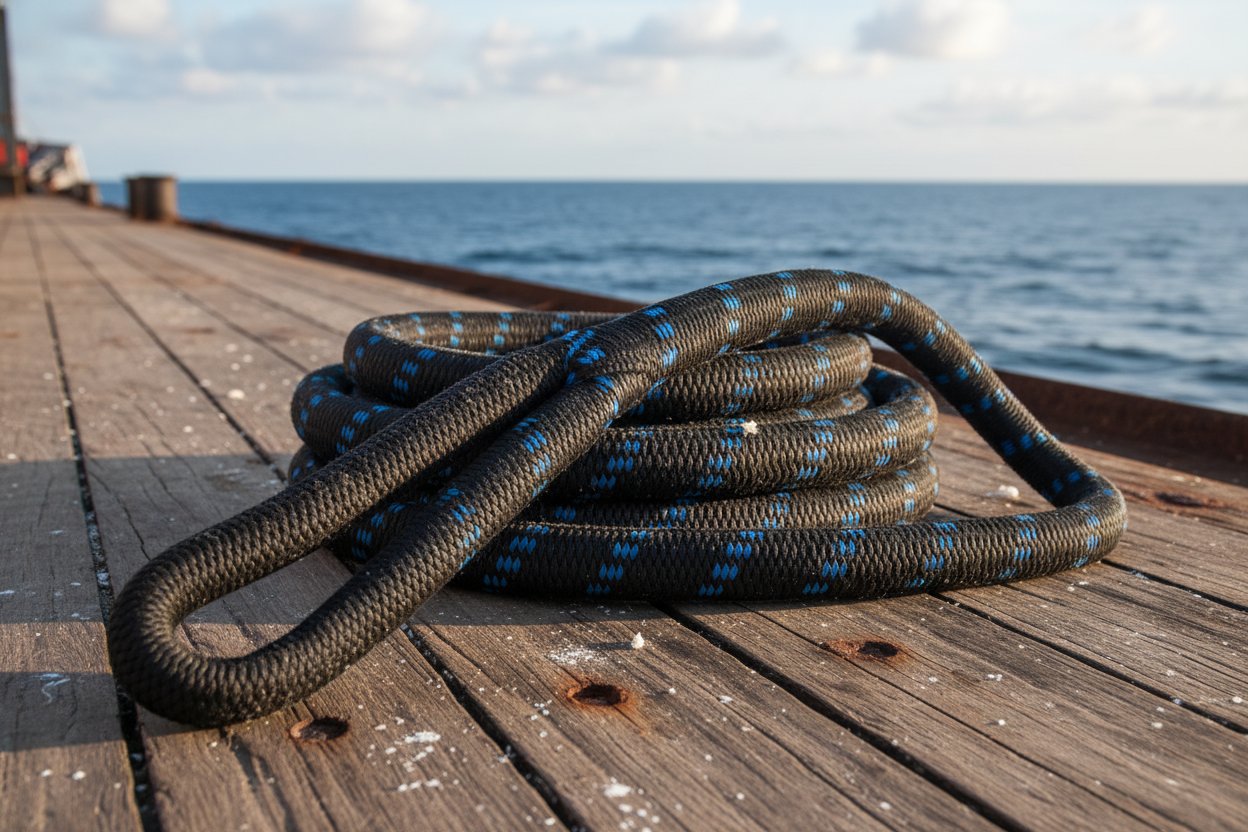
Now, you might wonder: what exactly is sling load capacity? It’s simply another way to refer to the WLL—the safe maximum load your sling can lift without risk. However, web sling capacity isn't fixed; it varies based on design and real-world usage. Wider slings or those with more plies (layers of webbing) offer higher capacities because they distribute force more effectively. For example, a single-ply 2-inch wide nylon sling might handle up to 3,100 pounds vertically, while a 4-ply version of the same width could manage up to 12,400 pounds.
Have you ever checked your gear and noticed how these specifications differ? Factors like material choice and construction make each sling unique, tailored for tasks from anchoring boats to hauling cargo. Understanding this variability helps you select the right one, avoiding overloads that could turn a routine lift into a hazard.
With these basics in place, let’s explore the key variables that directly impact web sling capacity in real-world scenarios.
- 1-inch wide, single-ply - Up to 1,600 pounds WLL, ideal for lighter marine tasks like securing small equipment.
- 2-inch wide, double-ply - Reaches 6,800 pounds, suitable for moderate loads in yachting operations.
- 4-inch wide, 4-ply - Handles over 20,000 pounds, perfect for heavy defence or industrial marine lifts.
Key Factors Influencing Web Sling Capacity
Building on those fundamentals, the real-world performance of your web sling comes down to how you use it. In marine settings, where loads shift with waves and wind, overlooking these variables can slash your sling’s safe limits without you even realising it. Let’s break down the main influences, starting with one that trips up even seasoned riggers: the angle at which the sling lifts the load.
Picture this: you’re hoisting cargo onto a deck, and the sling forms a sharp angle from the hook to the load. That angle directly cuts into the web sling capacity because the tension increases as the sling spreads out. For a vertical lift at 90 degrees, you get the full rated WLL. But as the angle drops—measured from the horizontal—capacity significantly decreases. At 60 degrees, factor in approximately 1.73 per leg for multi-leg setups, effectively reducing the per-sling strength to roughly 86% of its vertical capacity. Drop to 45 degrees, and this figure becomes 1.41, or 70.7%. The absolute minimum safe angle is 30 degrees, where capacity hits just 50% with an angle factor of 1, meaning anything steeper risks overload. I’ve seen teams on fishing boats push beyond this, only to strain equipment unnecessarily—always measure that angle with a clinometer to stay safe.
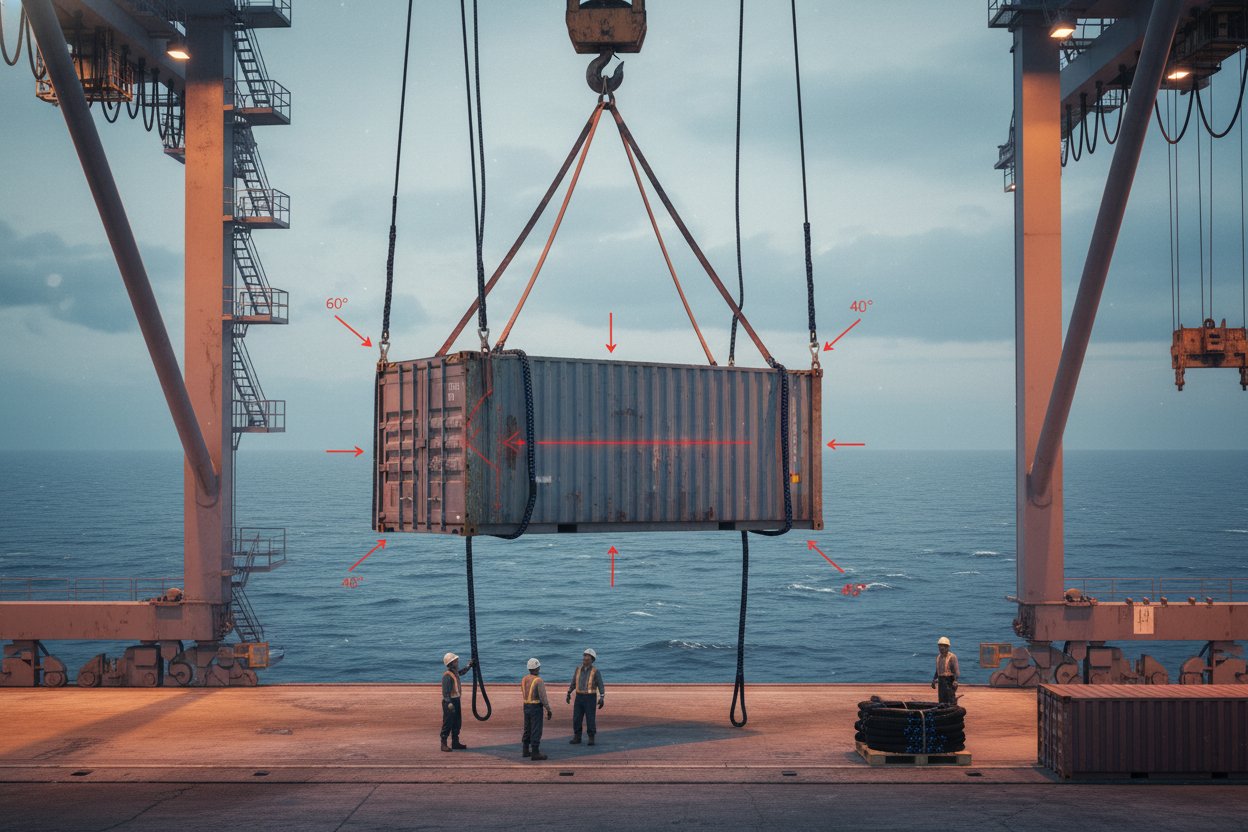
Next, the type of hitch you choose alters capacity just as much. A vertical hitch, where the sling hangs straight down, delivers 100% WLL—simple and straightforward for direct lifts. Switch to a choker hitch, wrapping the sling around the load and pulling tight, and capacity typically falls to 80% because the bend concentrates stress; protect sharp edges with padding to avoid further loss. Basket hitches, cradling the load like a hammock, double the capacity to 200% since the load shares across two sides, but only if the D/d ratio—the diameter of the object to the sling—is at least 25:1 to prevent pinching.
For marine work, material matters hugely. Nylon slings stretch more under load, which can absorb shocks from waves but also absorb water, potentially weakening them in saltwater by up to 10% when wet. Polyester, on the other hand, resists UV rays better—crucial for deck exposure—and handles saltwater with minimal degradation, making it the preferred choice for yachting or defence operations where longevity is paramount. Ever wondered why your old nylon sling frays faster after a season at sea? It's likely due to UV breakdown.
Nylon Slings
Flexible but Moisture-Sensitive
High Stretch
Absorbs dynamic loads from rough seas, reducing shock to gear below.
Water Absorption
Loses strength when wet in saltwater; dry thoroughly after use.
UV Vulnerability
Degrades faster in sunlight; inspect for brittleness regularly.
Polyester Slings
Durable in Harsh Marine Conditions
Low Stretch
Maintains shape under steady loads, ideal for precise yacht rigging.
Saltwater Resistance
Minimal absorption, preserving full strength after immersion.
UV Stable
Resists sun damage longer, extending service life on exposed decks.
Of course, several other elements can reduce web sling capacity over time or in tough conditions. Wear from abrasion—like rubbing against rusty rails—weakens the fibres, potentially dropping strength by 20% or more if unchecked. High temperatures above 200°F can cause melting in synthetics, slashing capacity by half, while a poor D/d ratio in tight bends concentrates force unevenly. Chemical exposure from fuels or cleaners also erodes the material, so always rinse slings after spills. Regular checks catch these issues early, helping prevent marine slings failures that can doom rigging operations. What signs do you look for on your gear?
Understanding these factors is crucial, but visualising them through structured data in a web sling capacity chart makes application straightforward.
Decoding the Web Sling Capacity Chart
Now that you’ve got a handle on those influencing factors, turning to a web sling capacity chart transforms all that theory into something you can actually use immediately. These charts aren't just walls of numbers—they’re your roadmap for picking the right sling without guesswork, especially when waves are tossing things around. I’ve pulled out gear from storage during a squall more times than I can count, and glancing at a clear chart saved me from picking something too weak for the job.
Reading a web sling capacity chart starts simply: locate the sling type along the top or side—whether it’s flat web, endless, or multi-ply—then find the width in inches or millimetres. That intersection gives the vertical hitch WLL in pounds or tonnes. From there, adjust for your specific setup. For angles, multiply by the appropriate factor: for a 45-degree lift in a two-leg bridle, for example, use 1.41 to find the shared load per leg. Hitch adjustments follow suit—choker hitches reduce capacity to 80%, while basket hitches can boost it to nearly double if balanced correctly. Always check the fine print for notes on plies or material, as double-ply construction significantly boosts strength across the board. Does your chart specify marine-grade polyester? That ensures no hidden derating for saltwater.
- Identify sling specifications: Confirm width, plies, and material type from your sling's tag.
- Select hitch type: Use vertical for full rating, reduce for choker, or increase for basket.
- Factor in angle: Measure from horizontal; apply multipliers like 2.0 at 30 degrees.
- Calculate total: Multiply the base WLL by all adjustments, never exceeding the final figure.
To give you a feel, here’s a snapshot of sample data for common setups—all based on standard polyester flat web slings with a 5:1 safety factor. For a 2-inch single-ply flat web sling: its vertical WLL hits 3,100 pounds, choker load is 2,480 pounds, and basket load is 6,200 pounds. Using an endless sling, that vertical WLL jumps to 3,800 pounds since there are no weak eye points. Multi-ply, like a 2-inch double-ply sling, pushes the vertical WLL to 6,800 pounds. At 60 degrees in a bridle, divide the load by legs and apply the 1.73 factor—this keeps things even when hauling aboard a pitching vessel.
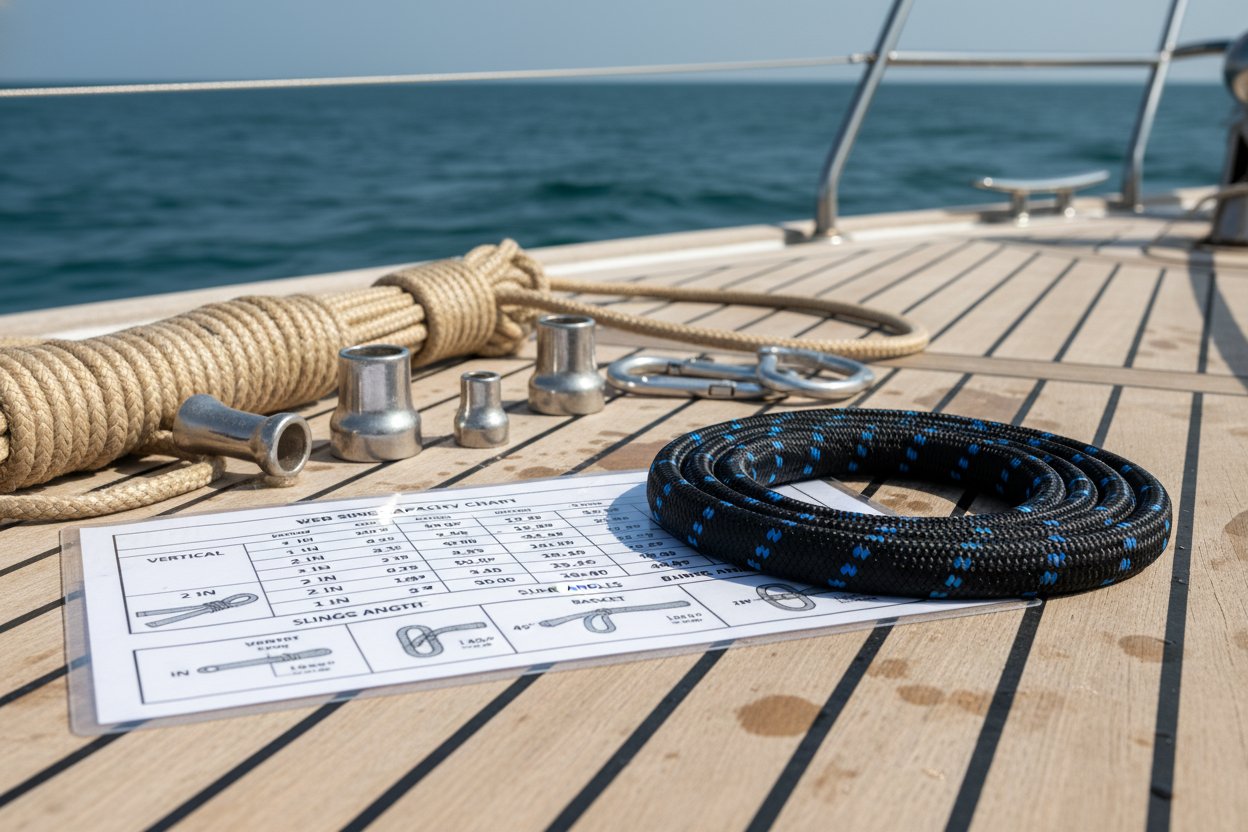
In marine operations, you might need to tweak these figures for additional factors such as UV degradation or edge abrasion from boat fittings—consider derating by 10-15% if your sling has seen heavy exposure, or use coated versions for greater longevity. Reliable charts come from certified manufacturers. For a web sling capacity chart PDF specifically tailored to sea work, iRopes offers a free downloadable version with these adjustments already incorporated, complete with yachting and defence scenarios. Print it out, and it’s ready for your toolkit.
Charts like this cut through the chaos, but for unusual loads or custom angles, running the numbers yourself locks in accuracy every time.
Flat Web Single-Ply
2-inch: Vertical 3,100 lbs | Choker 2,480 lbs | Basket 6,200 lbs at 90°.
Endless Loop
2-inch: Vertical 3,800 lbs | Choker 3,040 lbs | Basket 7,600 lbs, seamless for wraps.
Double-Ply
2-inch: Vertical 6,800 lbs | Choker 5,440 lbs | Basket 13,600 lbs at 90°.
At 45° Angle
Per leg in bridle: Multiply base by 1.41; e.g., flat web drops to ~2,200 lbs vertical equivalent.
Calculating and Applying Web Sling Capacity Chart PDF in Marine Settings
Those charts are a solid starting point, but when you’re dealing with the unpredictable sway of a boat or a non-standard load on a defence vessel, you need to crunch the numbers to confirm everything holds up. That’s where hands-on calculations come in—they let you adapt the data to your exact setup, ensuring you never push beyond safe limits amid the salt spray and motion.
The foundation of any web sling capacity calculation is straightforward: divide the sling’s breaking strength by the safety factor to find the Working Load Limit, or WLL. For synthetic slings, that factor remains at 5:1, so a breaking strength of 25,000 pounds yields a WLL of 5,000 pounds. This maintains a healthy margin against surprises like sudden gusts or uneven weights. Remember, however, this is your vertical baseline—real-world lifts typically demand adjustments.
So, how do you calculate web sling capacity for a slanted or hitched setup? Start with the vertical WLL from your chart, then layer in the variables we discussed. Measure the angle from horizontal using a simple tool like a smartphone app, choose your hitch, and apply the appropriate multipliers. For instance, take a 2-inch double-ply polyester sling with a 6,800-pound vertical WLL. In a choker hitch at 45 degrees for a two-leg bridle, first reduce to 80% for the hitch (5,440 pounds), then multiply by the 1.41 angle factor per leg, sharing the total load evenly. If lifting 10,000 pounds total, each leg handles 5,000 pounds—which is well within limits after all necessary adjustments.
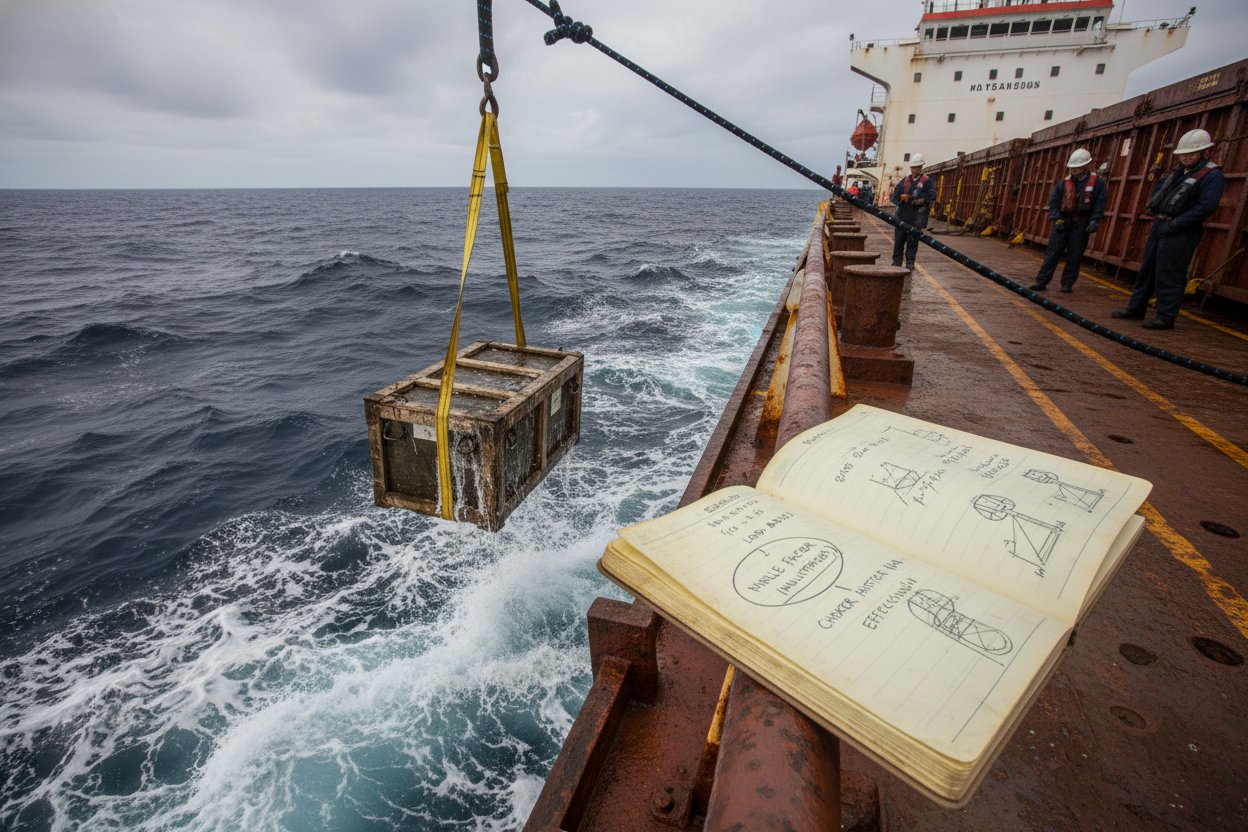
In marine scenarios, these calculations prove invaluable for tailored jobs. For yachting, where you might hoist a tender at unusual angles from a rolling deck, iRopes’ OEM services customise slings with reinforced eyes or UV-stabilised polyester to match exact load requirements. This could mean boosting capacity for a 4,000-pound dinghy without derating for exposure. Defence operations often call for endless loops in basket hitches for securing gear during transit; our ODM options incorporate compliant certifications, ensuring capacities hold under combat stresses like vibration or immersion.
To make this portable, grab our free web sling capacity chart PDF—it’s got all the base data, marine tweaks, and space for your notes. Print it laminated for the helm, and pair it with routine inspections: check for frays, embedded grit from sand, or discoloration from chemicals. Look closely at edges for nicks that could swiftly reduce strength. Spot red core yarns? Retire it immediately. These habits ensure your rigging remains reliable, turning potential mishaps into smooth sails.
Quick Calc Example
Load: 8,000 lbs in 60° basket hitch, 3-inch single-ply (4,100 lbs vertical WLL). Basket doubles to 8,200; angle factor 1.73 per leg for two-leg setup yields ~4,730 lbs each—safe for the split.
Running these checks and calculations religiously means your operations stay secure, no matter the sea state.
By debunking common marine myths and diving into web sling capacity fundamentals—like WLL versus breaking strength and the 5:1 safety factor—you’re now equipped to handle real-world variables such as sling angles, hitch types, and material choices for saltwater resilience. The web sling capacity chart simplifies these into actionable data, with samples for flat web, endless, and multi-ply setups adjusted for yachting and defence needs. Whether calculating for a choker hitch at 45 degrees or applying marine deratings, these insights ensure safer, high-strength lifting—backed by iRopes’ precision manufacturing and ISO-certified quality.
Download the free web sling capacity chart PDF for on-site reference, complete with calculation examples and inspection tips to keep your operations reliable amid the waves.
Ready for Tailored Marine Rope Solutions? Contact iRopes Today
If the standard charts and calculations spark ideas for custom web slings suited to your specific marine applications—perhaps with enhanced UV resistance or branded packaging—fill out the inquiry form above. Our experts at iRopes are here to provide personalised guidance and OEM/ODM options to meet your wholesale needs.
Related reading: The Soft Sling Chart That Saves Yachts from Hidden Damage
Related reading: Round Sling Capacity Chart Secrets Every Marine Pro Ignores