⚠️ Shocking truth: Double braid ropes, engineered for marine toughness with breaking strengths up to 7,300 pounds at half-inch diameter, secretly lose 20-50% of their power when knotted—turning a secure line into a potential disaster at sea.
In 7 minutes, you'll master rope reliability:
- ✓ Decode breaking strength vs. WLL metrics to select ropes that handle 5:1 safety factors in real waves.
- ✓ Compare single vs. double braid constructions, revealing why splicing retains 90% strength over knots.
- ✓ Unpack nylon's 25-30% elasticity for shock absorption, plus wet-condition losses up to 15%.
- ✓ Explore iRopes' custom solutions that optimise marine performance and cut knot vulnerabilities.
You trust double braid for its torque-free handling and armoured jacket, yet most sailors overlook how a simple knot crushes fibres, slashing core strength by half just when swells hit hardest. What if your next tie-up hid a ticking failure? This guide exposes the hidden mechanics behind that betrayal, from anatomy dissections to material myths, arming you with data-driven fixes and iRopes tweaks to reclaim full power on the water.
Braided Rope Strength: Key Terms and Metrics
In the demanding world of marine environments, grasping the basics of braided rope strength isn't just technical jargon—it's what keeps your vessel secure during a sudden storm. Building on the vital role ropes play at sea, where failure isn't an option, let's break down the essential terms that define how well a rope holds up. These metrics help you choose wisely, ensuring your gear matches the job's rigours.
Breaking Strength and Working Load Limit (WLL) Explained
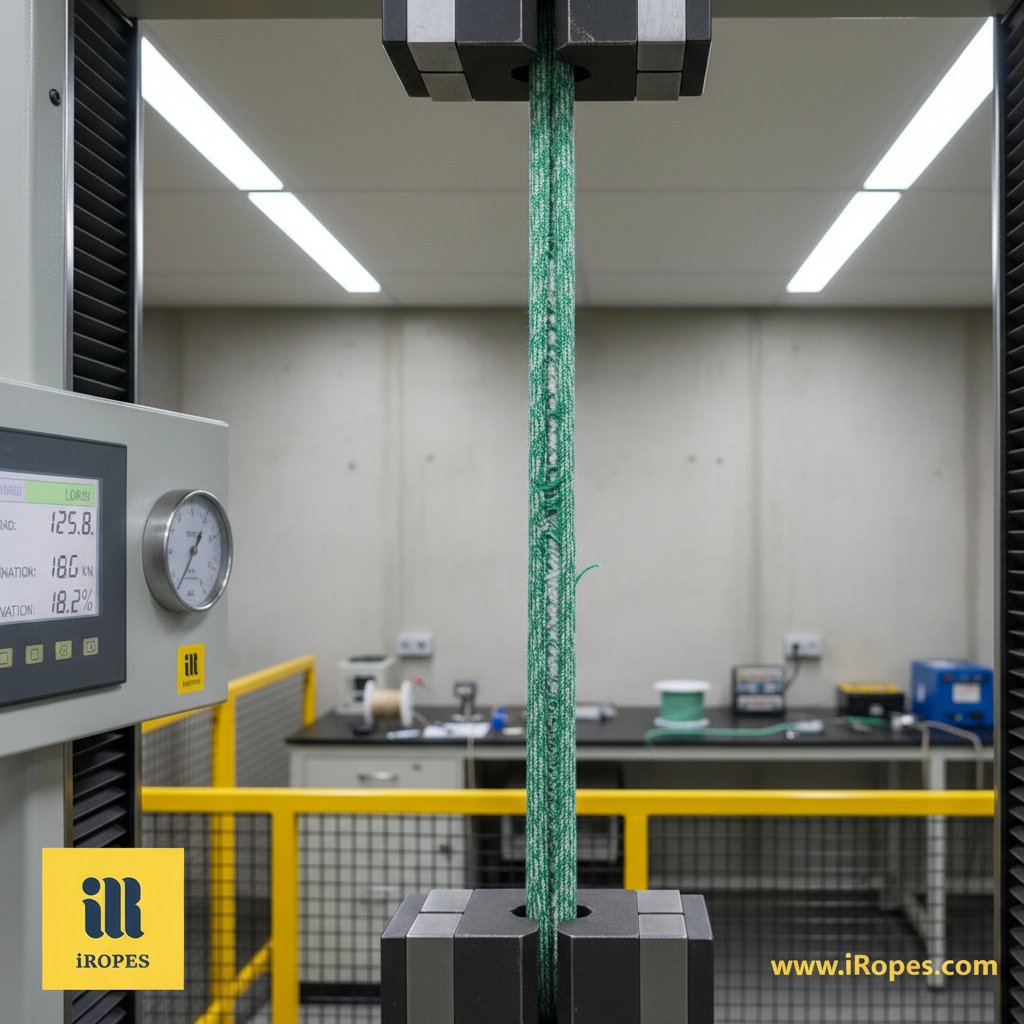
Breaking strength, often called tensile strength, represents the maximum force a rope can withstand before it snaps. For braided rope strength, this is tested in controlled lab conditions, pulling the rope until failure. Think of it as the rope's ultimate limit—say, 7,000 pounds for a half-inch nylon braid—but you should never push it there in practice.
That's where the working load limit, or WLL, comes in. It's a safer benchmark, typically one-fifth of the breaking strength, following a 5:1 safety factor common in marine settings. So, if your rope's breaking strength hits 7,000 pounds, the WLL might be around 1,400 pounds. This cushion accounts for dynamic loads like waves crashing against a boat. Ever wondered why seasoned professionals never load a rope to its maximum capacity? It's because real-world variables like sudden jerks can exceed expectations, turning a strong rope into a liability without that critical buffer.
Elongation, Elasticity, and Safety Factors in Marine Applications
Elongation measures how much a rope stretches under load, expressed as a percentage. In marine applications, this ties directly to elasticity—the rope's ability to absorb shocks from choppy waters. Nylon braids, for instance, elongate up to 30% before breaking, acting like a spring to dampen impacts on dock lines or anchors. Polyester, by contrast, stretches less than 15%, offering stability for steady holds but less forgiveness in rough seas.
Safety factors build on these traits, adjusting the WLL for specific risks. For dynamic marine work, like towing, you might use a 10:1 factor to cover unpredictable surges. Imagine hauling a dinghy in a swell: high elasticity prevents snaps, but ignoring the factor could overload the rope catastrophically. These elements ensure your setup isn't just strong but resilient, tailored to the sea's unpredictability.
- Dynamic Loads: Require higher safety factors due to sudden forces in waves.
- Static Holds: Allow standard 5:1 ratios for moored boats under calm conditions.
- Material Match: Pair elastic nylons with shock-prone tasks for optimal performance.
How Test Data Measures Braided Rope Strength Under Load
Test data comes from standardised pulls, like those outlined by the Cordage Institute, where ropes are loaded gradually until they break. For braided constructions, this reveals how interlocked fibres distribute stress evenly, often outperforming twisted ropes by 10-20% in consistent strength. Data logs peak loads, elongation curves, and failure points, helping manufacturers certify products.
In practice, these tests simulate marine stresses but exclude variables like knots, which we'll explore later. By reviewing such data, you can verify a rope's specifications—ensuring, for example, that a double braid's core and cover work in harmony for reliable performance. This foundation lets you compare options confidently, setting the stage for understanding how constructions like double braids influence overall reliability at sea.
Double Braid Rope Strength: Constructions and Comparisons
Now that we've covered the core metrics like breaking strength and elongation, it's clear they form the backbone of any reliable rope choice. However, how those metrics play out depends heavily on the rope's construction. In marine settings, where ropes face constant twisting and pulling, the design can make or break performance. Let's dive into double braid rope strength by comparing it to single braid and unpacking its inner workings, explaining why it's a go-to for tough jobs at sea.
Single Braid vs. Double Braid Performance in Marine Use
Single braid ropes, with their straightforward interwoven strands, offer solid all-around performance but shine in simpler tasks like halyards or sheets where flexibility matters. They are easier to handle on deck but can develop torque—that twisting force that makes them spin under load, potentially complicating manoeuvres during a sail.
Double braid, on the other hand, steps it up for demanding marine work. Its dual-layer design eliminates torque, providing smoother operation and better control when securing lines or towing. In tests, double braids often retain more consistent strength under repeated stress, making them ideal for anchoring in rough conditions. Have you ever dealt with a line that fights back while you're trying to adjust it? Double braid cuts down on that hassle, delivering about 20% better load distribution in dynamic scenarios compared to single braid.
Single Braid
Versatile and Flexible
Easy Handling
Simpler weave suits quick deck tasks without excess bulk.
Moderate Strength
Good for light to medium loads but prone to torque buildup.
Abrasion Basics
Outer layer wears steadily in fair-weather use.
Double Braid
Superior Stability
Torque-Free
Balanced core and cover prevent spinning under tension.
Higher Load Capacity
Distributes force evenly for heavy marine duties.
Enhanced Durability
Jacket shields core from wear in harsh saltwater exposure.
Anatomy of Double Braid: Core and Jacket Contributions to Strength
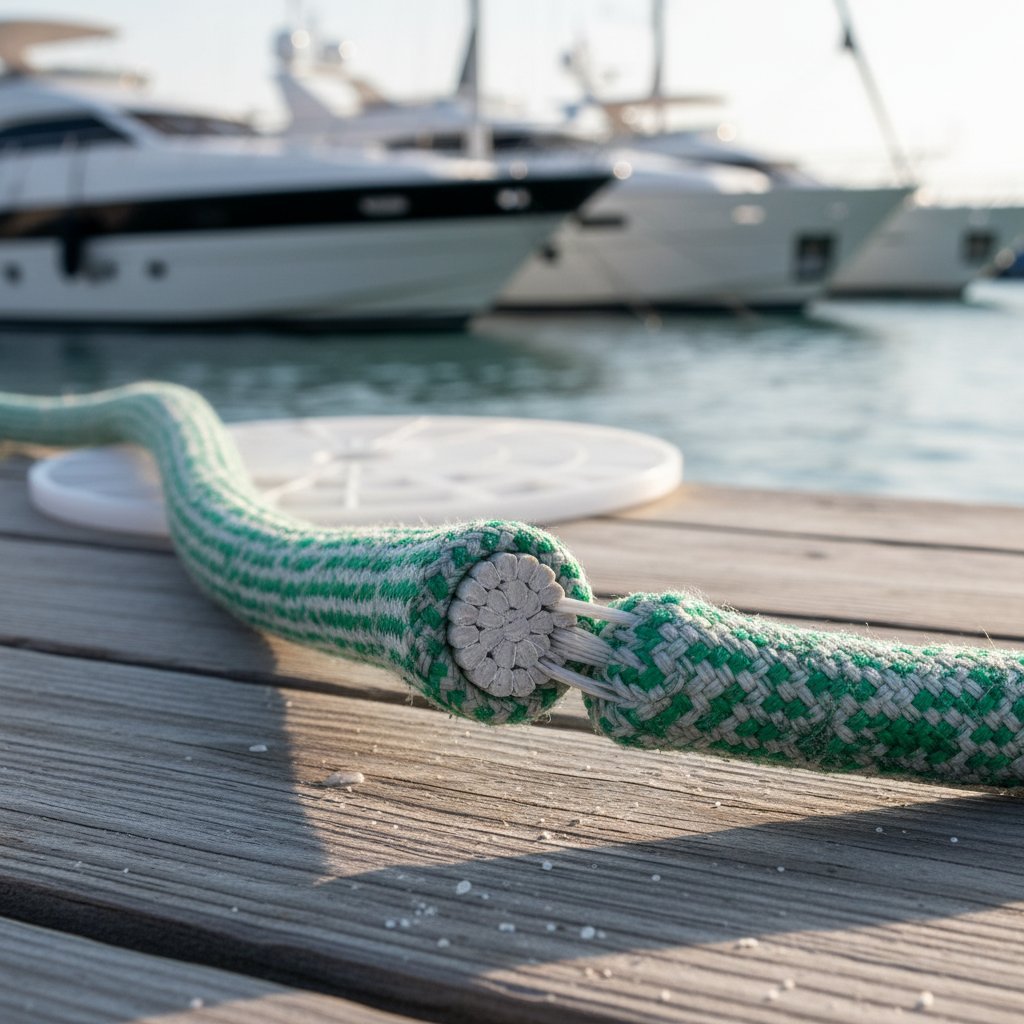
At its heart, double braid rope strength comes from two key parts: the core and the jacket. The core, usually a braided bundle of parallel yarns, carries most of the load—often 50-60% of the total strength. For a half-inch double braided rope, the core might handle around 4,000 pounds on its own, depending on the material, while the jacket adds protection and some extra pull.
The jacket, a tight outer braid, locks everything in place and guards against abrasion from rocky shores or rubbing cleats. Together, they create a rope that's not just strong but balanced. The core provides the muscle, and the jacket provides the armour. This setup ensures the whole holds up better than the sum of its parts, especially when waves add unpredictable strain.
Splice Efficiency and Why It Outperforms Knots for Strength Retention
When it comes to keeping double braid rope strength intact, splicing beats knotting hands down. A well-done splice tucks the core and jacket together seamlessly, retaining up to 90-100% of the rope's original power—far better than knots, which can slash efficiency by 40% or more by crushing fibres. For detailed guidance on mastering splicing 8 plait nylon and polyester ropes, explore techniques that preserve near-full strength.
Splicing involves weaving ends back into the rope, a skill that takes practice but pays off in longevity. For marine professionals, it's essential for loops or eyes that need to endure without weakening. Next, we'll see how choosing the right material, like nylon, can further tune these constructions to handle the sea's demands.
Braided Nylon Rope Strength: Material Properties and Specifications
Building on how double braid's core and jacket team up for reliable performance, the material you choose can make all the difference in tuning that strength to the sea's relentless demands. Nylon stands out in marine settings for its unique blend of power and give, but let's unpack what makes braided nylon rope strength so suited—or sometimes challenging—for wet conditions and heavy loads.
Nylon's Elasticity and Shock Absorption in Wet Marine Conditions
Nylon's real edge lies in its elasticity, which allows the rope to stretch and recover like a tough rubber band under sudden pulls from waves or boat wakes. This shock absorption is crucial when you're docking in choppy waters, where a rigid line might snap but nylon yields up to 25-30% before reaching its limit, spreading out those jarring forces. To unlock the full benefits of nylon rope stretch for high-performance use, consider custom-engineered solutions tailored for marine demands. Yet, in marine environments, water changes the game: nylon can lose 10-15% of its dry strength when soaked, and it might shrink a bit too, tightening lines unexpectedly. That's why checking your setup after a rain or submersion keeps things safe—have you noticed your dock lines feeling shorter after a storm? It's nylon's way of reminding you to inspect. Despite this, its overall resilience makes it a favourite for dynamic tasks like mooring or towing, where forgiveness beats stiffness every time.

Strength Tables for Braided Nylon: Test Data by Diameter
To get a clear picture of braided nylon rope strength, look at lab-tested breaking strengths, which measure the peak load before failure under controlled pulls. These figures come from standards like those from the Cordage Institute and apply to new, dry rope in double braid form. For practical use, always apply a safety factor to find the working load—typically dividing by five for marine risks.
- 3/8-inch diameter: Breaking strength around 4,200 pounds; safe for lighter dock lines handling up to 840 pounds.
- 1/2-inch diameter: Breaking strength about 7,300 pounds; ideal for moderate anchoring with a 1,460-pound working limit.
- 5/8-inch diameter: Breaking strength up to 15,200 pounds; supports heavier towing tasks at 3,040 pounds working load.
These specifications show how thicker diameters scale up capacity. However, remember that wet use or age can trim those numbers, so factor in regular checks for your setup.
Comparison with Polyester and HMPE for Marine Applications, Addressing 'How Strong is Double Braided Nylon Rope?'
Double braided nylon rope is impressively strong, often hitting 7,300 pounds breaking strength at half-inch diameter, thanks to its balanced stretch that suits shock-heavy marine jobs like yacht moorings. But stack it against polyester, which boasts similar raw power—around 8,200 pounds for the same size—but with far less give, under 12% elongation. For in-depth insights, check out the unleashing double braid polyester rope strength secrets to see how it enhances sailing performance. Polyester holds steady in static holds, resisting UV and abrasion better without the wet weakness, making it a sound choice for long-term rigging where consistency trumps bounce.
Then there's HMPE, like Dyneema, the heavyweight champ with over 30,000 pounds breaking strength in comparable builds, ultra-low stretch under 3%, and featherlight weight—think steel-like pull without the bulk. It's perfect for high-stakes defense or industrial lifts, but costs more and needs careful handling to avoid slippage. For many boaters, nylon's everyday toughness wins out, especially when customised for specific wet scenarios. Weighing these options, what fits your next outing: the forgiving stretch of nylon or the unyielding grip of alternatives?
These material traits set the stage, yet even top performers like nylon reveal weaknesses when marine realities like knots come into play, demanding smart choices to preserve that built-in power.
Why Double Braid Rope Loses Strength in Marine Knots
Those material choices we just explored, like nylon's helpful stretch, give double braid its edge in handling sea surges, but they don't tell the whole story when you tie a knot. In the salty grip of marine work, knots can quietly sap a rope's power, turning a reliable line into a weak link just when you need it most. Let's unpack why this happens and how to fight back, starting with the sneaky way knots cut into efficiency.
Knot Efficiency: Up to 50% Strength Reduction and Best Practices
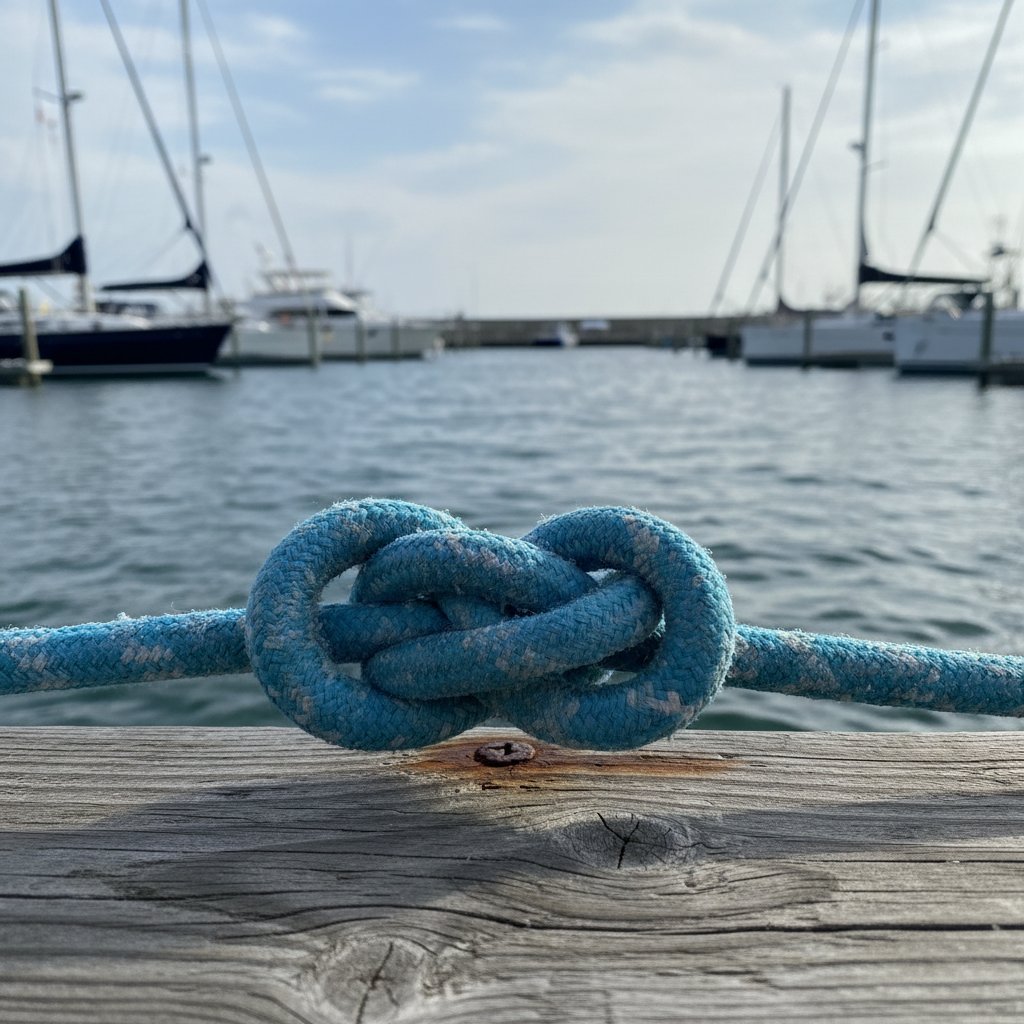
Knot efficiency refers to how much of a rope's original strength survives after you tie it—and for double braids, it's often a sharp drop. Common knots like the bowline or figure-eight can reduce double braid rope strength by 20% to 50%, depending on the tie and material. Why? The bend crushes and misaligns those tightly woven fibres in the core and jacket, creating stress points that fail under load. Imagine cinching a hose too tightly; the flow suffers. In tests following Cordage Institute methods, a straight-pull double braid might hit 7,300 pounds breaking strength at half-inch, but knotted, it could plummet to as low as 3,650 pounds.
To minimise this, opt for knots with higher retention, like the double fisherman's, which holds 70-80% better than bulkier ones. Or better yet, splice instead—tucking ends without the crush preserves nearly full power. Have you ever retied a dock line after a windy night and felt the give? That's your cue to check for wear. Regular practice with these techniques keeps your setup solid.
- Choose low-friction knots to ease fibre stress during pulls.
- Inspect after every use for frays that worsen knot weaknesses.
- Train on splicing for permanent eyes that skip knot risks altogether.
Environmental Factors in Marine Settings: UV, Abrasion, and Wetness Impact
Out on the water, it's not just knots—the elements collectively erode double braid's resilience. UV rays from endless sun break down synthetic fibres over months, dropping strength by 20-30% if left exposed without cover. Abrasion from rubbing against pilings or hulls grinds the jacket, exposing the core to faster failure, while constant wetness soaks in salt that accelerates mildew in nylon builds.
These hits compound: a UV-weakened jacket can't shield as well, letting abrasion bite deeper. Saltwater adds corrosion-like effects, trimming overall capacity by another 10% in prolonged exposure. Picture your anchor rode chafing on a rocky bottom during a tide shift—without checks, that wear turns minor rubs into major threats. Hence, diligent inspection is paramount.
Core Strength Insights and Answering 'What is the Core Strength of a Double Braided Rope?' with Data
The core drives most of a double braid's pull, often accounting for 50-60% of total strength, but its isolation in knots highlights vulnerabilities. For a standard nylon double braid, the core's breaking strength varies by size: around 3,700 pounds for 1/2-inch diameter, rising to 9,100 pounds at 5/8-inch, based on lab pulls that isolate it from the jacket. This inner bundle, made of parallel yarns, handles the bulk of tension but suffers most in tight bends, where fibres shear unevenly.
Data from manufacturers like those adhering to ISO standards confirms this: the core's standalone power drops significantly if the jacket slips during knot stress. Understanding this split helps explain why full-rope tests matter less than how the whole behaves tied up.
iRopes' Custom Solutions for Optimised Marine Rope Performance
At iRopes, we tackle these knot and environmental pitfalls head-on with tailored double braids that boost retention and durability. Our ISO 9001-certified process lets us tweak core yarns for better knot hold or add UV-stabilisers to the jacket, ensuring your marine lines keep 85-95% strength even when tied. For yachting or defense needs, we incorporate abrasion-resistant coatings or precise diameters that match your loads without excess bulk.
Wholesale partners value how we protect designs through the build, delivering spliced-ready ropes direct to their dock. Selecting and caring for these customised ropes keeps your operations smooth and safe, transforming potential weak spots into trusted performers.
Tailored for Tough Waters
Custom double braids from iRopes retain superior strength in knots and harsh conditions, backed by precision engineering for your marine demands.
Understanding braided rope strength is essential for safe marine operations, where metrics like breaking strength, elongation, and safety factors guide reliable choices. Double braid outperforms single braid in torque-free stability and load distribution, with its core handling 50-60% of the power. However, knots can slash double braid rope strength by up to 50% through fibre compression. Splicing retains 90-100% efficiency, making it far superior to knotting. For materials, braided nylon rope strength excels in shock absorption with 25-30% stretch, though wet conditions reduce it by 10-15%. Compare this to polyester's low elongation or HMPE's ultra-high loads. Test data, like 7,300 pounds breaking strength for 1/2-inch nylon, underscores selecting custom solutions to mitigate environmental wear and optimise performance.
Armed with these insights, you're better equipped to select ropes that withstand the sea's demands. For tailored advice on iRopes' ISO 9001-certified marine ropes, including custom designs for your yachting or defense needs, explore personalised options below.
Ready to Customise Your Marine Rope Solution?
If you're seeking expert guidance to match rope specifications to your specific loads and conditions, fill out the inquiry form above—our team at iRopes is here to provide bespoke OEM solutions for enhanced safety and efficiency.
