Polyester marine ropes outlast nylon by up to 3x in UV-exposed saltwater environments—retaining 100% wet strength versus nylon's 20% loss, while limiting stretch to just 10-15% for rock-solid stability. Say goodbye to frequent, costly replacements that compromise your boating safety.
Discover 4 Game-Changing Benefits in ~8 Minutes
- ✓ Cut shock loads by 70% with polyester's low elongation, preventing anchor drift and hull strain during rough seas. This contrasts with nylon's bouncy 40% stretch.
- ✓ Boost longevity by 2-3 seasons through superior UV and abrasion resistance, significantly slashing replacement costs for your mooring lines in harsh marinas.
- ✓ Master custom fits effortlessly via iRopes' OEM options, tailoring diameters and constructions like double braid for your vessel's exact needs and branding.
- ✓ Ensure ISO-certified safety with ropes that hold 7,700+ lbs breaking strength, giving you peace of mind for anchoring in depths up to 200 feet.
You've probably heard nylon's stretch makes it ideal for absorbing wave shocks, yet it quietly unravels under relentless sun and salt. This leaves you with brittle lines that fail when you need them most. What if the real marine hero was a rope that stays taut, unyielding, and virtually indestructible? Dive in to uncover the counter-intuitive science behind polyester's edge. Learn how iRopes customises it to transform your boating reliability forever.
Understanding Polyester Marine Rope
Imagine you're out on the water, the sun beating down, waves lapping against your boat. You need a rope that won't let you down. This is precisely where polyester marine rope excels. Made from high-tenacity polyester fibres, this rope is engineered specifically for the tough demands of boating and sailing. It's not just any cordage; it's a reliable workhorse combining strength and resilience, making it a go-to for serious mariners.
At its core, polyester marine rope stands out for several key properties that set it apart in salty, sun-soaked environments. First off, it boasts high tensile strength, meaning it can handle heavy loads without snapping under pressure. Then there's the minimal stretch—unlike some ropes that elongate like a rubber band, polyester keeps things steady. This is crucial for maintaining control during static loads, such as holding an anchor in place. So, to answer that common question: is polyester rope good for marine use? Absolutely. Its low elongation provides the stability you need in choppy waters, reducing the risk of sudden jerks that could damage your gear or compromise safety. Think of it as a steady hand on the helm when conditions get rough.
- Excellent UV resistance: Polyester shrugs off sunlight degradation that would weaken other materials, keeping your rope reliable season after season.
- Superior abrasion resistance: Rubbing against rocks, cleats, or dock edges? Polyester holds up without fraying quickly, saving you from frequent replacements.
- Soft hand and easy handling: It feels smooth in your grip, making it less likely to cause blisters during long hauls.
Strength is another highlight. Polyester ropes typically offer impressive breaking strength for their weight. For instance, a half-inch diameter might support over 7,000 pounds before failure, adhering to standards from groups like the Cordage Institute. However, it's the construction options that truly enhance performance. Double braid polyester, with its core-and-cover design, delivers balanced strength and flexibility, perfect for smooth handling on deck. On the other hand, 3-strand twisted construction is more straightforward and cost-effective, twisting into itself for a firm grip that's easy to splice if you need to customise lengths or add eyes. These builds not only boost durability but also make the rope less prone to kinking, which can be a real hassle when deploying it quickly.
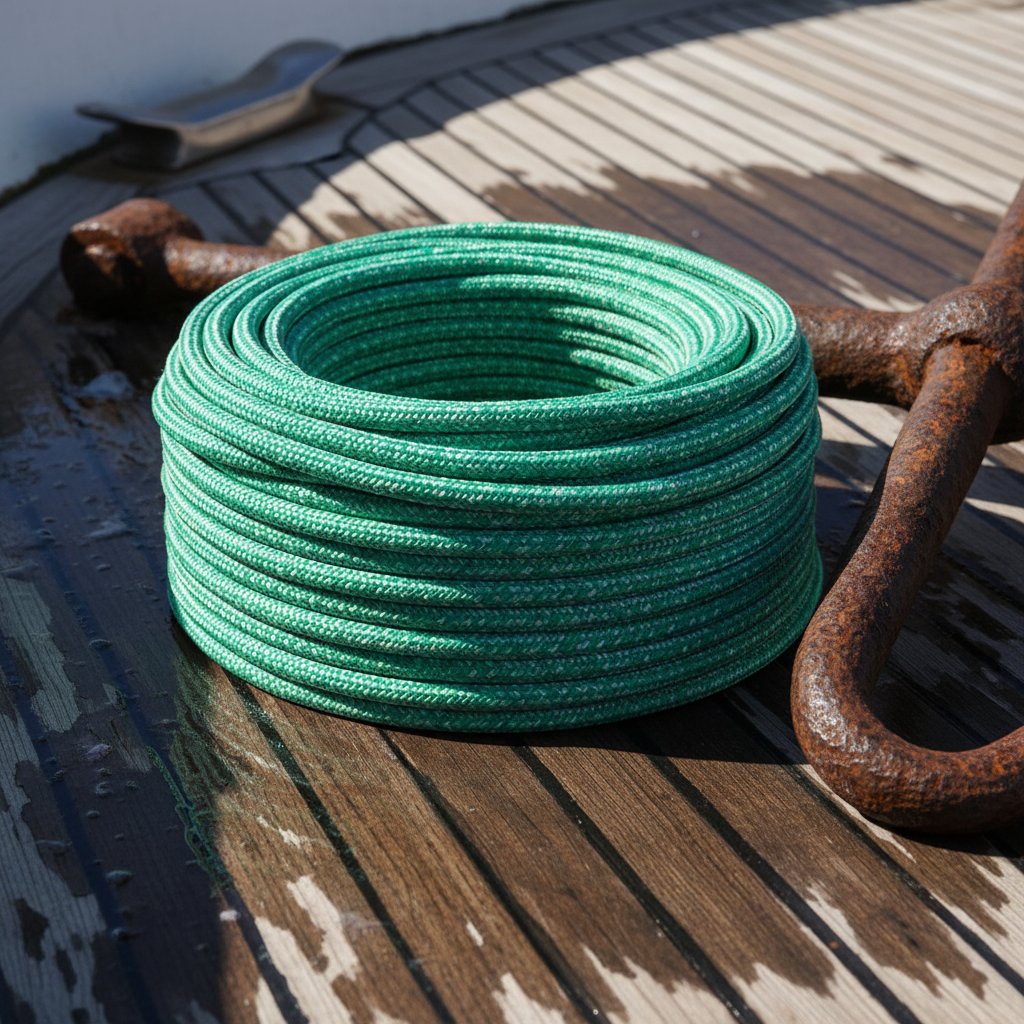
Don't overlook its chemical and water resistance either. Polyester doesn't absorb much moisture, so it retains nearly full strength when wet. This is unlike nylon, which can lose up to 20% of its power after a soak. As a result, it’s resistant to saltwater corrosion, fuels, and oils you might encounter in a marina. I've seen ropes turn to mush after a few wet winters, but polyester? It bounces back, ready for the next outing. Have you ever dealt with a soggy line that felt like dead weight? Polyester avoids that frustration entirely.
These traits make polyester a solid foundation for tougher jobs ahead, like securing your vessel in ways that demand unwavering hold.
Polyester Anchor Rope Applications and Benefits
Building on those core strengths like minimal stretch and resistance to the elements, polyester anchor rope steps up when you need to drop anchor and trust it will hold steady. For anchoring, this rope excels due to its low elongation—typically just 5-15% under load. This means it doesn't give way like elastic, helping your boat stay put even in gusty winds or swells. This reduced stretch cuts down on shock loads that could yank your anchor free or strain the hull, giving you peace of mind during overnight stays at sea. Imagine being anchored in a bay with waves rolling in, yet your anchor line stays taut, absorbing just enough without letting the boat wander.
Yes, polyester rope can absolutely be used for anchor lines, and many seasoned boaters swear by it for good reason. Its tough build stands up to the grind of scraping along rocky bottoms or coral, thanks to that inherent abrasion resistance, while shrugging off constant UV exposure that would degrade lesser materials. This combination makes it a smart pick for long passages where reliability is paramount, preventing failures that can turn a relaxing trip into a nightmare.
Choosing the right size matters significantly here, tailored to your boat's length and the water depth you're anchoring in. For a 30-foot vessel in moderate depths, aim for at least 3/8-inch diameter with 150-200 feet of length to achieve a proper scope of 5:1 or more. Larger boats, perhaps 40-50 feet, might need 1/2-inch or thicker to handle increased weight and windage, ensuring the working load limit remains well above your setup's demands—often calculated with a safety factor of 5 to 12 times the expected pull. If you're using a windlass for easy retrieval, opt for 8-strand plait construction; it's designed to feed smoothly without jamming, gripping the gypsy just right for effortless operation.
- Small boats (under 25 feet): Consider 5/16-inch diameter, 100-150 feet for shallow anchoring.
- Mid-size vessels (25-40 feet): Opt for 3/8 to 7/16-inch, 200 feet to cover deeper spots.
- Large boats (over 40 feet): Use 1/2-inch or more, 250+ feet with a chain combo for maximum hold.
When stacked briefly against nylon, polyester pulls ahead for anchoring in ways that significantly impact long-term performance. Nylon's higher stretch—up to 40%—cushions sudden jerks nicely for docking, but it can lead to drift as the line sags and rebounds, potentially resetting your anchor position. Polyester avoids that excessive give, offering superior overall holding power without the creep that nylon suffers over time. This means fewer adjustments and a rope that lasts for seasons longer in the sun and surf.
Pairing it with a short chain leader adds even more bite to the setup, but the rope's stability is what ultimately keeps everything secure through the night. This reliability in anchoring paves the way for equally solid mooring setups, where maintaining position is absolutely critical.
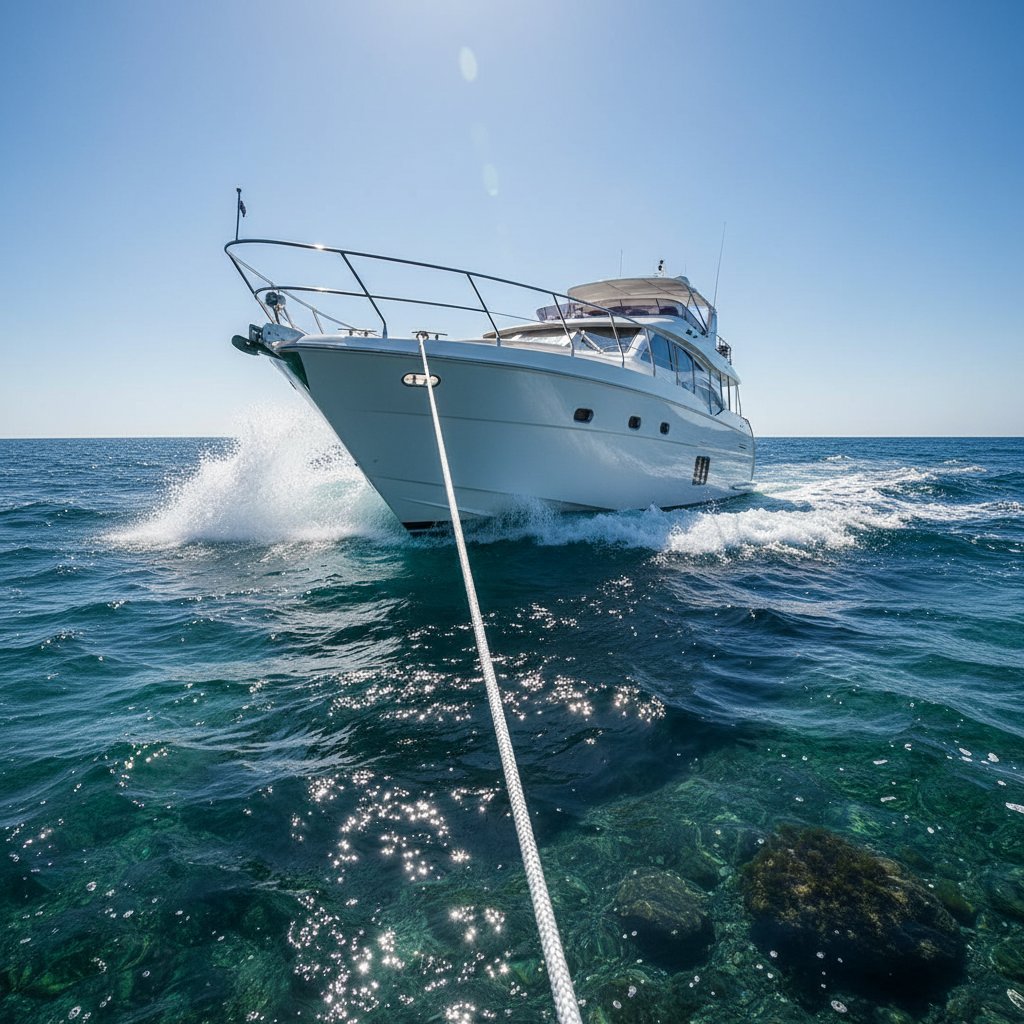
Have you noticed how some lines start to wander on you? Switching to this kind of reliable anchoring gear changes that, paving the way for equally solid mooring setups where holding position is everything.
Polyester Mooring Line for Secure Vessel Holding
Just as reliable anchoring keeps your boat from drifting in open water, a strong polyester mooring line ensures it stays secure at the dock or buoy when you're not aboard. This is where polyester truly proves its worth in static securing—holding your vessel steady against tides and winds without the drama of excessive movement. Unlike more elastic options, this material absorbs minor energy from surges while maintaining its position, so you return to find everything exactly as you left it. I once tied up in a busy harbour where the wind howled all night; a good polyester line meant no worries about lines going slack or pulling too hard on the fittings.
What makes it stand out for mooring? Its built-in chafe resistance is key—those rough edges from pilings or rubbing against the hull don't wear it down as fast, significantly extending the line's life through countless comings and goings. And when it comes to prolonged exposure, polyester shines with UV stability, preventing the gradual weakening from sun that plagues other ropes. Low creep—the slow stretching under constant tension—is another boon; it won't gradually lengthen over days or weeks, which could loosen your setup and invite trouble. So, if you're wondering, what is the best type of rope for mooring? Polyester often tops the list for these reasons. Its balance of durability and reliability handles static demands without the pitfalls of materials that fade or give way too easily.
Selecting the right diameter and length depends on your vessel's size and the mooring spot's conditions, such as exposure to heavy surges or calm waters. For smaller boats around 25 feet, a 3/8-inch diameter with 20-30 feet per line often suffices, allowing for a safe angle without overstraining cleats. Step up to 40-foot yachts, and you might need 1/2-inch lines running 40-50 feet to accommodate wider swings. Always factor in a safety margin, aiming for a working load that's at least five times your expected pull. To boost protection, add chafe gear like tubular sleeves or heat-shrink covers at contact points—these simple accessories prevent friction burns that could compromise the entire line.
- Vessels under 30 feet: Use 3/8-inch diameter, 25 feet length; suitable for sheltered marinas to avoid minor chafe.
- 30-50 foot boats: Opt for 1/2-inch diameter, 40 feet; ideal for exposed docks with added thimbles for eye splices.
- Larger than 50 feet: Require 5/8-inch or thicker, 50+ feet; pair with double lines fore and aft for commercial setups.
Construction also plays a significant role, especially for mooring where storage and adjustments are important. Double braid stands out here—its interwoven core and cover resist kinking when coiled on deck, making it a breeze to deploy or stow after a trip. Plus, it's straightforward to splice, letting you create custom eyes or loops that fit your cleats perfectly without knots that weaken the line over time. Have you ever wrestled with a tangled mess just to get moored? This setup sidesteps that hassle entirely.
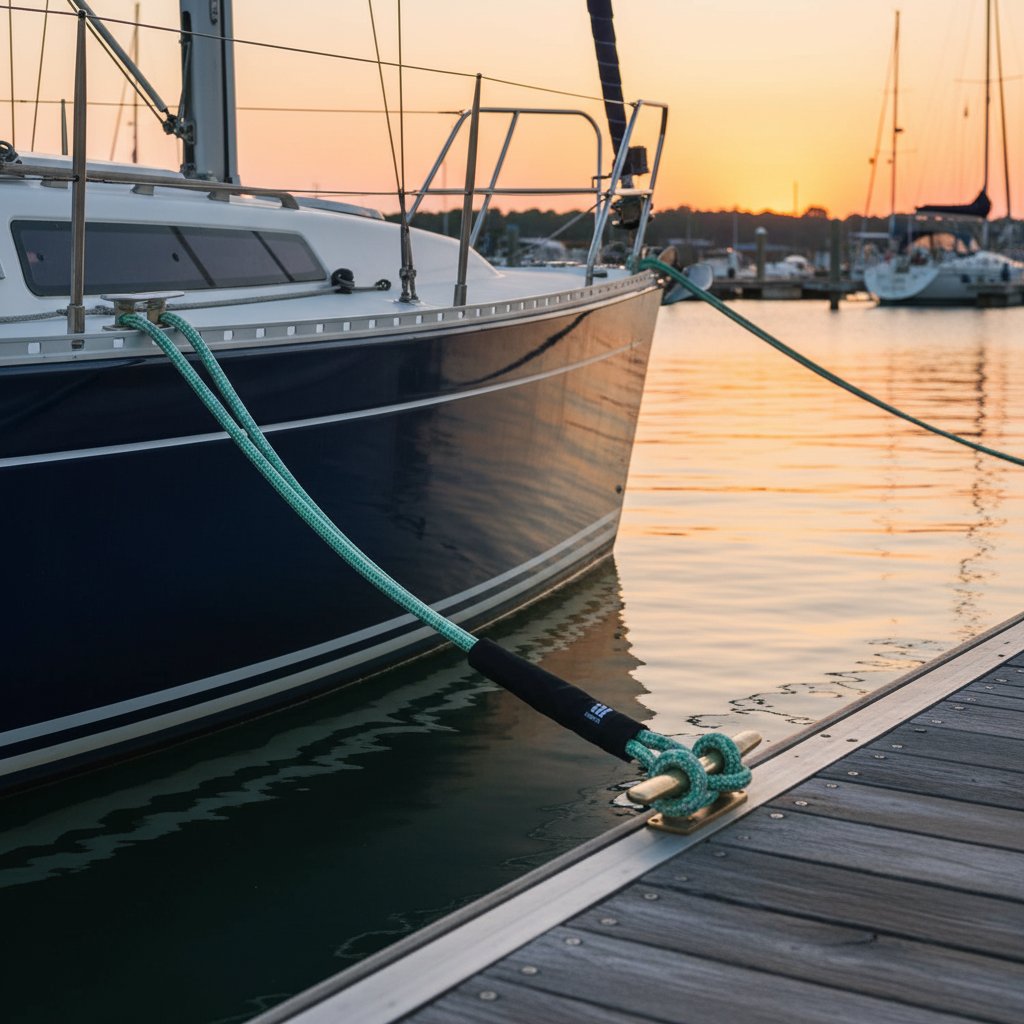
These choices not only keep things secure but also highlight why certain materials handle the rigours better than others, especially when compared against more common alternatives in tough conditions.
Polyester vs. Nylon: Key Differences and iRopes Customisation
The tough conditions you face at the dock or while anchoring often demand picking the right material. This is where a close look at the difference between polyester and nylon marine rope truly pays off. Both are popular for marine work, but they handle the demands of saltwater and sun in noticeably different ways. Let's break it down simply so you can see why one might suit your setup better than the other.
The main differences begin with how they respond to loads and the environment. Nylon, for instance, stretches significantly—up to 40% under tension—which can nicely absorb shocks from waves in dynamic applications like towing. However, that extensibility makes it less ideal for static jobs where a steady hold is crucial. Polyester, on the other hand, stretches far less, around 10-15%, keeping things taut without the rebound that might allow your boat to drift. When it comes to UV degradation, polyester holds its ground much better; nylon starts breaking down after months in direct sun, losing strength gradually, while polyester resists fading and weakening for years longer in exposed positions.
And let's not forget wet strength retention—that's a big one for anything near the water. Nylon can lose about 15-20% of its power after soaking, feeling heavier and more prone to slippage when conditions turn soggy. Polyester barely budges, staying just as strong wet or dry. This means reliable performance even after a storm or a rinse-down. This edge is evident in anchoring and mooring, where polyester's low-stretch nature prevents excessive movement that could wear on your gear or compromise safety over time. Ever had a line that sagged and needed constant tweaking? Polyester eliminates that hassle, offering longevity that means fewer replacements and more time on the water.
Polyester Strengths
Low stretch for stable anchoring; superior UV resistance against sun damage; full wet strength retention.
Nylon Traits
High elasticity for shock absorption; good initial abrasion but quicker UV breakdown; reduced strength when wet.
Best for Anchoring
Polyester's stability shines here, reducing drift and extending life on rough bottoms.
Mooring Preference
Polyester holds firm without creep, while nylon suits shorter, bouncier dock ties.
If you're gearing up for custom needs, that's where iRopes steps in with their OEM and ODM services. These allow you to tailor polyester ropes to fit exactly what your operation requires. They handle everything from blending materials for specific strength requirements to dialling in diameters from 3/8-inch up or colours that match your branding. All this is backed by ISO 9001 certification to ensure every batch meets high standards. Want reflective strips for night visibility? Or protected designs through their IP safeguards? It's all possible, making your lines not just durable but uniquely yours for wholesale runs.
To keep that investment going strong, maintenance boils down to regular checks and simple care. Rinse off salt with fresh water after use to avoid buildup, inspect for frays or stiff spots monthly, and store it coiled loosely away from direct sun. This routine can significantly prolong the lifespan, especially with custom add-ons like those reflective elements that boost safety without extra wear.
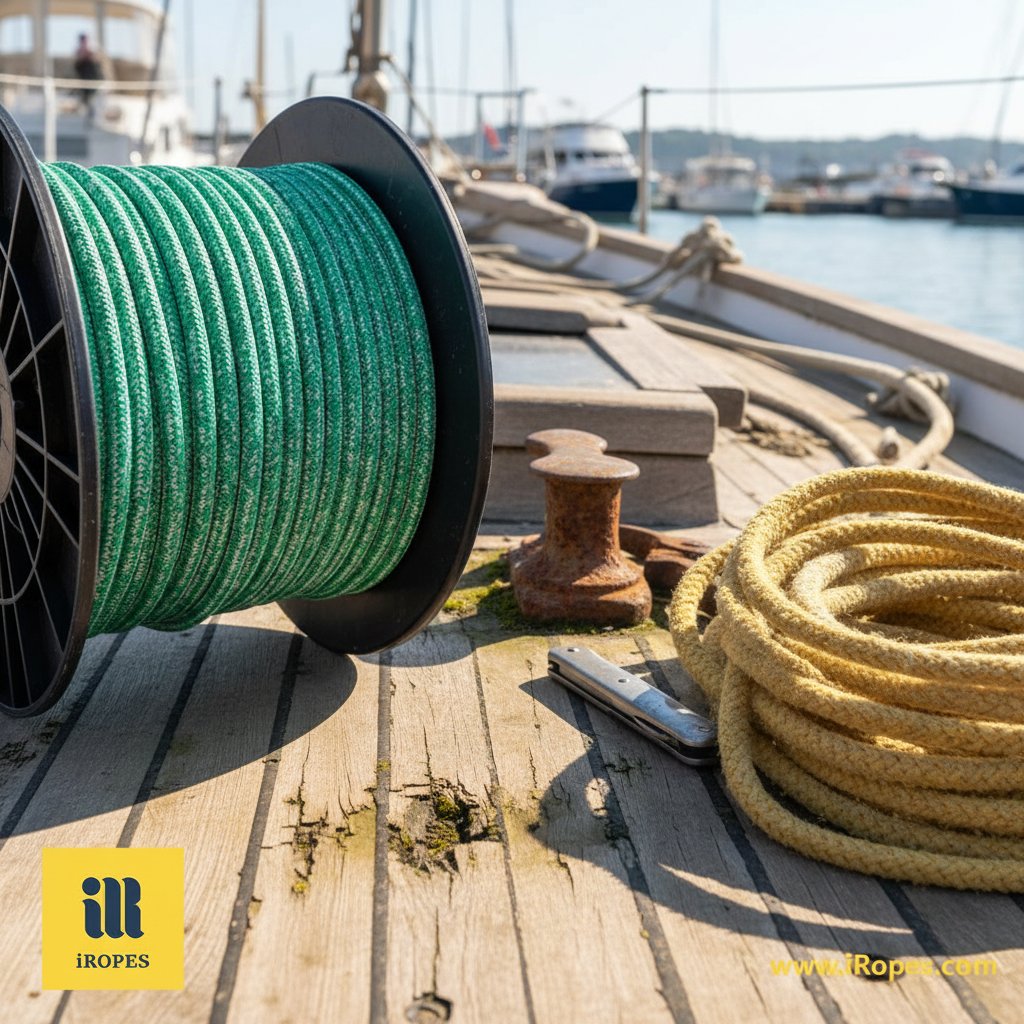
These careful practices in care and customisation truly solidify the advantages, transforming a good rope into one that consistently supports your boating safely year after year.
From the steady hold of polyester marine rope in choppy waters to its robust resistance against UV rays and abrasion, this material proves ideal for demanding marine environments. It significantly outperforms nylon in longevity and reliability. With low stretch ensuring minimal drift during anchoring and mooring, and construction options like double braid for smooth handling or 3-strand twisted for cost-effective strength, it's a versatile choice for wholesale customers seeking safety and durability. Simple maintenance—rinsing salt and regular inspections—further extends its life, while iRopes' custom OEM/ODM services allow tailoring polyester anchor rope and polyester mooring line to your exact specifications, blending in colours, diameters, and reflective elements for enhanced performance.
As you've seen how polyester excels in anchoring against rocky bottoms and mooring with low creep, imagine applying these benefits directly to your fleet or product line. For personalised guidance on selecting or customising ropes that fit your unique requirements, our experts at iRopes are ready to assist.
Customise Your Polyester Marine Solutions Today
If you're ready for tailored advice on polyester ropes suited to your specific marine needs, complete the inquiry form above to connect with iRopes' specialists. They'll guide you towards durable, custom solutions that keep you—and your customers—safe on the water.
