Synthetic rope stays slash rigging weight by up to 80% compared to wire, delivering flexible strength that prevents corrosion and enhances furling speed in dynamic seas. You get safer, more responsive sailing without the heavy drag—proven in modern yacht systems.
Master Furling Upgrades in Just 12 Minutes: Key Wins for Your Rig
- ✓ Cut 80% of wire's weight to improve boat balance and boost speed by 12-15% on tacks, solving sluggish handling woes.
- ✓ Gain torsional stiffness in Dyneema blends for minimal luff sag, acquiring skills to deploy sails twice as fast in gusts.
- ✓ Eliminate corrosion risks with UV-resistant synthetics, extending stay life by 3-5 years through easy inspections and custom splices.
- ✓ Secure rope connects via soft splicing that boosts load distribution by 90%, preventing failures in high-tension furling setups.
Wire rigging has long been upheld as the unbreakable backbone of sailing—or so you've been told. But what if that rigidity is secretly sabotaging your performance, adding unnecessary drag and fatigue on every voyage? Synthetic rope stays flip this script with counter-intuitive flexibility that absorbs shocks better than steel ever could, yet demands you rethink connections to unlock their full potential. How exactly do these innovations transform your furling system from clunky to effortless, and what hidden pitfalls could derail the upgrade if ignored?
Understanding Rope Stays: The Shift from Wire to Synthetics in Furling Systems
Imagine gliding across the water on a crisp morning, the wind perfectly filling your sails, and your rigging feeling almost weightless. That's the kind of sailing experience synthetic rope stays bring to the table, a far cry from the clanging, heavy wire setups of old. Rope stays are essentially the supportive lines that hold your mast steady, running from the bow or stern to keep everything aligned under load. In furling systems, they play a crucial role by integrating with sails that roll up smoothly, allowing quick adjustments without the hassle of traditional hoisting.
Traditionally, wire rigging dominated because it was strong and straightforward, but it came with drawbacks like stiffness that made handling tricky in tight spots. Synthetics change that game entirely. Made from advanced fibres such as Dyneema or Vectran, these ropes offer a flexible alternative that doesn't sacrifice strength. Think of wire as a rigid steel beam—reliable but unforgiving—while synthetic rope stays act more like a taut spring, absorbing shocks from waves and gusts without permanent deformation. This flexibility not only enhances comfort but also improves overall responsiveness of the yacht.
Wire Rigging
Traditional Choice
Heavy Weight
Adds significant load to the boat, increasing fuel use and fatigue during long voyages.
Corrosion Prone
Exposed to saltwater, it rusts over time, requiring frequent inspections and replacements.
Rigid Handling
Less forgiving in dynamic conditions, potentially leading to sail flap or mast stress.
Synthetic Rope Stays
Modern Upgrade
Lighter Build
Up to 80% lighter than wire, improving boat balance and speed without extra effort.
Flexible Strength
Bends easily for better sail shape control, yet holds firm under high tension.
Corrosion-Free
Resists saltwater and UV degradation, lasting longer in harsh marine settings.
Ever wondered what those ropes attached to your sails are actually called? In sailing lingo, the ones providing constant support—like the forward-pulling forestay or the aft-steadying backstay—fall under standing rigging. These are the unsung heroes keeping your mast upright, distinct from running rigging that adjusts sails on the fly. Forestays secure the front, essential for headsails, while backstays counterbalance from behind, ensuring stability during tacks. The evolution of these components, particularly with synthetic materials, represents a significant leap in marine technology.
This shift to synthetics didn't happen overnight; it evolved with fibre technology in the late 20th century, driven by racers seeking every edge. Today, in staysail setups, rope stays allow for compact furling on inner forestays, perfect for heavy weather when you need quick reefing. For Genoa systems, they enable seamless top-down rolling, reducing luff sag and boosting upwind performance on modern cruisers. Have you noticed how older boats feel sluggish compared to those with synthetic rigs? It's all about that lighter, more responsive setup, providing a tangible advantage in diverse sailing conditions.
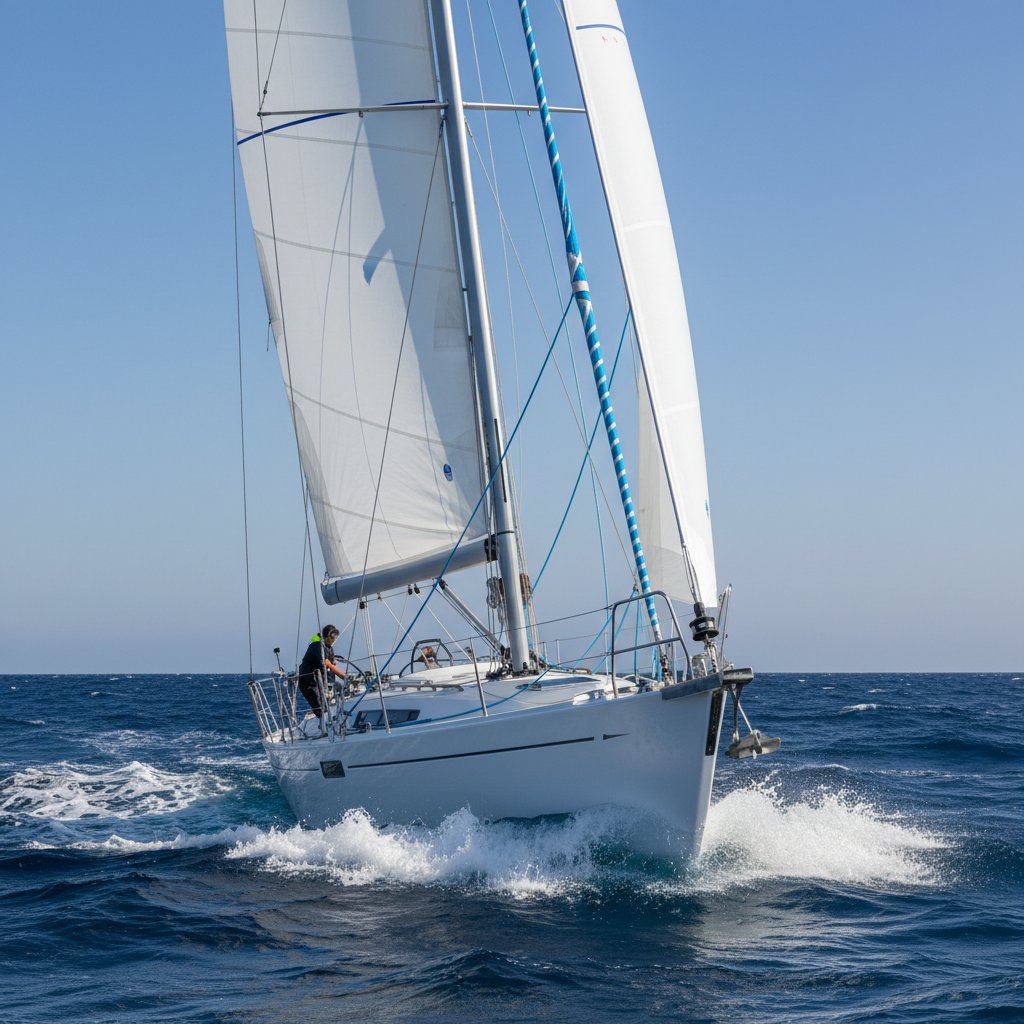
Building on these basics, the real magic unfolds when you pair rope stays with specialised furling lines that handle the twist and turn of deployment, further optimising your sailing experience.
Why Furling Rope Excels in Synthetic Rigging Configurations
Now that we've seen how synthetic rope stays lighten the load and add that welcome flexibility to your mast support, it's time to talk about the furling rope that makes deploying and stowing sails a breeze. These aren't your everyday lines—they're engineered to twist without kinking and hold tension like a pro, turning what used to be a chore into a smooth operation. Picture this: you're out on the water, and instead of wrestling with stiff wire that's fighting every turn, your sails roll up neatly with just a few cranks from the cockpit. That's the edge synthetic furling ropes give you.
Let's break down the main types. Torsion ropes, often the heart of the system, are built with a core of high-performance fibres like Dyneema to resist twisting under load—these keep the sail luff straight as it furls. Then there are control lines, usually double-braided polyester or Dyneema blends, which you use to operate the furler itself. They're grippy for winches and clutches, ensuring you maintain control even in a squall. Have you ever had a line slip at the wrong moment? These setups minimise that risk by staying firm, providing greater reliability and safety.
What sets a great furling rope apart are its core traits: torsional stiffness to prevent rotation that could bunch up your sail, low stretch to keep everything taut without sagging, and seamless fit into either top-down or bottom-up systems. In top-down furling, common for asymmetric sails like gennakers, the rope starts the roll from the head, relying on that anti-twist property to peel the sail evenly. Bottom-up, typically for jibs, pulls from the tack, where minimal elongation means less luff sag and better shape. Choosing the right one depends on your boat's setup—racing? Go for ultra-low stretch Dyneema. Cruising? A balanced polyester blend handles daily abuse without breaking the bank, offering a cost-effective yet reliable solution.
Wire Furling
Stiff and heavy, leading to slower rolls and more wear on fittings over time.
Prone to Sag
Luff can wander under wind pressure, complicating precise sail trim.
Synthetic Furling Rope
Quick deployment and retraction, even in gusty winds, for faster manoeuvres.
Superior Handling
Lighter and more forgiving, adapting to waves and shifts without constant adjustments.
Curious about how the whole furling system comes together? At its core, it involves a drum at the base where you wrap the control line to rotate the setup, a swivel up top that lets the halyard spin freely without twisting, and anti-torsion features in the rope itself to ensure even pull along the luff. The drum cranks to wind the sail around the rope or foil, while the swivel prevents torque from building up and damaging your halyard. In practice, this means you can single-hand your boat more confidently, whether reefing in a blow or dousing the genoa at dusk.
Switching to synthetic furling rope from wire isn't just an upgrade—it's a game-changer for speed and reliability. On a recent coastal hop I did, the low-stretch line kept my Genoa flat and efficient, cutting through chop without the telltale flutter you'd get from older setups. And when conditions turned rough, the ease of handling let me focus on the helm rather than fighting the lines, enhancing both safety and performance.
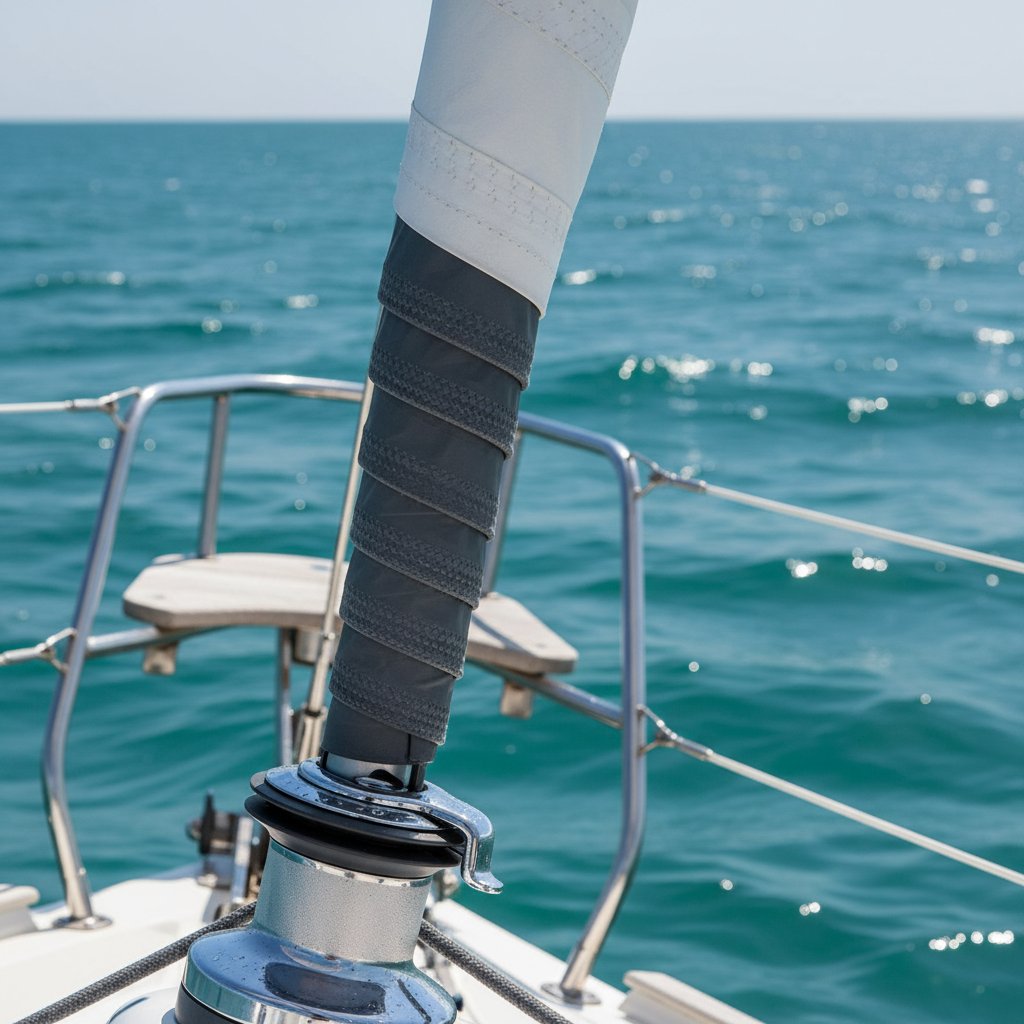
Of course, all this performance hinges on getting the connections right—secure attachments that won't come loose mid-tack or chafe over time, an aspect where precision in rope connect techniques becomes paramount.
Mastering Rope Connect Techniques for Durable Furling Installations
With furling ropes now handling the twists and pulls so smoothly, the next step is securing them properly to your rigging and sails. Loose or poorly made connections can turn a reliable setup into a liability, especially when waves are crashing and winds are whipping. That's where rope connect techniques come in—they ensure everything stays locked in place, whether you're racing offshore or cruising the coast. Let's walk through the essentials that keep your system durable and responsive, backed by iRopes' commitment to precision manufacturing and quality assurance.
At the heart of rope connect are splicing and hardware pairings that blend strength with flexibility. Splicing weaves the rope's own fibres into loops or joins, creating seamless attachments that distribute load evenly. For eye splices, you form a loop at the end, perfect for hooking onto a thimble—a metal or plastic insert that protects the rope from sharp bends. Shackles then link that eye to your furler or stay, allowing quick releases without weakening the line. End-to-end splicing joins two ropes, say to extend a control line, maintaining nearly full breaking strength. These methods beat knots for critical spots because they don't bulk up or slip under tension. I remember retrofitting a friend's older furler; swapping out a knotted end for a proper splice cut down on wear and made adjustments way easier.
Now, consider innovative soft splicing versus old-school clamps. Traditional clamps crush the rope with metal jaws, which works for wire but often pinches synthetics, leading to hidden damage over time. Soft splicing, on the other hand, tucks fibres back into the core—like a seamless braid—creating a low-profile end that's kinder to sails. This reduces snags during furling, where a bumpy clamp might catch the luff tape and tear fabric. For synthetic stays, it improves sail interaction by letting the cloth slide smoothly, preserving shape and speed. Plus, it's lighter, shaving grams that matter on a performance boat. Why risk a snag when a soft join flows just like the rope itself, delivering both efficiency and longevity?
Ever needed to figure out how to stick rope together without bulky extras? Splicing is your go-to for that, especially with double or single braid constructions common in furling setups. For double braid, which has a braided cover over a core, start by milking the cover back to expose the core, then insert a fid—a tapered tool—through the core to pull the tail end back in. Secure it by tapering and tucking, then repeat on the cover side for a clean bury. Single braid, often pure Dyneema for its simplicity, involves locking strands in a crown knot before tucking them alternately to lock tight. These steps, done right, restore 90% of the rope's strength and last seasons longer than any glue or tape hack due to superior load distribution.
- Measure and mark the splice point, allowing overlap for tucks.
- Use a fid to core out a path in the standing part.
- Pull the tail through, staggering strands to avoid lumps.
- Trim excess and whip the end to prevent unravelling.
For best results in custom setups, lean on OEM and ODM precision like what iRopes offers. They tailor splices to your exact diameter and load, incorporating features like tapered ends for smoother sail handling. This aligns with their skilled craftsmanship, ensuring IP-safe designs that fit your brand. Whether it's a soft eye for a staysail furler or a joined torsion line, these connections build on the rope's inherent strengths, setting you up for seasons of trouble-free sailing and consistently high performance.
Just as vital as making the join is keeping an eye on how it holds up over time, spotting wear before it turns into a real headache and compromises your vessel's safety and efficiency.
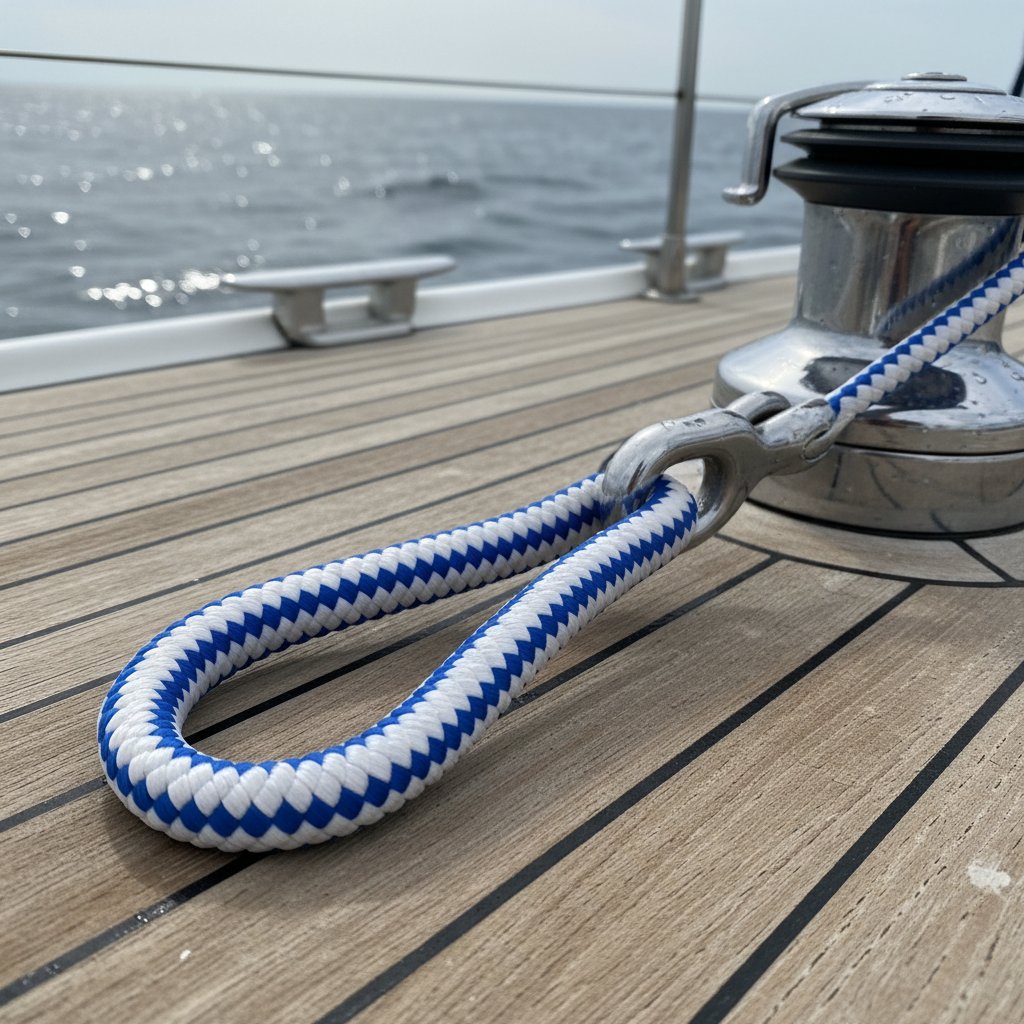
Inspection Protocols and Replacement Schedules for Synthetic Rope Stays
Spotting issues early can save you from a mid-voyage disaster, especially after nailing those rope connect techniques that keep your furling system humming. With synthetics like Dyneema in play, they're tough, but the sea doesn't pull punches—salt, sun, and constant tension wear them down over time. Regular checks turn potential problems into minor tweaks, keeping your rope stays and furling ropes performing at their best. I once skipped a thorough look after a stormy passage, only to find a hidden chafe that could have parted a line; lesson learned the hard way that vigilance is key.
Start inspections by running your hands along the entire length, feeling for irregularities. Chafing shows up as fuzzy or worn spots where the rope rubs against sails, deck fittings, or itself during furling—look for discolouration or reduced diameter that signals outer fibres breaking down. UV damage hits harder in sunny climes; exposed lines turn brittle and faded, losing that crisp white or colour vibrancy as sunlight degrades the polymers. For core slippage, common in double-braid constructions under heavy loads, grasp the cover and core separately—if they move independently or bunch up, the bond's weakening, risking sudden failure during a tack. Don't forget splices and terminations; inspect thimbles for cracks and eyes for pulled strands. Do this monthly for active boats, or before every outing if you're pushing limits in races, to proactively maintain safety.
- Chafing Check - Feel for rough patches or flat spots; these often occur at contact points like spreaders or furler swivels, where friction builds during rolls.
- UV Exposure Signs - Note stiffness or cracking; synthetics resist better than wire, but prolonged sun still shortens life by up to 50% without cover.
- Core Integrity - Tug gently on ends; slippage indicates internal wear from cycles of tension and release in staysail setups, potentially compromising the structural integrity of your rope stays.
To keep things in top shape, follow simple maintenance routines that extend your lines' lifespan without much fuss. Rinse with fresh water after every sail to wash off salt crystals that accelerate breakdown—avoid harsh chemicals that strip protective coatings. For storage, coil loosely in a cool, dry spot away from direct light; UV blockers like sleeves or bags shield against degradation during off-season layup. Applying a silicone spray now and then repels water and eases handling, but test a small section first to ensure it doesn't affect grip on winches. Consistent care ensures your rigging remains reliable for years to come.
As for when to replace rigging components, it boils down to safety in the unforgiving marine world—don't wait for visible breaks. Guidelines suggest swapping out load-bearing rope stays every two to five years for cruisers, or annually for racers facing extreme conditions, factoring in usage hours and peak loads. If you've logged over 1,000 sailing hours or noticed any stretch beyond 1% under tension, it's time; performance drops subtly at first, with sagging luffs or reduced breaking strength signalling the end. Pros recommend a full professional survey every season, especially for critical forestays in furling systems, to catch fatigue before it compromises control. In my experience, replacing proactively not only boosts speed but gives peace of mind on long passages, a priceless advantage on the open water.
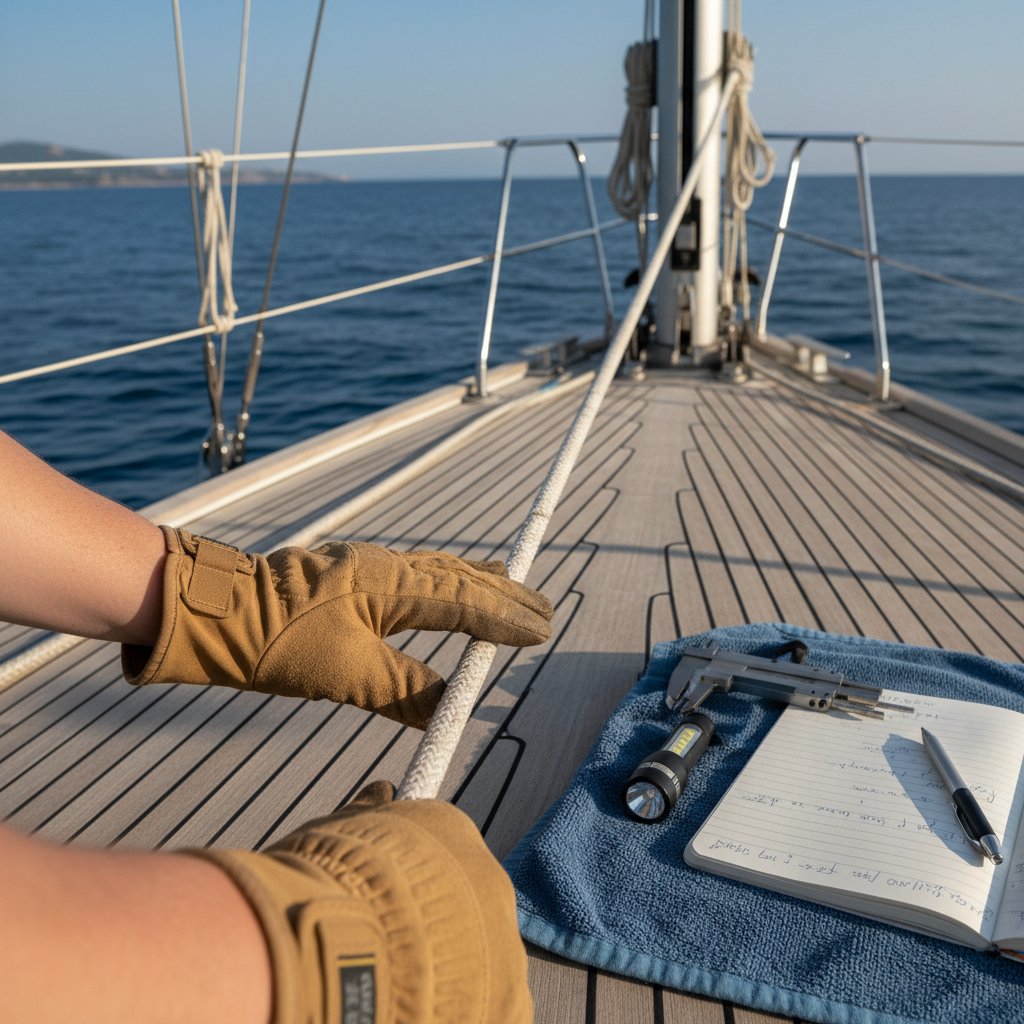
Sticking to these protocols means your setup stays reliable, letting you focus on the thrill of the wind rather than worries about what might give way next, ensuring countless safe and enjoyable voyages.
As we've explored, synthetic rope stays revolutionise furling systems by offering lighter, more flexible alternatives to wire rigging, enhancing safety and performance on the water. High-performance furling rope with torsional stiffness and low stretch ensures smooth deployment, while mastering rope connect techniques like soft splicing guarantees durable installations that reduce snags and extend lifespan. Regular inspections for chafing and UV damage, paired with proactive replacement schedules, keep your setup reliable for every adventure. With iRopes' custom OEM solutions, you can tailor these synthetics to your yacht's exact needs, elevating your sailing experience, delivering both superior performance and peace of mind.
Need Custom Synthetic Rope Solutions for Your Furling System?
If you're ready to optimise your rigging with personalised guidance from iRopes experts, fill out the inquiry form above—we'll help design and deliver the perfect ropes for your vessel, backed by our ISO 9001 quality assurance.
