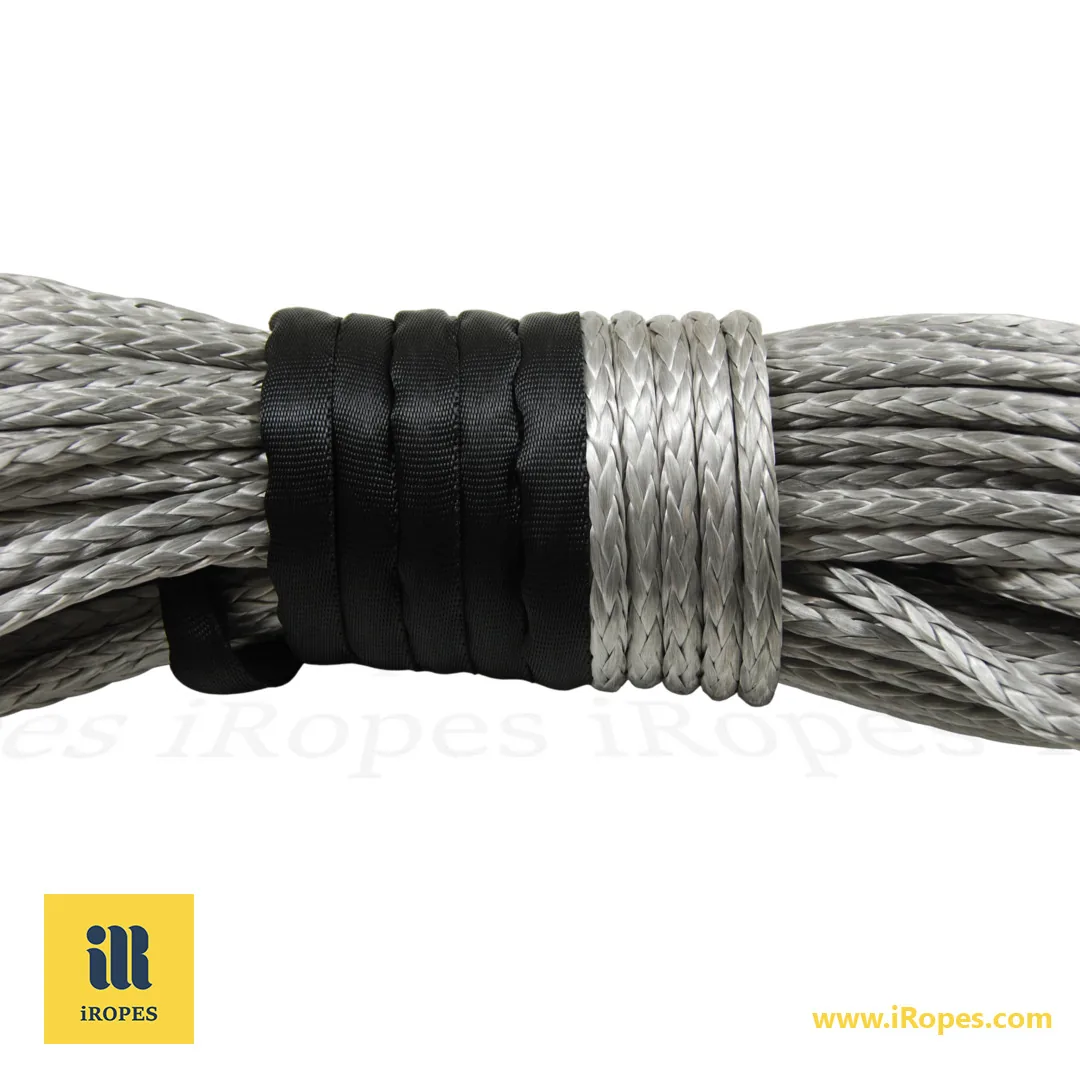
UHMWPE rope can lift the same load as steel wire, weighing up to 30 % less and cutting hoist energy use by 15‑20 %.
What you’ll gain in ≈2 min read
- ✓ Reduce dead‑load weight by 30 %, enabling smaller motors and lower power draw.
- ✓ Extend rope service life beyond 12 years, leading to up to 40 % less maintenance cost.
- ✓ Eliminate corrosion‑related downtime, boosting availability by up to 25 %.
- ✓ Benefit from custom colours and branding for instant safety compliance.
You might consider steel wire rope as the sole heavy‑duty option for hoists. However, a side‑by‑side test reveals UHMWPE (Ultra-High Molecular Weight Polyethylene) outperforming steel in strength‑to-weight ratio, corrosion resistance, and lifecycle cost. This innovative edge has been capitalised on by only a handful of hoist rope manufacturers. In the following sections, we will dissect the exact performance numbers, expose the hidden cost traps of steel, and demonstrate how iRopes’ custom‑engineered UHMWPE line can slash your energy bill by up to 20 %. Ready to explore the data that changes the game?
Hoist Rope Manufacturer: Why UHMWPE Ropes Outperform Traditional Steel Wire Rope
In any material‑handling system, the hoist rope serves as the silent workhorse, bearing the load, transferring power, and dictating how smoothly a lift operates. It functions as a high‑strength line that winds around a drum, connects to a hook or sling, and endures repeated tension cycles. The rope directly influences safety, speed, and energy consumption, making its selection a critical decision that impacts your entire operation.

Although traditional steel wire rope has a reputation for durability, it comes with three notable drawbacks. Firstly, its high specific gravity means a full‑scale hoist can weigh several hundred kilograms more than a comparable UHMWPE system. This often necessitates larger motors and heavier support structures. Secondly, steel corrodes when exposed to moisture, chemicals, or salty marine air, leading to routine expenses for regular inspections and lubrication. Thirdly, its stiff construction accelerates wear on drums and sheaves, increasing maintenance intervals and the risk of unexpected downtime. For a hoist rope manufacturer, these factors translate into higher engineering costs and a lower overall return on investment for the end‑user.
Replacing steel with UHMWPE can reduce the total hoist weight by up to 30 %, directly leading to faster cycle times and lower energy use.
When assessing rope suitability, begin by matching the required load capacity, ambient environment, and duty cycle to the material’s performance profile. UHMWPE delivers a tensile strength rivaling steel while weighing approximately one‑third as much. This characteristic allows it to easily meet the demands of heavy-duty mining hoists, marine cranes, and high‑rise construction lifts. Its inherent corrosion resistance means you can operate in saltwater or chemically aggressive settings without the constant need for protective coatings. Furthermore, the flexibility of UHMWPE reduces stress on drum grooves, extending service life and cutting routine maintenance. For a wire rope hoist manufacturer aiming to differentiate its catalogue, offering a custom‑engineered UHMWPE line presents a clear advantage in both performance and lifecycle cost.
iRopes Expertise
As a dedicated hoist rope manufacturer, iRopes combines OEM/ODM flexibility with ISO 9001‑backed quality control. Our engineers collaborate closely with your design team to select the optimal UHMWPE grade, diameter, and construction. The rope is then fabricated in a climate‑controlled facility, guaranteeing uniform strength and a consistent finish. The result is a rope that not only meets the stringent standards of an electric wire rope hoist manufacturer but also delivers measurable savings in weight, energy consumption, and maintenance overhead.
Now that we’ve explored why UHMWPE surpasses steel, the next logical step is to examine the core components and specifications that define modern wire‑rope hoist systems for various industries.
Wire Rope Hoist Manufacturer: Core Components, Specs, and Customization Options
Having understood why UHMWPE ropes are superior to steel, it’s essential to examine the machines that rely on these ropes. A wire rope hoist consists of a collection of tightly coordinated parts, each influencing lift speed, safety, and overall efficiency. Knowing the function of each component helps in matching the right rope to the right hoist.

- Rope Drum – This cylinder winds the rope, influencing lift smoothness and cable life.
- Electric Motor – It provides the torque necessary for raising and lowering loads and can be sized efficiently to match the rope’s weight.
- Wire Rope – As the primary load‑bearing element, iRopes allows you to specify UHMWPE instead of steel for lighter, corrosion‑resistant performance.
Beyond the hardware, a hoist's performance is defined by several key specifications. Capacity typically ranges from ½ ton up to 55 tons, enabling you to select a model that suits your heaviest loads while maintaining a safety margin. Lift height, which is the length of rope you can deploy, is often configurable, allowing you to tailor the system to specific ceiling clearances or pit depths. Voltage options include single‑phase (115/230 V) for smaller installations and three‑phase (230/460 V) for high‑capacity units. Speed is measured in feet‑per‑minute (FPM); many manufacturers offer dual‑speed options, such as 16 FPM low / 80 FPM high, for versatile cycle times. Finally, the duty cycle rating indicates how long the hoist can operate continuously before a cool‑down period is required—a crucial factor in heavy‑duty environments.
People Also Ask: What are the different types of wire rope hoists?
- Electric – The most common type, offering precise speed control and high capacities for industrial applications.
- Manual – Lever‑operated, ideal for low‑volume tasks or remote locations where power is limited.
- Low‑headroom – A compact design that fits under restricted ceiling heights while still delivering full‑capacity lifts.
For a wire rope hoist manufacturer, the ability to customise the rope itself provides a decisive advantage. iRopes offers end‑to‑end OEM/ODM services: you can select the UHMWPE grade, diameter, colour, and even add reflective or glow‑in‑the‑dark elements for enhanced visibility in dim environments. Accessories such as thimbles, loops, or specialised terminations are engineered to match your hoist’s brake and drum geometry, ensuring a seamless fit. All customised solutions are backed by ISO 9001 quality control and comprehensive IP protection, ensuring you receive a rope that not only meets technical specifications but also aligns with your brand’s safety standards.
Understanding these core components and specifications sets the stage for our next topic: how UHMWPE rope transforms electric hoist performance and drives measurable efficiency gains.
Electric Wire Rope Hoist Manufacturer: Leveraging UHMWPE for Superior Performance
After reviewing the key components of a wire‑rope hoist, it becomes clear that the rope itself significantly impacts overall efficiency. As an electric wire rope hoist manufacturer, you’ll find that a lighter, stronger line reshapes every calculation for motor sizing, cycle time, and energy budget.

UHMWPE delivers three core advantages crucial for an electric wire rope hoist manufacturer:
- High strength‑to‑weight ratio – The rope can support the same loads as steel while weighing approximately one‑third as much, directly reducing the hoist’s dead‑load.
- Corrosion resistance – The polymer’s inert chemistry withstands saltwater, chemicals, and humid mining environments without the rust‑related inspections that steel demands.
- Flexibility – Its softer lay reduces drum‑groove wear, ensuring the drum and sheaves remain smoother for longer durations.
These material traits translate into measurable performance gains. A lighter rope allows the drive motor to accelerate the load more quickly, increasing lift speeds by 10–15 % without requiring a motor upgrade. Since the motor operates against less inertia, electricity use drops proportionally, often resulting in a 15–20 % reduction in power consumption. Over a typical eight‑hour shift, these savings significantly cut utility costs.
Switching to UHMWPE can cut energy consumption by up to 20 % while extending rope service life beyond 10 years.
People Also Ask: What are the benefits of an electric wire rope hoist over a chain hoist?
When comparing an electric wire rope hoist to a traditional chain hoist, the benefits of the former become even more distinct. Chain hoists are typically heavier, generate more noise, and require frequent lubrication. An electric hoist equipped with UHMWPE rope, however, lifts faster, operates quieter, and eliminates the chain’s susceptibility to rust – all of which boost productivity and reduce maintenance downtime.
For manufacturers seeking a turnkey solution, iRopes offers comprehensive OEM/ODM services, backed by ISO 9001 quality control and robust IP protection. You can specify the exact UHMWPE grade, rope diameter, colour, and any special terminations like thimbles or reflective tags. Our engineering team then produces a rope that precisely fits your hoist’s drum geometry, meets the required safety factors, and arrives ready for seamless integration into your next electric hoist model.
Understanding how a synthetic rope reshapes motor load, speed, and energy usage sets the stage for the final piece of the puzzle: why partnering with a specialist supplier like iRopes ensures you receive a rope that not only meets technical specifications but also drives long‑term operational savings.
By now, you’ve seen how UHMWPE ropes reduce dead‑load by up to 30 %, resist corrosion, and flex more gently on drums, leading to faster cycles and lower power consumption. These benefits make UHMWPE the preferred choice for a range of applications, including mining, marine applications, cranes and other lifting equipment. This also positions iRopes as the leading partner for any hoist rope manufacturer seeking a superior alternative to steel wire.
Whether you are a wire rope hoist manufacturer or an electric wire rope hoist manufacturer, our OEM/ODM service can tailor rope diameter, colour, reflective tags, and terminations to your exact specifications. This is all backed by ISO 9001 quality and full IP protection, ensuring a bespoke solution for your needs.
Ready for a custom UHMWPE rope solution?
If you’d like personalised guidance on selecting the ideal UHMWPE rope for your hoist applications, simply complete the form above and our specialists will be in touch shortly.