100 foot rope that cuts anchor-line shock by 42% and meets ISO 9001 standards—ready for global wholesale.
Key Gains – ≈2.9 min read
- ✓ Tailor material, diameter, colour, and reflective trim to exact specifications – no off-the-shelf compromises.
- ✓ Achieve up to 1,250 lb working load for a 5,000 lb break-strength line – staying within the safe ¼ rule.
- ✓ Receive ISO 9001-certified, IP-protected rope with on-time pallet delivery to any port.
- ✓ Save an average of 13% on cost versus generic distributors through bulk OEM pricing.
You’ve probably been coiling your boat’s 100-foot line the same way for years, trusting the usual nylon-only advice. But did you know that many owners unknowingly sacrifice up to half of their rope’s strength by using the wrong construction? Imagine if a simple switch to a double-braid core and a custom-spliced eye could boost the effective tensile capacity by 30%, all while keeping the line submerged and within budget. At iRopes, a leading rope manufacturer based in China, we understand these nuances. We specialise in high-quality, customised rope solutions for wholesale customers globally, ensuring safety and performance for various applications.
100 Foot Rope: Material Selection for Marine and Utility Applications
Once you understand how construction choices affect handling, it's time to delve into the fibres that give a 100 foot rope its distinct character. The marine world typically relies on four core materials: nylon, polyester, polypropylene, and the high-performance Dyneema. Each offers a unique blend of strength, stretch, and resistance to harsh marine environments.
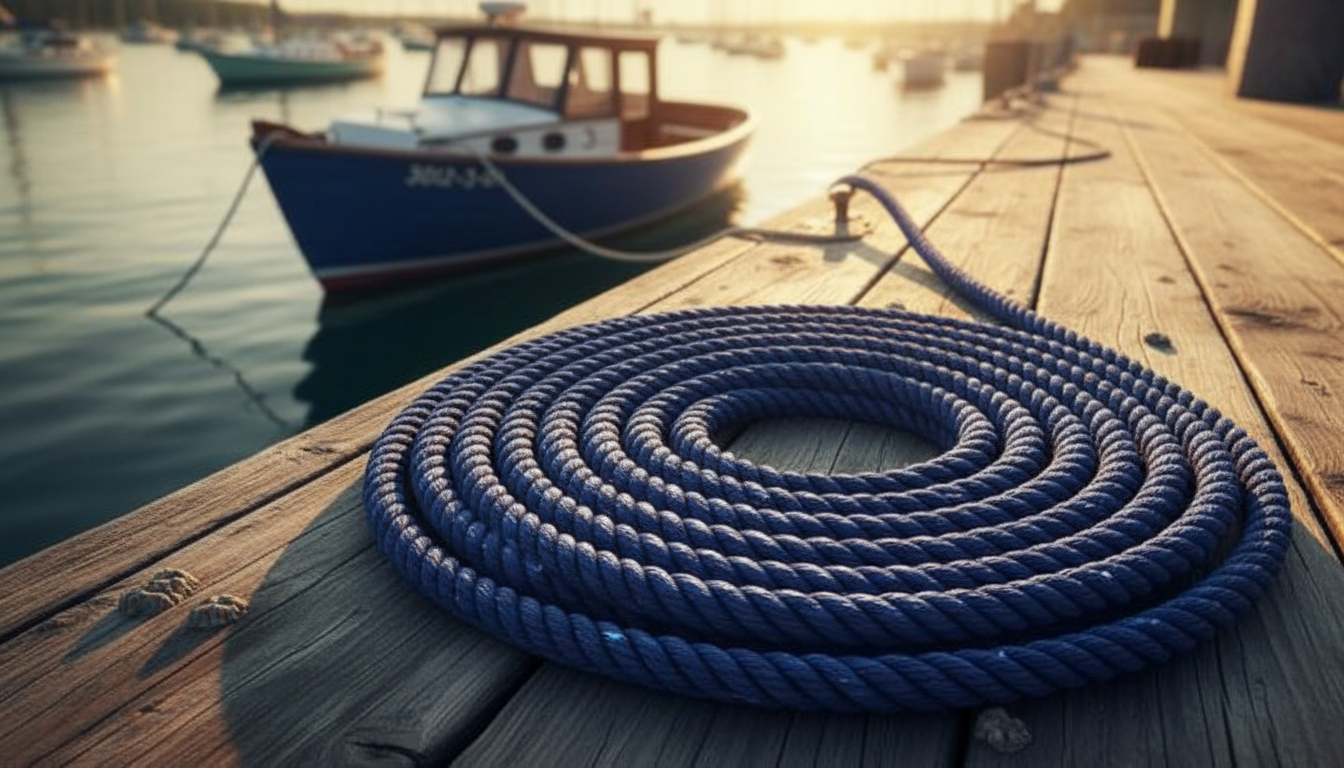
For anchoring, nylon is the undisputed champion. Its elasticity under load effectively absorbs shock, preventing sudden jerks. Its density ensures the line sinks quickly, helping to keep the anchor firmly set. This makes nylon the preferred choice for a 100 foot boat rope that must perform reliably in dynamic conditions, protecting your rigging from stress.
- Polyester – low stretch – excels in applications like dock lines where minimal elongation and strong UV resistance are critical. It’s also excellent for mooring lines on larger vessels.
- Polypropylene – floats – resists rot and is perfect for floating utility ropes, painter lines, or temporary tow lines, especially where visibility is key. However, it readily degrades under UV light.
- Trade‑offs – polyester adds weight and can be stiffer, while polypropylene loses strength significantly under prolonged sun exposure and is generally less durable than nylon or polyester.
Dyneema, an ultra‑high‑molecular‑weight polyethylene, pushes the boundaries of performance with a strength‑to‑weight ratio far exceeding traditional fibres. Although it’s a pricier option, a 100 foot Dyneema line provides minimal stretch and exceptional abrasion resistance, making it an ideal choice for high‑load rigging or other performance‑critical applications where every kilogram saved greatly improves efficiency.
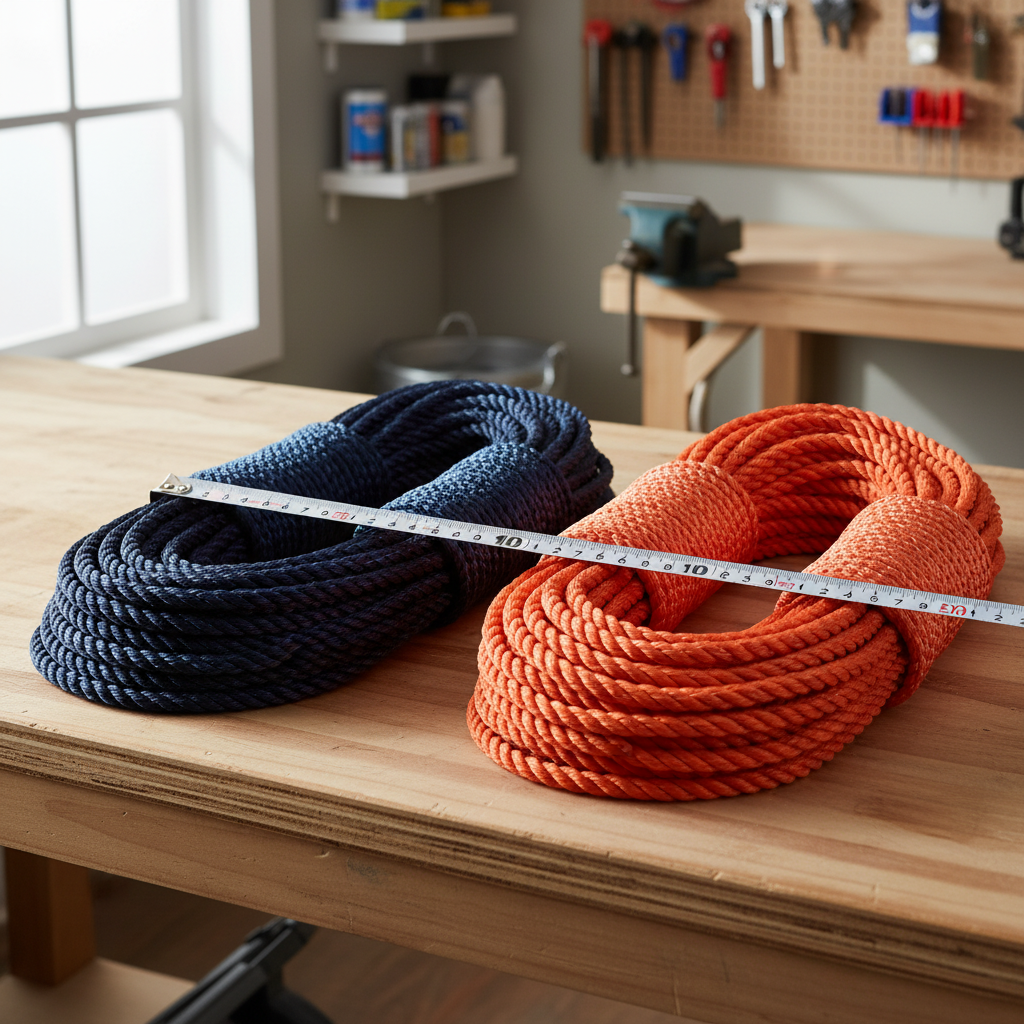
One of the most common misconceptions is that a knot simply "holds" a rope effectively. In reality, most knots can reduce a line’s breaking strength by up to 50%, potentially turning a robust 100 foot boat rope into a significant weak point. In contrast, a professionally spliced eye or loop maintains approximately 80 to 95% of the rope’s original strength because the fibres remain continuous, providing far greater integrity.
Splice Over Knot
A splice preserves fibre continuity, delivering nearly the full tensile capacity of the rope. For critical anchor lines, a spliced eye eliminates the 30‑50% strength loss typical of bowline or figure‑eight knots, giving you peace of mind in rough conditions.
When you align the construction type with its intended purpose, the benefits become clear. For instance, a solid or double‑braided nylon line provides the necessary stretch and shock‑absorption for an anchor rode. Meanwhile, a braided polyester rope offers low‑stretch characteristics and high UV resistance, making it ideal for dock lines that endure constant tension. For temporary tow or utility work, a rugged 3‑strand twist made from polypropylene is excellent, as it floats and won't sink if dropped overboard.
With the right construction now selected, the next crucial step involves calculating the exact length and diameter required for your anchor rode. This ensures optimal performance and safety in all conditions.
Sizing and Length Calculations: Determining Diameter and Scope for Anchor Lines
After choosing the appropriate construction for your 100 foot rope, the next critical step is to size the line correctly so it holds firmly when you drop anchor. Below, you’ll find essential calculations and a practical rule‑of‑thumb for determining rope thickness based on your vessel’s size.
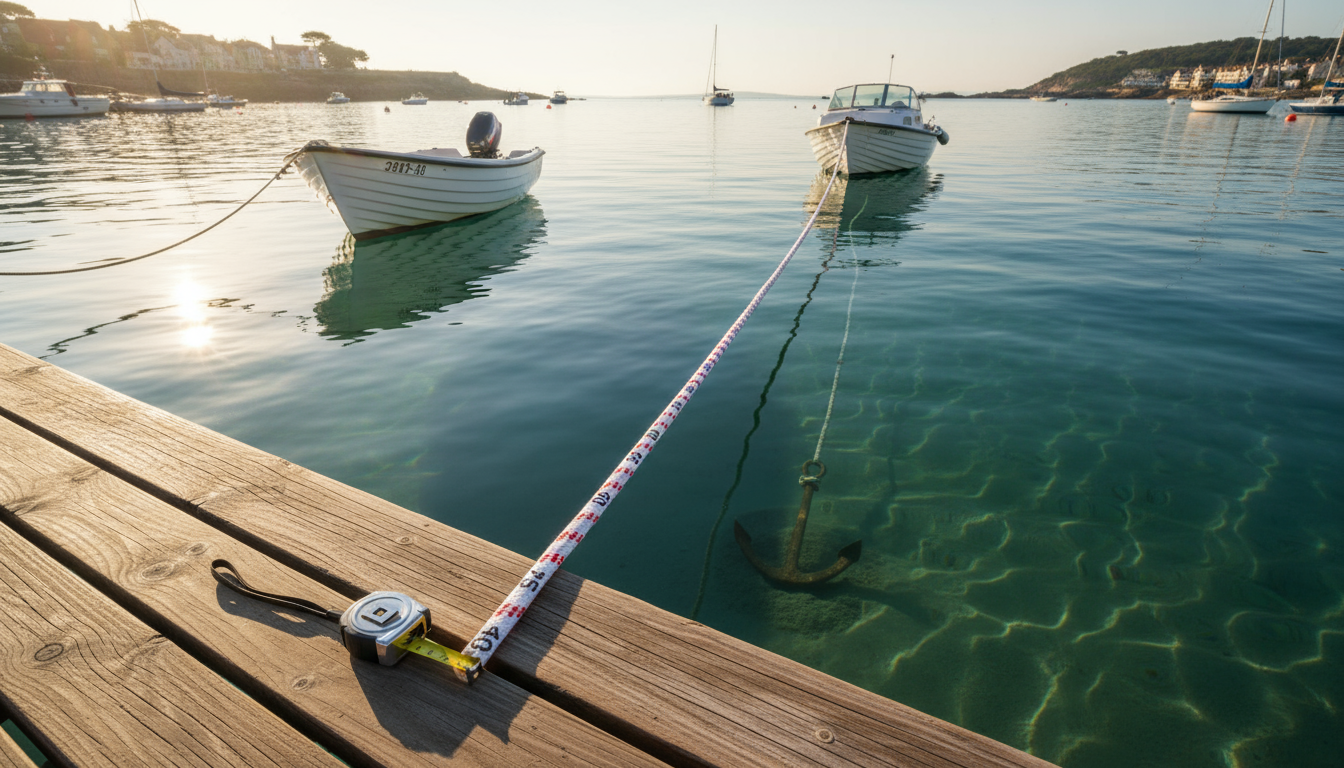
The industry‑standard formula for calculating a safe anchor rode length is:
(Water depth + Bow height) × Scope ratio = Required rope length
Most sailors typically aim for a scope between 7:1 and 10:1. For example, if the water is 6 feet deep and your bow sits 4 feet above the waterline, a 7:1 scope requires (6 + 4) × 7 = 70 feet of rope. This leaves a comfortable margin if you are using a 100 foot rope.
Length
Scope calculation basics
Step 1
Measure water depth at your anchoring spot and add the vertical distance from the waterline to the bow.
Step 2
Choose a scope ratio. Calm conditions often allow 7:1; rougher weather benefits from 10:1.
Step 3
Multiply the sum from Step 1 by the chosen ratio. The result tells you how many feet of rope you need.
Diameter
Rope thickness guide
Rule
Allocate roughly 1/8 inch of rope diameter for every 9 feet of boat length. For example, a 24-foot vessel typically uses a 3/8-inch line, while a 30-foot boat steps up to a 1/2-inch rope.
Why it Matters
The diameter directly influences the working load limit (WLL). A larger rope carries a higher WLL, keeping your operations within the safe 1/10 to 1/4 range of its breaking strength.
Rope‑to‑Chain Combo
Adding a short length of chain at the anchor end absorbs shock, helps the anchor set, and prevents the rope from chafing on the seabed, thereby extending its service life.
Always remember that the working load limit (WLL) should never exceed a quarter of the rope’s rated breaking strength. For instance, if a 100 foot nylon rope has a breaking strength of 5,000 lb, you should aim for a WLL of no more than 1,250 lb for routine anchoring to ensure safety.
By diligently following the scope formula, respecting the diameter rule, and combining the rope with an appropriate length of chain, you will create a robust anchor rode. This setup will perform reliably in both calm harbours and challenging open‑sea conditions, offering peace of mind and enhanced safety.
Customisation and Bulk Purchasing with iRopes
Once you’ve determined the precise length and diameter for a safe anchor rode, you may consider a custom 12 mm anchor rope that perfectly matches your brand and operational needs. iRopes, as a leading rope manufacturer, offers comprehensive OEM and ODM services, allowing you to fine‑tune every detail. This ensures your final 100 foot rope arrives exactly as required, ready to perform.
- Material & Diameter – Select nylon, polyester, polypropylene, or Dyneema. Then choose the exact thickness your vessel or application requires to ensure optimal performance.
- Colour, Pattern & Reflectivity – Options include corporate hues, high‑visibility stripes, or glow‑in‑the‑dark threads for enhanced safety and brand alignment.
- Accessories & Terminations – Add thimbles, shackles, expertly spliced eyes using advanced end splice techniques, or reflective loops, all customised to match your specific application requirements.
These extensive customisation options are available through our OEM (Original Equipment Manufacturer) and ODM (Original Design Manufacturer) programmes. This means you dictate the exact specifications, and our skilled craftsmen handle the precision manufacturing in our state‑of‑the‑art facilities.
IP Guard
All your custom designs and innovations benefit from our dedicated intellectual property (IP) protection, safeguarding them from concept to final delivery.
ISO 9001
Our ISO 9001 certification underpins a rigorous quality system, guaranteeing consistent tensile performance and dimensional accuracy for every single batch we produce.
Plain Packing
We provide flexible non‑branded packaging options, including bags, colour boxes, or sturdy cartons, allowing you to seamlessly integrate your own branding.
World Shipping
We ensure timely delivery and punctual order fulfillment, with direct pallet delivery to customer locations worldwide for large‑scale orders.
Because every kilogram saved matters for a 100 foot boat rope, we maintain competitive pricing without ever compromising the ISO‑backed quality you rightfully expect. Our comprehensive after‑sale support includes expert technical advice, efficient spare‑part sourcing, and rapid replacement for any batch that doesn't strictly adhere to the agreed specifications, solidifying iRopes as your strategic partner.
Ready for a tailored rope solution?
In this guide, we've explored how selecting the appropriate material, braid or twist construction, and carefully calculating the correct diameter and scope can transform a simple 100 foot rope into a reliable anchor rode. We've also highlighted how a 100 foot boat rope can benefit significantly from low‑stretch polyester or a solid‑braid nylon for critical applications like dock lines. iRopes brings these precise specifications to life, offering full OEM/ODM options, custom colour and reflective branding, expertly spliced terminations, and ISO 9001 quality assurance, all shipped globally on demand to meet your needs.
For a personalised design that precisely fits your unique requirements and brand identity, simply fill out the enquiry form above. Our dedicated rope specialists are ready and eager to help you create the perfect, high‑quality rope solution, including custom solid‑braid nylon and polyester ropes.
