500 ft or 1 000 ft rope? Choosing the right length can trim material cost by about 10–15 % and reduce handling time on site.
Read in 2 min – What you’ll gain
- ✓ Identify the fibre that delivers the tensile strength and durability your load requires.
- ✓ Calculate the cost‑per‑foot so you pay the right price for a 500 ft roll.
- ✓ Apply a 5× safety factor for static loads in line with OSHA guidance.
- ✓ Unlock iRopes’ OEM/ODM options to brand your rope with custom colours and packaging.
Most professionals assume that a longer rope automatically inflates their budget, yet the hidden cost drivers are actually diameter, fibre choice and bulk‑order efficiencies. In this guide we explain the simple calculations that can save around 10–15 % per foot with bulk tiers, help you apply OSHA‑aligned safety factors, and show you how to streamline custom branding with iRopes OEM/ODM.
Choosing the Right 500 ft rope for Your Project
Now that you understand how length influences bulk pricing, handling, and storage, let’s drill down into the specifics of a 500 ft rope. A longer coil usually means a lower price per foot, but it also requires more floor space and careful unwinding to avoid tangles. Planning ahead for how you’ll store the coil can save both time and money on the job site.

Below is a quick‑compare view that lets you match material, diameter, tensile strength, and price per foot at a glance. Spot the option that aligns with your budget and performance needs without digging through endless product sheets.
Nylon
Soft, abrasion‑resistant, moderate UV stability (improves with stabilisers).
Polypropylene
Lightweight, rot‑resistant, budget‑friendly.
UHMWPE
Highest strength‑to‑weight, excellent for heavy loads.
Specs
Diameter 1/8", Tensile 150–500 lb (grade‑dependent), $0.02–$0.05 / ft (≈ $10–$25 total).
Specs
Diameter 1/8", Tensile ≈ 150–250 lb, from ≈ $0.01 / ft in bulk; request a quote for 500 ft pricing.
Specs
Diameter 1/8", Tensile ≈ 500–800 lb (grade‑dependent); 1/4" can reach ~1 200 lb. Pricing varies—request a quote.
So, how much does a 500 ft rope cost? Retail prices typically range from $0.02 to $0.07 per foot depending on material and strength, meaning a full roll can sit anywhere between $10 and $35. Bulk discounts often shave 10‑15 % off the total when you order 1000 ft or more.
When you buy a 500 ft rope, the price per foot often drops, but you also need to plan for safe handling, proper storage, and the right diameter to match your load requirements.
With the material and price picture clear, the next step is to compare how different fibres perform in garden‑twine applications, where durability and UV resistance become decisive factors.
Evaluating 500 ft twine Options and Material Performance
When you shift from bulk rope to twine, the same length advantage meets a new set of expectations – colour coding for plant rows, resistance to sunlight, and a gentle touch that won’t damage delicate stems. Understanding how each fibre behaves helps you avoid costly replacements after a single season.

Four synthetic families dominate the 500 ft twine market. Each brings a distinct blend of stretch, UV stability and abrasion tolerance, which determines whether it belongs in a nursery, a construction site or a marine rigging line.
- Nylon – high elasticity, strong abrasion resistance, and moderate UV stability; choose UV‑stabilised grades for long‑term sun exposure.
- Polypropylene – ultra‑light, naturally rot‑resistant, but its UV protection relies on added stabilisers; colour fade is common in full‑sun exposure.
- Polyester – low stretch, excellent abrasion and UV resistance, and retains colour longer than polypropylene under harsh sunlight.
- UHMWPE – the lightest of the group with outstanding tensile strength; its slick surface can slip on wet plant stems without proper knots or hardware.
Gardeners often wonder whether nylon or polypropylene is the better choice for trellising vines. Nylon’s abrasion resistance and stretch make it gentle on stems. For long, sun‑exposed runs, polyester typically outlasts both nylon and polypropylene. Polypropylene is budget‑friendly and rot‑resistant, but it degrades faster under UV unless the twine carries a stabilised coating. If you plan to replace twine each season, polypropylene works; for longer‑term layouts, nylon or polyester offers better longevity.
Industrial users, on the other hand, value abrasion resistance above all. Polyester twine’s tightly woven construction tolerates repeated friction against metal brackets, making it a favourite for temporary safety lines on scaffolding. When maximum load‑to‑weight ratio is required – for example, anchoring lightweight nets on a sailboat – UHMWPE twine delivers high tensile strength; as a guide, 1/4″ can approach 1 200 lb, while 1/8″ typically ranges 500–800 lb depending on grade.
UV Matters
If your 500 ft twine will spend more than a few weeks in direct sunlight, choose a fibre with built‑in UV stabilisers or add a clear UV‑resistant coating. The right choice can significantly extend the service life of the twine.
Beyond fibre chemistry, the final decision often hinges on packaging and handling. A 500 ft roll of nylon twine typically arrives on a recyclable cardboard core, whereas polypropylene is frequently supplied in a bulk bag that protects it during transit. Knowing how each packaging style fits your storage space can prevent unnecessary waste.
With the material performance landscape mapped out, the next logical step is to align the twine’s diameter and tensile rating with the specific load you intend to support.
Sizing and Strength Considerations for a 1000 ft rope
Now that you’ve paired the right fibre with the intended use, the next step is to decide how thick the rope should be and what load it can safely carry. The diameter you choose directly influences tensile capacity, handling weight, and compliance with safety standards.
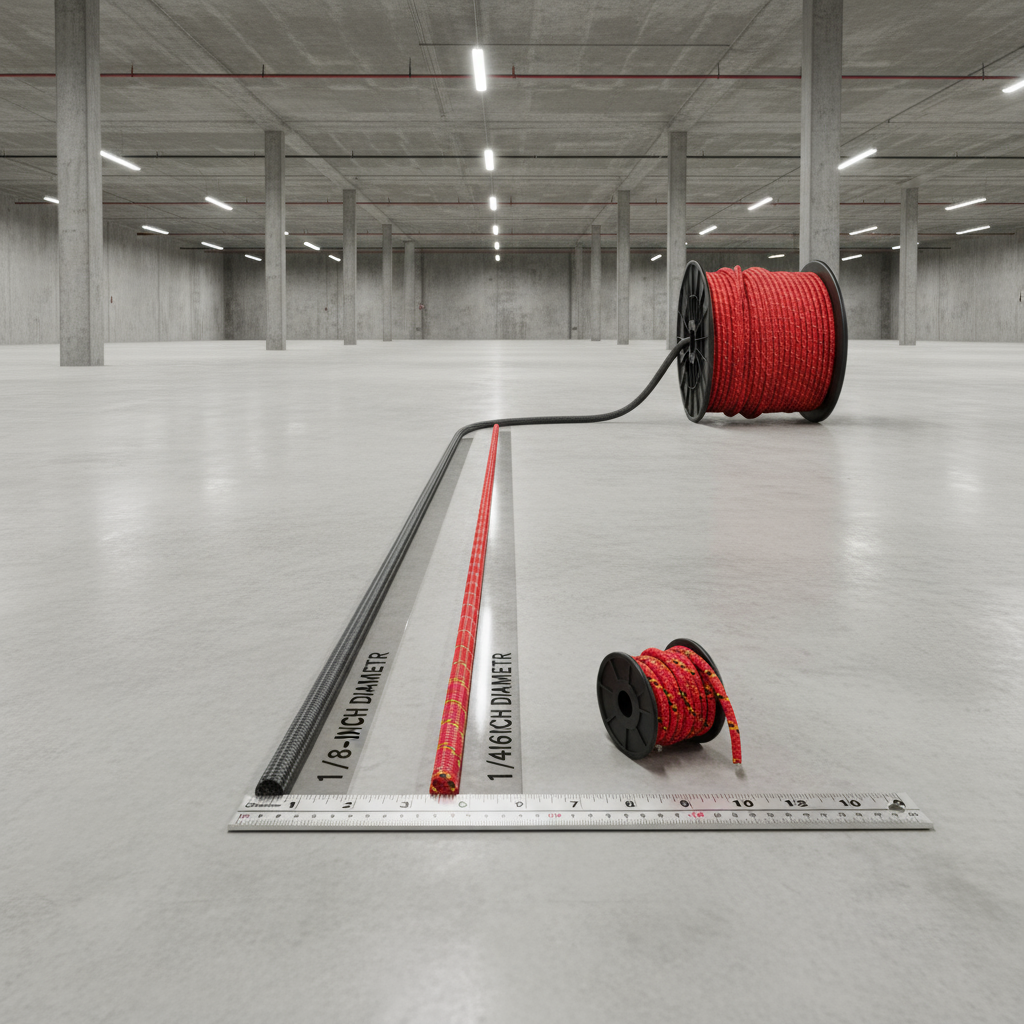
Choosing between the three standard diameters is easier when you know the approximate tensile rating each provides (fibre‑ and construction‑dependent):
- 1/8" – roughly 150–500 lb, ideal for light‑duty rigging or garden‑line applications.
- 3/16" – about 400–800 lb, suited for medium‑load tasks such as temporary anchoring or stage rigging.
- 1/4" – typically 700–1 200+ lb (UHMWPE at the top end), the go‑to choice for heavier loads.
When you translate those numbers into real‑world safety, two calculations become essential: the OSHA‑recommended safety factor and the manufacturer’s load‑capacity guidance. OSHA recommends a minimum factor of five for static loads, meaning a 1/4″ rope rated at 1 000 lb should not be asked to hold more than 200 lb continuously. For dynamic impacts, many engineers apply higher factors (often 8×). By dividing the rope’s rated tensile strength by the chosen factor, you obtain the maximum safe working load for your specific project.
Always verify that the selected diameter meets both the OSHA safety factor and any project‑specific certification requirements before installation.
Answering a common query, “What is the strongest 1000 ft rope available?” – the top performer is a UHMWPE rope in the 1/4″ diameter, delivering tensile strengths up to about 1 200 lb while remaining lighter than comparable steel cables. Its high strength‑to‑weight ratio makes it the preferred option for demanding marine or wind‑farm applications.
Armed with the right diameter, a clear safety‑factor calculation, and knowledge of the strongest available option, you can now match the 1000 ft rope to any load requirement without second‑guessing the numbers.
Custom OEM/ODM Solutions and Ordering Guide
Now that you’ve sized the perfect 1000 ft rope and checked the safety factors, the next step is to turn that specification into a product that bears your brand and meets your exact performance needs. iRopes, an ISO 9001‑certified manufacturer in China with 15 years’ experience, turns premium fibres—UHMWPE, Technora™, Kevlar™, Vectran™, polyamide (nylon) and polyester—into finished solutions that fit your workflow.

Materials
Choose the fibre that fits your task
Nylon
Excellent abrasion resistance and reliable outdoor performance with UV‑stabilised grades.
Polypropylene
Lightweight, rot‑resistant and ideal where weight savings matter.
UHMWPE
Highest strength‑to‑weight ratio, perfect for heavy‑load marine or industrial projects.
Coatings & Options
Add performance layers and branding
UV‑Resistant Finish
Extends outdoor life by shielding fibres from sun‑induced degradation.
Waterproof Sheath
Prevents moisture absorption, essential for marine installations.
Custom Colour & Branding
Full‑colour dye (Pantone‑matched) or printed logo on any length, including 1000 ft ropes.
When you request a bespoke order, iRopes offers flexible minimum order quantities so even niche projects can benefit from OEM pricing. Typical lead times run seven to ten business days for standard colours, with expedited options in three to five days; specialised dyes or branding may add a couple of extra days. Throughout the process, iRopes safeguards your designs with strict IP protection, and you can choose packaging that showcases your brand—bags, colour boxes or cartons, up to custom‑labelled pallets for direct shipment.
Yes, you can get a custom colour for a 1000 ft rope; the factory mixes the dye to match your Pantone reference, applies the colour uniformly with UV‑stable finishes, and then seals each coil in the packaging you specify. For projects that demand the lightest possible solution, consider the UHMWPE rope advantages over steel to maximize strength‑to‑weight performance.
Ready to order?
Contact iRopes with your length, material and colour preferences, and a dedicated engineer will draft a quote that respects your budget and delivery schedule.
Request your custom rope solution today
By now you’ve seen how choosing the right length, fibre and diameter—from a cost‑effective 500 ft rope to a high‑performance 1000 ft rope—affects handling, safety factors and overall budget. As a Made‑in‑China specialist with 15 years’ export experience and ISO 9001 certification, iRopes offers UHMWPE, Technora™, Kevlar™, Vectran™, nylon and polyester ropes with coatings and branding tailored to marine, industrial and sporting projects. Explore our high abrasion and UV resistant rope options for the toughest environments.
If you’d like personalised guidance on selecting the ideal 500 ft twine, material blends or custom colour, simply complete the enquiry form above. Our engineers will help you craft the perfect solution—backed by ISO 9001‑aligned quality assurance, flexible OEM/ODM services and on‑time delivery. Learn how we stack up against the competition in iRopes vs US rope manufacturers.