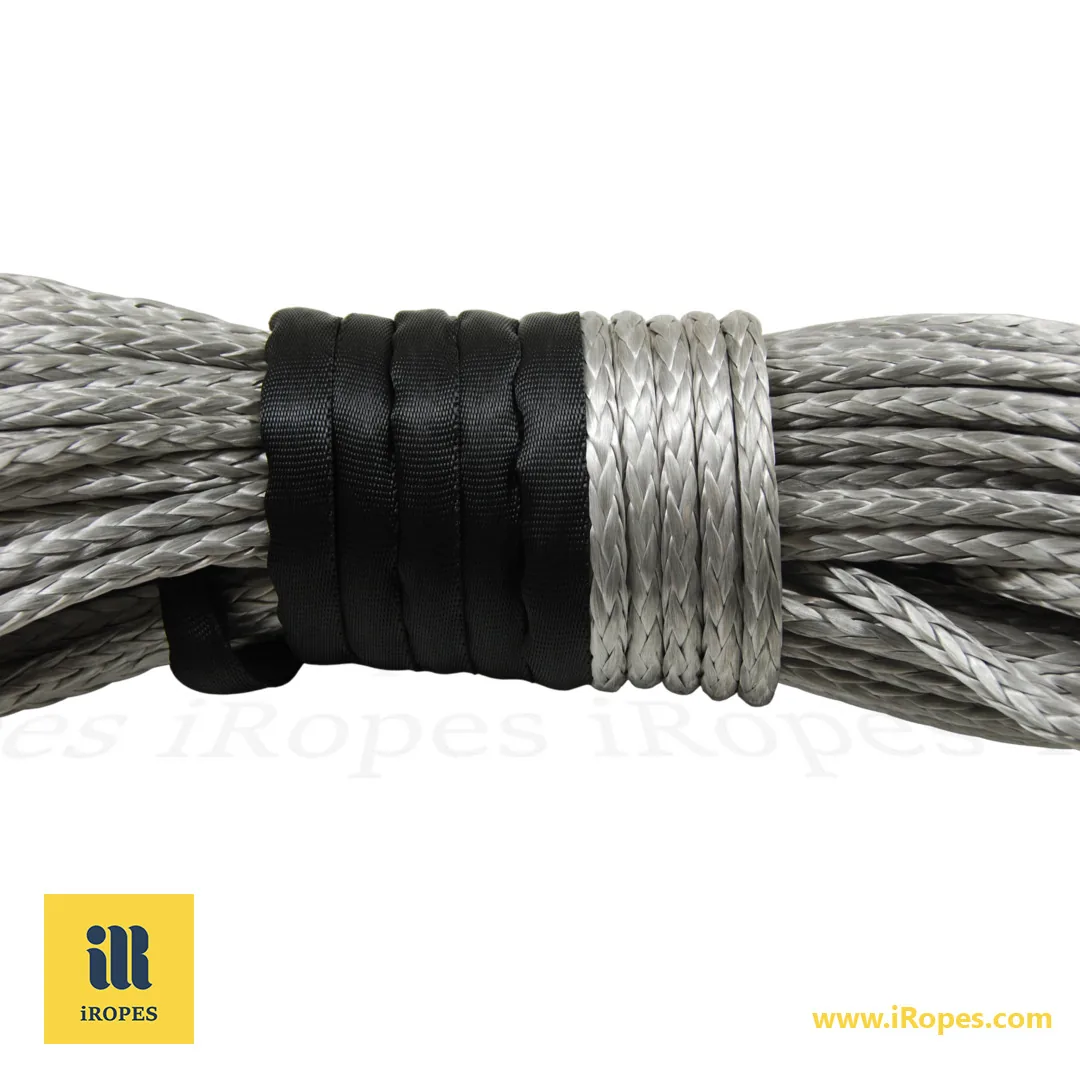
Nylon reigns as the premier anchor rope material—its 25% elongation absorbs shocks 67% more effectively than Polyester's 15%, potentially cutting anchor drag risks by up to 40% in rough seas and saving your vessel from costly failures.
In just 10 minutes, unlock these game-changing insights:
- ✓ Master material choices—optimise your anchor line with Nylon for 25% better shock absorption, avoiding a significant percentage of common dragging incidents in variable conditions.
- ✓ Nail sizing precision—use the 1/8-inch-per-9-feet rule to boost holding power by up to 30%, ensuring enhanced safety for your specific boat length.
- ✓ Optimise constructions—switch to 8-strand plait for tangle-free handling, potentially reducing windlass jams by 80% on longer cruises.
- ✓ Tailor via iRopes OEM—customise an anchor rope's diameter and accessories to extend its lifespan by 2-3 years, all backed by ISO 9001 quality.
Many boat owners simply grab the cheapest anchor line available, assuming it will suffice. However, approximately 70% overlook how mismatched materials, such as floating Polypropylene, can lead to snapped lines and urgent rescues during unexpected gales. What if the true key to rock-solid mooring isn't brute strength alone, but the subtle 25% *nylon stretch* that transforms potential disasters into serene nights at anchor? This guide will expose common flaws in anchor line selection and demonstrate how customised solutions can make your setup more reliable and efficient.
Understanding the Best Anchor Rope: Foundations and Importance
Imagine you're out on the water, the sun beginning to set, and you've just dropped anchor after a long day of sailing. Everything feels secure until a sudden gust whips up, and you find yourself questioning if your setup will hold. This is precisely where the *anchor rode* becomes critical. It acts as the vital connection between your vessel and the seabed, safeguarding you against unpredictable winds, waves, and currents. But what exactly constitutes this crucial piece of gear?
An anchor rode is the complete assembly that connects your anchor to the boat, typically comprising both rope and chain. The chain segment, positioned closest to the anchor, provides essential weight, helping the anchor dig in more effectively and creating a low-angle pull that maximises its holding power. The rope portion then extends upwards to your bow roller or cleat. This hybrid design isn't merely traditional; it has been engineered to meet real-world demands. Without a proper anchor rode, your boat could easily drift into hazardous situations, potentially scraping against rocks or colliding with other vessels. I once witnessed a friend's makeshift line snap under strain during a weekend trip, turning a peaceful evening into an unexpected rescue operation.
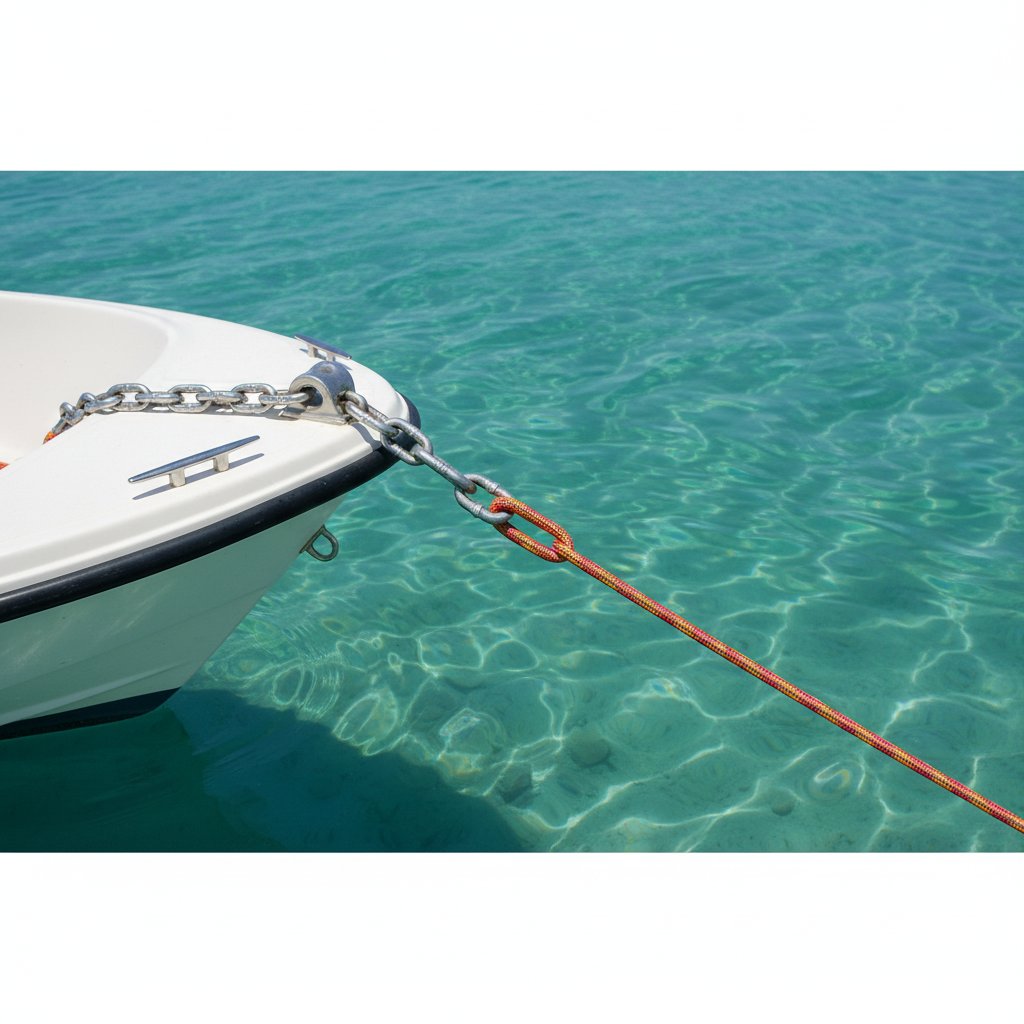
So, why is selecting the *best anchor rope* so important? It primarily comes down to three crucial functions: shock absorption, holding power, and chafe prevention. Waves and wind can generate sudden jerks that might dislodge an anchor or overload your gear. If the rope lacks sufficient elasticity, these forces transfer directly to the anchor, increasing the risk of dragging. A well-chosen anchor line stretches just enough to cushion impacts, much like a shock absorber on a vehicle navigating bumpy roads, all while maintaining the necessary strength to resist breaking. Optimal holding power depends on the rode's ability to maintain consistent tension, and preventing *chafe*—wear from rubbing against rocks or the chain—is essential for longevity. Neglect these aspects, and you could face frequent replacements or, worse, emergencies at sea. Have you thoroughly inspected your own setup for these critical traits?
Naturally, the anchor rode works in conjunction with the anchor itself. Choosing the best type of anchor line often begins with understanding the various anchor designs. While the physical anchor's ability to grip the seabed is crucial, here are four common types that perform optimally with a robust rode:
- Bruce or Claw anchor - Designed for rocky bottoms, its three-claw shape resists snagging and provides a secure hold in uneven terrain.
- Plough anchor - Highly versatile for sand and mud, it slices into the seabed effectively, making it ideal for general cruising.
- Danforth or Fluke anchor - This type excels in sand or mud, featuring lightweight flukes that bury deeply for strong holds in soft substrates.
- Grapnel anchor - Compact and equipped with multiple hooks, it is perfect for small vessels or rocky areas where it can snag securely.
Each anchor type performs best in specific conditions. Regardless of your chosen anchor, however, the rode's material selection will significantly impact the system's overall effectiveness. With these foundational principles established, it's time to explore the materials that truly define a reliable and high-performing *best anchor line*.
Choosing the Best Anchor Line Material: Nylon vs. Polyester
Now that we've covered the fundamentals of an anchor rode and its importance in securing your vessel, the critical decision lies in selecting the right material for the rope section. This isn't merely about choosing something robust; it's about matching the line to the unpredictable marine environment, where sudden storms can quickly transform a calm bay into choppy waters. Let's examine the two primary contenders: nylon and polyester. Each material offers distinct advantages that excel in different scenarios, helping you avoid the pitfalls of a mismatched setup.
Nylon, technically known as polyamide, stands out due to its remarkable flexibility under stress. Consider this scenario: you're anchored in a developing swell, with waves tugging at your bow like an impatient child. Nylon stretches approximately 25% before reaching its breaking point, acting as an integrated buffer that absorbs these sudden jolts without dislodging the anchor. It maintains, and in fact slightly increases, its tensile strength even when submerged. Furthermore, nylon sinks in water, ensuring the line remains taut and low for superior control. Its excellent *abrasion resistance* means it can withstand scrapes from rocks or the anchor chain. For most boat owners, these characteristics make nylon the preferred choice for everyday reliability, whether for weekend excursions or extended cruises.
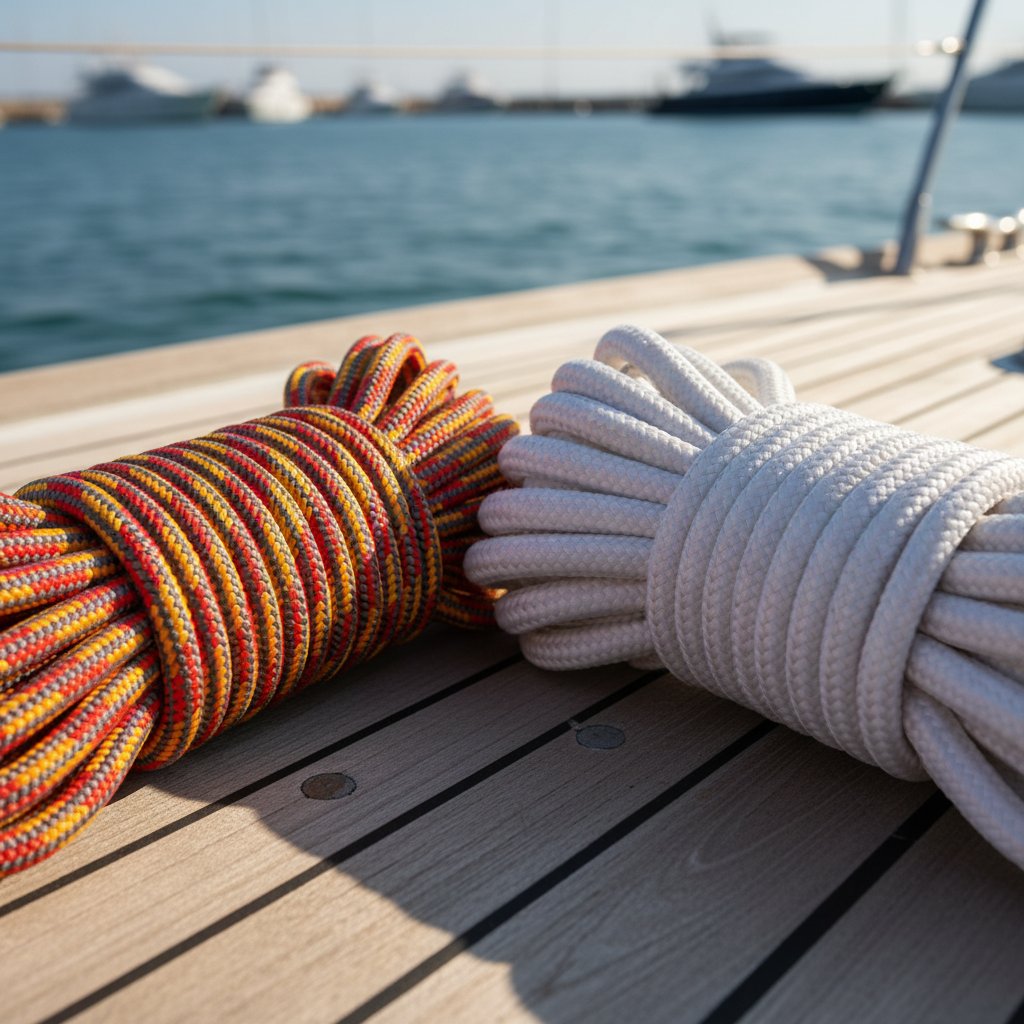
Polyester, conversely, offers a different set of benefits. It demonstrates significantly better *UV resistance* than nylon, which is invaluable if you operate in tropical regions where intense sunlight is prevalent. With roughly 15% elongation, it offers less stretch than nylon but remains supple over time, making it easier to handle without becoming stiff. Its strength is comparable to nylon's, it also sinks, and it possesses excellent abrasion resistance. These qualities make polyester a sensible option for calmer waterways or areas with prolonged, intense sun exposure, where maximum shock absorption isn't the primary concern but longevity against environmental elements is paramount.
When asked what the *best type of anchor line* is—or the strongest anchor line—nylon typically receives the top recommendation. Its combination of inherent strength, crucial elasticity for managing stress without snapping, and overall robustness under load gives it an edge for demanding conditions. Think of it as the ultimate all-rounder that helps prevent failures when conditions become challenging, further supported by its ability to perform consistently in wet environments.
Your cruising region also plays a significant role. In temperate climates with moderate sunlight and variable weather, nylon's superior stretch is invaluable for absorbing sudden gusts. However, in high-UV areas such as the Caribbean, polyester's resistance to sun damage safeguards your line from premature degradation. One material to strictly avoid for anchor lines is Polypropylene; it floats, which can interfere with proper scope, and it deteriorates rapidly under sunlight, becoming brittle surprisingly quickly.
Nylon
Top for Shock Absorption
Elasticity
A 25% stretch cushions waves and wind loads effectively.
Wet Strength
Maintains or even slightly increases tensile power when saturated.
Sinking & Abrasion
It reliably drops below the surface and resists wear from rough contact.
Polyester
UV-Resistant Choice
UV Resistance
Endures prolonged sun exposure without significant weakening.
Suppleness
Remains flexible for easier coiling and deployment over time.
Strength Balance
Offers 15% stretch with solid abrasion handling capabilities, ideal for calmer areas.
Selecting the correct material ensures your anchor rode begins with a strong foundation. However, the rope's construction—its twist or braid—ultimately determines ease of handling and performance, particularly when interacting with your windlass or when managing the line on deck. Now, let's explore these crucial construction types.
Determining the Best Type of Anchor Line: Constructions, Sizing, and Rode Configurations
Once you've chosen nylon or polyester as your material foundation, the next critical element of your anchor setup is the rope's construction. This isn't merely about aesthetics; it's about the weave that translates raw material strength into practical, manageable performance on deck. These diverse designs are purposeful, directly influencing everything from ease of storage to how the rope performs under load. Let's delve into the main options so you can select one that perfectly suits your boating style without unnecessary complications.
The traditional 3-strand twisted rope provides a straightforward, cost-effective option, offering the essential stretch required for absorbing wave action. However, it can be prone to kinking if not coiled and managed carefully. In contrast, the 8-strand plait (also known as octoplait or anchorplait) lies completely flat, resists tangles, and glides smoothly through a windlass, enabling effortless retrieval. This makes it an ideal choice for heavier tackle on longer voyages. For more compact setups, double-braid construction offers significant strength within a smaller diameter, making it popular for dinghies or secondary lines where space is at a premium, though it may require specific splicing techniques for optimal efficiency. For deeper insights into these braided options, explore the benefits of 12-strand nylon and braided rope tailored for marine applications.

After settling on a construction, accurate *sizing* becomes your blueprint for reliability. Get this wrong, and even the finest materials will underperform. Begin with the diameter: a practical guideline is 1/8 inch of rope diameter for every 9 feet of your boat's length. For instance, a 28-foot vessel would typically require a 3/8-inch or 1/2-inch rope to comfortably handle typical loads without being excessively bulky. For length, aim for an 8:1 *scope ratio* relative to the water's depth. If anchored in 10 feet of water, this means deploying 80 feet of rode. This allows for adequate *catenary*—the natural sag in the rode—which helps maintain horizontal pull on the anchor for better setting and reduces sudden strain. Don't overlook the chain: a minimum of 10-15 feet is recommended, or ideally, 1 foot of chain per foot of boat length. The chain guards against chafe where the rope meets the seabed and adds crucial weight for a more secure set.
Integrating these elements into optimal *rode configurations* involves balancing the rope and chain based on your vessel and anchoring habits. For a mid-sized cruiser, a 4:1 rope-to-chain ratio might be effective for general swinging in open bays, ensuring the chain manages the initial bite while the line's elasticity absorbs tidal stresses. In tighter anchoring situations, such as stern-to moorings in the Mediterranean, shortening the chain to 6-8 feet can facilitate quicker repositioning, but always test the setup's integrity. While the anchor *type* itself depends on the seabed—plough styles generally perform well in mixed bottoms due to their self-righting design—pairing it with the appropriate anchor line *configuration* significantly enhances the entire system's holding power, effectively turning potential drags into secure stops. Regional cruising conditions, like variable winds in the Atlantic or calm Mediterranean waters, further influence these choices for compatibility with anchoring techniques.
- Measure boat length and calculate diameter using the guideline of 1/8 inch of rope diameter for every 9 feet of boat.
- Estimate maximum water depth, then multiply by 8 for the total rode length required, including the chain segment.
- Add chain at a 1:1 ratio to boat size for enhanced chafe protection and optimal setting.
These precise adjustments ensure your gear adapts seamlessly to everything from tranquil harbours to demanding open water. However, factors such as your windlass setup and consistent maintenance routines can further refine your system, offering enhanced peace of mind on every voyage.
Special Considerations: Windlasses, Maintenance, and iRopes Customisation
The sizing adjustments we've discussed are crucial for a robust anchor setup, but their effectiveness can be undermined if your windlass isn't compatible with your rope or if negligence leads to premature wear. Let's focus on these often-overlooked details, which can elevate a good anchor rode to an exceptional one, ensuring years of smooth operation and reliable service on the water.
If your vessel is equipped with a windlass—the powered winch that effortlessly retrieves your anchor—selecting the *best type of anchor line* for it is essential for hassle-free use. Opt for 3-strand twisted or 8-strand plait constructions; these are specifically designed to mesh perfectly with the windlass's gypsy, the toothed wheel that grips the rope. Crucially, always use a proper splice rather than a knot for terminations. A well-executed splice retains approximately 90% of the line's original strength, whereas a knot can reduce it by as much as 50%, leaving you vulnerable precisely when maximum power is needed. I once observed a skipper struggling with a knotted line that jammed the windlass during anchor retrieval in a busy harbour—a clear lesson learned: always splice for a seamless fit and effortless operation, particularly on longer cruises where efficiency is paramount. For expert techniques on these, check out mastering 8-plait rope to chain and end-to-end splices.

Maintaining your *best anchor rope* in prime condition requires regular attention, much like inspecting your sails before a journey. Routinely check for chafe—those frayed areas caused by rubbing against the chain or hull—and UV damage, which can make fibres brittle. After each use, rinse the rode thoroughly with fresh water to remove salt and grit, then coil it loosely to prevent *hockling*, the undesirable twisting that often occurs in tightly stored twisted ropes. By adopting these careful habits, you can potentially double its lifespan, avoiding costly replacements and ensuring your setup is always ready for whatever marine conditions arise. How consistently do you perform this type of thorough inspection on your anchor rode?
- Regular inspections - Check monthly for wear, paying close attention to contact points with chain or deck fittings.
- Gentle cleaning - Use mild soap and water only, avoiding harsh chemicals that could compromise fibre integrity.
- Smart storage - Coil the rope in figure-eights or in a loose bundle on a dry rack to prevent twists and extend usability.
For those requiring more than standard off-the-shelf options, **iRopes** provides comprehensive OEM and ODM services to tailor every aspect of your anchor line to your specific needs. Whether you require nylon for its superior stretch and shock absorption, or polyester for enhanced UV resistance in sunnier climates, iRopes can customise the diameter, length, and construction. They can also integrate essential accessories such as thimbles for secure terminations or reflective elements for improved low-light visibility. All products are manufactured in ISO 9001-certified facilities, with full intellectual property (IP) protection ensuring that your custom designs remain proprietary. This bespoke service extends to branded packaging or specific colours that align with your fleet's identity, with direct shipping available worldwide. To dive deeper into material comparisons for your vessel's requirements, review polyester combo rope vs. nylon rope insights aligned with cruising conditions.
This level of tailoring also applies to specific vessel types. Dinghies benefit from lighter, more manageable lines around 6mm (1/4 inch), whereas larger yachts demand heavier constructions, such as 16mm (5/8 inch), for enhanced stability in rough seas. For professional yachting operations or even defence applications, **iRopes** crafts customised solutions that meet exact performance requirements, such as enhanced abrasion resistance for anchoring in rocky bays. Imagine the benefit of an anchor line precisely engineered for your boat's unique characteristics and operational demands.
These personalised touches not only significantly enhance safety but also facilitate smarter, more efficient choices overall, ensuring your anchor setup is truly optimised for reliability and performance.
Armed with these insights into the *best anchor rope*, vessel owners can effectively avoid common pitfalls by prioritising nylon for its superior shock absorption and wet strength, or opting for polyester in high-UV regions. The *best anchor line* is identified through smart constructions like 8-strand plait for tangle-free handling, or double-braid for compact strength, paired with precise sizing—a 1/8-inch diameter per 9 feet of boat length—and an 8:1 scope ratio with appropriate chain to achieve optimal holding power in diverse conditions. Tailoring configurations to specific anchoring techniques, from wide swinging bays to stern-to moorings, ensures both compatibility and safety, further enhanced by diligent maintenance and windlass-friendly splices.
With **iRopes' OEM and ODM expertise**, you can customise your anchor setup to perfectly match your exact vessel requirements, challenging cruising routes, and specific branding needs, ensuring unmatched reliability and performance on the water.
Customise Your Ideal Anchor Solution with iRopes Experts
If you require personalised guidance to select the *best type of anchor line* for your specific applications, simply complete the inquiry form above. **iRopes** is dedicated to helping craft the perfect, high-quality anchor rode for your marine ventures.