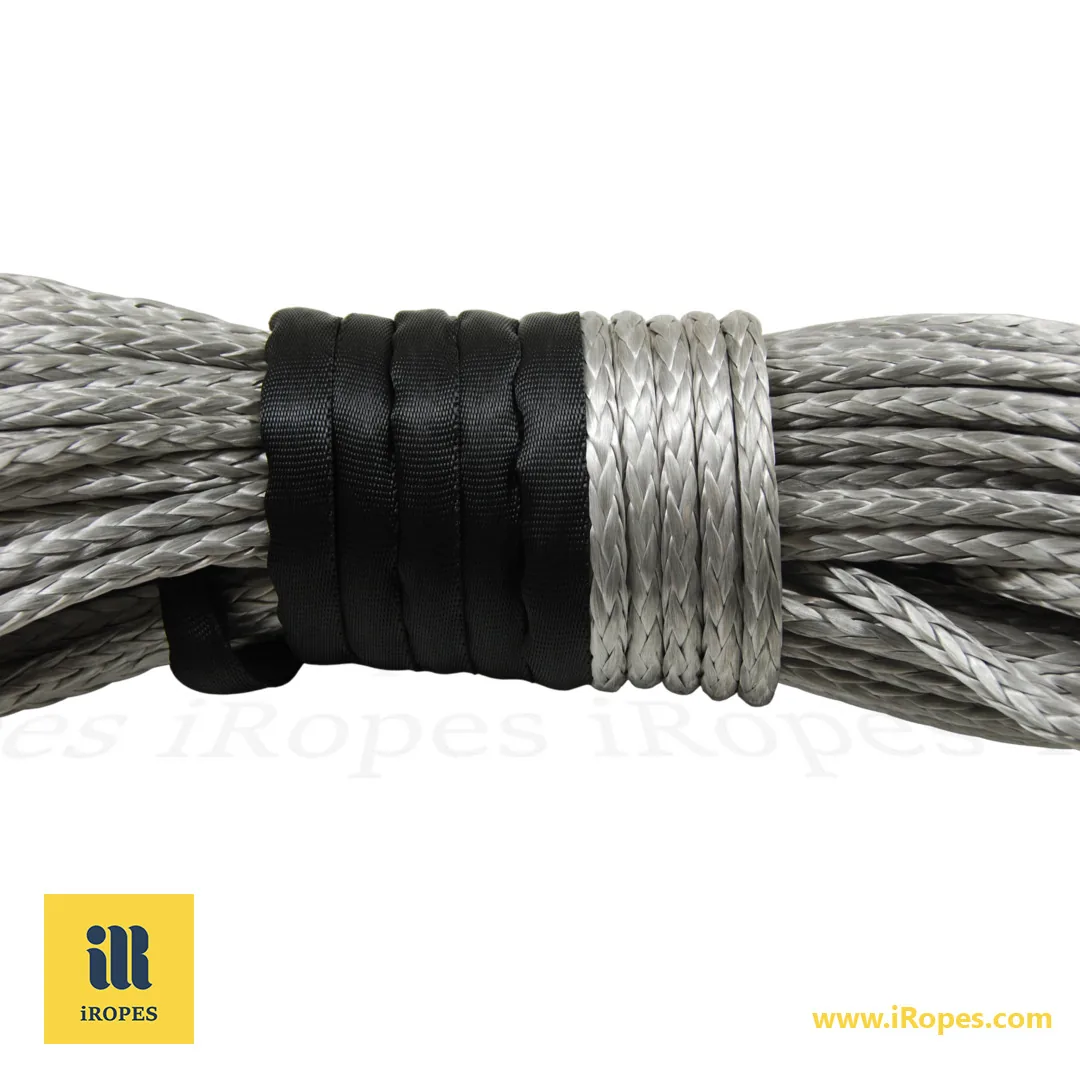
12‑strand ropes deliver up to 20% higher shock‑absorption while weighing as little as 0.12 lb per 100 ft – the perfect blend of strength and lightness for marine, industrial and outdoor jobs.
Key gains – ~3 min read
- ✓ Up to 20% more elastic energy dissipation than lower‑strand ropes – cuts line wear and extends service life.
- ✓ Weight as low as 0.12 lb / 100 ft for UHMWPE variants – eases handling, storage and shipping costs.
- ✓ Custom diameters (1/8″‑2″) and colours with ISO 9001‑backed quality – eliminates re‑order delays and reinforces branding.
- ✓ Competitive pricing – ½″ 12‑strand nylon from about $0.44 / ft, with most typical ½″ lengths under $500 for bulk orders.
You might assume only bulky, heavyweight ropes survive the pounding forces of a sea‑borne mooring, yet a 12‑strand braid delivers spring‑like shock‑absorption in a fraction of the mass. What if you could accelerate delivery by up to 30% and reduce warranty claims, while showcasing your brand in vivid colours without compromising tensile strength? The next few minutes reveal the exact specs, splice shortcuts, and iRopes’ OEM edge that make this versatile rope the smartest choice for your projects.
12 strand mooring rope: Benefits and key applications
After exploring the wide world of rope constructions, it’s time to see why the 12 strand mooring rope stands out when you need a line that can survive the relentless pull of waves and wind.

The 12‑strand braid creates a natural “spring” effect. When a vessel swings against the line, each strand flexes slightly, spreading the load across the whole braid. That built‑in elasticity reduces peak forces, meaning less wear on both the rope and the hardware.
- Superior shock‑absorption – the twelve interwoven strands dissipate wave energy, extending line life in harsh marine conditions.
- Diameter & tensile‑strength range – marine‑grade 12‑strand mooring rope typically runs from ¼″ to 2″, delivering tensile strengths from roughly 4 200 lb at ¼″ up to around 30 000 lb at larger diameters, depending on material.
- Real‑world custom case – iRopes supplied a ½″ black 12‑strand nylon mooring rope to a European yacht charter fleet (≈ 10 000 ft total). Produced under ISO 9001 quality management with branded packaging, the order arrived about 30% faster than off‑the‑shelf alternatives and warranty claims dropped by approximately 12% in the first season.
That European fleet example shows how a well‑specified 12 strand mooring rope can turn technical advantages into operational gains. By selecting the right diameter for the vessel’s displacement and choosing a colour that matches the brand, the owner gains performance and a presentable dockside appearance.
“Switching to a 12‑strand braided line gave our fleet a noticeable reduction in line wear during rough seas, and the custom branding turned the rope into a floating advertisement for our charter service.” – Fleet manager, Mediterranean yacht charter company.
Understanding these benefits makes it easier to decide which diameter and material suit your own mooring needs. In the next part we’ll dive deeper into why nylon is the material of choice for high‑stretch mooring applications and how its properties complement the 12‑strand design.
12 strand nylon rope: Material strength, stretch, and performance
Building on the shock‑absorbing advantage of the 12‑strand construction, the choice of material determines how much pull the line can take and how it behaves under sunlight and salt spray.

When you compare nylon with polyester and UHMWPE, three performance pillars emerge: ultimate load capacity, how much the rope elongates under load, and the weight you have to carry on board.
- Tensile strength – a ½″ 12‑strand nylon rope typically delivers around 7 850 lb, slightly higher than a comparable polyester line (≈ 7 500 lb) and lower than UHMWPE (≈ 12 000 lb).
- Elongation at load – nylon stretches 20‑30% before reaching its breaking point, giving the “spring” effect needed for wave‑laden moorings; polyester only 5‑10% and UHMWPE under 3%.
- Weight per 100 ft – at small diameters, nylon starts around 0.44 lb and polyester around 0.5 lb; UHMWPE can be as low as 0.12 lb. Weight increases with diameter.
Answering the common query “How strong is a 12‑strand nylon rope?” the key figures are summarised below.
| Diameter | Tensile Strength (lb) | Elongation % |
|---|---|---|
| ¼″ | 4 200 lb | 22‑28 |
| ½″ | 7 850 lb | 20‑30 |
| ¾″ | 12 600 lb | 18‑25 |
Beyond raw strength, nylon’s UV stability helps protect fibres from sun‑induced degradation, a critical factor for lines that sit exposed on docks for months at a time. The material also resists abrasion at chafe points, so a nylon dock line can retain performance even after repeated tightening and loosening cycles.
Customisation
iRopes can colour‑match a 12‑strand nylon rope to your branding, add thimbles or loops, and ship it in non‑branded cartons. All production runs are conducted under ISO 9001‑certified quality management, supporting the repeatability of the tensile data you see on the spec table across every metre.
With the material fundamentals laid out, we can now explore how the 12‑strand braid itself is built and what custom options are available for wholesale buyers.
12 strand braided rope: Construction, customization, and OEM/ODM advantages
Building on the material fundamentals, the next step is to understand how the 12 strand braided rope itself is constructed and why that matters for flexibility, weight and strength.

A 12‑strand rope consists of twelve individual strands interwoven in a single‑braid pattern. In a solid‑braid construction, the line feels stiffer and transmits load more directly. A hollow‑braid version, by contrast, creates a small internal cavity that lets the rope flex more freely, giving a softer “spring” feel that many dock‑line operators prefer. In short, geometry defines the balance between rigidity and give.
Solid braid
Delivers higher stiffness, ideal for winch‑handled rigging where minimal stretch is critical.
Hollow braid
Provides extra flexibility and a lighter feel, perfect for mooring lines that must absorb wave impact.
Higher stiffness
Maintains precise line length under load, beneficial for sail‑boat rigging and cargo tie‑downs.
Weight reduction
Hollow geometry can reduce weight and improve handling during installation.
Beyond the braid itself, iRopes offers a breadth of customisation options that turn a functional line into a brand asset.
Customization
Tailor‑made for wholesale
Colour range
Choose from standard hues or request a bespoke Pantone match that aligns with your corporate palette.
Branding
Coloured tracers in the rope or printed packaging ensure every coil promotes your brand.
Accessories
Add thimbles, loops, or specialised terminations during the finishing process.
OEM/ODM
Quality & IP protection
ISO 9001
Every production run follows certified quality‑management procedures, supporting repeatable tensile data.
IP protection
Your design specifications remain confidential from concept to delivery, safeguarding innovation.
Global shipping
Direct pallet dispatch to ports or warehouses worldwide reduces lead‑time and handling costs.
All iRopes 12‑strand braided ropes are produced under ISO 9001 quality management, supporting repeatable tensile data and providing full intellectual‑property protection for every custom order.
By selecting the appropriate braid geometry, colour, and OEM services, wholesale buyers can order a rope that meets exact load requirements while reinforcing brand visibility. The next logical step is to match those specifications to a specific project, ensuring the right diameter and material are chosen for optimal performance.
Choosing the right 12‑strand rope for your project
With the material fundamentals and braid geometry explained, the next step is to match a rope’s size and composition to the specific load and environment it will face. Selecting the correct diameter and fibre type can prevent premature wear and keep safety factors comfortably above the required minimum.

Below is a quick‑calc guide that lets engineers and specifiers translate a design load into a recommended rope size. The principle is simple: the rope’s minimum breaking load should be at least 1.5 × the maximum anticipated load.
- Determine the peak load – add a safety margin for dynamic forces such as wave impact or sudden tension spikes.
- Multiply by 1.5 – this gives the minimum tensile capacity the rope must provide.
- Match to a catalogue value – choose the smallest diameter whose published tensile strength exceeds the calculated figure.
For example, a mooring system expecting a maximum static load of 9 000 lb would require a rope capable of at least 13 500 lb breaking strength. A ½″ 12‑strand nylon rope (≈ 7 850 lb) would be undersized, whereas a ¾″ nylon line (≈ 12 600 lb) still falls short, prompting a move to a 1‑inch diameter or to a higher‑strength material such as UHMWPE.
Material comparison at a glance
| Variant | Typical tensile strength (lb) | Elongation % | Weight / 100 ft (lb) |
|---|---|---|---|
| 12‑strand UHMWPE rope | 12 000 – 70 000 | < 3 | 0.12 – 30 |
| 12‑strand nylon rope | 4 200 – 30 100 | 15‑30 | 0.44 – 100 |
| Multi‑purpose 12‑strand blend | 6 000 – 15 000 | 10‑20 | 0.40 – 70 |
UHMWPE delivers the highest strength‑to‑weight ratio, making it ideal for long‑span offshore applications where handling weight matters. Nylon provides generous stretch and good UV resistance, perfect for dock lines that need to absorb wave energy. The blended multi‑purpose variant balances cost, flexibility, and durability for general‑purpose rigging. We have 12‑strand ropes for sale, including 12‑strand braid, 12‑strand UHMWPE rope, nylon accessory cord, and other multi‑purpose 12‑strand ropes.
Tip
When a project demands a visible safety colour, iRopes can dye a 12‑strand rope to any Pantone match while retaining the required tensile specification.
Frequently asked questions
What defines a 12‑strand rope? It is a single‑braid construction where twelve individual strands are interwoven in a uniform pattern, giving a blend of high strength and manageable flexibility compared with lower‑strand ropes.
How do you splice a 12‑strand rope? A reliable class‑1 eye splice follows five steps: (1) mark fid lengths, (2) form the eye, (3) open the braid and bury the tail with a fid, (4) taper and milk the bury, and (5) set the splice under moderate tension.
Can the rope be supplied in a custom colour? iRopes offers full colour‑matching services, from standard marine blues to corporate Pantone shades, with colour applied during manufacturing to ensure uniformity throughout the length.
Armed with the quick‑calc method, a clear material matrix, and answers to common queries, specifiers can now select the exact 12‑strand solution that meets load, durability, and branding requirements without guesswork. We have 12‑strand braid, 12‑strand UHMWPE rope, nylon accessory cord, and multi‑purpose 12‑strand options available for wholesale orders. The next part will explore how to request a tailored quote and streamline the ordering process.
Need a custom solution for your 12‑strand rope project?
If you’d like personalised assistance tailoring a rope to your exact specifications, please complete the form above.
The article has shown how a 12 strand mooring rope delivers superior shock‑absorption and load capacity for demanding marine and industrial applications, while a 12 strand nylon rope adds high stretch, UV resistance and easy branding. Coupled with the versatile 12 strand braided rope construction—offering solid or hollow braids, colour matching, accessories and ISO 9001‑backed OEM/ODM support—iRopes can tailor a solution that meets exact tensile, weight and aesthetic requirements.
Whether you’re specifying dock lines, rigging gear or specialised outdoor ropes, our experts can fine‑tune diameter, material and finish to optimise performance and cost.
Explore our 12‑strand rope range, including braid, UHMWPE, nylon accessory cord, and multi‑purpose options.