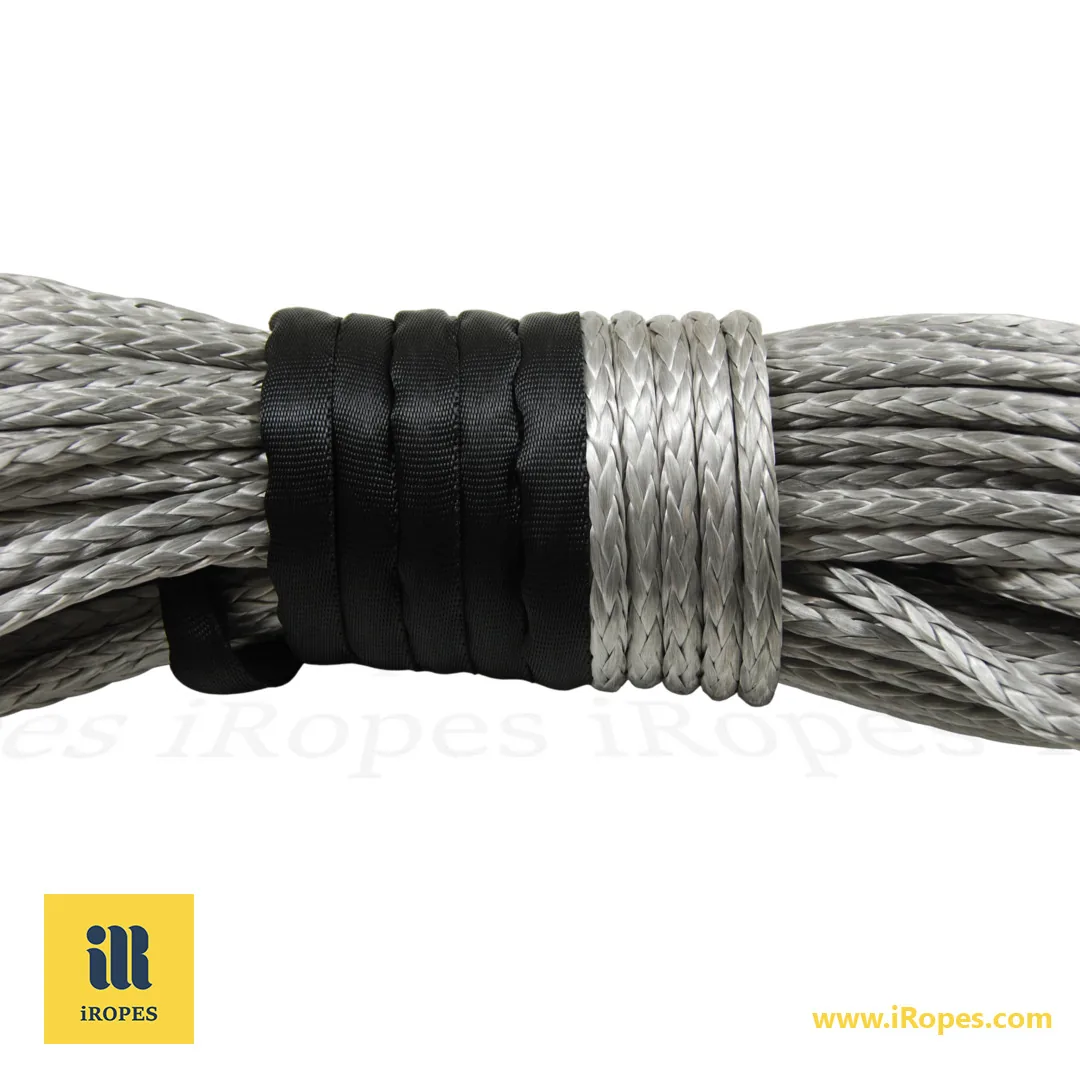
A 1/2‑inch steel cable pulls 29,760 lb, yet a same‑size UHMWPE rope lifts 27,500 lb at 68 % less weight — the lighter winch wins.
≈1 min read
- ✓ Cut rope weight by 68 %, lowering fuel use.
- ✓ Retain 95 % of steel’s strength – no power loss.
- ✓ No wire recoil – safety improves up to 40 %.
Imagine retaining steel’s raw pulling power while shedding two‑thirds of the weight. You can achieve this with iRopes’ advanced UHMWPE ropes. Let's explore how.
braided steel cable: Fundamentals and Applications
The demand for reliable winch solutions in heavy-duty industries is constant. Braided steel cable has traditionally been the backbone of heavy-duty pulling, performing across a variety of applications from winching and lifting to general rigging. When selecting a cable, you need confidence that its material, size, and construction will withstand the toughest jobs without unexpected failures.
What is a braided steel cable?
A braided steel cable is a flexible rope formed by twisting multiple steel wires together in a helical pattern. This braiding provides a smooth surface, makes handling easier, and allows the rope to bend around drums without kinking. Unlike a simple steel wire, the braided construction distributes the load across numerous strands, which significantly improves fatigue resistance.

Key specifications for a 1/2‑inch variant
- Diameter – 0.50 in (12.7 mm) standard for many winch applications.
- Breaking strength – typically 21,600 – 29,760 lb, varying with construction and material.
- Working load limit (WLL) – approximately 6,650 lb when a 3:1 safety factor is applied.
Did you know a standard 1/2‑inch steel winch cable can handle over 20,000 lb of tension? This answers the common question, "What is the strength of a 1/2 inch winch cable?" The ultimate (breaking) strength typically ranges from 21,600 lb to 29,760 lb. However, for safe operation, the recommended working load limit (WLL) sits near 6,650 lb, factoring in a crucial safety margin. Applications include off-road, lifting, and towing.
Common constructions and their impact on performance
The most frequent lay patterns for braided steel cable are 6x19 and 6x37. A 6x19 construction uses six strands, each with 19 wires, offering a good balance of flexibility and abrasion resistance. This makes it ideal for winches that wrap around drums repeatedly. The 6x37 variant, on the other hand, adds more wires per strand, increasing fatigue life but making the cable slightly stiffer. Choosing between these options depends on how often the cable will bend and the level of surface wear you anticipate. Understanding these constructions is vital for optimising performance and longevity.
When a steel cable snaps, the recoiling wire can become a lethal projectile – a risk that synthetic ropes virtually eliminate.
Understanding these fundamentals equips you to pick the right 1/2 steel winch cable for your operation. Next, we’ll examine how different wire grades and rotation‑resistant designs further influence strength, durability, and safety, building on this foundational knowledge.
braided steel wire: Material Grades and Construction Types
Building on the basics of braided steel cable, the next step is to understand how the wire itself varies. Different grades and constructions dictate how a braided steel wire behaves in winching, lifting, or rigging applications, and they also affect long‑term maintenance and performance.

Grades and what they mean for performance
Three primary grades dominate the market for braided steel wire:
- Galvanized – Steel strands are dipped in zinc, creating a protective coating that slows rust in humid or coastal environments. This enhances resistance to corrosion.
- Bright (un‑coated) – This type offers the highest tensile strength because it lacks a coating, but it requires regular oiling to fend off corrosion and maintain performance.
- Stainless (typically 304) – Stainless steel combines excellent corrosion resistance with good strength, making it the preferred choice for marine or chemical‑exposed applications where durability against harsh elements is crucial.
When you compare these grades, the trade‑off is usually between raw strength and durability against the elements. A stainless‑grade wire may have a slightly lower breaking strength than a bright‑grade counterpart, yet it can significantly outlast a galvanized one in salty air, making it a valuable choice for specific environments.
Construction patterns that resist rotation
Beyond material, the way wires are assembled significantly matters. Rotation‑resistant designs, such as 8x19 and 19x7, place multiple smaller strands around a central core. This construction reduces the rope's tendency to twist under load, crucial for applications involving unguided loads. The 1x7 configuration, featuring a single massive strand, offers maximal crush resistance but can bind when used on a drum that requires frequent turns. Each construction serves specific performance needs.
Safety check: the 3‑6 wire rope rule
Regular inspection prevents catastrophic failures and ensures operational safety. The industry-standard “3-6 rule” states that a wire rope should be removed from service if any of the following conditions appear:
- Six or more broken wires in a single lay (one helical turn of a strand around the rope axis).
- Three or more broken wires in a single strand within one lay.
- Visible crushing, bulging, or core damage that compromises the rope’s circular shape or integrity.
Following this guideline keeps your 1/2 steel winch cable fleet safe and extends its service life, preventing potential accidents and costly downtime.
How galvanisation influences performance
Galvanisation adds a sacrificial zinc layer that corrodes before the underlying steel, providing enhanced protection. In dry, inland settings, this coating may add unnecessary weight. However, in offshore or rain‑swept locations, galvanisation can add years of usable life to the cable. Over‑galvanised wire can become brittle, so specifying the correct zinc thickness is a critical part of the selection process, balancing protection with performance.
Custom Solutions
iRopes can tailor wire‑grade, construction, length, and colour to match your brand or project specifications. We deliver OEM or ODM steel wire that consistently meets ISO‑9001 quality standards, ensuring precision and reliability for your needs.
With the material grade, construction pattern, and inspection routine clarified, you’re ready to weigh steel against modern synthetic alternatives in our upcoming comparison. This knowledge will guide informed decision‑making for your specific applications.
1/2 steel winch cable: Selection, Comparison, and Customization
Having explored the nuances of steel‑wire grades and construction, you’re now ready to decide which winch cable truly fits your operation. The optimal choice hinges on three practical dimensions: the load you must move, the environment that will challenge the rope, and the overall cost of ownership.

Use the following checklist to narrow down the ideal 1/2 steel winch cable for your specific project (see our ultimate guide to choosing the best winch line):
- Load requirement – Carefully calculate the maximum breaking strength and working load limit needed to match your heaviest anticipated pull safely.
- Operating environment – Consider factors like corrosion, extreme temperatures, and abrasion when choosing the appropriate material and construction type.
- Budget and lifecycle cost – Weigh the upfront price against long‑term expenses such as maintenance, replacement frequency, and potential downtime, ensuring cost‑effectiveness.
When you compare these steel specifications against a modern synthetic UHMWPE rope, a clear pattern emerges. Synthetic rope delivers comparable breaking strength while shedding most of the mass. Crucially, it eliminates the dangerous recoil that can follow a steel‑cable snap, offering a significant safety advantage.
Synthetic UHMWPE rope cuts weight by up to 70 %, offers similar strength, and removes the sharp‑wire recoil hazard of steel cables.
iRopes excels at turning these selection decisions into tailor‑made solutions. Whether you require a galvanized 6x19 strand for rugged off‑road work, a stainless‑steel 6x37 core for marine exposure, or a colour‑coded length that aligns with your branding, our OEM/ODM service provides the exact specifications you need. We also offer custom terminations, loops, thimbles, and branding options for packaging, ensuring your cable arrives ready to be mounted on your winch.
In short, the best cable for a winch is the one that reliably meets your load requirements, withstands your specific environment, and fits your budget. If you prioritise lighter handling, reduced injury risk, and an impressive strength‑to‑weight ratio, a synthetic UHMWPE rope often proves to be the optimal choice. Learn more about the advantages of UHMWPE rope in our guide on UHMWPE boat winch cable benefits, and see how it compares to steel in our fiber vs steel winch cable comparison. When those priorities align, iRopes’ custom‑fabricated solutions effectively bridge the gap between safety and performance, empowering your operations.
Looking for a custom winch‑rope solution? Get expert advice below
You've seen how a braided steel cable delivers raw pulling power, but its weight and the dangerous recoil of a snapped strand can limit safety. In contrast, a synthetic UHMWPE rope provides comparable breaking strength while cutting weight by up to 70 % and eliminating the sharp‑wire hazard, making it the smarter choice for many applications. iRopes can tailor the rope’s colour, length, terminations, and branding to match your exact requirements, ensuring you get the safest, lightest, and most efficient winch system.
If you’d like a solution designed specifically for your project, please complete the form above, and our specialists will guide you through the optimal configuration, ensuring all your unique needs are met.