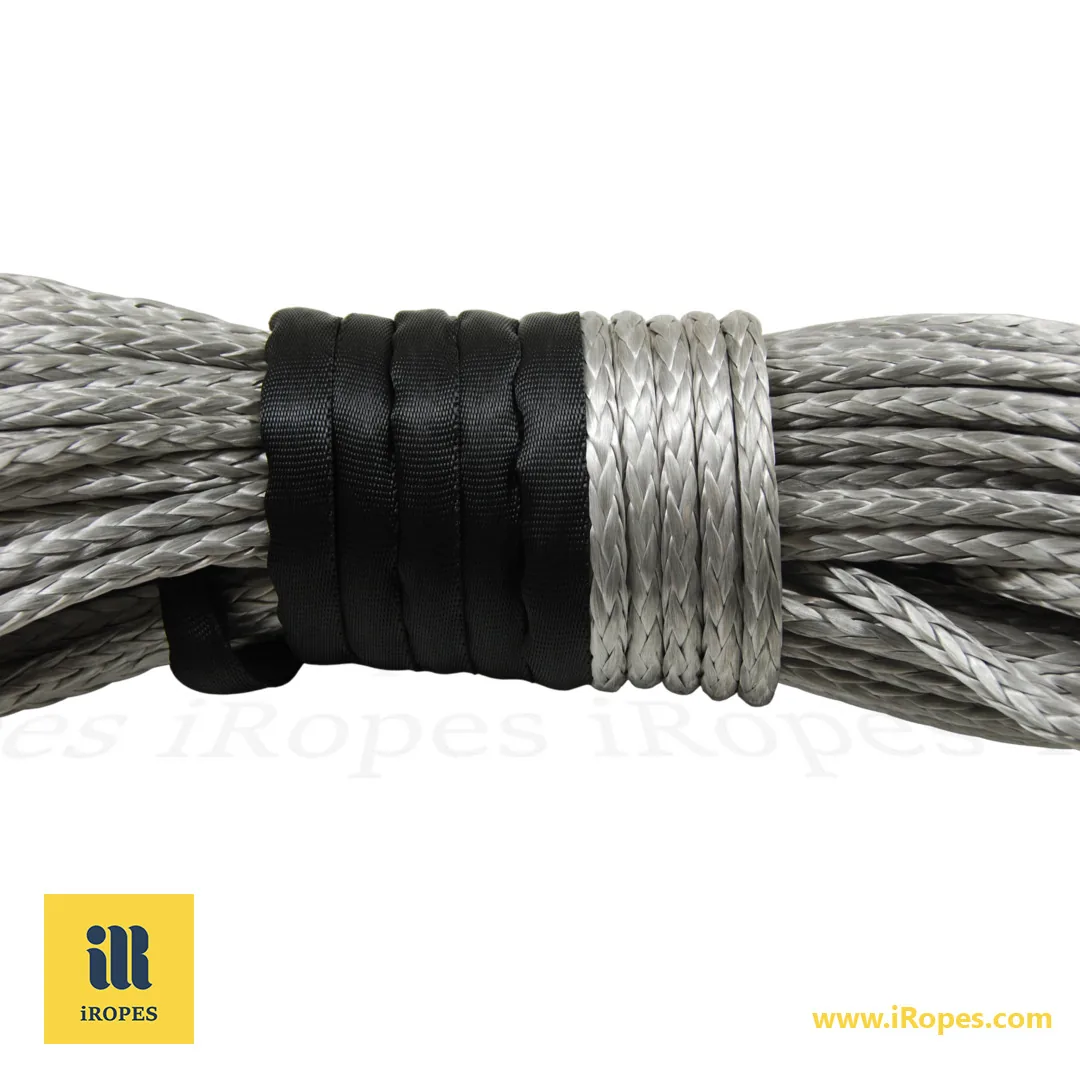
Synthetic rope slings can deliver comparable rated capacity to steel in many applications while being up to 7 × lighter—improving handling, set‑up speed, and overall efficiency.
What you’ll gain in 4 min read
- ✓ Reduce handling fatigue thanks to ultra‑light construction (up to 7× lighter than steel rope slings).
- ✓ Gain optimised strength through iRopes’ synthetic weaving expertise and precise construction.
- ✓ Lower total handling costs with easier transport, faster rig‑ups, and simpler inspections.
- ✓ Enjoy corrosion‑free performance in marine, off‑road, and chemically exposed environments.
You might think steel is the only safe bet for heavy lifts, but modern synthetic rope slings can provide comparable strength for many tasks while weighing a fraction of steel. As a specialist in synthetic weaving, iRopes enhances fibre alignment and construction quality to improve load efficiency and longevity. Keep reading to see how these advantages translate into real‑world savings, safety gains, and clear criteria for choosing the right sling for any job.
Braided slings
Having examined the overall lift efficiency, let’s explore the flexibility and strength that braided slings bring to demanding rigging tasks.
What is a braided sling? A braided sling is a rope made by interlacing multiple steel wires into a cohesive, rope‑like body with eyes at each end. This construction delivers high load capacity while remaining pliable enough to wrap around irregular shapes.

Key advantages
- Flexibility - the interwoven wires allow the sling to bend around irregular shapes without breaking.
- Even stress distribution - load is shared across multiple strands, reducing point pressure.
- Kink resistance - the braid prevents sharp bends that could compromise strength.
As a rule of thumb, about 1 lb of braided steel sling supports roughly 5 lb of load, and braided designs tolerate elevated heat (often up to around 600 °C). These traits make braided slings a strong choice for load turning and hot, abrasive environments.
Common configurations
Choosing the right arrangement depends on lift geometry and the need for stability.
- 3‑part - three wire‑rope parts braided into one body; suited for simple lifts and load turning.
- 6‑part - six parts, offering balanced load distribution for longer spans.
- 8‑part - eight parts, used when maximum stability and multi‑point contact are required.
In my 20 years on construction sites, I trust braided slings for any job that demands both strength and the ability to wrap around awkward loads; they never let me down.
When the lift environment calls for higher temperatures or abrasive contact, braided slings often outperform synthetic rope slings. For tasks that require extreme heat resistance, many professionals turn to steel rope slings instead.
Having reviewed the flexibility and strength of braided slings, we now shift focus to the lighter, corrosion‑resistant synthetic rope slings.
Synthetic rope slings
Building on the flexibility of braided options, let’s examine the lighter, corrosion‑resistant alternatives that dominate many modern lift operations. These synthetic rope slings combine advanced fibre technology with iRopes’ synthetic‑weaving expertise to meet demanding performance criteria.

The core of every high‑performance synthetic rope sling lies in the fibre selected. iRopes offers three primary material families, each woven to maximise tensile efficiency.
- Nylon – strong and elastic with good shock absorption.
- Polyester – low stretch with good UV and abrasion resistance.
- HMPE – highest strength‑to‑weight with very low stretch.
Across these materials, iRopes’ focus on synthetic weaving aligns fibres for efficient load sharing while keeping the sling lightweight. The result is a product that is up to seven times lighter than an equivalent steel option, corrosion‑free, and non‑conductive in typical dry conditions. As a simple benchmark, approximately 1 lb of synthetic sling can lift about 15 lb of load. Typical operating limits range from −40 °C to +80 °C, with some specialised HMPE grades handling up to ~150 °C—always verify exact specifications for your job.
In practical terms, synthetic rope slings are employed for off‑road construction rigs that need to move quickly over uneven terrain, for yachting crews that must protect polished decks from abrasion, and for any operation where the load surface is delicate or the environment is chemically aggressive. Their lightweight nature also reduces crew fatigue during manual handling and speeds up rigging cycles.
Custom Weave
iRopes’ synthetic‑weaving expertise aligns fibres for efficient load distribution while keeping the sling lightweight and easy to handle.
When the job calls for maximum durability at extreme temperatures, the conversation shifts to steel rope slings, whose heat tolerance and abrasion resistance set the benchmark for heavy‑duty lifting.
Steel rope slings
When the lift environment demands the toughest combination of heat resistance and abrasion durability, steel rope slings become the go‑to solution. Their solid construction allows them to survive temperatures that would melt or weaken synthetic alternatives, making them indispensable in heavy‑duty industries such as mining, steel‑plant hoisting, and offshore rigging.

The backbone of a steel rope sling is its construction type. Manufacturers typically offer four main formats, each suited to a different rigging geometry:
Construction Types
How the sling is built
Single‑part
One continuous wire rope with eyes at each end; ideal for simple, straight lifts.
Braided
Multiple strands woven together for added flexibility while retaining steel strength.
Endless
Closed‑loop design eliminates eye wear; perfect for continuous‑pull applications.
Performance Highlights
Why steel stands out
High‑Temp Tolerance
Can operate safely up to 800 °C, far beyond the limits of synthetic fibres.
Abrasion Durability
Steel wire resists cuts, gouges, and harsh surfaces, extending service life in gritty environments.
Load‑to‑Weight Ratio
Approximately 1 lb of sling supports 6 lb of load, offering a reliable strength‑to‑mass balance.
Because steel rope slings excel where heat and wear dominate, they are the preferred choice for tasks such as furnace door removal, heavy‑metal beam positioning, and abrasive‑rock mining lifts. When should I use steel rope slings? The answer is straightforward: select them for any lift that involves extreme temperatures, high‑impact contact, or loads that exceed the safe working limits of synthetic alternatives.
Safety standards governing steel rope slings include OSHA 1910.184 and ASTM A1023. Conduct a visual inspection daily, a thorough check monthly, and a proof‑test at least once a year. Apply a minimum 5:1 safety factor to working load limits.
Choosing the right steel rope sling begins with matching the construction type to the lift geometry, then confirming that the sling’s temperature rating exceeds the operating environment. For detailed guidance on wire rope sling capacities and types, see our dedicated article. With iRopes’ ISO 9001‑certified manufacturing, each steel rope sling can be ordered with custom eye configurations, colour‑coded markings, or branding, ensuring the final product fits both the technical specs and the visual identity of the client’s fleet.
Ready to optimise your rigging? Request a custom quote or download the full specification sheet to compare options in detail.
Choosing the Right Sling & iRopes Advantage
Building on the detailed capabilities of braided slings, synthetic rope slings and steel rope slings, the next logical step is to match each lift requirement with the most suitable family.
A quick‑pick comparison matrix lets engineers glance at the core attributes – strength, weight, cost, flexibility and temperature range – and decide which sling aligns with the job’s demands.

The matrix is complemented by a three‑step selection guide:
Step 1 – Load characteristics: Identify the weight, centre‑of‑gravity and geometry of the load. Step 2 – Environment: Note temperature extremes, chemical exposure, UV intensity and abrasion potential. Step 3 – Regulatory checklist: Verify compliance with OSHA 1910.184, EN 1492 and any industry‑specific standards, and apply the mandated safety factor before finalising the sling type.
Strength
Steel rope slings deliver the highest absolute capacity and temperature tolerance. Braided slings offer high capacity with superior flexibility. Synthetic rope slings balance strength with exceptional lightness.
Weight
Synthetic rope slings minimise handling fatigue, braided slings offer a moderate mass, while steel rope slings are the heaviest but provide unmatched durability.
Cost
Synthetic rope slings provide cost‑effective options for medium‑range lifts, braided slings sit in the mid‑price tier, and steel rope slings command a premium for heavy‑duty applications.
Temp
Steel rope slings remain reliable at temperatures far beyond synthetic limits, braided slings tolerate high heat, and synthetic rope slings perform well within the upper range of specialised fibres.
iRopes extends the matrix with a full OEM/ODM programme. Clients can select the exact material—whether a high‑modulus polyethylene fibre for ultra‑light lifts or a specialised steel alloy for furnace work—specify custom colours, patterns or branding, and rely on ISO 9001‑certified production plus full IP protection throughout the development cycle. Non‑branded or customer‑branded packaging is available, and pallets can be shipped directly to your location worldwide. Explore our top industrial ropes and slings guide for more options.
With the right sling identified and iRopes’ custom capabilities at hand, the final step is to place an order that matches both performance and branding goals.
Ready for a personalised sling solution?
After exploring how braided slings deliver flexibility and high‑temperature resilience, and seeing how synthetic rope slings provide lightweight, corrosion‑resistant performance through iRopes’ synthetic‑weaving expertise, you now have a clear framework for matching the right sling to any lift. When extreme heat or abrasive conditions arise, steel rope slings remain the go‑to choice. Pair these insights with iRopes’ OEM/ODM services—custom material selection, branding, ISO 9001 quality, and full IP protection—to optimise cost, weight, and compliance for your industry.
If you’d like tailored advice on selecting or designing the perfect sling for your application, simply complete the inquiry form above and our specialists will craft a solution that fits your exact needs.