You can make a secure loop in solid‑braid polyester rope without splicing — use a properly sized, rated clamp or a suitable knot. Mechanical clamps typically preserve more strength than knots when installed to specification.
≈ 4‑minute read
- ✓ Choose engineered clamps to maximise strength retention and apply a conservative 1/10 safety factor for working loads.
- ✓ Install a loop in minutes per eye, helping reduce labour time and downtime on site.
- ✓ Customise colour, branding, and packaging — align the rope and accessories with your product identity.
- ✓ Benefit from ISO‑9001‑backed quality and IP‑protected designs for repeatable, batch‑consistent performance.
Many assume any rope can be eye‑spliced, yet solid‑braid polyester defies that rule because its lock‑stitch core never lets the strands terminate. Consequently, you must rethink loop creation. The alternatives below deliver reliable strength and can save installation time. Keep reading to learn clamp‑selection tips and custom‑design options that turn this limitation into an advantage.
What Is Solid‑Braid Rope? – Understanding the Basics
Solid‑braid rope is a tightly braided construction with interlocking strands around a continuous, lock‑stitch‑style core. Unlike twisted or plaited ropes, the core runs the entire length, so the cover does not separate into individual strands for splicing. This design delivers a low‑stretch feel and excellent resistance to abrasion and UV exposure.

Key construction details
- Lock‑stitch core — runs continuously, keeping the braided cover in fixed alignment.
- Low‑stretch behaviour — solid‑braid construction offers low elongation, often under 2 % under load; ideal for flag‑pole halyards and control lines.
- Material choice — polyester offers superior UV resistance and wet‑strength retention, while nylon provides a bit more stretch.
When comparing polyester to nylon solid‑braid rope, the polyester variant retains its colour and strength after prolonged sun exposure, making it a favourite for outdoor installations. Nylon, by contrast, stretches slightly more, which can be useful where a bit of give is required, such as in dynamic rigging.
Strength and safe working loads
Strength Overview
A 1/4 in (6 mm) solid‑braid rope breaks at roughly 1 080 lb, giving a safe working load of about 108 lb (1/10 break). A 1/2 in (12 mm) version reaches 3 876 lb breaking strength, with an SWL near 387 lb.
Because the lock‑stitch core prevents the strands from being terminated cleanly, a traditional eye splice cannot be formed in solid‑braid rope. An eye splice is a permanent loop created by weaving the rope’s own fibres back into the standing part, typically preserving most of the original strength. This limitation is why many users turn to rope clamps or custom‑engineered loop solutions for solid‑braid applications.
Where solid‑braid rope shines
Typical projects that benefit from the low stretch and high abrasion resistance include:
- Flag‑pole halyards that must stay taut under wind load.
- Camping guylines where UV exposure is constant.
- Yard swings and general utility lines where predictable tension helps.
- Marine deck fittings where salt‑water exposure is a concern.
Understanding these fundamentals sets the stage for exploring why eye splicing is problematic and which loop‑making alternatives deliver reliable performance.
Eye Splice Solid Braid Rope – Anatomy and Standard Procedure
Now that we know solid‑braid rope’s construction makes a traditional splice impossible, let’s look at what an eye splice actually is and how it’s built on a conventional three‑strand rope.
An eye splice creates a permanent loop by interweaving the rope’s own fibres back into the standing part, forming a closed eye that can carry load without a knot slipping. Because the loop is made from the rope itself, the splice retains most of the rope’s original strength.
- Unlay the rope end into three strands and tape the tips. Form the desired eye size against the standing part.
- Tuck each strand under an opposite strand of the standing part in sequence, then repeat for at least three full tucks per strand.
- Dress and set the splice, add extra or taper tucks as needed, whip to finish, and trim the ends.
In a typical instructional infographic, the standing part appears in dark blue, the tail in light grey, and the emerging eye highlighted in green. The diagram shows each turn of the strands aligning with the rope’s lay, illustrating how the splice mimics the rope’s natural structure while locking the loop in place.
Eye splices are the gold standard for a permanent loop when the rope’s construction allows strand termination. They offer a clean finish and typically retain more strength than knots.
When you’re asked “What is an eye splice on a rope?” the concise answer is: it is a permanent loop formed by interweaving the rope’s own strands back into the standing part, preserving most of the original strength. This definition often appears in quick‑reference tables and is the basis for many how‑to guides.
Understanding the anatomy of the splice helps you recognise why the lock‑stitch core of a solid‑braid rope blocks this process. The core runs continuously, so the tail never gets a chance to terminate cleanly — the very reason an eye splice solid braid rope is not feasible. In the next section we’ll explore the alternatives that let you create reliable loops without splicing.
Why Solid Braid Polyester Rope Can’t Be Eye‑Spliced
When you try to form an eye splice in a solid‑braid polyester rope, the very structure that gives the rope its low‑stretch performance also stops the splice from ever completing. The lock‑stitch core runs the full length of the rope, meaning the individual fibres never have a natural end point where you can weave them back into the standing part. Without that termination point, the loop can’t lock into place, and the splice loses its characteristic strength retention.

Industry guides, including Ravenox, and iRopes’ technical team agree that this construction makes a conventional eye splice impossible. Therefore, any loop you need on this rope should come from a different method — either a mechanical clamp or a specially engineered fitting.
Expert Confirmation
Solid‑braid polyester rope cannot be eye‑spliced because the lock‑stitch core prevents the strands from terminating. The reliable loop solutions are clamps, end fittings, or custom‑engineered alternatives.
To visualise the splice‑ability landscape, consider this quick comparison:
Splice‑able
Twisted rope and three‑strand rope, plus many double‑braid constructions, allow an eye splice because their fibres can terminate cleanly.
Not splice‑able
Solid‑braid polyester rope — the lock‑stitch core runs uninterrupted, so an eye splice isn’t possible.
Why it matters
Without a splice, you need a clamp or a custom‑engineered loop to keep the load safe and reliable.
Design tip
Select a rope clamp that matches the rope’s diameter and load rating for a secure, non‑spliced loop.
Which type of rope cannot be spliced? Solid‑braid rope — its lock‑stitch core stops the strands from terminating, so an eye splice isn’t feasible.
Knowing that an eye splice solid braid rope is off the table helps you focus on the loop‑making alternatives that actually work. The next section walks through clamps, knots, and iRopes’ custom OEM/ODM services, so you can finish your project with confidence.
Loop‑Making Alternatives for Solid Braid Rope
Since an eye splice solid braid rope cannot be formed, the logical next step is to choose a loop method that respects the rope’s lock‑stitch core while delivering the required strength. Below are the most reliable options that iRopes recommends for field‑ready projects.

Two broad families cover most applications: mechanical hardware that locks the rope in place, and knot‑based loops that rely on proper dressing for strength.
Mechanical Solutions
Clamp‑based loops for instant strength
Rope Clamp
Stainless‑steel body with a screw‑tightening plate; select a model rated to meet or exceed the rope’s working load. When installed correctly, clamps often retain more strength than knot‑only solutions.
End Fitting
Machined aluminium eye or thimble that slides onto the rope tip; ideal for permanent installations where a clean, low‑profile loop is required.
Load Rating Guide
iRopes supplies a concise chart linking rope diameter to safe working load; match the clamp’s rating to stay within the 1/10 break‑strength rule.
Knot Solutions
No‑hardware loops you can tie
Bowline Loop
Creates a secure eye that resists slipping; when dressed properly on solid braid rope it provides dependable performance, though with lower strength retention than a clamp.
Perfection Loop
Compact loop that’s handy where a small eye is useful. Always confirm the safe working load for your application.
Quick‑Tie Method
Two‑step process: (1) form a bowline, (2) snug and dress the knot against the standing part. This answers the PAA query “How do I make a loop in solid‑braid rope without splicing?”
When a project demands a loop that looks like a splice but the material prevents it, iRopes can engineer a custom solution. Our OEM/ODM service blends the reliability of a clamp with the aesthetics of a spliced eye, using purpose‑built tooling and material‑specific tolerances to meet exact load requirements. We safeguard your IP from concept to shipment and manufacture under ISO‑9001 quality systems.
2‑Step Loop Guide
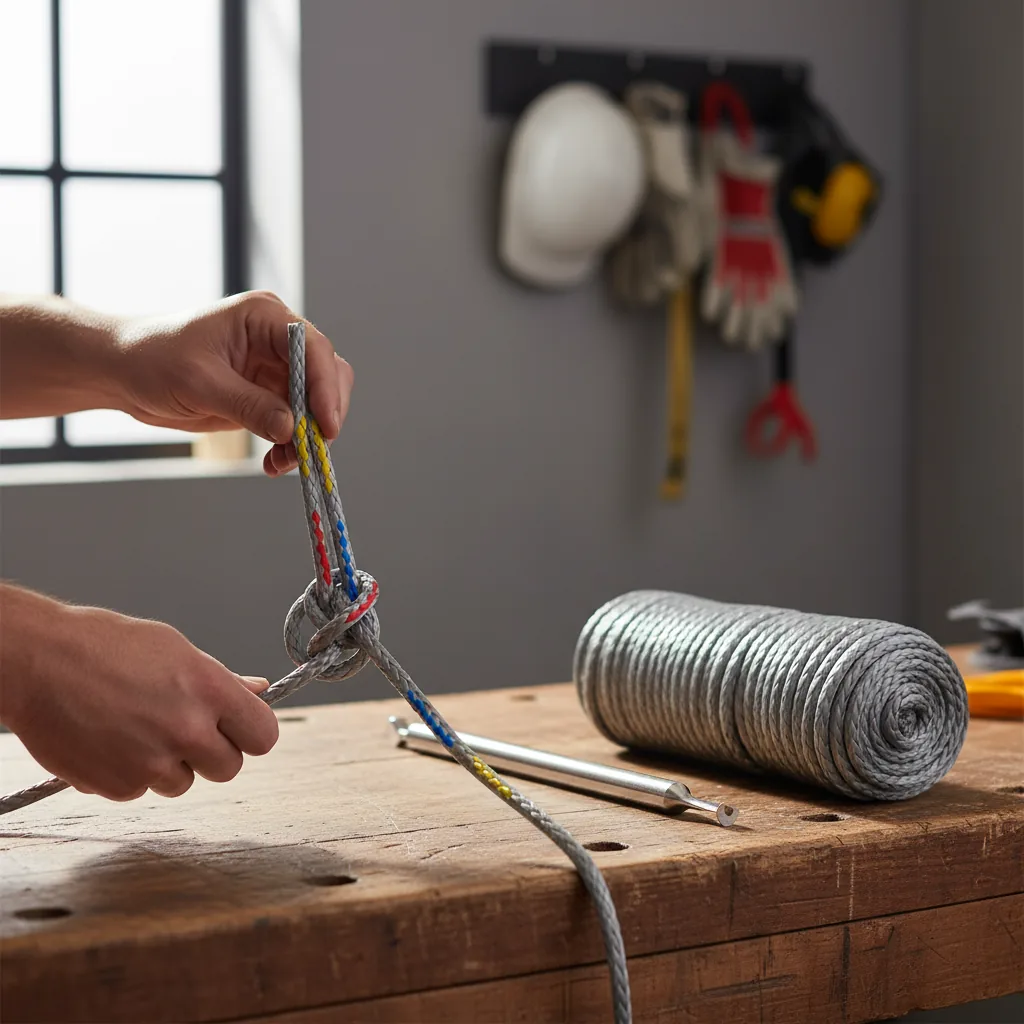
Tie a bowline → dress the knot tightly against the standing part; or attach a rated clamp → secure the screw. Both methods can provide a secure, splice‑free loop for solid braid rope when sized and installed correctly.
Ready for a personalised rope‑loop solution?
If you’d like a custom recommendation on the best loop‑making method for your project, simply complete the form above and our iRopes specialists will get back to you with tailored advice.
We’ve shown why an eye splice solid braid rope is off the table — the continuous lock‑stitch core in solid braid rope (especially solid braid polyester rope) prevents a true splice. By switching to clamp‑based hardware, bowline or perfection knots, or by leveraging iRopes’ OEM/ODM services, you can achieve a secure, load‑rated loop without compromising your safety factor. Reach out for a solution that matches your exact specifications, branding, and delivery requirements.
For a side‑by‑side comparison of solid‑braid and titan‑braid polyester ropes, see our Titan Braid vs Solid Braid Polyester Rope Guide.
