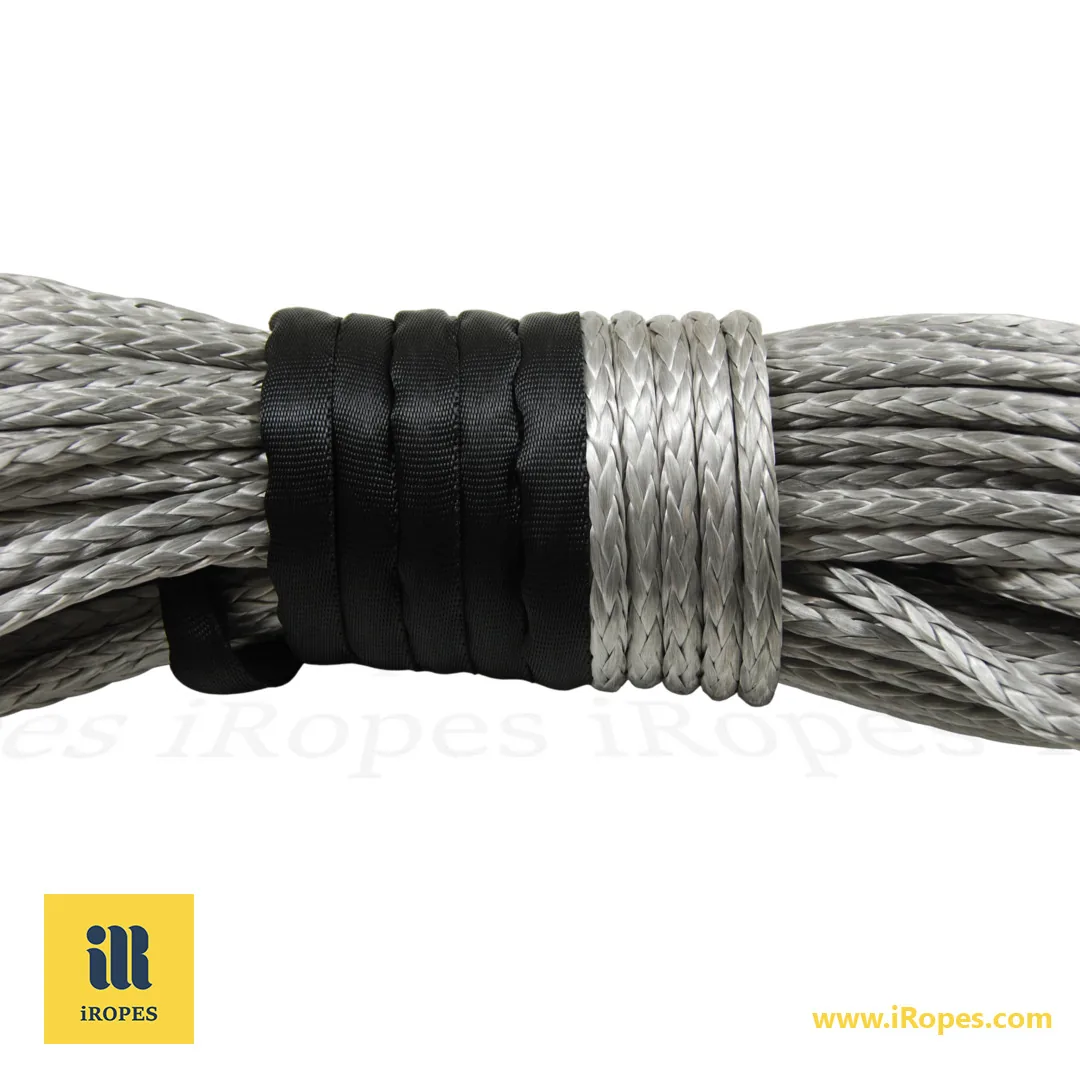
iRopes can supply custom UHMWPE slings that are up to 7× stronger than steel while cutting weight by 85 % and delivering in 4‑6 weeks.
≈3 min read – What you’ll gain
- ✓ Reduce inventory with adjustable‑length slings.
- ✓ Slash lift weight by 80‑85 % using plasma‑UHMWPE ropes.
- ✓ Extend service life 30 % with specialised coatings and accessories.
- ✓ Lower total cost‑of‑ownership by 15‑30 % through OEM/ODM optimisation.
You probably assume that the heavier the rope, the safer the lift—after all, steel‑cabled slings have been the industry staple for decades. Yet iRopes’ UHMWPE plasma slings shatter that myth, delivering up to 7 times steel strength while shedding 85 % of the weight, and they’re fully customisable to your branding and load specs. Whether you need adjustable slings, plasma slings or fibre rope slings, keep reading to discover how the right choice can cut rig‑time, lower costs and boost safety on every job.
Adjustable slings
Adjustable slings are flexible lifting devices that let you change the effective length without cutting or adding extra rope. By using a built‑in splice eye, you can set the exact distance needed for a lift, which reduces rig‑time and eliminates the need for multiple fixed‑length slings. The design also helps you keep the load centred, improving stability and safety on site.

Key benefits of using adjustable slings include:
- Versatility – one sling can cover a range of lift heights, cutting inventory costs.
- Space saving – the compact folded length fits easier on pallets and in transport crates.
- Safety – the eye‑lock splice prevents accidental slippage once tension is applied.
Adjustable slings let you fine‑tune the lift length on site, cutting down rig‑time and avoiding excess rope.
When you need to set the length, follow these simple steps:
- Locate the adjustable eye at the end of the sling.
- Pull the free‑end through the eye until the desired length is reached.
- Engage the built‑in splice lock to secure the rope.
- Verify that the eye size matches the rated load before lifting.
Choosing the right diameter is crucial because it determines the breaking load (MBL) and, after applying the standard 5:1 safety factor, the working load limit (WLL). Below is a quick reference for common sizes; always confirm the WLL on the sling tag to ASME B30.9.
| Diameter (mm) | MBL (kN) | WLL (kN) |
|---|---|---|
| 12 | 35 | 7 |
| 16 | 62 | 12 |
| 20 | 98 | 19 |
| 25 | 160 | 32 |
Answering a common query, “How do adjustable slings work?” – they rely on a splice eye that slides along the rope, allowing you to set a precise loop length. Once the eye is positioned, a lock‑mechanism grips the splice, creating a secure eye under load while preserving rated capacity when used correctly.
Now that you understand the flexibility and safety of adjustable slings, you might wonder how a lighter‑weight material could further improve performance. That’s where plasma slings enter the picture, offering exceptional strength‑to‑weight ratios and natural buoyancy for marine environments.
Plasma slings
Plasma slings are fabricated from ultra‑high‑molecular‑weight polyethylene (UHMWPE), a synthetic fibre that delivers up to seven times the tensile strength of steel while shedding 80‑90 % of the weight. The material’s low stretch (3‑4 % at break) and excellent resistance to UV, chemicals and saltwater make it a favourite for offshore and marine lifts.

- Strength‑to‑weight – up to seven times stronger than steel yet dramatically lighter.
- Buoyancy – the rope naturally floats, eliminating the need for additional flotation devices in marine environments.
- Corrosion resistance – UHMWPE does not rust, making it perfect for salty or humid conditions.
Custom Options
iRopes lets you specify plasma slings with precise diameter, length and colour choices to suit your lift. Add accessories such as thimbles, chafe sleeves or reflective tags, and include custom branding on labels, sleeves or packaging. Every order is supported by ISO 9001 quality assurance and dedicated IP protection.
A plasma sling is a lifting sling constructed from UHMWPE rope, delivering high working load limits at a fraction of the weight of steel when sized appropriately.
When weight isn’t the only concern, fibre rope slings can still provide cost‑effective solutions for certain applications.
Fibre rope slings
While plasma slings impress with extreme lightness, many lifting projects still benefit from the proven reliability of traditional fibre rope slings. iRopes’ range of polyester, nylon and aramid (Kevlar™ / Technora™) constructions delivers a blend of strength, durability and cost that suits high‑volume or UV‑intensive environments.

Choosing the right material hinges on the job’s demands. Polyester excels where UV exposure and moisture are constant, offering good abrasion resistance at a modest price. Nylon adds higher elasticity, making it suitable for dynamic loads such as crane hoists. Aramid fibres, notably Kevlar™ and Technora™, deliver very high tensile strength and superior heat resistance—ideal for heavy‑duty construction or rescue scenarios where peak performance is non‑negotiable.
Light‑weight
Up to 80‑90 % less mass than steel (material‑dependent), reducing rig‑time and handling effort.
Buoyant
UHMWPE variants float, making them ideal for offshore lifts where water exposure is constant.
Cost‑effective
Lower material cost makes fibre rope slings attractive for high‑volume, moderate‑load projects.
Durable
Polyester resists UV and abrasion; aramid excels in heat resistance and benefits from UV‑protective covers.
Pricing follows clear tiers. Entry‑level polyester slings are often under $60 for routine warehouse lifts; mid‑range options at $60–$150 cover nylon and some small‑diameter UHMWPE; plasma slings commonly range from $150–$700 for ½–1 in diameters, while large‑diameter 12×12 plasma can exceed $700. Learn more about the advantages of UHMWPE rope. When calculating total cost‑of‑ownership, factor in expected lifespan, wear‑protection (chafe sleeves) and reduced replacement frequency—often yielding lower overall expense despite a higher upfront price.
Rope slings should be inspected before every lift, visually checked weekly, and load‑tested monthly. Replace after 5 years or sooner if wear exceeds 10 % of diameter, or after any impact.
Understanding these material nuances helps engineers select the most economical sling without sacrificing safety. Compare synthetic rope versus steel wire for a deeper insight.
Get a Custom Sling Design Quote
Having explored how adjustable slings trim rig‑time, how plasma slings deliver unrivalled strength‑to‑weight and buoyancy, and why fibre rope slings remain a cost‑effective workhorse, you now have the technical basis to choose the right lift solution.
iRopes, a leading rope maker in China, focuses on strong synthetic fibres such as UHMWPE, Technora™, Kevlar™, Vectran™, polyamide and polyester—along with many coating options—showcasing the great quality of “Made in China.” Our OEM/ODM customisation, ISO 9001 quality assurance, dedicated IP protection, and flexible branding and packaging (non‑branded or customer‑branded) help turn your specification into a finished product with direct pallet shipping worldwide. Discover why UHMWPE ropes surpass wire rope in demanding hoist applications.
If you’d like personalised assistance or a detailed quote, please fill out the form above—our experts are ready to help you design the perfect iRopes UHMWPE sling or tailored fibre rope for your project.