8-strand braid rope outperforms 3-strand by ≈20% in breaking strength and occupies ~50% less space—making it the clear winner for high-load, space-critical jobs.
Key Benefits (≈2 min read)
- ✓ +20% breaking strength – 8-strand reaches ~4,200 lb vs 3-strand’s ~3,300 lb for 3/8″ nylon.
- ✓ Half-size storage – same length coils occupy roughly 50% less volume.
- ✓ Minimal kinking – smooth parallel plait reduces hocking by up to 70%.
- ✓ OEM/ODM flexibility – tailor material, colour, and accessories to your brand.
You might think the classic 3-strand braid is always ideal for towing and dock lines, but the data tells a different story. The 8-strand construction not only lifts approximately 20% more weight but also halves your storage footprint and significantly reduces kinking incidents. In the sections below, we’ll uncover why this choice could save you time, space, and money on every shipment.
braid rope 3 strand
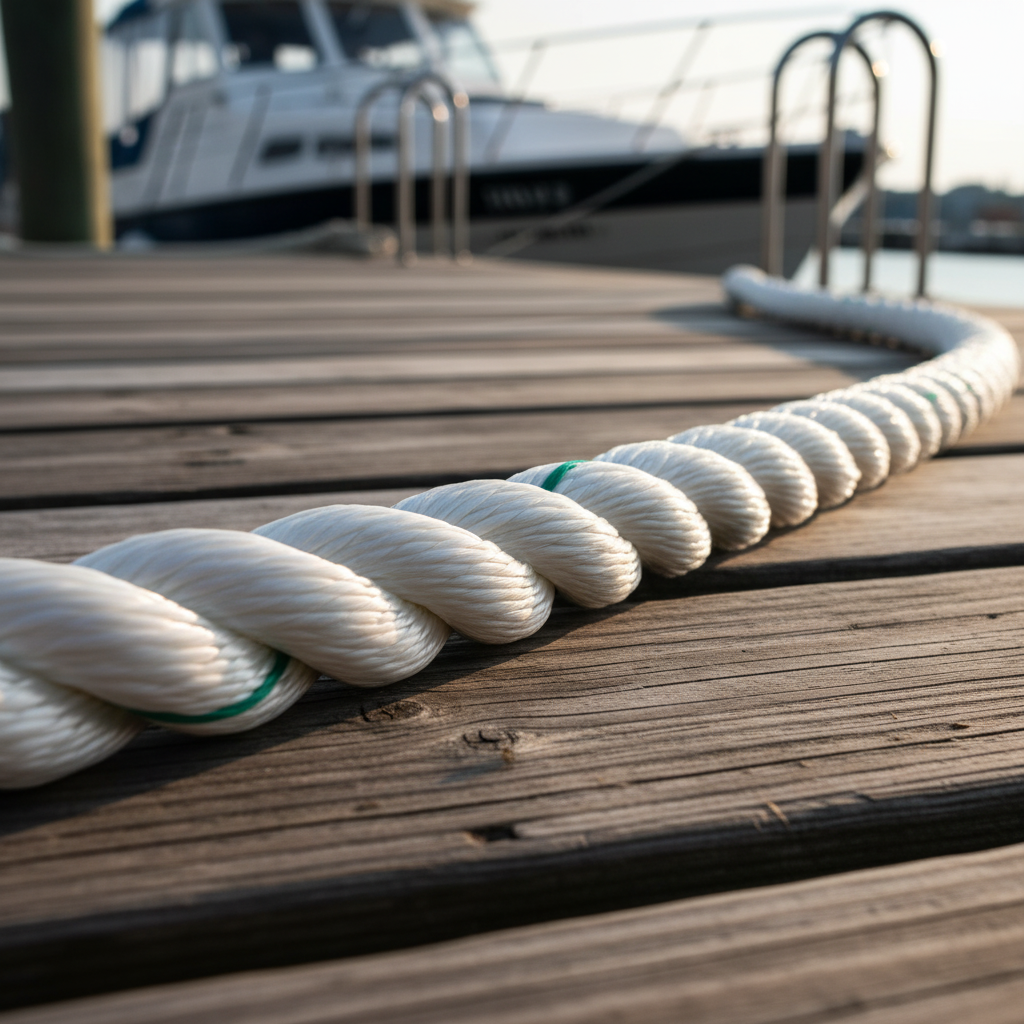
When you need a rope that offers some stretch under load yet remains easy to handle, the braid rope 3 strand often becomes the go-to choice. Its twisted-lay construction provides a familiar feel, much like the classic dock lines commonly seen at marinas. Because the strands are interwoven rather than tightly plaited, the rope can absorb shock—a useful trait for towing vehicles or securing a boat at the pier. This makes a braid 3 strand rope highly versatile.
How it’s built
The manufacturing process begins with three long yarns twisted together in a right-hand lay. Subsequently, these three resulting yarns are twisted in the opposite direction to form the final braid. This “twist-and-counter-twist” method creates a round profile that is both strong and flexible. Because each strand bears part of the load, the rope maintains a high breaking strength while remaining supple in your hands.
Key properties
- Breaking strength – A 3/8″ nylon braid rope 3 strand typically reaches around 3,340 lb before failure, offering a generous safety margin for most towing applications.
- Elongation – This construction allows 12-15% stretch when wet, which helps absorb sudden shocks without snapping the line.
- Handling ease – The rounded surface resists kinking, knots hold well, and proper splicing can retain up to 90% of the original strength.
Typical applications
Due to its combination of strength and flexibility, the braid 3 strand rope is well-suited for several common scenarios:
- Dock lines that require flexibility to absorb movement without snapping.
- Towing ropes for off-road recovery, where a little give prevents damage to vehicle attachments.
- General-purpose utility lines on construction sites, valued for their easy-to-tie knots.
“For a wholesale buyer who values both performance and cost-effectiveness, a well-designed braid rope 3 strand delivers the perfect balance of tensile strength and user-friendly handling.” – iRopes rope specialist
If you've ever wondered how to braid three strands yourself, the basic rhythm is simple: cross the right strand over the centre, then the left strand over the new centre, and repeat. Practising this loop a few times on a short piece will help you understand the rope’s natural lay before working with a full-length line.
Understanding these fundamentals sets the stage for exploring the compact, high-performance 8 strand braid rope, often preferred by marine operators for anchor rodes and other space-critical applications.
8 strand braid rope
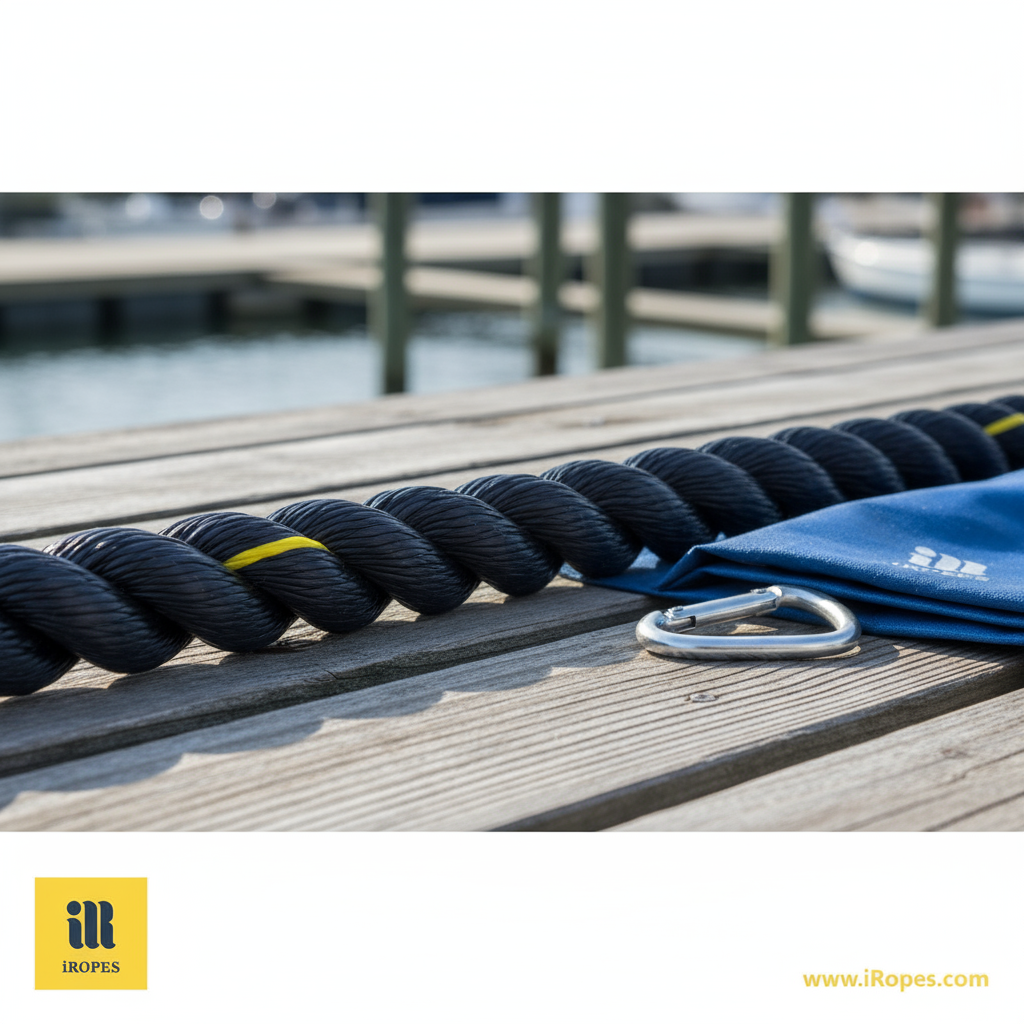
Building on the fundamentals of the 3-strand rope, the 8 strand braid rope features a tighter, parallel-plaited architecture. Many marine operators favour it for its space-saving profile and superior load handling.
How the eight strands come together
The manufacturing sequence of an 8 strand braid rope follows a disciplined rhythm, ensuring every strand shares the load evenly:
- Eight yarns are laid side-by-side in a flat line, with consistent tension across the bundle.
- These yarns are then interlaced using a repeating over-under pattern, creating a tight, parallel plait.
- Finally, the braid is often encapsulated with a protective jacket or coating to guard against abrasion and UV exposure.
Performance characteristics you’ll notice
Because the eight strands are woven in a compact braid, the rope can achieve a breaking strength that surpasses a comparable 3-strand version by roughly 20%. For a 3/8″ nylon line, the 8-strand construction typically reaches about 4,200 lb before failure. It also maintains a low-stretch profile, which keeps the line tight under load.
The dense plait also means the rope occupies roughly half the volume of a 3-strand of the same length, making coiling on deck or in a storage locker much easier. Moreover, the smooth surface significantly reduces the tendency to kink or hock, so you spend less time straightening the line after use.
Key Benefits
Higher tensile strength, a compact storage footprint, and a smooth lay that resists kinking make the 8-strand braid rope ideal for demanding marine anchoring, industrial lifting, and high-visibility safety lines.
Where you’ll find it in the field
Marine captains frequently select 8 strand braid rope for anchor rodes because its compact coil fits snugly on a windlass. It also delivers the considerable pull needed to hold a vessel steady. In industrial settings, the rope’s higher breaking strength and resistance to kinking make it ideal for overhead lifting rigs, where a clean, predictable line reduces the risk of snagging. High-visibility applications—such as rescue teams’ safety lines—benefit from the rope’s ability to be dyed or fitted with reflective strands without sacrificing strength.
When you compare it side-by-side with a 3-strand rope, the main differences boil down to its construction (parallel plait versus twisted lay), space efficiency (roughly 50% less bulk), and handling characteristics (reduced kinking but a slightly steeper learning curve for splicing). Understanding these nuances helps you decide which rope aligns best with your operational priorities.
Next, we’ll place the two constructions side-by-side in a direct comparison, giving you a clear decision-making framework for your next rope purchase.
braid 3 strand rope
Building on the overview of eight-strand designs, many wholesale buyers wonder whether the classic three-strand braid still holds an advantage for certain applications. The answer lies in how the rope behaves under load, how it stores, and how easy it is to work with on the shop floor.
When selecting a rope, always compare the breaking strength to the required working load – the safe limit is typically 10-20% of the breaking value.
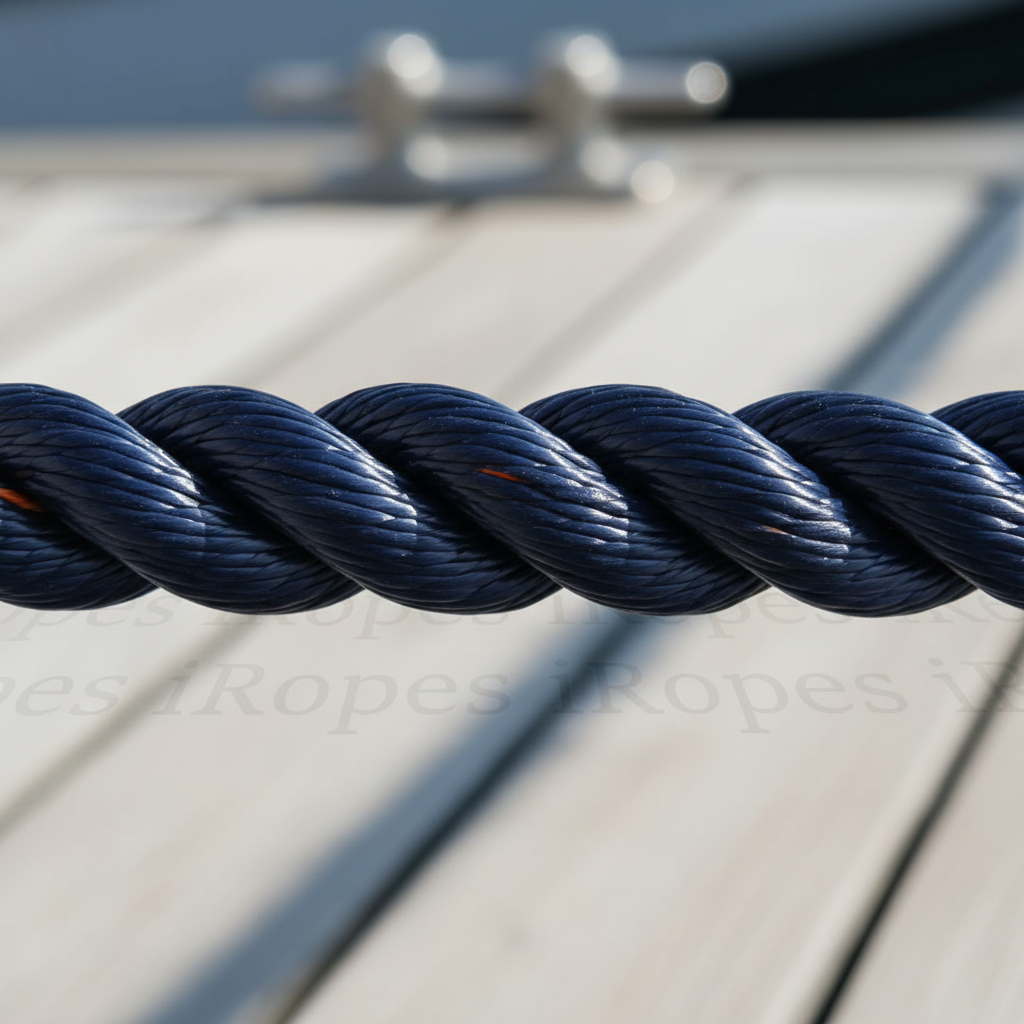
The core distinction between a braid rope 3 strand and an 8 strand braid rope is the lay pattern. A three-strand rope uses a twisted-lay method where three yarn bundles are first twisted one way and then counter-twisted together, giving it a round, supple profile. In contrast, an eight-strand rope employs a parallel plait that packs the fibres tighter, resulting in a flatter, denser cross-section. This tighter plait translates into roughly 20% higher tensile capacity and half the bulk when coiled, but it also makes the rope feel a touch stiffer in the hand.
Regarding strength, a 3/8 inch three-strand braid made from polyester typically reaches about 3,600 lb before failure, while the same size in nylon hovers near 3,340 lb. An eight-strand version of the same material and diameter can push past 4,200 lb, offering a noticeable uplift margin for demanding marine anchoring or industrial lifting tasks.
If you’re curious about the hands-on process, braiding three strands is straightforward. Lay the three ropes side by side, then bring the rightmost strand under the centre line. Next, pull the leftmost strand over the new centre position. Continue repeating this under-over rhythm, and the braid will develop naturally. A few practice passes on a short stub will give you the feel needed to scale up to full-length production.
These nuances become especially relevant when you weigh factors such as storage space on a vessel, the need for rapid splicing, or the preference for a rope that offers a little give under sudden shock. With that perspective in mind, the next part of the guide will lay out a side-by-side comparison matrix so you can see at a glance which construction aligns with your operational priorities.
Quick FAQ Recap
Difference, strength numbers, and a simple three-strand braid method—all covered in one place for fast decision-making.
Customization, Quality & Choosing the Right Rope
After answering the most frequent questions about braid rope 3 strand and 8 strand braid rope, it’s time to see how iRopes transforms that knowledge into a rope that fits your exact business needs.
iRopes OEM/ODM capabilities for 3-strand and 8-strand ropes
You can specify every parameter that matters to your operation. Whether you need a nylon braid 3 strand rope for shock-absorbing towing lines or a polyester 8 strand braid rope that packs tightly on a windlass, our engineers will match material, core type, diameter, length, colour, reflective elements, and termination accessories to your brief. Because the process is fully OEM/ODM, the final product can bear your logo, colour scheme, or even a unique pattern that distinguishes your brand in the market. We offer custom design solutions aligned with your branding and specific needs.
ISO 9001 quality assurance, IP protection, and packaging options
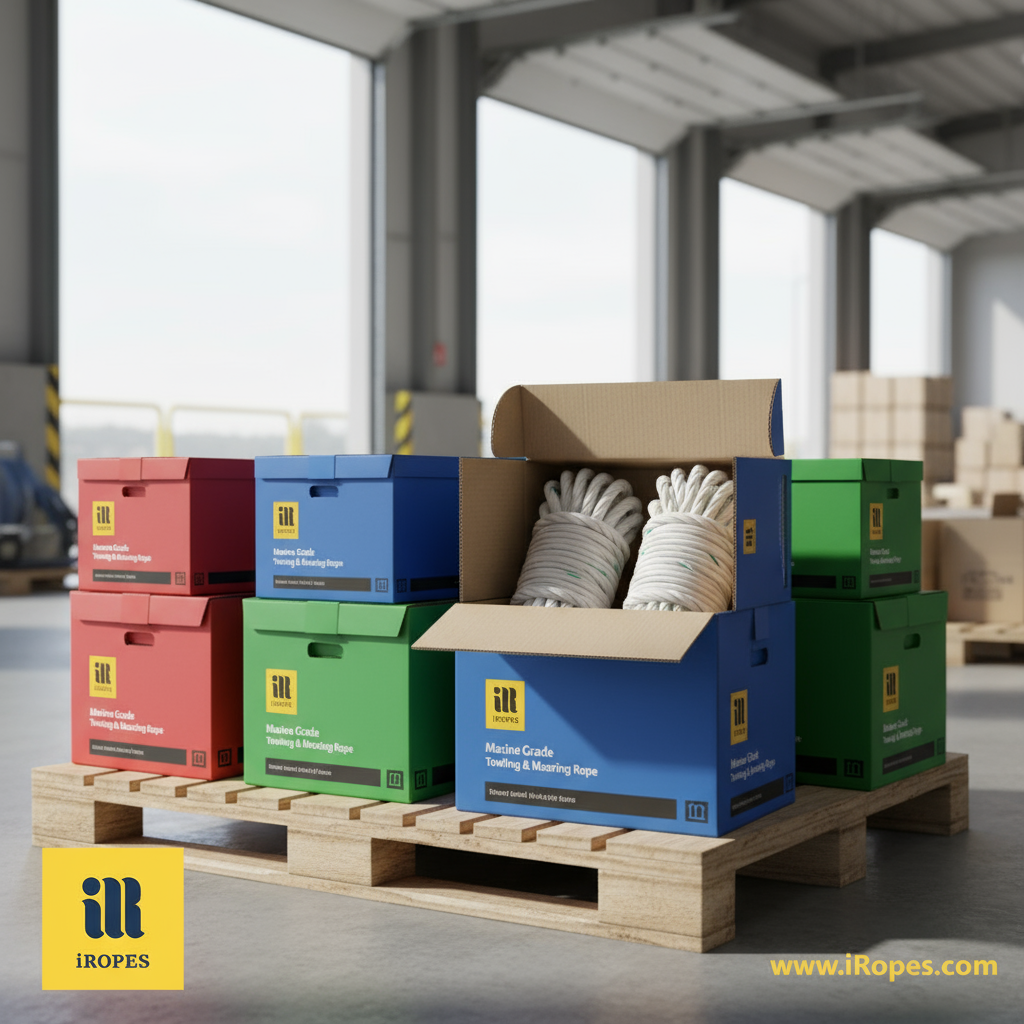
All batches leave our factory under ISO 9001-controlled conditions, meaning each coil is inspected for tensile consistency, abrasion resistance, and dimensional accuracy before it is sealed. While you focus on sales, we safeguard your intellectual property: designs, colour codes, and proprietary accessories remain confidential from raw-material sourcing to final palletisation. Packaging can be non-branded, customer-branded, or customised entirely—ranging from rugged poly-bags to printed colour boxes or stackable cartons that optimise warehouse space.
OEM / ODM Capabilities
Tailor-made solutions for any strand count
Material Choice
Select nylon, polyester, or polypropylene to meet stretch, UV, or chemical-resistance requirements.
Dimension Flexibility
Specify exact diameter, length, and core construction for the load you expect.
Brand Integration
Apply custom colours, reflective threads, or emboss your logo directly on the sheath.
Quality & Packaging
Assurance that every metre performs
ISO 9001 Certified
Systematic testing guarantees consistent breaking strength and elongation limits.
IP Protection
Your proprietary design stays confidential throughout production and shipment.
Packaging Options
Choose from sealed bags, colour-coded boxes, or bulk cartons – all with your branding.
Decision-making framework: factors to consider when selecting the ideal rope
When reviewing your options, ask yourself four practical questions. First, what is the maximum load and how much safety margin do you require? Second, will the rope face UV-rich sun, salty seawater, oil, or abrasive surfaces? Third, how much storage space is available on-site—a compact 8 strand braid rope can halve the coil volume compared with a 3-strand counterpart. Fourth, what level of handling do your crews need—a braid rope 3 strand offers a softer feel for quick splicing, while an 8 strand braid rope delivers a smoother lay that resists kinking.
Load & Environment
Match material strength and UV/chemical resistance to the forces and conditions your operation encounters daily.
Storage & Handling
Choose 8 strand braid rope when space is at a premium; select braid 3 strand rope if you need easier splicing and some give under shock.
Customization Fit
Leverage iRopes’ OEM/ODM service to align colour, diameter, and accessories with your brand story.
Assurance & Delivery
Rely on ISO-backed quality checks, IP protection, and flexible packaging to keep your supply chain smooth.
By weighing these criteria against the capabilities described above, you can pinpoint whether a braid rope 3 strand or an 8 strand braid rope best serves your project. Then, let iRopes craft the exact specification that transforms that choice into a reliable, branded product.
Need a Tailored Rope Solution? Get Expert Help Below
The article has demonstrated that both braid rope 3 strand and 8 strand braid rope deliver high elongation, making them excellent choices for towing lines and mooring applications where shock absorption and compact storage are important. You now understand the construction differences, strength figures, and handling traits that set each option apart.
iRopes can convert these insights into a custom specification that meets your exact load, environment, and branding requirements—from material selection to colour and reflective elements, all backed by ISO 9001 quality and IP protection. If you’d like personalised guidance to choose the perfect braid 3 strand rope or to fine-tune a design, simply fill out the form above, and our specialists will contact you.
