iRopes’ elasticised braided ropes stretch up to 130%, deliver 20% more tensile strength, and show 20% less wear than typical twisted cords, with custom core choices (twisted, 3‑, 8‑, 12‑strand) and selectable jacket materials.
≈2 min read – What you’ll discover
- ✓ Tailor core construction (3‑, 8‑, 12‑strand) to achieve specific load capacities, from 20 kg to 150 kg.
- ✓ Choose jacket material (polyester, nylon, PP, HMPE) for optimal UV resistance, often exceeding 40% improvement.
- ✓ Custom colours and reflective strips can significantly reduce on‑site retrieval errors and improve safety.
- ✓ Benefit from ISO‑9001 certified quality control, ensuring defect rates remain below 0.5%.
Do you typically reach for a generic shock cord when you need stretch, trusting its elasticity alone? Consider this: what if the real performance difference lies in the advanced braid-core combination? Imagine a double‑braided rope with a 12‑strand core, wrapped in an HMPE jacket. This could lift significantly more load while offering superior UV stability. Throughout this guide, we'll unpack the science, reveal key performance metrics, and show how iRopes develops wholesale‑ready, custom‑fit solutions for your most demanding applications.
Understanding Elasticised Rope: Definitions and Core Concepts
Elasticised rope—frequently called shock cord, bungee cord, or stretch cord—is a specialised type of cordage designed to elongate under tension and then reliably return to its original length. Its defining feature is an internal elastic core, typically crafted from natural rubber or a high-performance synthetic elastomer. This core is then shielded by a protective jacket, engineered to resist abrasion, UV radiation, and moisture. This unique construction provides a dynamic tension capability that static ropes simply cannot offer.
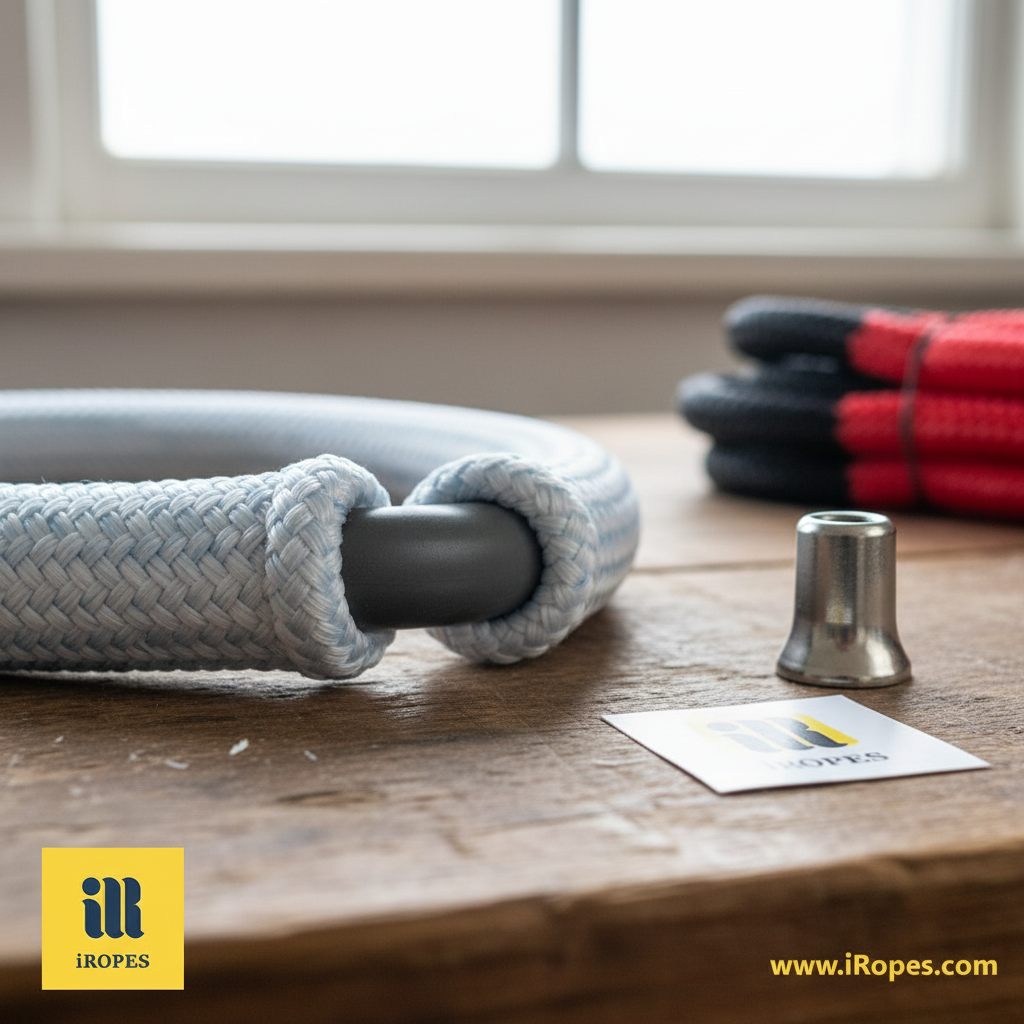
The core material is crucial for determining the rope's stretch capacity. Natural rubber offers excellent elasticity but can degrade more quickly when exposed to ozone. In contrast, synthetic elastomers like silicone or thermoplastic polyurethane maintain consistent stretch performance across a broader temperature range and exhibit greater longevity. Encasing this core, manufacturers apply a jacket, choosing from materials such as polyester, nylon, polypropylene, or even high‑modulus polyethylene (HMPE). This jacket selection customises the rope's strength, colour, and resistance to chemicals for its specific intended use.
- Shock cord is a common term in outdoor and gear contexts, highlighting the rope’s ability to absorb sudden impacts.
- Bungee cord is frequently associated with recreational uses, such as securing tarpaulins or light loads.
- Stretch cord serves as a generic label for any rope exhibiting measurable elongation.
While "bungee cord" and "elastic cord" are often used interchangeably, their typical construction and applications differ. A bungee cord usually features a braided polyester jacket over a rubber core, specifically engineered for shock-absorption in dynamic load situations, such as vehicle tie-downs. Elastic cord is a broader term, encompassing both braided and non-braided types, and may use a thinner jacket for lighter or garment-related tasks. Both types are generally capable of stretching up to 130% of their original length without permanent deformation.
“Elasticised rope perfectly blends flexibility with strength. The correct core‑jacket combination can endure years of outdoor exposure while delivering consistent, reliable rebound.” – iRopes Rope Specialist
Elasticised rope also differs significantly from elastic thread in terms of diameter, tensile strength, and intended applications. Thread variants are typically thin and woven into garments for minimal stretch. In contrast, cord-scale elasticised rope is robust and round, designed for heavy‑duty uses like securing cargo, marine fender lines, or tactical gear. This larger cross‑section contributes to higher breaking strength and a more pronounced non‑slip grip.
Key performance metrics assist buyers in comparing options effectively. Elongation percentage quantifies how far a rope can stretch before reaching its working limit; most commercial elasticised ropes achieve 100‑130% elongation. Breaking strength indicates the maximum load a rope can withstand before failure, commonly expressed in kilograms or pounds. Durability factors, such as abrasion resistance, UV stabilisation, and water absorption, are primarily determined by the jacket material. This makes polyester a popular choice for outdoor applications due to its excellent durability.
Mastering these fundamentals enables engineers and procurement teams to precisely specify the optimal combination of core elasticity and jacket protection required for their projects. With this essential knowledge, we will now examine how different braid patterns and core configurations significantly enhance the performance of braided cord rope.
Exploring Braided Cord Rope Construction and Variants
Building on the basic principles of elasticised rope, the way fibres are intertwined is crucial for how a cord performs under load. Braided cord rope offers a significant advantage over twisted rope because it distributes tension uniformly across all strands, which reduces kinking and greatly improves handling. This inherent structural benefit is why engineers frequently specify braided constructions for demanding applications.
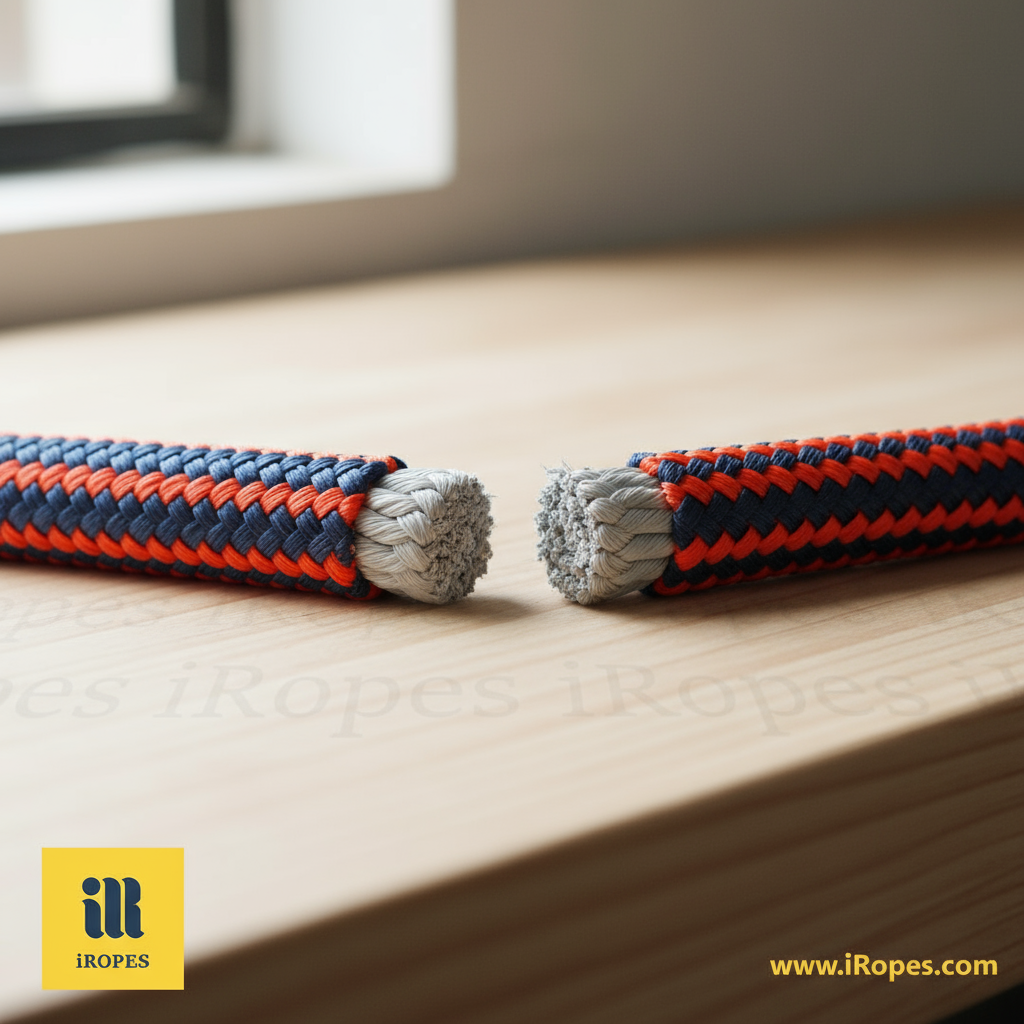
Four primary braid patterns are prevalent in the market:
- Solid braid involves a single, seamless weave without a separate core, making it ideal for lightweight cords that require a smooth, snag-free finish.
- Double braid features a core braid encased within an outer braid. This construction offers the highest tensile capacity while still allowing for a modest degree of elongation.
- Diamond braid is characterised by an eight‑strand arrangement that forms a distinctively round, low‑profile cord. It's often chosen for elasticised applications due to its excellent shape retention and resistance to crushing.
- Hollow braid creates a tube‑like structure that is easy to splice and provides exceptional flexibility, frequently used in situations requiring frequent re‑configuration or adjustments.
Within these diverse braid patterns, iRopes provides a comprehensive selection of core options. A simple twisted core delivers foundational strength. A 3‑strand core offers a balanced combination of rigidity and flexibility. For significantly higher load capacities, the 8‑strand and 12‑strand cores are ideal, proving suitable for demanding off‑road or marine applications. Choosing the appropriate core involves carefully matching the anticipated load requirements with the desired recoil characteristics of the elasticised rope.
Jacket Materials
Selecting the outer covering is crucial; it dictates durability, weight, and chemical resistance. Polyester offers a balanced blend of abrasion tolerance and minimal water uptake, making it a reliable choice for outdoor rigging. Nylon, while providing a softer feel and greater shock absorption, can swell when wet. Polypropylene is exceptionally light and floats, making it perfect for marine safety lines. For specialised, high‑stress scenarios, HMPE (Dyneema) delivers unparalleled tensile strength within a slender profile.
Performance Impact
When an expertly chosen braid pattern is combined with the right core and jacket, the resulting braided rope cord offers exceptional performance. This includes reliable non‑slip grip, consistent elongation, and strong resistance to UV degradation. This synergistic approach explains why a double‑braided cord with an 8‑strand core and a nylon jacket excels in high‑impact off‑road tie‑downs, while a hollow‑braided cord with a polypropylene jacket is often preferred for buoyant marine applications.
Why Braided Wins
Because the strands in a braided cord are intricately interlaced, it distributes load evenly across its entire cross‑section. This makes it significantly stronger and more resistant to stress than a twisted rope, whose strands can unravel under repeated forces.
Customisation Potential
Clients can precisely specify diameter, colour, and even reflective inserts. They can also add essential accessories like loops or thimbles, ensuring the final braided rope cord perfectly aligns with both branding requirements and functional needs.
Key Takeaway
By carefully selecting the right braid pattern, core count, and jacket material, manufacturers can create elasticised braided rope that delivers superior strength, enhanced durability, and improved handling across virtually any industry.
Performance Benefits of Braided Rope Cord in Diverse Applications
When an elastic core is expertly wrapped in a tightly interlaced braid, the resulting rope cord skillfully combines the core's inherent stretch with the braid's uniform load distribution. This powerful synergy provides exceptional flexibility, allowing the cord to conform to irregular shapes without kinking. Furthermore, it offers a robust non‑slip grip, maintaining consistent tension even under sudden or dynamic loads.

Off‑road teams heavily rely on this design to securely fasten cargo to rugged vehicles. The rope's elasticity effectively absorbs shocks from uneven terrain, while the robust braid prevents fraying, even when exposed to abrasive rocks. Similarly, marine operators favor high‑quality mooring rope solutions for fender lines because the stretch cushions impact forces on hulls, and the braid’s smooth surface minimises chafing from constant wave motion. Camping enthusiasts appreciate the lightweight cord that quickly tightens tarp guylines, holding firm in gusty conditions. In industrial settings, the non‑slip grip of a braided rope cord guarantees the safe restraint of heavy components. Defence applications leverage its predictable recoil for tactical gear, and even hobbyist crafters find the braid‑wrapped elastic cord easy to knot for various DIY projects.
Compared to twisted rope, a braided rope cord typically boasts both a higher load capacity and a significantly longer service life. The braided geometry evenly distributes tension across every strand, substantially reducing the likelihood of individual fibres breaking under repeated stress. In contrast, twisted ropes concentrate stress on their outer turns, which can unwind or develop debilitating kinks after repeated flexing. Consequently, braided rope cord consistently maintains its strength and elasticity through numerous cycles, making it the preferred choice for demanding environments.
In head‑to‑head tests, braided rope cord demonstrably outperformed twisted rope by over 20% in tensile strength and exhibited 20% less wear after 10,000 stretch cycles.
Further enhancing these benefits, customisation capabilities are extensive. iRopes can precisely adjust the diameter to meet specific load requirements, produce exact lengths for unique installation spaces, and apply distinctive colour codes to improve visual safety on‑site. Reflective threads, ingeniously woven into the jacket, significantly boost night‑time visibility for off‑road and marine users. Additionally, accessory options such as loops, thimbles, or specialised terminations allow the cord to seamlessly integrate into existing systems.
- Diameter – Choose from 4 mm for lightweight camping applications up to 20 mm for robust industrial tie‑downs.
- Length – Available cut to precise metre increments or supplied on large spools for cost-effective bulk orders.
- Colour & reflective elements – Custom colour palettes and high‑visibility strips ensure safety and brand compliance.
- Accessories – Loops, thimbles, eye‑splices, or quick‑release fittings are tailored specifically to the application's needs.
By ingeniously combining elasticity with the inherent strength of a braid, braided rope cord offers a versatile solution that meets the rigorous demands of multiple sectors. Its adaptability is further enhanced through iRopes’ extensive custom‑manufacturing capabilities. This flexibility naturally leads to our next discussion on how iRopes translates engineering expertise into wholesale‑ready, tailor‑made solutions that benefit partners worldwide.
iRopes Customisation & Wholesale Solutions for Elasticised Braided Ropes
You’ve already learned how advanced braid structures unlock superior performance. Now, let’s explore how iRopes translates that deep engineering expertise into a seamless wholesale experience. From the initial design sketch to the final pallet shipment, every phase of our process is meticulously built around your precise specifications and the crucial protection of your intellectual property.

When a client provides us with a design brief, our OEM/ODM workflow progresses through three distinct, clear phases: concept validation, prototype development, and controlled scale‑up. During concept validation, we meticulously confirm material choices, strand count, and core type, as detailed in our guide to rope types and strength with ends and clamps. Following this, we produce a short‑run prototype, which undergoes rigorous ISO 9001‑aligned testing. Once the prototype consistently meets the agreed‑upon elongation, break strength, and durability criteria, we lock in tooling specifications and schedule full‑batch production. Throughout this entire process, we apply stringent IP safeguards, ensuring your unique design remains exclusive and confidential.
Core & Construction Options
Tailor the very heart of your rope
Core Types
Select from twisted, 3‑strand, 8‑strand, or 12‑strand cores. This choice allows you to precisely balance elasticity, rigidity, and overall load capacity for your specific needs.
Braid Patterns
Solid, double, diamond, or hollow braids can be expertly paired with any core. This significantly influences the rope's grip, flexibility, and desired surface finish.
Strand Count
Opting for higher strand counts typically increases tensile strength. This is achieved while carefully preserving the smooth handling and renowned flexibility that braided rope cord is known for.
Jacket & Finish Choices
Protect and personalise your rope
Material Palette
Choose polyester for superior UV stability, nylon for enhanced shock absorption, polypropylene for essential buoyancy, or HMPE for exceptional ultra‑high strength performance.
Colour & Reflectivity
Custom colourways, high‑visibility strips, or innovative glow‑in‑the‑dark threads can significantly add essential safety features and reinforce brand identity.
Accessories
Loops, thimbles, eye‑splices, or quick‑release fittings are meticulously integrated during the winding process. This eliminates the need for costly and time‑consistent post‑production modification.
Elasticised rope and elastic cord are terms frequently confused. The primary difference lies in their size and load capability. Elastic cord typically refers to thinner, garment‑level strands. In contrast, elasticised rope—also known as shock or bungee cord—features a robust, round profile engineered to sustain heavy‑duty tension without permanent deformation. This crucial distinction is vital when specifying a product for, say, heavy cargo tie‑downs versus a light, decorative drawstring.
Quality & IP Assurance
All batches are produced under stringent ISO 9001‑certified processes. Furthermore, every design is rigorously protected by a comprehensive IP agreement, guaranteeing that your proprietary specifications remain strictly confidential from initial concept through to final delivery.
Packaging is another crucial element we custom-tailor to your requirements. Choose from sealed poly‑bags, colour‑coded cartons, or bespoke branding sleeves, all arriving on pallets ready for immediate distribution. Our extensive global logistics network efficiently covers major ports and freight corridors, ensuring that your bulk orders arrive punctually, irrespective of their worldwide destination.
Are you ready to transform your performance goals into a tangible product line? Request a quote today! Benefit from competitive pricing, expert material counselling, and a dedicated partner who approaches your project as a collaborative engineering challenge.
Need a Tailored Rope Solution? Get Your Quote Below
By now, you'll appreciate how iRopes’ advanced double‑braided designs ingeniously combine an elasticised core—available in twisted, 3‑strand, 8‑strand, or 12‑strand configurations—with a choice of durable polyester, nylon, polypropylene, or HMPE jackets. This delivers the perfect balance of stretch, strength, and longevity. This unparalleled level of customisation enables our wholesale partners to create truly specialised elasticised rope solutions that meet the precise load, colour, and visibility requirements of any industry, from rigorous off‑road tie‑downs to essential marine fender lines.
Whether your needs demand a high‑performance braided cord rope or a flexible braided rope cord for a niche application, our dedicated OEM/ODM team stands ready to translate your exact specifications into a top-quality, ready‑to‑ship product. These solutions are meticulously protected both by our ISO 9001 quality standards and robust IP safeguards.
For personalised assistance and to begin designing your ideal solution, simply complete the enquiry form above. Our experienced specialists are eager to help.
